When customers request precision machining services, one of the first things they usually check is the tolerance requirement on the drawing. A tolerance of ±0.01mm and ±0.005mm may look like
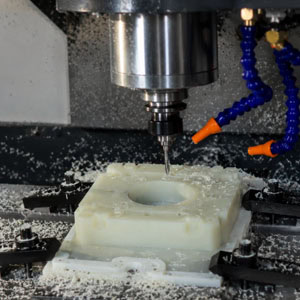
Plastics are different from metal materials in terms of hardness, toughness, thermal conductivity, and thermal expansion characteristics. When the same machining parameters are applied to different plastics, the final results
Micro-diameter milling cutters with diameters no greater than φ0.5 mm are commonly used for machining precision molds, micro-grooves, thin-walled parts, medical components, and electronic structural parts. They can produce details
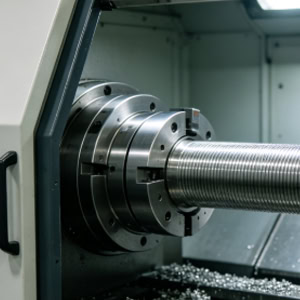
CNC turning process parameters have a direct impact on machining efficiency, dimensional accuracy, surface finish, tool life, and overall production stability. During actual machining, spindle speed, cutting speed, feed rate,
In metal CNC machining, cutting speed, feed rate, and depth of cut are three key parameters that directly affect machining efficiency, tool life, dimensional accuracy, and surface quality. Many machining
Titanium alloys offer high strength, low density, excellent corrosion resistance, and good high-temperature performance. As a result, they are widely used in aerospace, medical equipment, automotive components, marine applications, and
In CNC machining and metal part manufacturing, material hardness directly affects tool selection, cutting parameters, machining efficiency, and final part quality. Although both soft and hard metals can be processed
In metal part manufacturing, dimensional accuracy determines whether a component can be properly assembled, while surface roughness directly affects friction, wear, sealing performance, appearance, and service life. For CNC machining,
Stainless steel is widely used in medical equipment, food processing machinery, automotive components, aerospace parts, and industrial equipment because of its corrosion resistance, high strength, and heat resistance. However, compared
Aluminum is one of the most commonly used metals in CNC machining. It is lightweight, easy to machine, and offers a good balance of strength and performance, making it widely
Dimensional tolerances are an important consideration in metal machining. For a mechanical part, the dimension shown on an engineering drawing does not necessarily mean that the finished part must reach
Scroll to Top
Your 24 hour quote
Send us a message if you have any questions or request a quote. We will be back to you within 1-2 hours!