Small precision metal parts are widely used in medical devices, aerospace, electronics, automotive components, robotics, optical equipment, and precision machinery. Although these components are small in size, they often require tight dimensional tolerances, accurate positioning, excellent surface finish, and consistent production quality.
So, how are small precision metal parts machined? The answer depends on the part structure, material, dimensions, and tolerance requirements. Common methods include CNC turning, CNC milling, precision grinding, and micro-machining. Proper tooling, fixturing, cutting parameters, and inspection methods are also essential for maintaining machining accuracy.
Get 20% offf
Your First Order
Need custom metal and plastic parts?
What Are the Characteristics of Small Precision Metal Part Machining?
Small Size Makes Errors More Significant
For conventional metal components, a small dimensional deviation may have little impact on overall performance. For small precision parts, however, even a deviation of several microns can affect assembly clearance, movement accuracy, and product performance.
Therefore, manufacturers need to control not only length and diameter but also hole position, concentricity, perpendicularity, flatness, and other geometric tolerances.
Fixturing Can Be More Challenging
Small parts usually have limited clamping areas. Excessive clamping force can deform the workpiece, while insufficient clamping force may allow the part to move during cutting.
Depending on the part design, manufacturers may use custom fixtures, soft jaws, precision collets, or specialized positioning tools to keep the workpiece stable throughout machining.
Higher Requirements for Tools and Machines
Small precision parts often require relatively small cutting tools with suitable rigidity and sharpness. An oversized tool may not be able to reach narrow features, while an insufficiently rigid tool can cause vibration and dimensional errors.
Machine tool accuracy, spindle runout, positioning accuracy, and thermal stability can also directly affect the final machining results.
What Machining Methods Are Used for Small Precision Metal Parts?
CNC Turning
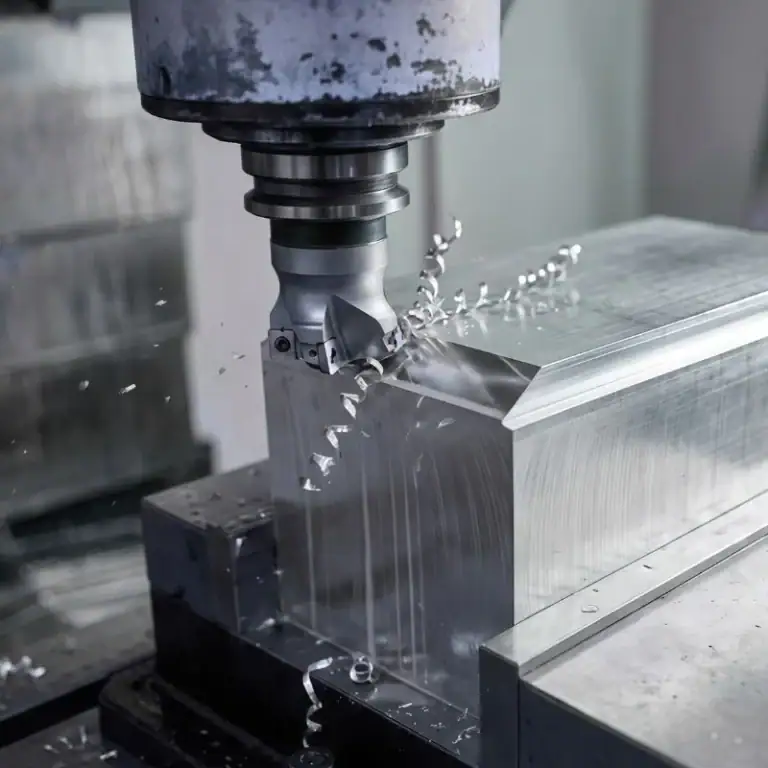
CNC turning is commonly used for rotationally symmetrical components such as shafts, pins, bushings, sleeves, and threaded parts.
By controlling spindle speed, feed rate, and cutting depth, manufacturers can produce external diameters, internal holes, end faces, grooves, and threads. CNC turning is particularly suitable for high-volume production of small precision shaft-type components because of its efficiency and repeatability.
CNC Milling
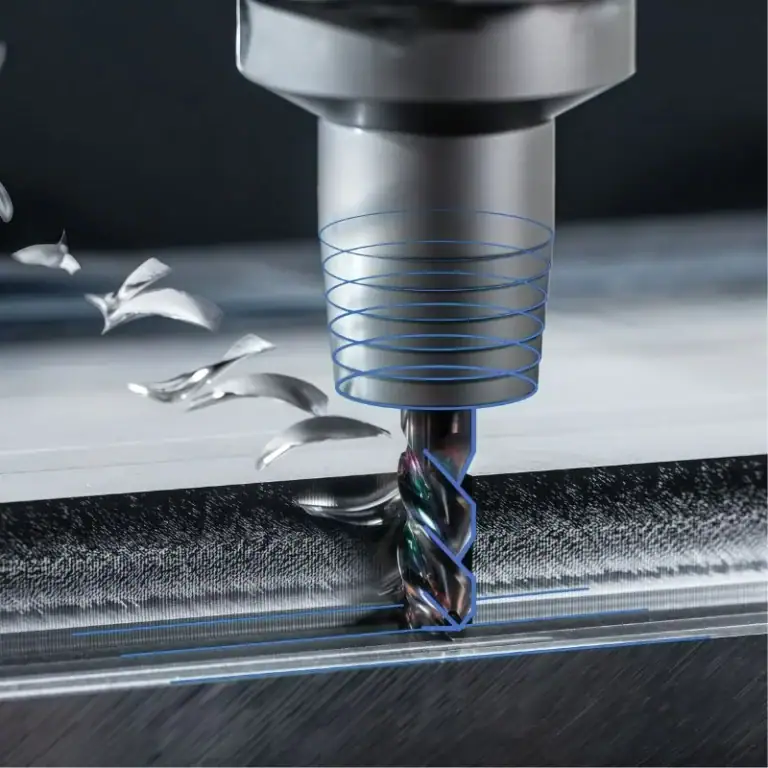
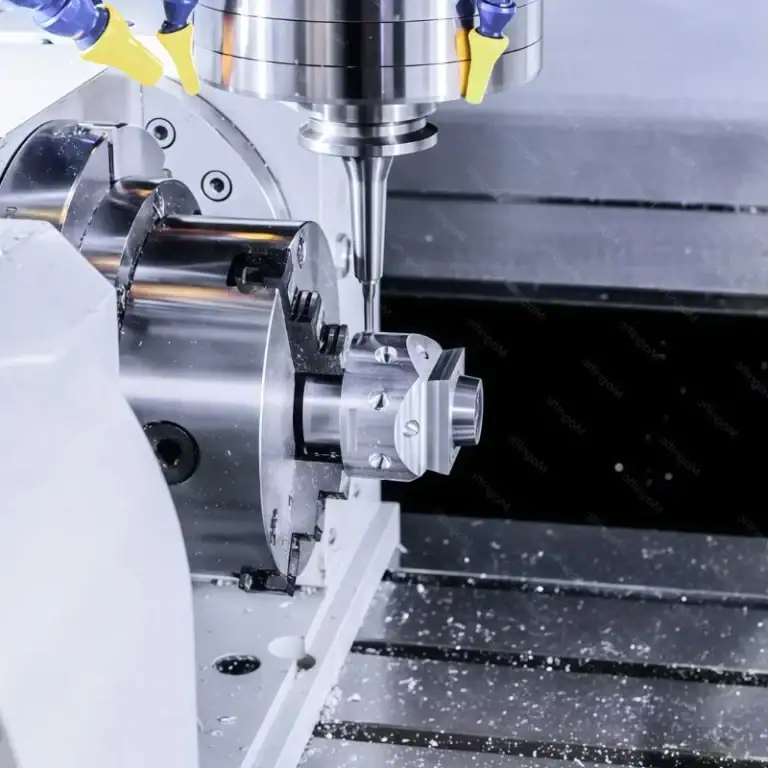
CNC milling is suitable for small components with holes, slots, steps, curved surfaces, or complex contours.
Three-axis, four-axis, and five-axis CNC machining centers can process features from multiple directions. For complex precision parts, multi-axis machining can reduce the need for repeated workpiece setups and help minimize positioning errors.
Precision Grinding
When a component requires extremely tight dimensional tolerances and a high-quality surface finish, precision grinding can be used after CNC roughing and finishing.
Grinding can further improve dimensional accuracy and surface quality, making it suitable for precision shafts, mating surfaces, and other high-precision metal components.
Micro-Machining
For extremely small components with complex features, micro-CNC machining and micro-hole machining may be required.
These processes place higher demands on machine resolution, tool size, spindle accuracy, and inspection equipment. The appropriate process should be selected according to the specific geometry and tolerance requirements.
How Can Machining Accuracy Be Controlled?
Influencing Factor
Common Problem
Control Method
Machine accuracy
Positioning errors and dimensional deviations
Calibrate and maintain equipment regularly
Tool condition
Dimensional changes and burrs
Inspect and replace tools when necessary
Fixturing
Workpiece movement or deformation
Use suitable fixtures and positioning methods
Cutting parameters
Vibration and thermal deformation
Optimize spindle speed, feed rate, and depth of cut
Machining temperature
Dimensional changes
Improve cooling and temperature control
Measurement method
Inspection errors
Use high-precision measuring equipment
Material properties
Deformation and residual stress
Select the appropriate machinin
What Are the Process Recommendations for Small Precision Parts?
Optimize Cutting Parameters
Small components usually have limited machining allowances, so cutting parameters should not simply follow standard settings for larger parts.
Parameters should be selected according to material hardness, tool diameter, cutting depth, and part geometry. During finishing, reducing cutting depth and cutting load can help minimize vibration and heat-related dimensional changes.
Minimize Repeated Setups
Every additional setup can introduce positioning errors. For parts with multiple precision features, manufacturers can try to complete more operations in a single setup or use multi-axis CNC machining to reduce repositioning.
Monitor Tool Wear
Tool wear can gradually change machining dimensions while increasing burrs and surface roughness. For batch production of small precision components, tool-life management should be implemented so that worn tools can be replaced before they affect product quality.
Use Appropriate Precision Inspection
After machining, critical dimensions should be inspected according to the engineering drawings. Common inspection equipment includes micrometers, calipers, height gauges, optical comparators, vision measuring systems, and coordinate measuring machines .
For very small dimensions and complex geometries, the measuring equipment should have sufficient accuracy for the required tolerance range.
Which Materials Are Suitable for Small Precision Metal Parts?
Aluminum Alloys
Aluminum alloys are lightweight and relatively easy to machine, making them suitable for small precision components used in electronics, aerospace, robotics, and other applications.
Stainless Steel
Stainless steel provides good strength and corrosion resistance and is commonly used for medical devices, food-processing equipment, and industrial machinery. However, tool wear and machining heat need to be carefully controlled.
Brass and Copper Alloys
Copper and brass offer good machinability and are often used for connectors, electronic components, fittings, and precision mechanical parts.
Titanium Alloys
Titanium alloys combine high strength with low density and are widely used in aerospace and medical applications. However, they are more difficult to machine and require careful control of tooling, cutting parameters, and machining temperature.
How Should You Choose a Supplier for Small Precision Metal Parts?
When selecting a CNC machining supplier, price should not be the only consideration. Machine capabilities, precision machining experience, inspection equipment, quality control systems, and production capacity are also important.
For complex small components, customers can provide CAD drawings or 3D models in advance. An experienced CNC machining team can evaluate the material, geometry, machining method, and tolerance requirements before production.
A professional supplier can also identify potential manufacturing problems early and optimize the machining process to improve accuracy, consistency, and production efficiency.
Although small precision metal parts may look simple, manufacturing them accurately requires careful control of machine tools, cutting tools, fixtures, machining parameters, and inspection methods.
Selecting the right process—such as CNC turning, CNC milling, precision grinding, or micro-machining—and controlling tool wear, reducing repeated setups, optimizing cutting parameters, and implementing accurate inspection can significantly improve dimensional accuracy and batch consistency.
For small metal components used in medical devices, aerospace, electronics, automotive systems, robotics, and precision machinery, choosing a CNC machining supplier with strong precision manufacturing capabilities can help ensure stable quality, reliable tolerances, and consistent production results.
Author
Galen Director and Founder
Committed to ensuring we provide the best possible service in the manufacturing industry.
Glass filled nylon is a reinforced engineering plastic that combines the versatility of nylon with the strength and stiffness of glass fibers. Compared with unfilled nylon, it offers better resistance
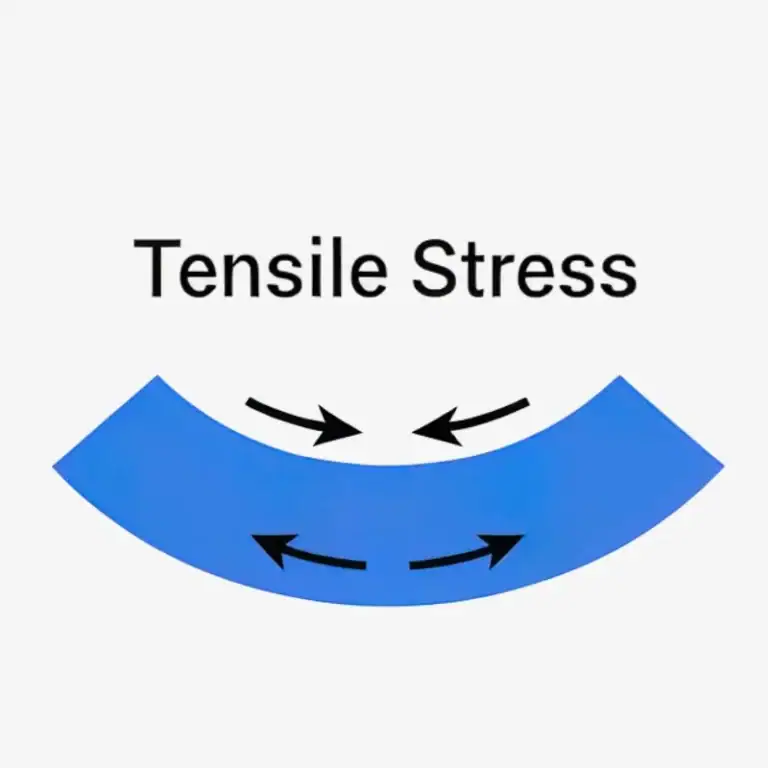
Tensile stress is the internal force per unit area produced when a material is pulled by an external load. It is calculated by dividing the applied tensile force by the
CNC machining programming connects a digital part design with the movements of a CNC machine. A well-built program defines where the cutting tool moves, which tools are used, how fast
Vertical and horizontal milling use the same basic cutting principle, but spindle orientation changes how the tool reaches the workpiece, clears chips, and handles different part geometries. This guide explains
Chamfer machining is the process of removing material from an edge, hole, or contour to create a controlled angled surface. In CNC manufacturing, chamfers are commonly used to remove sharp
Custom machining is used when a part cannot be sourced as a standard component or when its geometry, material, tolerance, or function must be tailored to a specific project. Instead
Undercut machining creates recessed, hidden, or back-facing features that a standard straight-shank cutter cannot reach from the primary machining direction. The main challenge is usually not removing the material, but
Semiconductor equipment depends on far more than electronics and process technology. Behind every wafer-handling system, test station, inspection tool, and process chamber is a network of precision-machined parts, structural components,
AI CNC machining combines traditional computer numerical control with artificial intelligence, machine learning, manufacturing data, sensors, and intelligent CAM software. Instead of replacing CNC technology, AI adds a decision-support layer
Robotic process automation is a software-based automation technology that uses digital bots to complete repetitive, rules-based tasks normally performed by people on computers. RPA bots can enter and transfer data,
Computer numerical control machining is an automated manufacturing process in which programmed computer instructions control machine tools to remove material and produce precise parts. CNC technology can control tool movement,
Semiconductor manufacturing is the process of turning high-purity semiconductor materials into functional chips through a sequence of wafer preparation, thin-film formation, photolithography, etching, doping, metallization, testing, dicing, packaging, and final