POM (polyoxymethylene) is a common engineering plastic with good hardness, wear resistance, dimensional stability, and machinability. It is commonly used to machine gears, bushings, sliders, guide components, washers, positioning parts, and mechanical structural components. During CNC machining of POM, in addition to properly selecting the tool, spindle speed, feed rate, and cutting depth, the way compressed air is used can also affect machining results. For plastic materials such as POM, compressed air is generally not used for forced cooling in the traditional sense. Instead, it is mainly used to remove chips promptly, reduce repeated cutting of chips, help dissipate heat from the machining area, and keep the tool and workpiece surfaces clean. POM has significantly different thermal conductivity from metals. If the heat generated during cutting cannot be removed promptly, it can easily accumulate around the tool, chips, and localized areas of the workpiece. When chips accumulate in machining grooves, holes, or around the tool, the tool may cut the already-generated chips again, causing scratches, burrs, and uneven patterns on the machined surface.
Chip evacuation is particularly important for deep grooves, blind holes, narrow grooves, and continuous milling areas. Using an appropriate amount of compressed air can blow chips away from the machining position in time, allowing the tool to maintain a relatively clean cutting condition. However, more compressed air is not always better for POM CNC machining. Excessively strong airflow may scatter large amounts of lightweight plastic chips inside the machine tool and around the machining area, and may also affect the working environment. For precision parts, the appropriate airflow needs to be determined based on the tool size, cutting parameters, part structure, and chip characteristics. The key to using compressed air properly is to remove chips from the cutting area and reduce the repeated effects of heat and debris during machining.
Why Is Compressed Air Suitable for POM CNC Machining?
Helps Remove Plastic Chips Promptly
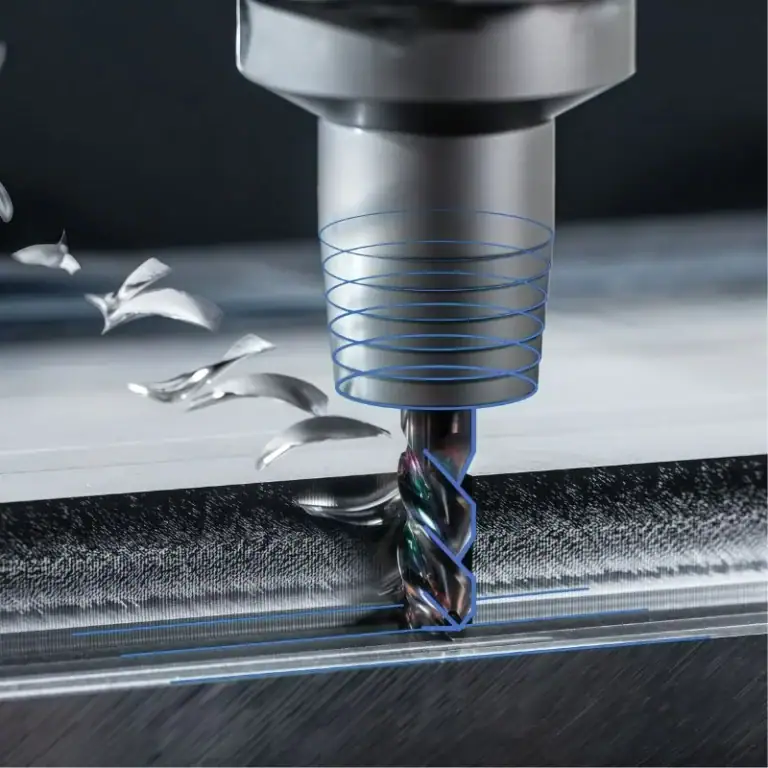
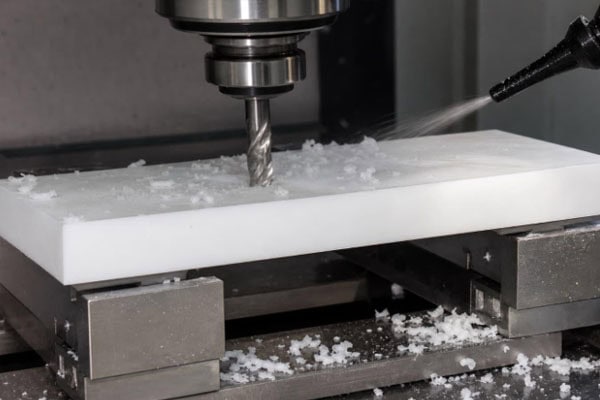
The chips generated during POM machining are usually lightweight and can easily remain between the tool and workpiece during continuous milling. If the chips are not removed promptly, the tool may contact these chips again, resulting in repeated cutting. When compressed air is directed toward the machining area through a nozzle, it can remove the generated chips in time, especially during groove machining, hole machining, and complex contour machining. For deep-groove and narrow-groove structures, properly arranging the airflow direction can make it easier for chips to exit from confined areas.
Reduces Scratches on Machined Surfaces Caused by Chips
The machined surface of POM generally needs to maintain a certain degree of flatness. If chips accumulate near the tool path, the tool may carry the chips along the workpiece surface during movement, leaving small scratches. Continuous and appropriate compressed airflow can keep chips away from surfaces that have already been machined. For POM parts with high appearance requirements, especially precision sliders, positioning surfaces, and mating surfaces, this chip evacuation function is relatively important.
Helps Remove Cutting Heat
Compressed air cannot replace professional cooling methods, but high-speed airflow can carry away part of the heat generated in the cutting area. When the tool continuously machines POM material, airflow can help reduce localized heat accumulation on the tool and workpiece surfaces. For POM parts undergoing relatively long periods of continuous machining, properly using compressed air can reduce frictional heat between chips and the tool. This helps reduce the possibility of dimensional changes or surface abnormalities caused by localized temperature increases in the plastic.
What Are the Functions of Compressed Air in CNC POM Machining?
The main functions of compressed air in POM machining are chip evacuation and auxiliary heat dissipation. Its effectiveness may vary depending on the part structure and machining operation.
Chip Evacuation Directly Affects Machining Quality
If POM chips remain in the machining area continuously, the tool may be unable to maintain stable cutting. Especially when milling deep grooves, chips may become compressed at the bottom of the groove and repeatedly rub against the surface as the tool moves. Proper compressed air can blow chips out from the bottom of grooves, hole openings, and areas around the tool, allowing newly generated chips to leave the machining area promptly. This not only improves chip evacuation but also reduces contact between chips and the workpiece surface.
Helps Reduce Burrs and Melting
During POM machining, if the tool is worn or excessive cutting heat accumulates, burrs, stringing, or even localized softening may occur along the material edges. Compressed air can help reduce heat in the machining area and minimize repeated cutting of chips, which can improve edge quality to a certain extent. However, it should be noted that burrs are not caused entirely by temperature. Tool sharpness, tool geometry, feed rate, cutting depth, and machining direction can all affect burr formation. Compressed air is an auxiliary measure and cannot replace appropriate tools and machining parameters.
Helps Keep the Tool Clean
POM chips may adhere to the cutting edge or around the tool holder. As chips continue to accumulate, the effective cutting condition of the tool may be affected. Compressed air can continuously remove lightweight chips around the tool, keeping it relatively clean. For continuous machining and machines with automatic tool changing, keeping the machining area clean can also help reduce the possibility of chips entering fixtures and other moving components.
What Should Be Considered When Using Compressed Air to Machine POM?
Although compressed air provides good chip evacuation, it still needs to be adjusted according to the POM material and machining conditions. Airflow direction, pressure, and nozzle position can all affect the final result.
The Nozzle Direction Needs to Be Properly Adjusted
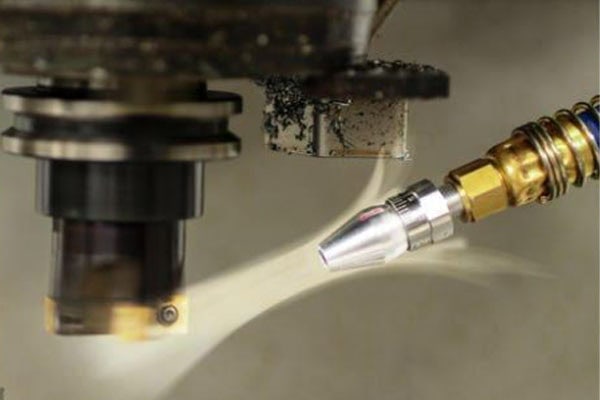
The nozzle should not simply blow directly toward the center of the tool. Instead, its position should be adjusted according to the tool rotation direction, machining position, and chip movement direction. For deep-groove machining, the airflow can be directed into the groove to carry chips out through the groove opening. For flat-surface machining, the airflow can direct chips toward an area away from the machined surface. If the nozzle direction is inappropriate, chips may be blown back into the machining area, reducing chip evacuation effectiveness.
Airflow Pressure Should Not Be Excessively High
POM chips are relatively lightweight, so very strong airflow is usually not required to remove them. Excessive air pressure may cause chips to scatter widely, increasing cleaning work and potentially allowing small chips to enter machine tool guideways, fixtures, and other components. The production site should select an appropriate airflow intensity according to the tool size, cutting speed, and chip characteristics. The main criterion should be whether the chips can be removed promptly rather than simply pursuing higher air pressure.
It Needs to Be Used Together with Appropriate Tools and Parameters
If the tool is already severely worn, increasing compressed air cannot fundamentally improve the machined surface. POM machining requires sharp tools and reasonable control of spindle speed, feed rate, and cutting depth.
Sharp tool: Reduces material compression and lowers cutting resistance.
Reasonable parameters: Reduce unnecessary cutting heat and vibration.
Smooth chip evacuation: Prevents chips from repeatedly entering the cutting area.
Appropriate airflow: Helps chips leave the machining position promptly.
Frequently Asked Questions
Q: Is Compressed Air Necessary for CNC Machining POM?
Not necessarily. Whether compressed air is required depends on the part structure, machining method, chip characteristics, and equipment conditions. For simple flat-surface machining, chip evacuation may not be a major issue. For deep grooves, hole machining, and complex contour machining, compressed air is generally more helpful.
Q: Can Compressed Air Replace Cutting Fluid?
The two cannot simply be considered equivalent. Compressed air is mainly used for chip evacuation and auxiliary heat dissipation, while cutting fluid also provides functions such as lubrication and cooling. Whether cutting fluid is required for POM machining should be determined according to the material grade, tool type, and part requirements. For many ordinary POM CNC machining applications, dry machining combined with compressed-air chip evacuation can meet the requirements.
Q: Is POM Machining Better When the Compressed Airflow Is Stronger?
No. Excessive airflow does not automatically improve machining accuracy. Instead, it may cause chips to scatter and enter the interior of the equipment.
In conclusion
When CNC machining POM, the main function of compressed air is to help remove chips and assist in reducing localized heat in the machining area. POM chips are relatively lightweight and can easily remain around the tool during continuous milling, deep-groove machining, and hole machining. If chips are not removed promptly, they may be carried back into the cutting area by the tool, causing friction against already machined surfaces while increasing contact between the tool and chips. Proper use of compressed air can make chips leave the workpiece and tool more quickly, thereby improving the cleanliness of the machining area. For POM plastic parts, compressed air also provides a certain degree of auxiliary heat dissipation. Airflow can carry away some cutting heat and reduce the continuous accumulation of heat from chips and the tool in localized areas. However, it should be clear that compressed air is not the sole factor determining machining quality. Tool sharpness, cutting parameters, clamping stability, and the chip evacuation characteristics of the part structure all affect the final result.
During production, the appropriate nozzle position and airflow direction should be selected according to the structure of the POM part. Simple flat-surface machining can use a basic chip evacuation method, while deep grooves, narrow grooves, deep holes, and complex contours require greater attention to whether the airflow can actually reach the cutting area. Air pressure should also not be increased blindly; it is sufficient to use enough airflow to remove chips promptly. For precision POM parts, machining results should also be evaluated through dimensional inspection and surface quality inspection. Therefore, compressed air is a practical auxiliary machining method in CNC POM machining. Proper use can improve chip evacuation, reduce repeated cutting of chips, assist heat dissipation, and keep the tool and workpiece area clean. When compressed air is used together with sharp tools, appropriate cutting parameters, and stable clamping, it is more conducive to achieving POM plastic machined parts with stable dimensions and smooth surfaces.