Titanium alloys are widely used in aerospace, medical devices, automotive, and high-end equipment manufacturing due to their high strength, low density, and excellent heat and corrosion resistance. However, these properties also make them one of the more difficult materials to machine in CNC milling. During high-speed milling, tools are prone to chipping, accelerated wear, and shortened tool life, which not only reduces machining efficiency but may also lead to dimensional deviations and poor surface quality. To effectively control chipping, systematic optimization is required in tooling, cutting parameters, cooling methods, and machining strategies.
Why Chipping Occurs Easily in High-Speed Milling of Titanium Alloys
Titanium alloy machining is challenging because cutting tools are subjected to complex thermo-mechanical coupling under high-speed conditions.
Cutting Temperature Rises Rapidly
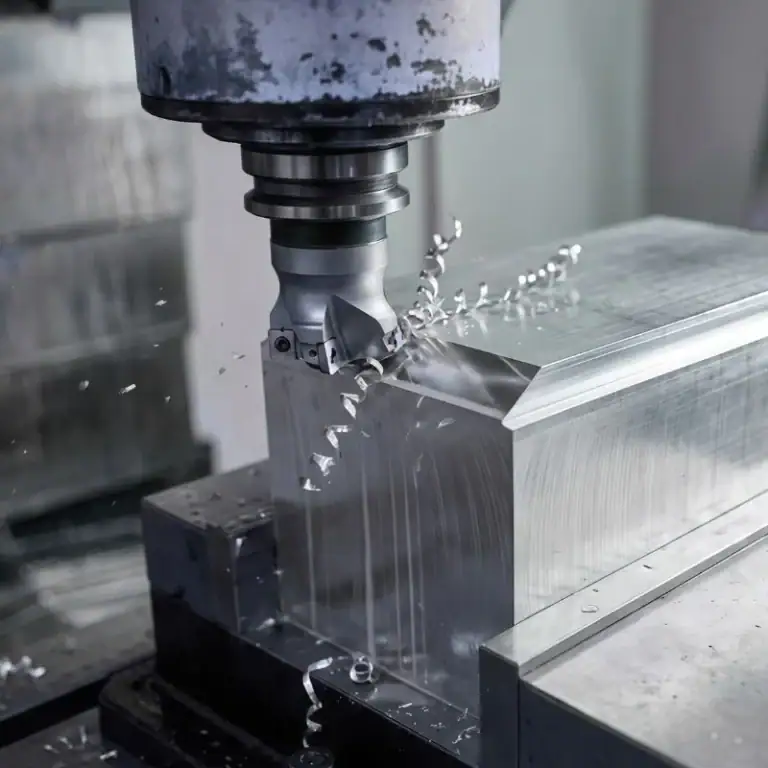
Titanium alloys have poor thermal conductivity, causing a large amount of heat generated during cutting to concentrate in the tool–workpiece contact zone, keeping the cutting edge in a high-temperature environment for extended periods.
- Reduce unnecessary heat accumulation to prevent tool edge strength degradation due to overheating.
- Adjust cutting speed appropriately to keep the tool operating within a more stable temperature range.
Use efficient cooling to remove heat in time and reduce thermal shock on the tool.
Cutting Force Fluctuations Cause Edge Impact
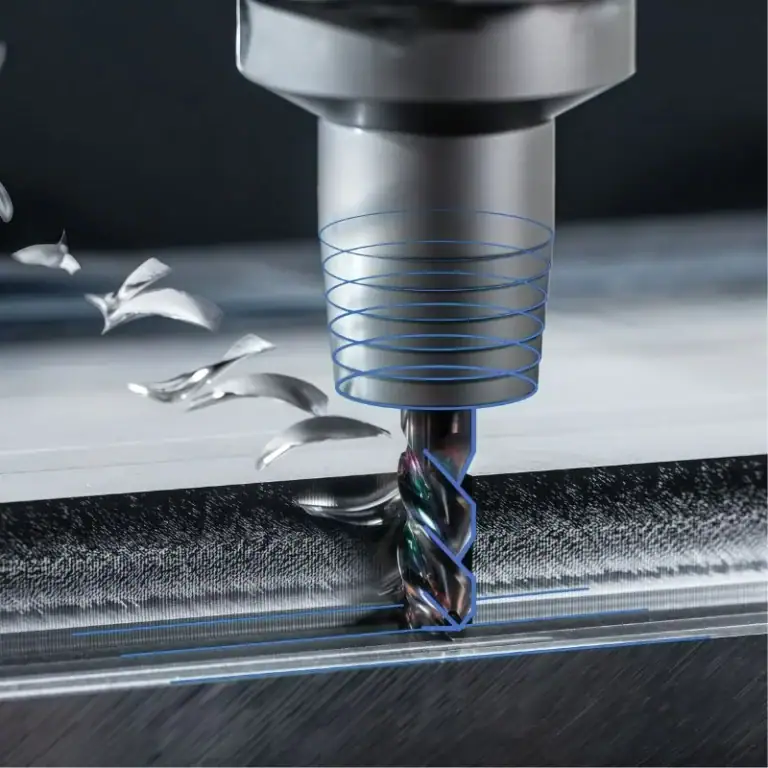
Titanium alloys have high strength and generate significant cutting resistance during machining. This is especially evident when the tool enters or exits the material or machines complex surfaces, where sudden impact loads are likely to occur.
- Avoid sudden increases in cutting load to reduce impact on the cutting edge.
- Optimize tool entry strategy to ensure smoother and more continuous cutting.
- Maintain stable chip thickness to prevent localized overload that may cause chipping.
The key to high-speed milling of titanium alloys is not simply increasing spindle speed, but ensuring the tool remains under stable loading conditions at all times.
Selecting the Right Tool to Reduce Chipping Risk
Tool selection directly affects machining stability. Improper tooling configuration can significantly shorten tool life.
Prioritize High-Performance Carbide Tools
Titanium alloy machining requires high tool rigidity, wear resistance, and heat resistance. Therefore, appropriate tools should be selected based on material grade and machining conditions.
- Use tool substrates with higher toughness to improve resistance to chipping.
- Select coatings suitable for titanium machining to enhance wear resistance and high-temperature performance.
Configure tool specifications appropriately for roughing, semi-finishing, and finishing stages.
Optimize Tool Geometry
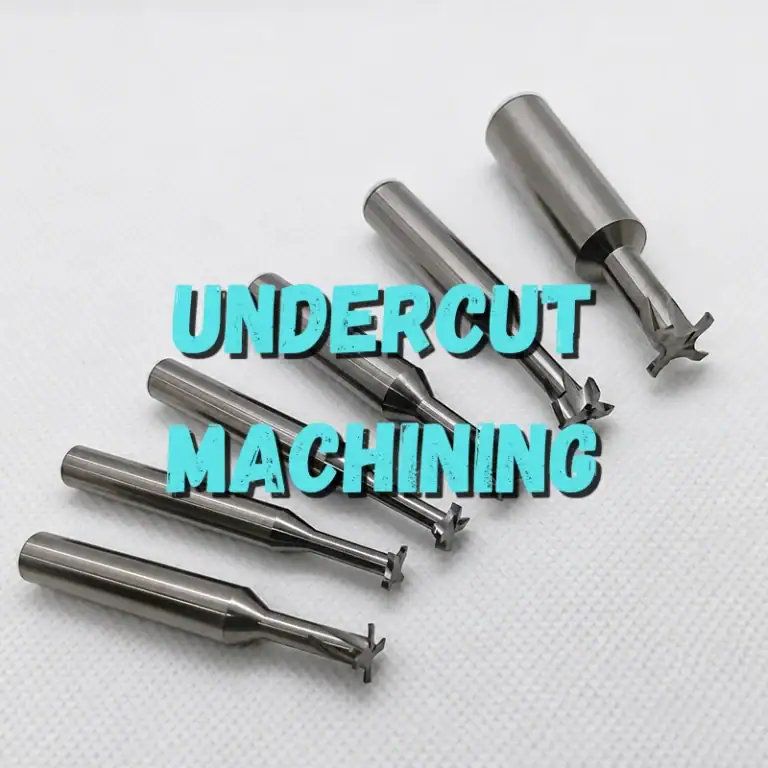
Tool edge design must balance sharpness and impact resistance. Proper adjustment of rake and relief angles helps reduce cutting resistance and improve chip evacuation. Optimizing helix angle design ensures a more continuous and stable cutting process. Tool overhang should be controlled according to machining depth to avoid vibration and deflection caused by excessive extension. Ultimately, a well-designed tool structure distributes cutting forces more evenly, reducing abnormal edge damage.
Optimize High-Speed Milling Parameters and Cooling Methods
Even with high-quality tools, improper parameter settings can still lead to chipping.
Proper Control of Cutting Speed and Feed
High-speed machining parameters should be determined based on tool diameter, number of flutes, material properties, and machine tool capability, rather than blindly pursuing high spindle speeds.
- Appropriately reduce excessive cutting speed to minimize continuous heat buildup.
- Increase feed per tooth to reduce ineffective friction between tool and workpiece.
- Control radial and axial depth of cut to maintain stable cutting loads.
Proper parameter matching helps achieve a better balance between efficiency, tool life, and surface quality.
Enhance Cooling and Chip Evacuation
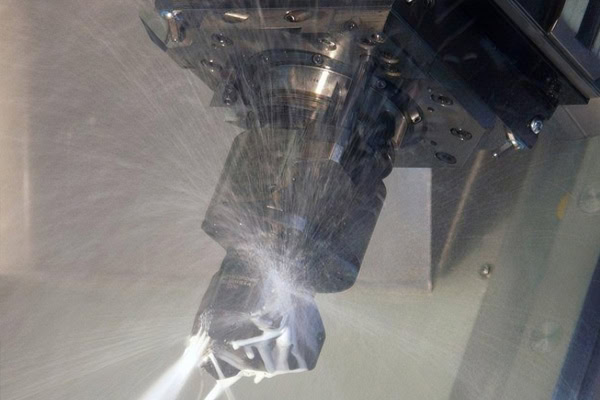
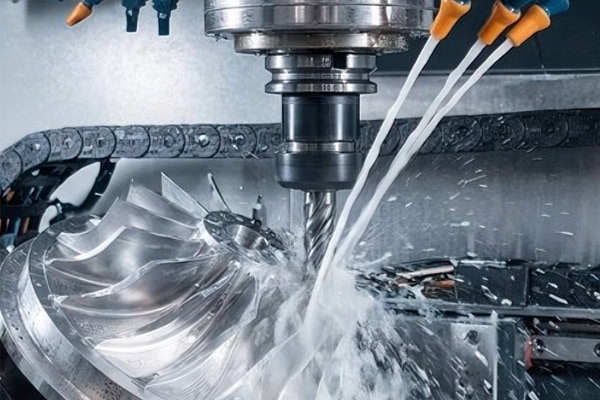
Cooling and chip removal conditions significantly affect tool life. It is necessary to ensure that coolant fully reaches the cutting zone, effectively covers the tool–workpiece contact area, and promptly removes hot chips to avoid secondary cutting wear. In deep cavity or complex structures, high-pressure cooling can be used to improve heat dissipation. Stable cooling and chip evacuation conditions significantly reduce heat accumulation and improve machining reliability.
Reducing Chipping Through Machining Strategy
In addition to tooling and parameters, toolpath planning also affects tool loading conditions.
Avoid Sudden Changes in Cutting Load
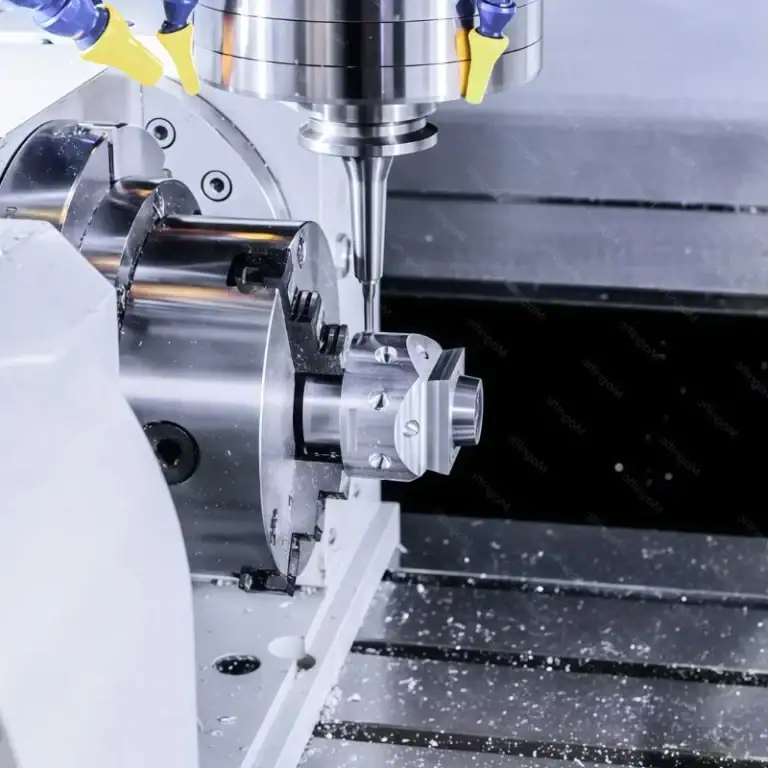
In complex titanium alloy part machining, tool entry and exit impacts should be minimized.
- Use smooth entry and exit strategies to reduce instantaneous cutting shock.
- Apply dynamic milling strategies to maintain uniform cutting loads.
- Plan machining sequences for deep cavities and thin-walled structures properly to avoid localized overload.
Optimized toolpaths significantly improve machining stability and reduce chipping risk.
Establish Tool Condition Monitoring
High-speed machining is sensitive to tool condition changes. Timely monitoring helps prevent minor issues from developing into severe chipping.
- Regularly inspect cutting edges to detect early wear and micro-chipping.
- Establish tool life management standards based on machining time and material removal volume.
- Implement in-process inspection for critical parts to prevent continued machining with abnormal tools.
Systematic management helps improve overall stability in CNC milling of titanium alloys.
Conclusion
Chipping in high-speed milling of titanium alloys cannot be solved simply by reducing spindle speed. It requires comprehensive optimization of tool selection, cutting parameters, cooling and chip evacuation, and toolpath strategies. Only by ensuring that the tool operates under appropriate load and temperature conditions can a balance be achieved among machining efficiency, dimensional accuracy, and tool life. TiRapid can provide customized CNC milling solutions based on titanium alloy part structures and precision requirements, helping customers reduce machining risks and improve mass production stability.