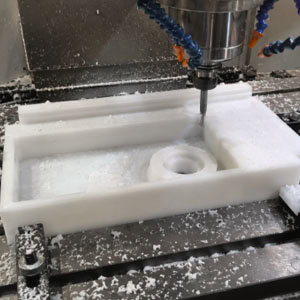
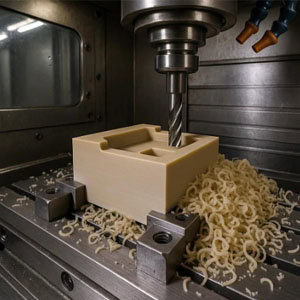
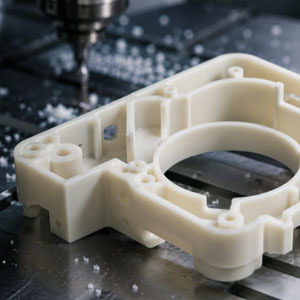
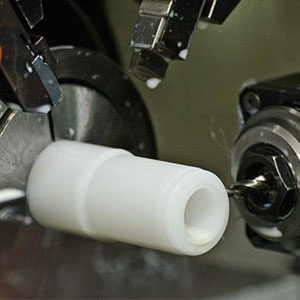
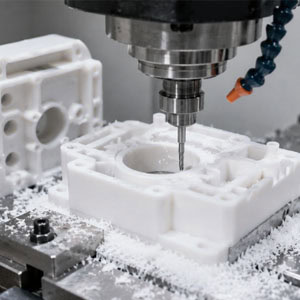
CNC finishing of plastics is an important machining stage used in the production of plastic parts to improve dimensional accuracy, surface quality, and edge condition. After rough machining, a plastic
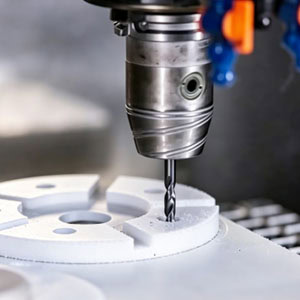
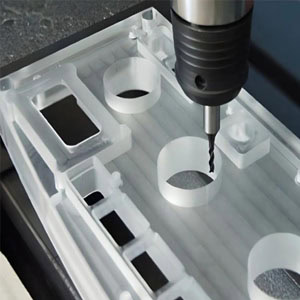
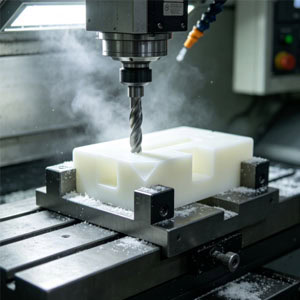
Drilling in CNC machining of plastic parts can easily result in dimensional deviations, burrs around the hole opening, breakout at the exit, rough hole walls, material melting, and chip blockage.
CNC plastic machining is commonly used for product prototyping, small-batch parts, equipment components, and precision structural parts. Compared with injection molding, CNC machining can directly cut plastic sheets, rods, or
HDPE (High-Density Polyethylene) is a common thermoplastic with good impact resistance, chemical resistance, and low water absorption. It is therefore commonly used for mechanical equipment components, wear-resistant parts, guides, backing
Not having a 3D drawing does not mean that plastic parts cannot be CNC machined. For CNC machining, although a 3D model can visually display the three-dimensional structure of a
CNC machining of plastic parts involves multiple stages, including material selection, machining accuracy, equipment capabilities, and production experience. Different manufacturers vary in machining quality, process control, inspection methods, and service
Plastics are different from metal materials in terms of hardness, toughness, thermal conductivity, and thermal expansion characteristics. When the same machining parameters are applied to different plastics, the final results
When machining plastic parts with CNC, chamfering is a common finishing process mainly used to remove sharp edges from parts, improve the overall appearance of products, and reduce the risk
During CNC plastic machining, the feed rate is one of the key parameters affecting machining quality, production efficiency, and dimensional stability of parts. The feed rate refers to the speed
After plastic parts are processed by CNC machining, they cannot simply be removed from the machine and immediately subjected to final dimensional measurement. During cutting, many engineering plastics are affected
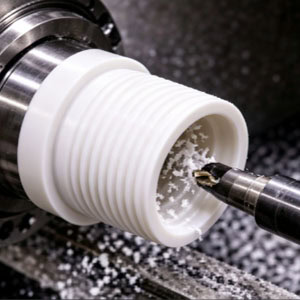
Plastic thread machining is a relatively common precision machining process in CNC machining. It is widely used in mechanical parts, electronic equipment, medical devices, automotive components, and industrial equipment. Compared
White plastic parts may develop yellowing, localized yellow discoloration, or differences in color between the machined area and the original material after CNC machining, milling, turning, or drilling. For white
Scroll to Top
Your 24 hour quote
Send us a message if you have any questions or request a quote. We will be back to you within 1-2 hours!