In the manufacturing industry, many parts may not be large in size, but they have very high requirements for material performance and machining accuracy. Internal equipment components such as shafts, transmission parts, structural supports, and wear-resistant components often need to withstand pressure, friction, and complex working environments during long-term operation. Steel is one of the most widely used materials in precision machining, but different types of steel vary greatly in hardness, toughness, wear resistance, and machinability. Choosing the right steel material directly affects machining efficiency, part quality, and service life.
Why Is Steel Selection Important in Precision Machining?
In actual part manufacturing, steel selection is not simply based on price or strength. Different parts perform different functions and have different material requirements. For example, high-speed rotating components require better fatigue resistance, while parts exposed to continuous friction need stronger wear resistance. During the early project planning stage, many customers focus only on whether the part can meet dimensional requirements but overlook how material characteristics affect machining performance. When the steel properties do not match machining requirements, problems such as faster tool wear, lower machining efficiency, and difficulty controlling dimensions may occur. In precision machining, steel selection needs to be evaluated based on part application, machining method, and actual operating environment.
Steel Properties Affect Machining Stability
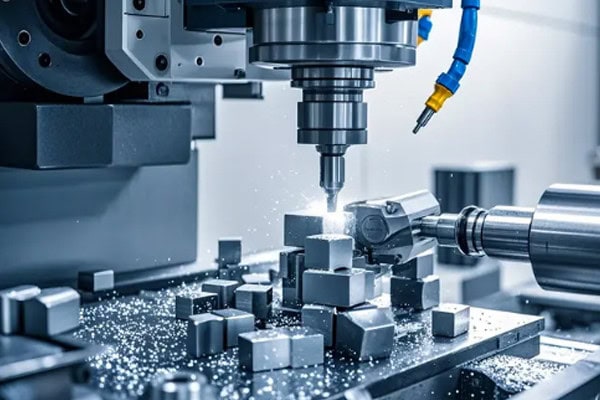
The internal structure and mechanical properties of steel directly affect machining performance. Different steels experience different cutting forces, heat generation, and tool wear during machining. Some steels have higher hardness and better wear resistance but require more advanced tools and machining control. Other steels may offer better machinability but may not meet the requirements of high-load applications.
Steel properties mainly affect the following aspects during precision machining:
- Hardness affects tool wear rate and machining efficiency.
- Toughness affects machining stability.
- Material structure influences surface finish quality.
- Heat treatment conditions affect final dimensional changes.
Proper matching of steel properties can reduce unexpected issues during machining and improve manufacturing stability. For high-precision components, material selection not only determines product performance but also affects the overall efficiency of the machining process.
Different Parts Require Different Steel Materials
Industrial equipment contains a wide variety of components, and each part faces different working conditions. Some parts need to withstand continuous friction, some need to resist impact loads, while others require excellent dimensional stability. Using the same steel material for every component may lead to unnecessary performance costs or increase machining difficulties.
When selecting steel materials, manufacturers usually consider:
- Whether the part is exposed to long-term pressure.
- Whether the working environment contains corrosive factors.
- Whether wear resistance is required during operation.
Selecting steel based on actual part requirements allows material performance and machining requirements to match better. Precision machining is not only about producing a part but also ensuring that it performs reliably in real equipment applications.
Steel Machinability Affects Manufacturing Costs
Besides final performance, the machinability of steel also has a significant impact on production costs. Some materials have excellent strength but require slower machining speeds, higher-performance tools, and more process adjustments. Without considering material characteristics in advance, production time and manufacturing costs may increase.
Steel machinability is mainly reflected in:
- Whether the material is easy to cut.
- Whether tool consumption can be controlled.
- Whether the required surface finish can be achieved.
- Whether the material is suitable for mass production.
Choosing steel with suitable machining performance can reduce process adjustments, improve production efficiency, and make precision machining more stable.
What Steel Materials Are Commonly Used in Precision Machining?
Different steels have different application areas in precision machining. Some materials are mainly used for high-strength mechanical components, some are suitable for wear-resistant parts, and others are better suited for products requiring high surface quality. There is no single steel material that fits every application. The right choice depends on part structure, operating environment, and machining requirements. The following steel types are commonly used in industrial manufacturing.
Stainless Steel for Corrosion-Resistant Parts
Stainless steel is one of the most widely used materials in precision machining. It is commonly found in medical equipment, food machinery, automation equipment, and industrial structural components. Its main advantages include good corrosion resistance and stable mechanical properties, making it suitable for parts used in demanding environments. However, different stainless steel grades have different machining characteristics, and some materials may experience work hardening during machining, requiring proper process control.
Common characteristics of stainless steel include:
- Strong corrosion resistance.
- Stable material performance.
- Suitable for complex industrial environments.
- Good surface treatment performance.
During stainless steel precision machining, tool condition and cutting methods need careful control. A proper machining strategy can reduce surface defects, improve dimensional consistency, and help stainless steel components achieve long-term reliability.
Alloy Steel for High-Strength Components
Alloy steel is formed by adding alloying elements to conventional steel. Compared with standard steel, it offers better strength, toughness, and fatigue resistance. Many critical mechanical components, such as drive shafts, connecting parts, and load-bearing structures, are manufactured using alloy steel.
Main advantages of alloy steel include:
- Higher load-bearing capability.
- Better impact resistance.
- Significant performance improvement after heat treatment.
- Suitable for long-term heavy-load environments.
Because alloy steel usually has higher strength, machining requires careful tool selection and parameter control. With proper precision machining processes, alloy steel components can achieve both high strength and dimensional accuracy.
Tool Steel for Wear-Resistant Components
Tool steel is known for its high hardness and excellent wear resistance. It is commonly used for molds, stamping components, and high-wear parts. These materials can withstand high pressure and friction, making them suitable for components that operate for long periods.
When machining tool steel, attention should be paid to:
- Selecting wear-resistant cutting tools.
- Controlling temperature during machining.
- Planning machining sequences properly.
- Reducing dimensional changes during processing.
Although tool steel is more difficult to machine, proper process planning can produce precision components with longer service life, making it widely used in mold manufacturing and industrial equipment.
Carbon Steel for Conventional Mechanical Parts
Carbon steel is a widely used industrial material with moderate cost and good machinability. Many common mechanical parts, connection components, and equipment structures are manufactured using carbon steel.
Main characteristics of carbon steel include:
- Relatively lower machining difficulty.
- Stable material supply.
- Suitable for various machining methods.
- Easy manufacturing cost control.
Although carbon steel does not provide the same performance level as some alloy materials, it can still meet practical requirements for many conventional precision machining parts through proper design and processing.
What Should Be Considered When Machining Different Steel Materials?
Different steel types present different challenges during machining. In high-precision part manufacturing, material characteristics directly influence machining methods. If machining plans are not adjusted according to steel properties, problems such as shorter tool life, poor surface finish, and unstable dimensions may occur. Before production begins, manufacturers need to analyze material characteristics and develop suitable machining strategies to ensure proper coordination between equipment, tools, and processes.
Adjust Machining Parameters Based on Steel Hardness
Steel hardness affects cutting forces during machining. Although harder materials usually provide better wear resistance, they also increase tool load during processing. Improper machining parameters may reduce efficiency and affect surface quality.
Parameter adjustments usually include:
- Controlling cutting speed.
- Adjusting feed rate.
- Planning cutting depth properly.
Proper machining parameter settings can reduce cutting pressure, improve tool stability, and make the machining process more reliable.
Match Cutting Tools with Material Characteristics
The relationship between tools and steel materials directly affects machining results. Different steels require different cutting tools. If unsuitable tools are selected, even high-precision equipment may not achieve the desired machining performance.
Tool selection should consider:
- Whether the tool material is suitable for steel machining.
- Whether wear resistance meets requirements.
- Whether tool dimensions match part structures.
- Whether tool conditions remain stable.
Proper tool selection reduces abnormal wear, improves machining efficiency, and enhances surface quality.
Consider Machining Changes After Heat Treatment
Many steel materials undergo heat treatment to improve hardness and strength. However, heat treatment changes material conditions and may increase machining difficulty. If the process is not properly planned, dimensional deviations or additional adjustments may occur.
Machining considerations include:
- Confirming the material heat treatment condition.
- Planning machining sequences properly.
- Leaving appropriate machining allowance.
Proper planning of heat treatment and machining processes can reduce dimensional changes and improve the stability of precision-machined components.
How Can Steel Precision Machining Quality Be Improved?
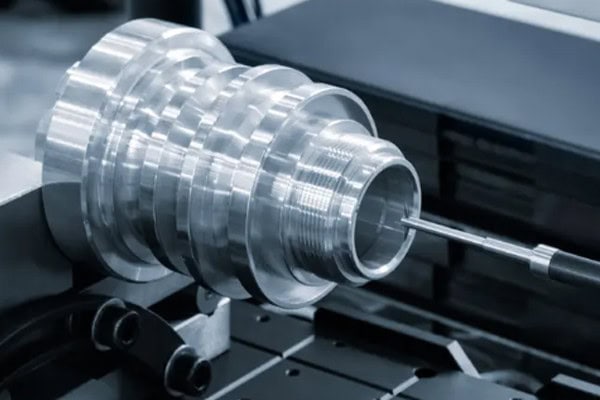
The quality of steel precision machining depends not only on material selection but also on equipment condition, process planning, and inspection procedures. Many parts can meet requirements in a single machining operation, but maintaining stable quality during batch production is the real challenge. Through improved process management and quality control, manufacturers can reduce production fluctuations and maintain better performance in dimensional accuracy, surface finish, and service life.
Conduct Detailed Analysis Before Machining
Before production starts, steel properties and part structures should be carefully analyzed to identify possible machining challenges in advance.
Main considerations include:
- Confirming material performance requirements.
- Analyzing part structure characteristics.
- Developing reasonable machining routes.
Proper preparation reduces adjustments during production and improves overall manufacturing efficiency.
Strengthen Process Control During Machining
Process management directly affects final part quality. By continuously monitoring equipment and machining conditions, potential problems can be identified and corrected in time.
Control measures include:
- Checking tool wear conditions.
- Monitoring dimensional changes.
- Optimizing machining parameters.
- Maintaining stable equipment operation.
Effective process control improves part consistency and makes precision machining results more reliable.
Perform Strict Inspection After Machining
After machining is completed, professional inspection is required to confirm whether parts meet design specifications. For high-precision steel components, even small errors may affect assembly performance.
Inspection usually includes:
- Dimensional accuracy testing.
- Surface quality inspection.
- Critical position verification.
- Batch consistency confirmation.
Strict inspection helps ensure product quality and allows final components to achieve stable performance.
Steel materials commonly used in precision machining include stainless steel, alloy steel, tool steel, and carbon steel. Each material has its own advantages and suitable application areas. During actual manufacturing, selecting the right steel material and combining it with suitable tools, equipment, machining processes, and inspection methods plays an important role in achieving stable precision and long-term performance. For high-demand components, consistent machining capability and effective quality management directly influence the final product results. Tirapid specializes in precision machining services, providing high-precision steel part machining solutions to help companies achieve stable, reliable, and high-quality customized manufacturing.