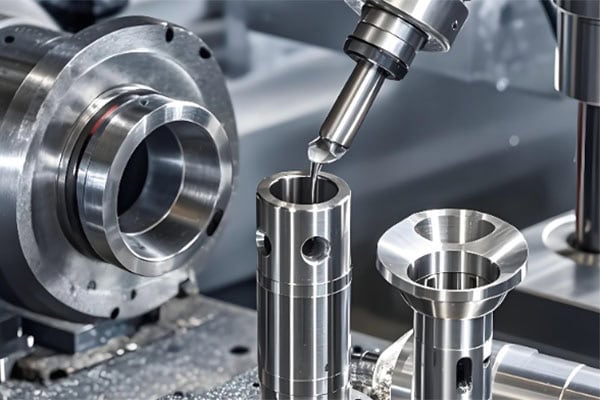
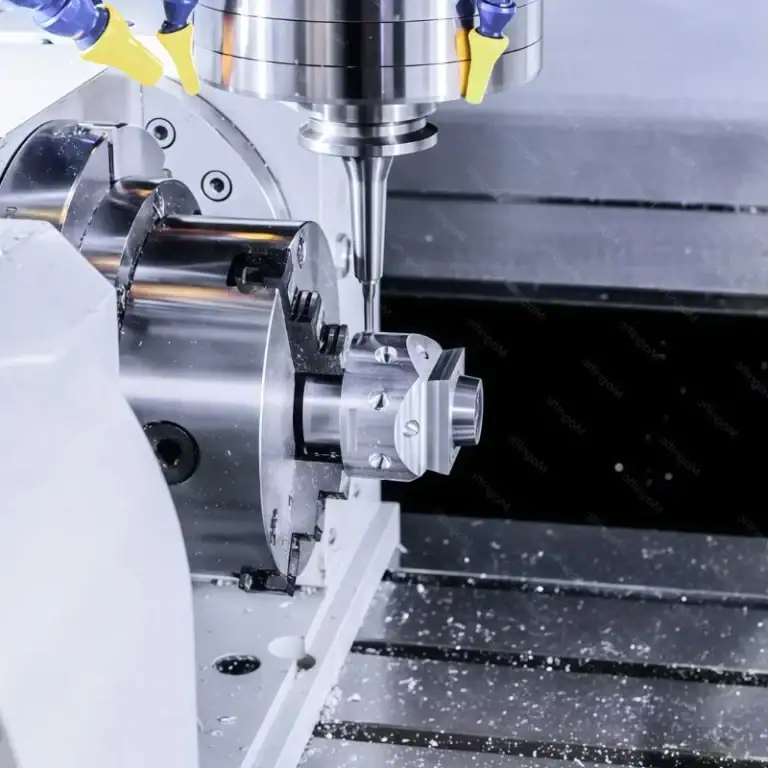
Deep-hole metal machining is an important process in precision manufacturing and is widely used for automotive components, hydraulic equipment, molds, aerospace parts, medical devices, and industrial machinery. Compared with conventional hole machining, deep holes have a relatively large depth-to-diameter ratio, making them more difficult to manufacture accurately.
During deep-hole machining, manufacturers may encounter problems such as poor chip evacuation, tool deflection, excessive heat, rough hole walls, dimensional deviations, and tool breakage. For metal parts that require high accuracy, good concentricity, and excellent surface quality, choosing the right tools and optimizing machining parameters are essential.
Get 20% offf
Your First Order
Need custom metal and plastic parts?
What Is Deep-Hole Metal Machining?
Basic Characteristics of Deep-Hole Machining
Deep-hole machining generally refers to machining a hole where the depth is significantly greater than its diameter. As the hole becomes deeper, the cutting tool must extend further into the workpiece. This reduces tool rigidity and makes the cutting area more difficult to access.
In conventional drilling, chips can usually exit the hole relatively easily. During deep-hole machining, however, chips must travel through a long and narrow passage. If chips accumulate inside the hole, they can cause secondary cutting, damage the hole wall, increase tool wear, and even lead to tool breakage.
Common Materials for Deep-Hole Machining
Deep holes can be machined in aluminum alloys, carbon steel, stainless steel, alloy steel, copper alloys, titanium alloys, and other metals. Each material has different hardness, toughness, thermal conductivity, and chip-forming characteristics, so cutting tools and machining parameters need to be selected accordingly.
What Are the Main Challenges of Deep-Hole Machining?
Difficult Chip Evacuation
Chip evacuation is one of the most common challenges in deep-hole machining. As hole depth increases, chips have to travel farther before leaving the workpiece.
If chips accumulate inside the hole, they can be recut by the tool, resulting in scratches on the hole wall and accelerated tool wear. Materials such as stainless steel can be particularly challenging because they often produce long, continuous chips.
Tool Deflection
Deep-hole machining requires a relatively long tool extension, which reduces overall tool rigidity. Cutting forces can cause the tool to bend or deflect slightly, affecting hole position, straightness, and dimensional accuracy.
For deep holes with tight tolerances, tool guidance, spindle stability, and machine rigidity become especially important.
Difficulty Controlling Machining Heat
The enclosed space inside a deep hole makes it difficult for cutting heat to escape quickly. If cooling is insufficient, the tool temperature can increase continuously, accelerating tool wear.
Excessive heat can also affect dimensional stability, which is particularly important when machining precision deep holes.
Poor Hole Wall Quality
Deep-hole machining requires control over more than just hole diameter. Roundness, straightness, concentricity, and surface roughness are also important.
Tool vibration, tool wear, or inappropriate cutting parameters can cause scratches, chatter marks, and burrs on the hole wall, potentially affecting assembly and component performance.
Common Deep-Hole Machining Problems and Solutions
Common Problem
Main Cause
Process Recommendation
Hole diameter too large or small
Tool wear or improper parameters
Check tool condition and optimize cutting parameters
Hole position deviation
Insufficient tool rigidity or unstable guidance
Reduce tool overhang and improve tool guidance
Poor chip evacuation
Chip accumulation or insufficient coolant
Improve high-pressure coolant and chip evacuation
Rough hole wall
Tool vibration or wear
Use sharp tools and reduce vibration
Tool breakage
Excessive cutting force or chip blockage
Reduce cutting load and improve chip evacuation
Excessive machining temperature
Insufficient cooling
Optimize coolant flow and pressure
Burrs at hole entrance
Tool wear or improper parameters
Optimize feed rate and add deburring if necessary
What Are the Process Recommendations for Deep-Hole Machining?
Select the Right Deep-Hole Machining Tool
Different hole diameters and depths require different types of cutting tools. For deeper holes, specialized deep-hole drills or gun drills can provide better guidance and machining stability.
Tool material should also match the workpiece material. When machining stainless steel, hardened steel, or other difficult-to-machine metals, tool wear resistance and thermal stability should be considered carefully.
Optimize Cutting Parameters
Higher cutting speeds do not always result in better deep-hole machining performance. Excessive spindle speed or feed rate can increase cutting heat and tool load, while overly conservative parameters may reduce production efficiency.
The spindle speed, feed rate, and depth of cut should be adjusted according to the workpiece material, hole diameter, hole depth, tool diameter, and machine capabilities.
Improve Cooling and Chip Evacuation
Effective cooling is critical for stable deep-hole machining. Proper coolant pressure and flow can reduce cutting temperatures while helping remove chips from the hole.
For materials that produce long chips, tool geometry and cutting parameters can also be optimized to produce shorter and more manageable chips.
Minimize Tool Overhang
The longer the tool extends from the holder, the lower its rigidity generally becomes. Excessive tool overhang can increase vibration, deflection, and machining errors.
For high-precision deep holes, the concentricity of the machine spindle, tool, and workpiece should also be carefully controlled.
Use an Appropriate Machining Sequence
For high-precision deep holes, machining directly to the final dimension in a single operation is often not the best approach.
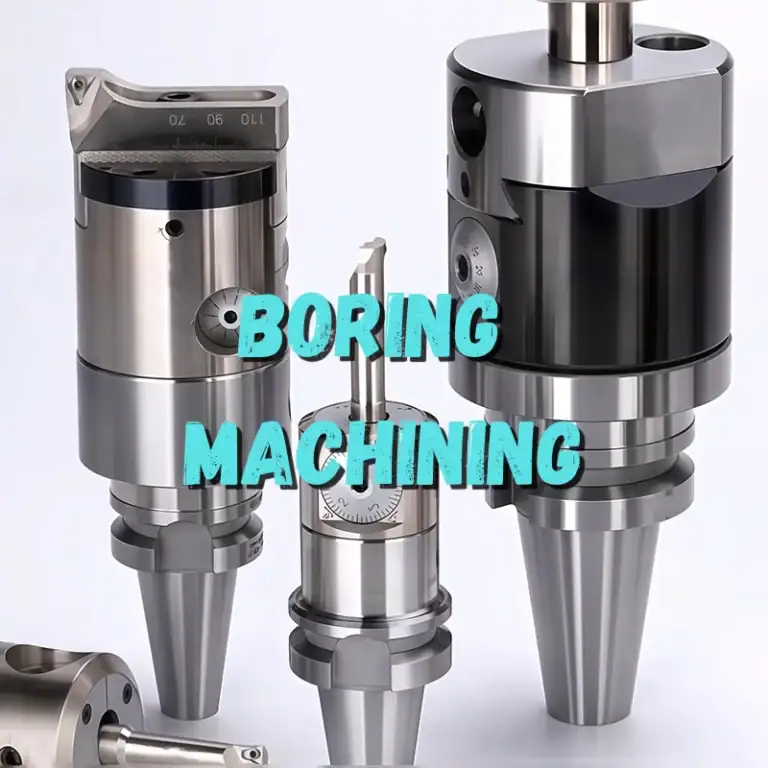
Depending on the component requirements, the process can include pilot drilling, drilling, semi-finishing, and finishing operations. If tighter dimensional accuracy and surface finish are required, reaming, boring, or honing may be used as subsequent processes.
How Can Deep-Hole Machining Accuracy Be Improved?
Improving deep-hole machining accuracy requires control over the design, equipment, tooling, and machining process.
During the design stage, requirements for hole diameter, depth, straightness, concentricity, and surface roughness should be clearly defined. During production, machine accuracy should remain stable, and tool wear should be monitored regularly.
For complex or high-precision deep-hole components, in-process measurement or post-machining dimensional inspection can help identify deviations early and prevent quality issues during batch production.
The main challenges of deep-hole metal machining include chip evacuation, cooling, tool rigidity, hole positioning, hole wall quality, and dimensional control. As hole depth increases, conventional drilling methods may not be sufficient to meet demanding accuracy requirements.
By selecting appropriate cutting tools, optimizing machining parameters, improving cooling and chip evacuation, minimizing tool overhang, and using a staged machining strategy, manufacturers can effectively reduce machining risks.
For deep-hole components used in aerospace, automotive, hydraulic systems, molds, and precision machinery, working with a CNC machining supplier experienced in deep-hole machining can help achieve more consistent accuracy, surface quality, and production reliability.
Author
Galen Director and Founder
Committed to ensuring we provide the best possible service in the manufacturing industry.
Custom machining is used when a part cannot be sourced as a standard component or when its geometry, material, tolerance, or function must be tailored to a specific project. Instead
Undercut machining creates recessed, hidden, or back-facing features that a standard straight-shank cutter cannot reach from the primary machining direction. The main challenge is usually not removing the material, but
Semiconductor equipment depends on far more than electronics and process technology. Behind every wafer-handling system, test station, inspection tool, and process chamber is a network of precision-machined parts, structural components,
AI CNC machining combines traditional computer numerical control with artificial intelligence, machine learning, manufacturing data, sensors, and intelligent CAM software. Instead of replacing CNC technology, AI adds a decision-support layer
Robotic process automation is a software-based automation technology that uses digital bots to complete repetitive, rules-based tasks normally performed by people on computers. RPA bots can enter and transfer data,
Computer numerical control machining is an automated manufacturing process in which programmed computer instructions control machine tools to remove material and produce precise parts. CNC technology can control tool movement,
Semiconductor manufacturing is the process of turning high-purity semiconductor materials into functional chips through a sequence of wafer preparation, thin-film formation, photolithography, etching, doping, metallization, testing, dicing, packaging, and final
Semiconductors are materials whose electrical conductivity can be controlled between that of conductors and insulators. Silicon is the most widely used semiconductor material, but germanium, silicon carbide, gallium nitride, gallium
Boring machining is a precision cutting process used to enlarge and correct an existing hole. Unlike drilling, which creates the initial hole, boring improves diameter, roundness, straightness, alignment, and internal
Shaft machining is the precision manufacturing of cylindrical components that transmit torque, support rotating elements, or provide controlled motion within mechanical systems. Although a shaft may appear simple, its performance
CNC machining vs injection molding compares two fundamentally different ways to manufacture parts. CNC machining removes material from solid stock with computer-controlled cutting tools, while injection molding melts plastic and
What Is Plating? Types, Processes & Applications Plating is a surface-finishing process that deposits a thin layer of metal onto a substrate. It is commonly used to improve corrosion resistance,