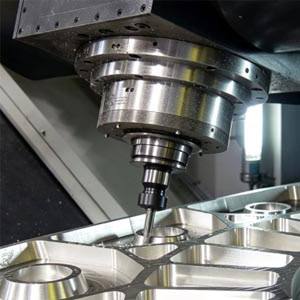
In CNC milling programming, automatic feature recognition can quickly identify machining features such as holes, slots, pockets, planes, and chamfers from 3D models, while also assisting in the generation of
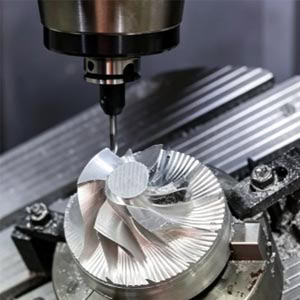
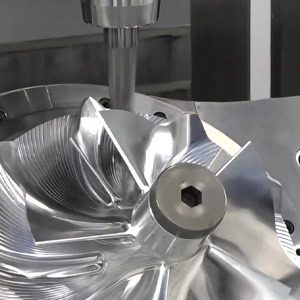
Impellers are typical complex-surface components with narrow spaces between blades and significant curvature changes, requiring high levels of tool orientation control and five-axis synchronization accuracy. In actual CNC milling, overcutting
In CNC milling production, programming time often affects delivery schedules. For parts with similar structures and relatively large production volumes, CAM template-based programming can reuse proven toolpaths, cutting tools, and
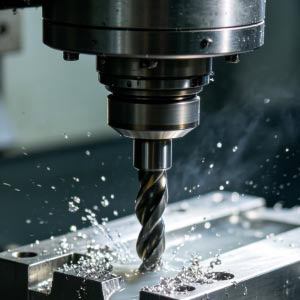
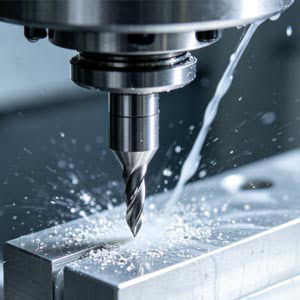
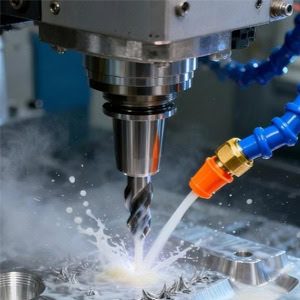
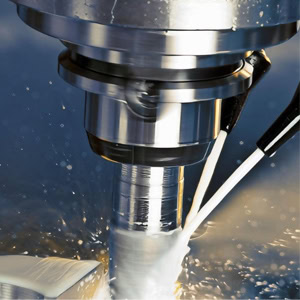
During CNC milling, the cooling method affects not only tool life but also machining efficiency, surface quality, and production costs. Traditional flood cooling can continuously remove a large amount of
In CNC milling, shortening the tool travel distance is generally regarded as a direct way to improve machining efficiency. A shorter toolpath can reduce machine operating time and some air-cutting
Micro-diameter milling cutters with diameters no greater than φ0.5 mm are commonly used for machining precision molds, micro-grooves, thin-walled parts, medical components, and electronic structural parts. They can produce details
In CNC milling, constant-speed cutting is widely used, but when the tool enters corners, deep cavities, narrow slots, or areas with significant variations in material allowance, the actual load on
For difficult-to-machine materials such as titanium alloys, superalloys, and stainless steel, tool consumption is an important factor affecting CNC milling costs. Conventional full-width cutting tends to generate high cutting forces
Carbon fiber composites are widely used in aerospace, automotive, drones, medical devices, and high-end equipment manufacturing due to their high strength, lightweight properties, and excellent corrosion resistance. However, during CNC
Titanium alloys are widely used in aerospace, medical devices, automotive, and high-end equipment manufacturing due to their high strength, low density, and excellent heat and corrosion resistance. However, these properties
Thin-walled parts have always been one of the most challenging workpieces in precision manufacturing. Due to their small wall thickness and limited overall rigidity, cutting forces generated during CNC milling,
In precision manufacturing, companies usually focus on machine tool accuracy, cutting tool performance, and machining parameters, while easily overlooking a hidden factor—thermal deformation. During CNC milling, continuous contact between the
Scroll to Top
Your 24 hour quote
Send us a message if you have any questions or request a quote. We will be back to you within 1-2 hours!