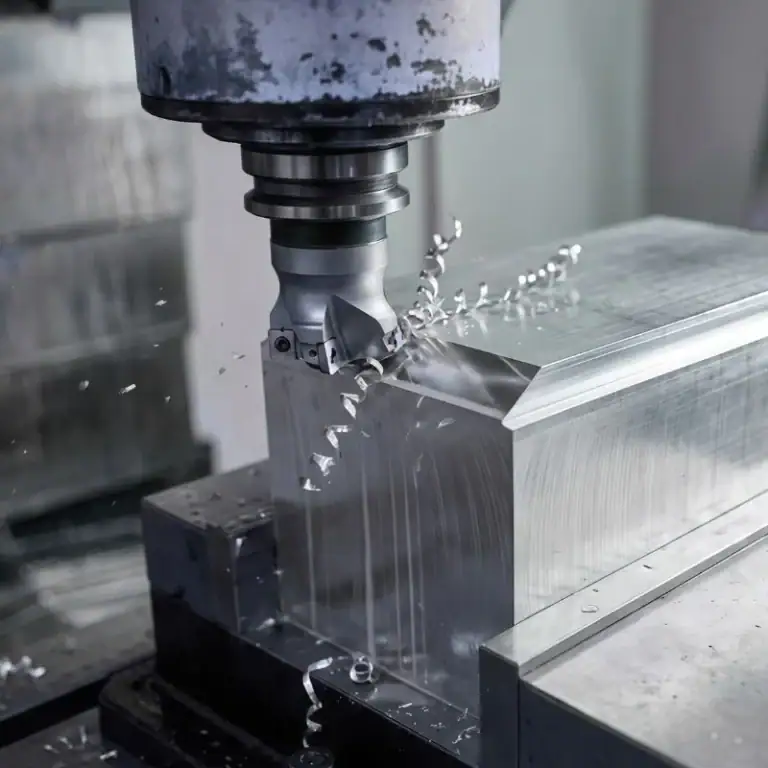
Thin-wall metal parts are widely used in aerospace, automotive, medical equipment, electronics, robotics, and precision machinery. Their lightweight design helps reduce material usage and overall component weight. However, compared with conventional parts, thin-wall components are more likely to deform during CNC machining because they have lower structural rigidity and are more sensitive to cutting forces, clamping pressure, heat, and residual stress.
So, are thin-wall metal parts prone to deformation? Yes, but proper CNC machining methods can significantly reduce the risk. Understanding the causes of deformation is essential for achieving accurate dimensions and stable production.
Get 20% offf
Your First Order
Need custom metal and plastic parts?
Why Do Thin-Wall Metal Parts Deform During Machining?
Low Structural Rigidity
Thin walls have less resistance to bending than thicker structures. When a cutting tool contacts the workpiece, the cutting force can cause the wall to deflect or vibrate.
The risk becomes higher when the wall is very thin, tall, or has a long unsupported section. Even if the metal itself has high strength, insufficient structural rigidity can still affect machining accuracy.
Cutting Forces Cause Deflection
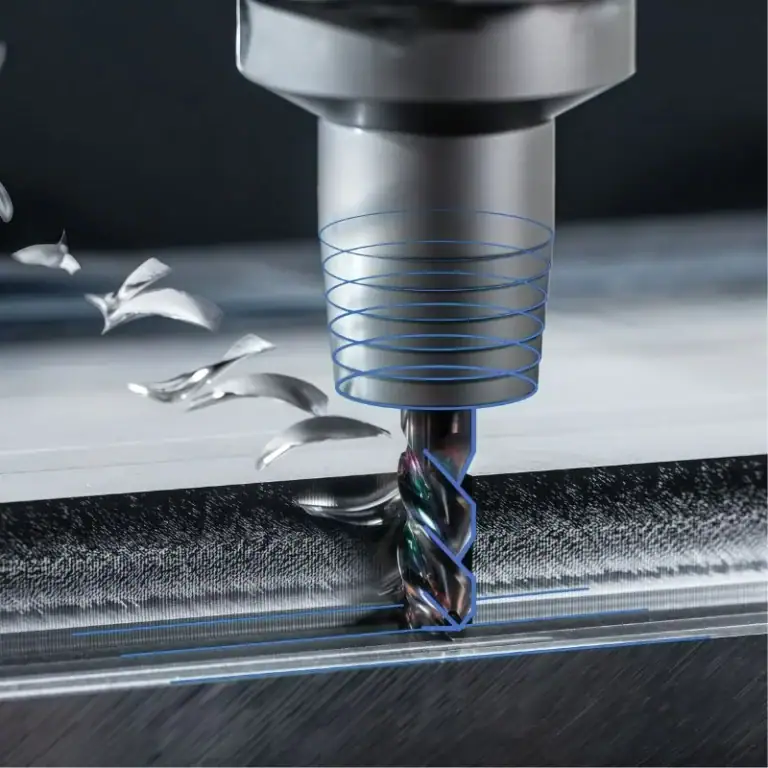
CNC machining generates axial and radial cutting forces. For thick components, these forces usually have little influence on the final shape. For thin-wall parts, however, radial forces can push the wall away from the cutting tool.
After the tool moves away, the wall may partially return to its original position. This elastic recovery can result in inaccurate dimensions, uneven wall thickness, taper, and other machining errors.
Excessive Clamping Pressure
Proper fixturing is important, but excessive clamping force can deform a thin-wall workpiece before machining even starts.
When the fixture is released after machining, the part may return toward its original shape, causing dimensional changes or loss of flatness. For this reason, thin-wall components require carefully controlled clamping forces and suitable support points.
Residual Stress Release
Metal materials may contain residual stresses from casting, forging, rolling, or heat treatment. CNC machining removes material and changes the internal stress balance of the workpiece.
As a result, the part may bend, twist, or warp during or after machining. In some cases, deformation becomes visible only after the workpiece is unclamped or cooled.
Which Thin-Wall Parts Have a Higher Deformation Risk?
Deformation depends on more than wall thickness. Wall height, material, geometry, machining depth, and tolerance requirements also play important roles.
Factor
Deformation Risk
Main Reason
Very thin wall
High
Low rigidity
High wall height
High
Poor bending resistance
Long unsupported wall
High
Increased deflection and vibration
Deep cavity
Medium to High
Long tool overhang
Large material removal
Medium to High
Residual stress redistribution
Tight tolerances
High
Small deformation can cause out-of-tolerance parts
Multiple support points
Lower
Improved structural stability
Therefore, there is no single minimum wall thickness that can determine whether a part is difficult to machine. A short thin wall with good support can be easier to manufacture than a thicker wall with a long unsupported section.
How Can CNC Machining Reduce Thin-Wall Deformation?
Optimize the Part Design
Deformation control should begin during the design stage. If the application allows, increasing wall thickness can improve rigidity. Reinforcing ribs, support structures, and suitable fillets can also reduce deflection.
For complex thin-wall components, a DFM (Design for Manufacturing) review can help identify potential machining problems before production.
Use Proper Fixturing
The goal of fixturing is not simply to clamp the workpiece tightly. The fixture should provide stable and evenly distributed support.
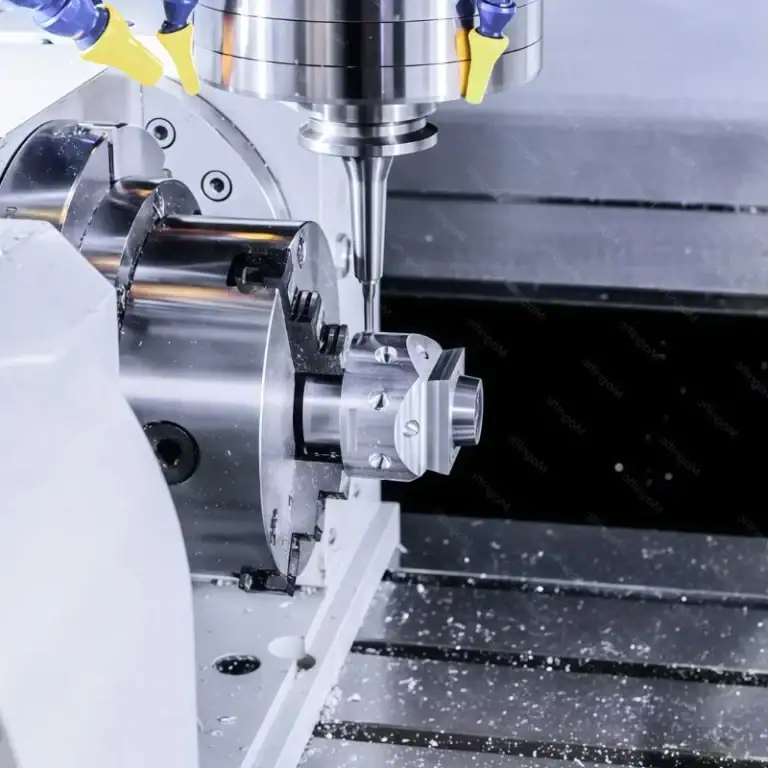
Additional support points can be added to large thin-wall structures. Soft jaws, customized fixtures, and auxiliary supports can also help minimize clamping deformation for precision parts.
Reduce Cutting Forces
Using sharp cutting tools, appropriate feed rates, and smaller depths of cut can reduce the forces acting on thin walls.
Instead of removing a large amount of material in one pass, machinists can use multiple light passes to gradually reach the required dimensions. Shortening tool overhang is also important because excessive tool extension can reduce rigidity and increase vibration.
Optimize Roughing and Finishing
Thin-wall parts should generally be machined through a controlled sequence rather than removing all material at once.
During roughing, sufficient material should be left to maintain workpiece rigidity. Semi-finishing and finishing operations can then gradually remove the remaining stock. Symmetrical or alternating machining strategies can help balance material removal and reduce warping.
Control Machining Heat
Cutting heat can cause thermal expansion and dimensional changes. Thin structures are particularly sensitive because they have less material to absorb and distribute heat.
Proper cutting parameters, suitable tooling, and effective coolant application can help prevent excessive heat accumulation and improve dimensional stability.
What Materials Are Commonly Used for Thin-Wall CNC Parts?
Aluminum Alloys
Aluminum is widely used because it is lightweight and easy to machine. However, aluminum thin-wall structures can be relatively flexible, so cutting forces and clamping pressure need to be carefully controlled.
Stainless Steel
Stainless steel has higher strength and can generate significant cutting forces and heat. Stable cutting conditions and appropriate tools are important for maintaining accuracy.
Titanium Alloys
Titanium combines high strength with relatively low thermal conductivity. Thin-wall titanium machining therefore requires careful control of cutting heat, tool rigidity, and machining parameters.
Thin-wall metal parts are more susceptible to deformation than conventional components, but this does not mean they are unsuitable for CNC machining. The key is controlling structural rigidity, cutting forces, clamping pressure, residual stress, heat, and machining sequence.
For high-precision aerospace, automotive, medical, electronic, robotic, and mechanical components, proper design and machining strategies can significantly reduce deformation and improve dimensional accuracy. Choosing an experienced CNC machining supplier with thin-wall machining capabilities is also an effective way to achieve stable quality and reliable production results.
Author
Galen Director and Founder
Committed to ensuring we provide the best possible service in the manufacturing industry.
Glass filled nylon is a reinforced engineering plastic that combines the versatility of nylon with the strength and stiffness of glass fibers. Compared with unfilled nylon, it offers better resistance
Tensile stress is the internal force per unit area produced when a material is pulled by an external load. It is calculated by dividing the applied tensile force by the
CNC machining programming connects a digital part design with the movements of a CNC machine. A well-built program defines where the cutting tool moves, which tools are used, how fast
Vertical and horizontal milling use the same basic cutting principle, but spindle orientation changes how the tool reaches the workpiece, clears chips, and handles different part geometries. This guide explains
Chamfer machining is the process of removing material from an edge, hole, or contour to create a controlled angled surface. In CNC manufacturing, chamfers are commonly used to remove sharp
Custom machining is used when a part cannot be sourced as a standard component or when its geometry, material, tolerance, or function must be tailored to a specific project. Instead
Undercut machining creates recessed, hidden, or back-facing features that a standard straight-shank cutter cannot reach from the primary machining direction. The main challenge is usually not removing the material, but
Semiconductor equipment depends on far more than electronics and process technology. Behind every wafer-handling system, test station, inspection tool, and process chamber is a network of precision-machined parts, structural components,
AI CNC machining combines traditional computer numerical control with artificial intelligence, machine learning, manufacturing data, sensors, and intelligent CAM software. Instead of replacing CNC technology, AI adds a decision-support layer
Robotic process automation is a software-based automation technology that uses digital bots to complete repetitive, rules-based tasks normally performed by people on computers. RPA bots can enter and transfer data,
Computer numerical control machining is an automated manufacturing process in which programmed computer instructions control machine tools to remove material and produce precise parts. CNC technology can control tool movement,
Semiconductor manufacturing is the process of turning high-purity semiconductor materials into functional chips through a sequence of wafer preparation, thin-film formation, photolithography, etching, doping, metallization, testing, dicing, packaging, and final