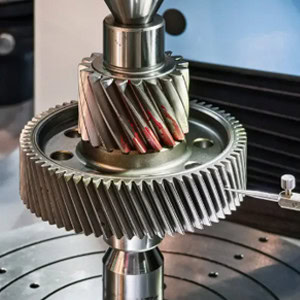
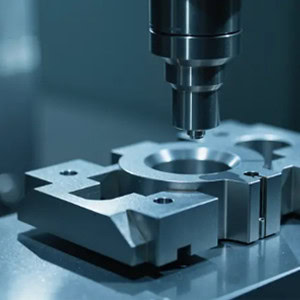
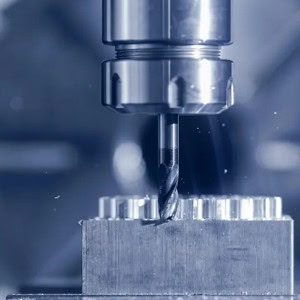
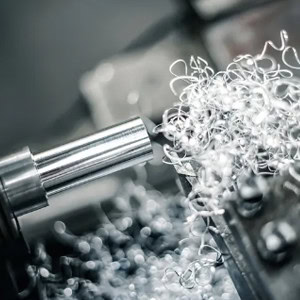
When it comes to precision machining, the real challenge is often not whether a part can be manufactured, but how tightly its dimensions need to be controlled. A drawing marked
Once a part has been machined, the real headache is often not whether it can be produced, but whether it looks fine yet fails during assembly. This is especially common
Many people hear the term “precision machining” and assume it is something reserved for advanced factories or highly specialized industries. In reality, it is already used in many everyday manufacturing
3D printing has made mold prototyping much faster. A complex mold that once required considerable preparation can now be produced quickly for evaluation. However, a printed mold is not necessarily
When customers send a part drawing to a machining supplier, one question often comes up: should this part be made by precision milling or precision turning? Both are widely used
When customers request precision machining services, one of the first things they usually check is the tolerance requirement on the drawing. A tolerance of ±0.01mm and ±0.005mm may look like
Thin-walled parts are becoming increasingly common in modern manufacturing industries. From aerospace structural components to precision parts used in automation equipment, these components offer advantages such as lightweight design and
In mechanical part manufacturing, some components may meet dimensional requirements but still experience issues such as increased friction, poor sealing, or unstable operation after being installed into equipment. In many
In many high-precision equipment systems, a part surface may look simply “flat,” but the actual machining requirements can be extremely strict. Components such as mounting bases, positioning plates, mold parts,
In precision machining, many parts may appear to meet requirements after processing, but problems such as dimensional changes, deformation, or reduced accuracy can occur during later assembly or long-term operation.
In the manufacturing industry, many parts may not be large in size, but they have very high requirements for material performance and machining accuracy. Internal equipment components such as shafts,
Scroll to Top
Your 24 hour quote
Send us a message if you have any questions or request a quote. We will be back to you within 1-2 hours!