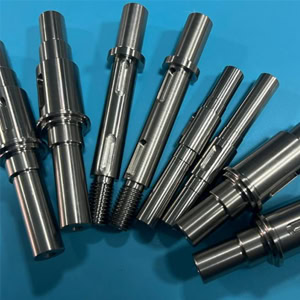
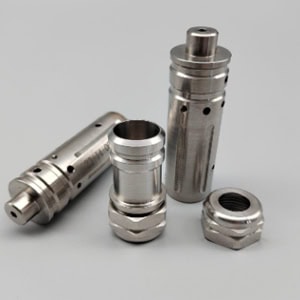
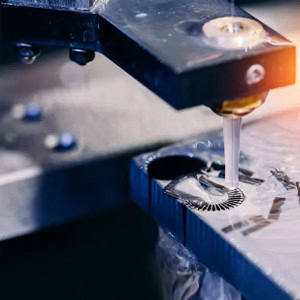
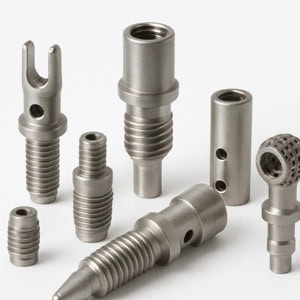
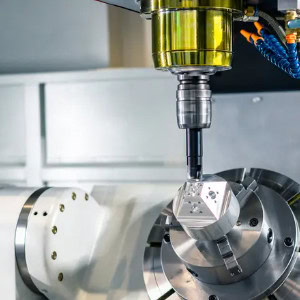
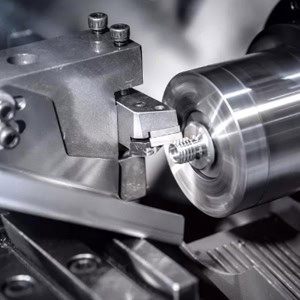
With the continuous development of industrial automation, smart manufacturing, and digital production, automation equipment has increasingly high requirements for component machining accuracy, dimensional consistency, operational stability, and batch production efficiency.
Many machines may look complex, but their actual performance often depends on small internal components. A slight deviation in a hole position or an unstable dimension can affect the assembly
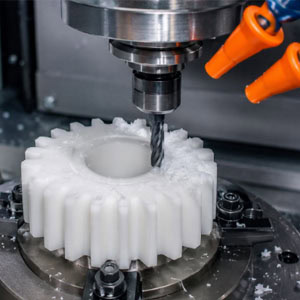
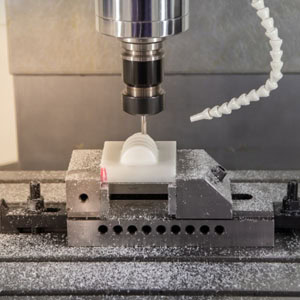
POM (polyoxymethylene) is a common engineering plastic with good hardness, wear resistance, dimensional stability, and mechanical strength. It is widely used to manufacture gears, bushings, sliders, washers, guide rails, connectors,
Magnetic chucks are widely used in precision milling for fast clamping of flat workpieces. They are known for high efficiency and convenience, but in high-precision CNC milling applications, their positioning
The aerospace industry has extremely high requirements for component manufacturing accuracy, material performance, structural reliability, and production consistency. Aircraft engines, aerospace transmission systems, landing gear, hydraulic systems, fuel systems, satellites,
A part must go through multiple manufacturing processes before it can become a finished component that meets design requirements. Especially in industrial equipment, automation systems, medical devices, aerospace components, and
Plastic gaskets are widely used in sealing, positioning, cushioning, and insulation applications, and are common parts in mechanical equipment, piping connections, and electronic assemblies. Compared with traditional metal gaskets, plastic
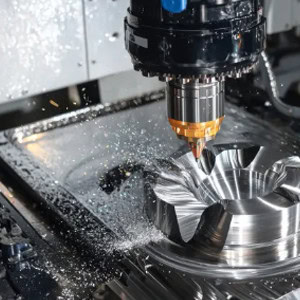
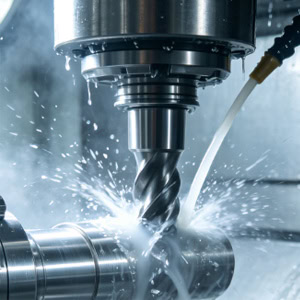
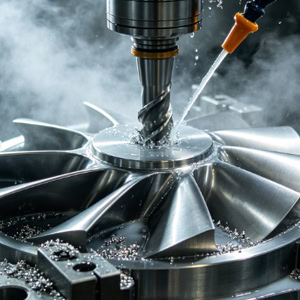
In CNC milling, efficiency is determined not only by spindle speed or tool performance, but more importantly by the choice of machining strategy. Especially in complex parts or high-strength material
The medical device industry has strict requirements for component accuracy, material properties, surface quality, and product consistency. Surgical instruments, orthopedic devices, dental equipment, diagnostic systems, rehabilitation equipment, and medical automation
Composite materials are increasingly used in aerospace, lightweight automotive applications, medical equipment, and advanced industrial products. They offer excellent advantages such as low weight, high strength, and corrosion resistance. However,
As electronic devices continue to develop toward miniaturization, high performance, and high integration, electronic components require increasingly strict standards for dimensional accuracy, surface quality, material properties, and batch consistency. Communication
High-temperature alloys, with their excellent heat resistance, corrosion resistance, and high strength, are widely used in high-end manufacturing fields such as aerospace, energy equipment, and gas turbines. However, these advantages
Scroll to Top
Your 24 hour quote
Send us a message if you have any questions or request a quote. We will be back to you within 1-2 hours!