In the field of modern precision manufacturing, enterprises are increasingly focused on part machining quality, production efficiency, and long-term stability. When it comes to CNC milling, many people prioritize equipment precision, cutting tool performance, and programming techniques, yet often overlook the critical factor of machine tool rigidity. In fact, equipment rigidity not only determines whether a stable cutting state can be maintained during the machining process but also directly impacts dimensional accuracy, surface quality, tool life, and consistency in mass production. The role of machine tool rigidity becomes particularly significant when machining high-hardness materials, deep-cavity structures, and parts with complex curved surfaces. Understanding the importance of equipment rigidity helps enterprises make more informed decisions regarding equipment selection and machining processes, thereby enhancing product quality and market competitiveness.
How Equipment Rigidity Affects Machining Accuracy
Machine tool rigidity is a crucial foundation for ensuring machining accuracy. Equipment must withstand continuous cutting forces during the machining process; if structural strength is insufficient, deformation and vibration are likely to occur.
Reducing Machining Deformation
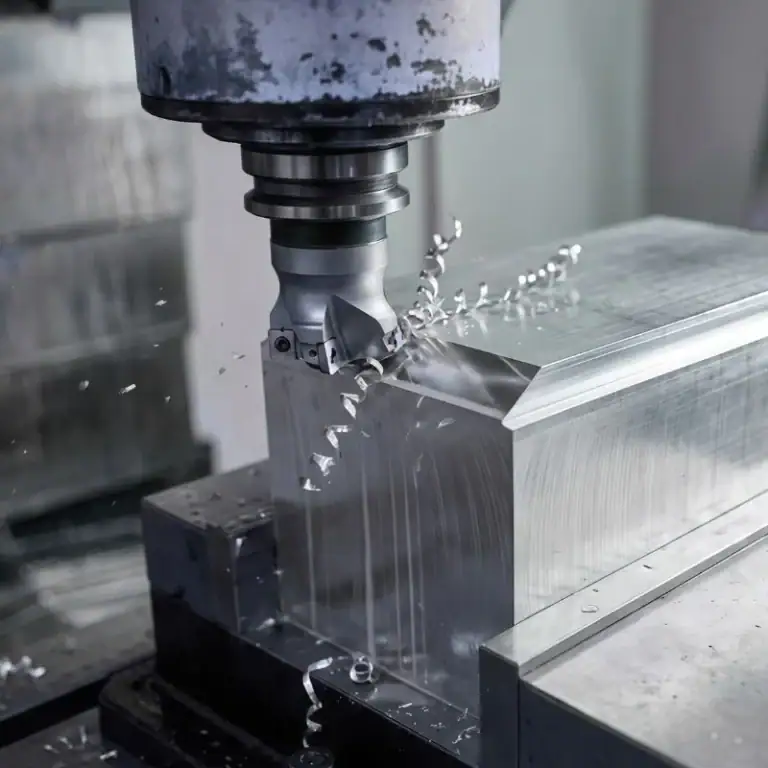
During CNC milling, the machine tool must continuously withstand cutting forces generated between the tool and the workpiece. Insufficient structural strength can lead to slight displacements or deformations, thereby affecting the final machining results.
- Minimizing structural displacement under load ensures stable equipment operation even during heavy-duty machining.
- Maintaining a stable relative position between the tool and the workpiece reduces positional deviations during machining.
- Reducing dimensional deviations in complex parts improves the consistency and reliability of critical dimensions.
Enhancing equipment rigidity effectively mitigates the impact of structural deformation on machining quality.
Improving Positioning Accuracy
High-precision machining places greater demands on the equipment’s motion control capabilities, and machine tool rigidity provides essential support for ensuring positioning accuracy.
- Enhancing repeatability ensures the equipment maintains stable accuracy over repeated operations.
- Ensuring dimensional consistency across multiple machining cycles meets quality requirements for mass production.
- Improving accuracy for complex contours enhances the quality of curved surfaces and irregular geometries.
- Reducing error accumulation prevents dimensions from gradually drifting away from target values during prolonged machining.
A stable machine structure enables the CNC system to execute machining instructions with greater accuracy.
Enhancing Long-Term Accuracy Retention
For production equipment intended for long-term operation, the ability to maintain accuracy over time is often more important than short-term precision performance. Mitigates the impact of structural fatigue and reduces precision degradation caused by long-term loading.
- Slows the wear rate of critical components and extends the service life of core assemblies.
- Prolongs the equipment’s precision lifespan and lowers long-term maintenance and calibration costs.
A foundation of high rigidity enables the equipment to maintain high-level machining capabilities over the long term.
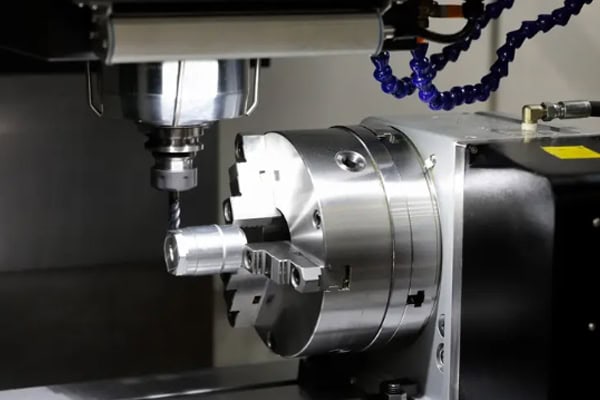
Impact of Equipment Rigidity on Surface Quality
The surface quality of a workpiece affects not only its appearance but also its assembly performance and service life.
Suppressing Machining Vibration
Vibration is a primary factor affecting workpiece surface quality and machining stability; high-rigidity equipment effectively mitigates this issue.
- Reduces tool marks and waviness, improving the visual quality of the workpiece.
- Improves surface finish and lowers roughness values.
- Reduces the need for secondary finishing, saving time and costs in subsequent processing.
Superior vibration control generally leads to more consistent surface quality in the final product.
Enhancing Cutting Stability
A stable cutting process helps achieve higher-quality machining results and boosts overall production efficiency.
- Maintains uniform cutting conditions and reduces fluctuations in cutting forces.
- Prevents localized cutting impacts, reducing the load on the equipment and cutting tools.
- Improves machining quality for complex surfaces and enhances contour consistency.
A smoother cutting process facilitates standardized control over machining quality.
Reducing the Risk of Machining Defects
Defects arising during machining are often closely linked to equipment vibration and structural instability.
- Reduces burr formation and improves edge quality.
- Prevents localized edge chipping, lowering the risk of part rejection.
- Enhances edge machining quality and improves part assembly performance.
- Improves contour integrity, ensuring complex structures better meet design specifications.
Increased equipment rigidity helps reduce the occurrence of various machining defects.
How Equipment Rigidity Affects Tool Life
Tooling costs constitute a significant portion of CNC milling expenses.
Reducing Abnormal Wear
Tool life is influenced not only by materials and parameters but also significantly by equipment rigidity.
- Lowers the risk of tool chipping and enhances machining safety.
- Reduces uneven wear, maintaining stable cutting performance.
- Increases tool utilization rates and lowers production costs.
A stable machining environment effectively extends the tool’s service life.
Enhancing High-Speed Machining Capabilities
Modern manufacturing places increasing emphasis on high-speed machining efficiency, yet high-speed cutting imposes strict requirements on equipment rigidity.
- Maintains stability during high-speed operation and minimizes vibration issues.
- Reduces chatter, thereby improving machining quality.
- Increases material removal rates and shortens overall machining cycles.
High-rigidity equipment allows for the full realization of the advantages offered by high-speed machining technology.
Reducing Tool Change Frequency
Frequent tool changes not only disrupt production rhythm but also increase operating costs.
- Improves equipment utilization and reduces downtime.
- Lowers production costs and enhances economic efficiency.
- Maintains continuity in batch production and boosts order delivery capabilities.
Extended tool life enables enterprises to achieve more efficient production management.
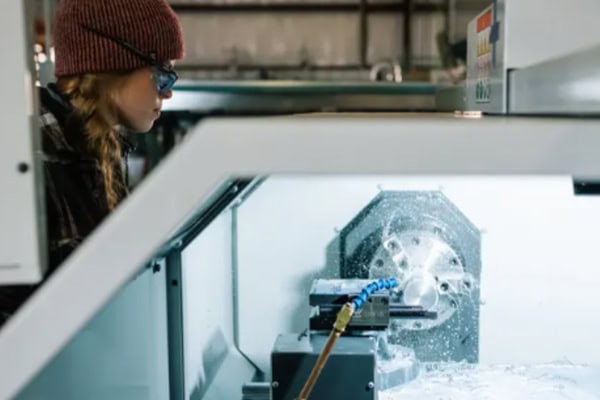
The Significance of Equipment Rigidity for Machining Complex Parts
Demand for parts with complex structures is constantly rising in modern manufacturing.
Greater Stability in Machining Deep-Cavity Structures
Machining deep-cavity parts involves long tool overhangs, placing higher demands on equipment stability.
- Improves deep-hole machining quality and reduces machining errors.
- Lowers the risk of tool deflection and enhances dimensional control.
- Maintains dimensional accuracy and improves consistency across complex parts.
High-rigidity equipment effectively enhances the reliability of deep-cavity machining.
Greater Reliability in Machining Thin-Walled Parts
Thin-walled parts are prone to deformation under cutting forces, making a stable machining environment crucial.
- Reduces workpiece deformation and enhances structural stability.
- Improves wall thickness consistency, ensuring product functional requirements are met.
- Enhances overall structural precision and assembly reliability.
Greater equipment rigidity makes it easier to control the quality of thin-walled parts.
Greater Precision in Machining Complex Surfaces
Parts with complex surfaces are widely used in aerospace and high-end equipment manufacturing.
- Improves surface contour accuracy, meeting high-standard design requirements.
- Enhances surface continuity, improving both appearance and performance.
- Reduces the need for subsequent finishing processes, lowering production costs.
- Boosts the capability for single-pass forming of complex parts, increasing overall efficiency.
Stable equipment provides a reliable technical foundation for machining complex surfaces.
The Value of Equipment Rigidity in Batch Production
In large-scale production, consistency is often more critical than the precision of a single part.
Improving Product Consistency
In mass production, product consistency is often the deciding factor for customer satisfaction and market competitiveness.
- Ensures dimensional uniformity and elevates the level of product standardization.
- Reduces quality fluctuations and enhances production stability.
- Boosts customer satisfaction and market recognition.
Higher consistency makes it easier for enterprises to establish a long-term competitive advantage.
Reducing Rework Rates
Stable machining quality effectively minimizes issues related to rework and scrap during production.
- Reduces waste generation and improves material utilization rates.
- Shortens production cycles and accelerates order delivery.
- Saves on material costs and enhances production efficiency.
Lower rework rates signify an overall improvement in the enterprise’s operational efficiency.
Enhancing Long-Term Production Capabilities
For modern manufacturing enterprises, long-term, stable production capability is a key benchmark for evaluating equipment value.
- Improves equipment reliability and reduces the risk of downtime due to malfunctions.
- Supports continuous mass production and maximizes capacity utilization.
- Meets the demands of high-standard orders and strengthens market competitiveness.
A stable and reliable equipment system provides a solid foundation for the enterprise’s sustainable development.
Conclusion
In CNC milling, equipment rigidity is critical to dimensional accuracy and surface quality; it also impacts tool life, the ability to machine complex parts, and mass production stability. As the modern manufacturing industry increasingly demands higher precision and efficiency, high-rigidity equipment has become essential for ensuring superior machining quality. For enterprises seeking stable and reliable machining results, selecting a service provider with advanced equipment and extensive experience is crucial; TiRapid offers professional CNC milling solutions for a wide range of precision part projects.