With the rapid development of aerospace, medical devices, new energy vehicles, and high-end equipment manufacturing, more high-performance materials are being used in industrial production. While these materials offer superior strength, wear resistance, and corrosion resistance, they also introduce new manufacturing challenges. Many customers discover that parts with the same design can have significantly different machining costs and production lead times simply because of the material selected. The reason is not a lack of equipment capability, but the inherent properties of the material itself. For precision machining, understanding material characteristics is essential for ensuring product quality and controlling manufacturing costs.
Why Do Materials Differ in Machining Difficulty?
Different materials vary in hardness, strength, thermal conductivity, and microstructure. These differences directly affect cutting forces, heat generation, chip formation, and tool wear during machining. For manufacturers, material properties often determine the entire machining strategy and production efficiency.
Higher Hardness Means Greater Cutting Resistance
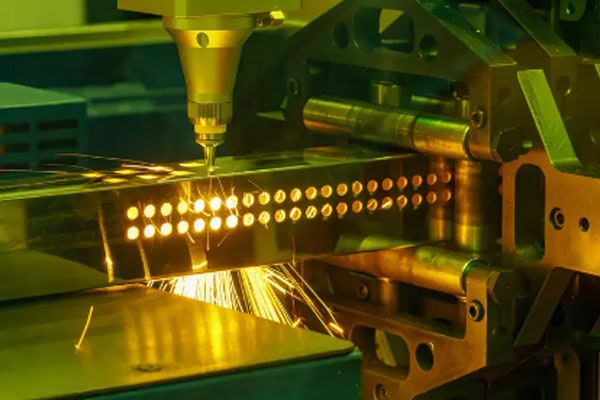
Hardness is one of the most obvious factors affecting machining difficulty. When cutting high-hardness materials, tools are exposed to greater loads and wear.
For standard materials, tools can cut and remove chips relatively easily. With harder materials, machining becomes much more demanding and requires higher-performance equipment and tooling.
- High-hardness materials increase cutting resistance and machining difficulty.
- Tool edges are more prone to wear and chipping.
- Greater cutting forces can negatively affect surface quality.
- Machining efficiency is often lower than with standard metals.
This is why high-hardness materials usually require specialized precision machining solutions.
Thermal Conductivity Affects Machining Stability
Besides hardness, thermal conductivity also plays a major role. Some materials are not exceptionally hard but still difficult to machine because they dissipate heat poorly.
When heat accumulates in the cutting zone, it can affect dimensional accuracy and surface quality, making machining more challenging.
- Heat concentration accelerates tool wear.
- Localized temperature increases may cause workpiece deformation.
- Surface defects or burn marks can occur.
The more difficult it is to control heat, the greater the need for advanced precision machining techniques.
Which Materials Are Considered Difficult to Machine?
Not all industrial materials have the same machinability. Some high-performance materials are widely recognized as difficult to machine despite their excellent mechanical properties.
Titanium Alloys
Titanium alloys are widely used in aerospace and medical applications because they combine high strength with low weight. However, they generate significant heat during machining and dissipate it slowly.
As heat accumulates around the cutting area, tool wear increases rapidly, leading to higher machining costs.
- Poor thermal conductivity causes heat concentration.
- Tool life is relatively short.
- Cutting parameters require careful control.
- Surface quality can be difficult to maintain.
This is one reason titanium components are often more expensive to manufacture.
Stainless Steel
Although stainless steel is a common material, certain grades can be surprisingly difficult to machine.
During cutting, the material may undergo work hardening, making subsequent machining operations more difficult.
- Work hardening occurs during cutting.
- Tool load and wear increase.
- Chip control becomes more challenging.
These characteristics require optimized precision machining processes.
Superalloys
Superalloys maintain excellent performance under extreme temperatures and are commonly used in aircraft engines and energy equipment.
However, their exceptional strength and heat resistance make machining particularly challenging.
- High strength creates greater cutting resistance.
- Tool wear occurs rapidly.
- Equipment rigidity requirements are higher.
- Machining efficiency is relatively low.
For many suppliers, the ability to machine superalloys effectively is a major competitive advantage.
How Do Difficult-to-Machine Materials Affect Precision Machining?
As materials become harder to machine, manufacturing requirements become more demanding. The impact extends beyond production efficiency and directly affects quality control.
Increased Tooling Costs
Difficult materials accelerate tool wear and increase tool replacement frequency.
To maintain stable machining performance, manufacturers often need premium tooling materials and advanced coatings.
- Faster tool wear rates.
- More frequent tool replacement.
- Higher machining costs.
- Greater process management complexity.
Tooling expenses often become a significant portion of overall production costs.
Longer Machining Time
To maintain quality, many difficult-to-machine materials cannot be processed at aggressive cutting speeds.
As a result, more machine time is required to produce the same quantity of parts.
- Cutting parameters must be more conservative.
- Production cycles become longer.
- Machine utilization efficiency may decrease.
Reduced productivity is a common challenge when machining advanced materials.
Higher Quality Control Requirements
As machining difficulty increases, the likelihood of dimensional errors and surface defects also rises.
Manufacturers must implement stricter inspection procedures to ensure quality.
- Increased in-process inspection frequency.
- Enhanced dimensional control.
- Improved batch-to-batch consistency.
- Reduced rework and scrap rates.
The stronger a company’s precision machining capability, the better it can handle complex materials.
How Can Manufacturing Efficiency Be Improved for Difficult Materials?
As advanced materials become more common, manufacturers continue improving machining technologies to increase efficiency through better equipment and optimized processes.
Selecting the Right Tooling System
Matching tooling solutions to material characteristics is one of the most effective ways to improve machining performance.
- Use high-performance coated cutting tools.
- Improve wear resistance.
- Extend continuous machining time.
Optimizing Machining Parameters
Proper cutting parameters help reduce tool load and improve process stability.
- Control cutting depth.
- Optimize spindle speed and feed rate.
- Reduce abnormal tool wear.
- Improve overall machining quality.
Utilizing Advanced CNC Equipment
High-performance CNC machines provide a more stable machining environment.
- Improve positioning accuracy.
- Reduce vibration effects.
- Enhance complex-part machining capability.
As manufacturing technologies continue to advance, many materials once considered extremely difficult to machine can now be processed more efficiently.
Material machining difficulty is not determined by hardness alone. It results from a combination of strength, thermal conductivity, microstructure, and cutting behavior. By understanding these characteristics and applying the right precision machining processes, manufacturers can achieve both high quality and cost-effective production. Tirapid offers extensive precision machining expertise and provides reliable manufacturing solutions for parts made from a wide range of challenging materials.