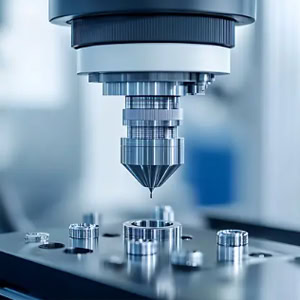
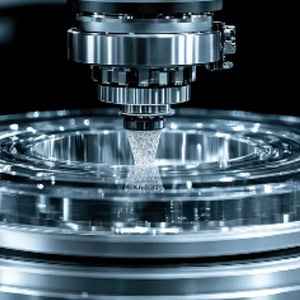
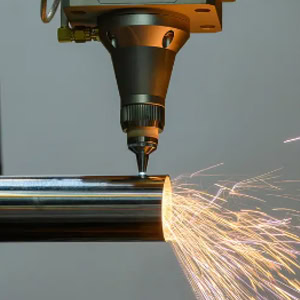
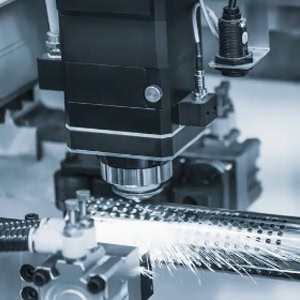
In high-end equipment manufacturing—such as aerospace, medical devices, semiconductor equipment, and precision molds—there are extremely strict requirements for component accuracy, stability, and consistency. These products typically feature complex structures, fine
In aerospace manufacturing, even the slightest dimensional deviation in a single component can be greatly amplified under high-speed, high-pressure, and high-temperature operating conditions, ultimately affecting overall aircraft performance and even
In modern manufacturing systems, the quality of precision machining does not depend solely on equipment capabilities. Material selection is a more fundamental and critical factor. With the same drawing, using
In today’s manufacturing industry, which is continuously moving toward higher precision and larger-scale production, precision machining has become a core capability for ensuring product quality stability and mass production efficiency.
Thin-walled parts are a typical high-difficulty workpiece type in precision machining. Their main characteristics include thin wall thickness, low structural rigidity, high sensitivity to deformation under force, and strong susceptibility
In precision machining production, unstable quality is one of the most common challenges faced by manufacturers. It often appears as dimensional variation, inconsistent surface finish, local deformation, burr formation, and
In precision machining, vibration is one of the most common and challenging factors affecting machining quality, especially in high-speed milling, deep cavity machining, and thin-walled part production. Vibration not only
In precision machining, material cracking is a critical issue that can significantly increase production cost and reduce yield rate, especially when working with high-strength alloys, hardened steels, aluminum alloys, and
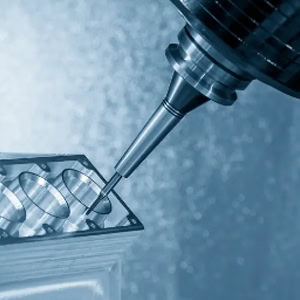
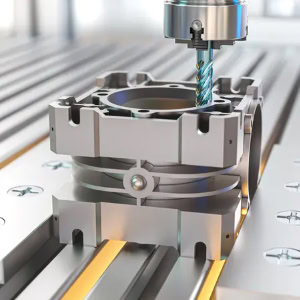
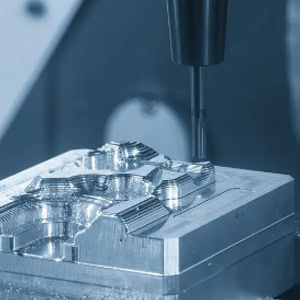
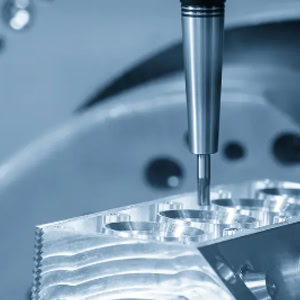
In modern high-end manufacturing systems, milling is one of the most fundamental and critical processes in precision machining, widely used in mold making, automotive components, aerospace structures, and medical devices.
In modern precision manufacturing systems, equipment capability directly determines the upper limit of machining accuracy and product quality stability. From complex surface forming to micron-level dimensional control and mass production
In the continuous development of precision machining toward higher accuracy and consistency, the edge quality of machined parts has become increasingly critical. Processes such as turning, drilling, and milling can
As the automotive industry rapidly evolves toward electrification, high performance, and intelligent manufacturing, the requirements for component manufacturing accuracy are continuously increasing. Production is no longer focused on basic “functionality,”
Scroll to Top
Your 24 hour quote
Send us a message if you have any questions or request a quote. We will be back to you within 1-2 hours!