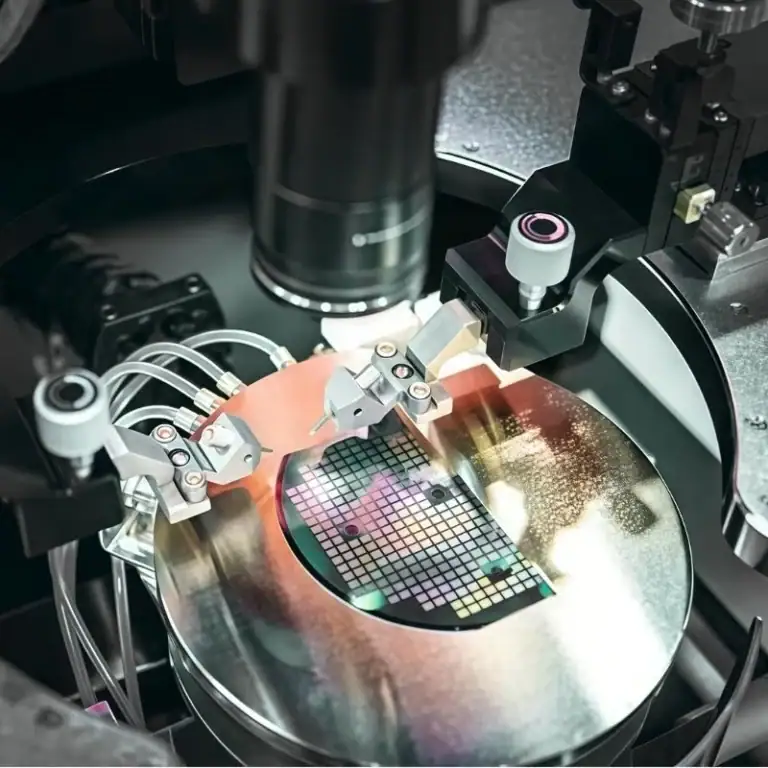
In modern manufacturing systems that are continuously upgrading, precision machining has gradually evolved from a capability exclusive to a small number of high-end industries into a fundamental technical support for multiple key sectors. As product structures become more complex, material performance continues to improve, and requirements for reliability keep increasing, traditional machining methods are increasingly unable to meet modern industrial demands. As a result, micron-level and even higher-precision manufacturing capabilities have become indispensable. From aerospace to medical devices, from semiconductors to new energy equipment, precision machining is deeply integrated into various high-end manufacturing systems and continues to drive industrial upgrading.
Aerospace and Defense Industry
The aerospace and defense sector shows the most obvious dependence on precision machining, characterized by extreme environments and high safety standards.
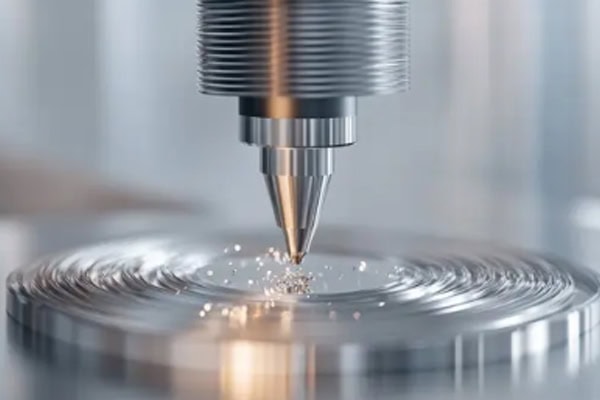
Aircraft structures and propulsion systems
Aerospace components typically operate in high-speed, high-temperature, high-pressure, and complex vibration environments, making them extremely sensitive to machining accuracy.
- Aircraft engine blades must have complex 3D aerodynamic surfaces; otherwise, thrust efficiency will be significantly reduced
- Turbine disks and compressor components must maintain extremely precise dynamic balance; otherwise, high-speed rotation will cause dangerous vibration
- Aircraft fuselage structures must maintain extremely high consistency during multi-point assembly; otherwise structural stress concentration may occur
- Landing gear components must withstand extreme impact and long-term fatigue loads, requiring very high material stability
- Spacecraft structures must maintain geometric stability in vacuum and extreme temperature conditions over long periods
In this field, precision is not just a manufacturing standard—it is a safety baseline.
Defense equipment and high-reliability systems
The defense industry emphasizes not only performance but also long-term reliability and consistent operation.
- High-precision weapon systems are extremely sensitive to dimensional errors, directly affecting combat accuracy and stability
- Radar and electro-optical systems rely on micron-level assembly accuracy to ensure signal transmission and recognition capability
- Naval and aerospace electronic systems must operate stably in strong vibration and complex environments
In this system, manufacturing precision directly determines the upper limit of system reliability.
Medical Devices and Life Sciences Industry
The core principle of the medical industry is safety first, which makes it highly dependent on precision machining.
Implantable devices and surgical instruments
Medical devices directly interact with the human body, requiring extremely strict standards for dimensions, surface quality, and material performance.
- Artificial joints must achieve a high level of matching with human bone structure; otherwise, long-term use and comfort will be affected
- Cardiovascular stents must balance support strength and flexibility within extremely small dimensions
- Surgical instruments must ensure extremely high sharpness and dimensional consistency to guarantee operational stability
- Orthopedic implants must withstand long-term dynamic loads while maintaining structural stability
Even the smallest deviation may directly affect medical outcomes or safety.
Medical equipment systems
Internal structures of medical equipment also rely heavily on precision machining to ensure stable performance.
- CT and MRI equipment require extremely high mechanical stability; otherwise imaging accuracy will be affected
- Minimally invasive surgical robots rely on high-precision transmission systems to complete complex motion control
- Infusion and microfluidic systems require extremely stable flow control capability
- Optical imaging systems rely on micron-level positioning accuracy to ensure image clarity
- Miniaturized medical devices place higher demands on structural compactness and machining capability
Equipment performance is fundamentally determined by manufacturing precision.
Automotive and New Energy Industry
The automotive industry is rapidly moving toward electrification and intelligence, continuously increasing demand for precision machining.
Power systems and mechanical structures
Automotive power systems require extremely high precision and reliability.
- Engine blocks and crankshafts require high-precision matching to ensure stable power output
- Turbocharging systems operate in high-temperature and high-speed environments, requiring extremely high structural strength
- Electric drive rotors must maintain strict dynamic balance; otherwise efficiency and vibration performance will be affected
Power system performance is highly dependent on machining quality.
New energy and intelligent vehicle systems
New energy vehicles feature more complex structures and higher integration requirements.
- Battery housings must balance structural strength, safety, and long-term sealing performance
- Lightweight body structures rely on high-precision aluminum machining for performance optimization
- Autonomous driving sensor structures require micron-level installation accuracy for recognition reliability
- Thermal management systems must maintain highly consistent internal flow channels to improve heat dissipation efficiency
The development of new energy fundamentally drives manufacturing precision upgrades.
Electronics and Semiconductor Industry
The electronics industry is one of the fastest-growing sectors for precision machining, characterized by miniaturization and high integration.
Semiconductor manufacturing equipment
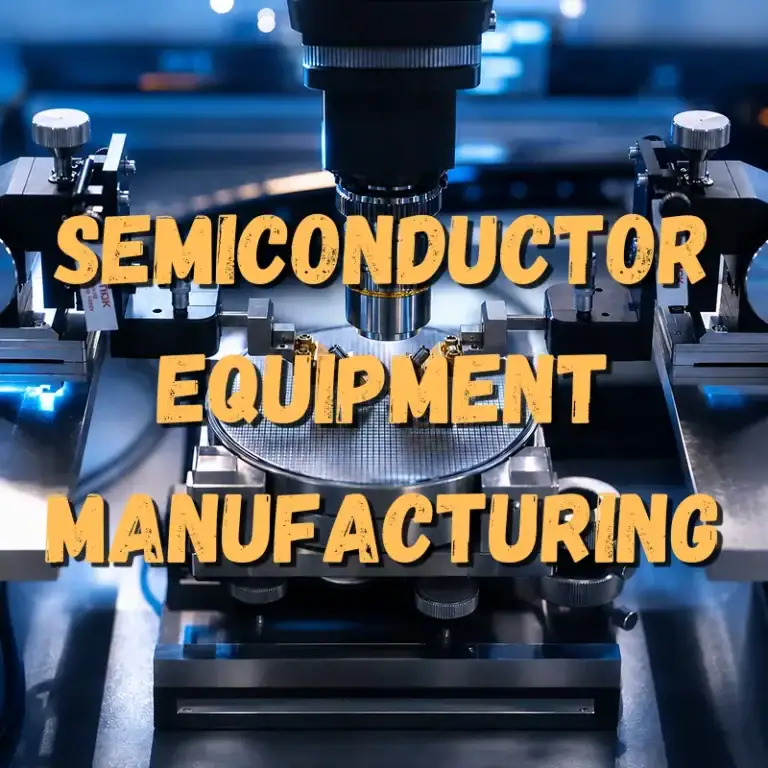
Chip manufacturing equipment itself is a concentrated embodiment of high-precision engineering.
- Lithography machine structures must maintain extremely high stability to ensure nanoscale exposure accuracy
- Vacuum chambers must strictly control deformation, otherwise wafer processing quality will be affected
- Wafer transfer systems require extremely high motion control precision
- Precision fixtures must ensure repeatable positioning accuracy
- High-speed systems are extremely sensitive to vibration and thermal deformation
Equipment precision directly determines the upper limit of semiconductor manufacturing capability.
Consumer electronics products
Consumer electronics are increasingly driven by miniaturization and performance demands.
- Smartphone frames require both high strength and extremely high dimensional accuracy
- Camera modules rely on micron-level alignment technology to ensure imaging quality
- Wearable devices are extremely small and require continuously improving machining capability
Consumer electronics are essentially a competition of manufacturing capability.
Industrial Equipment and Energy Industry
Industrial and energy sectors are not always under extreme conditions, but they require extremely high long-term stability.
Automation and mechanical systems
Industrial equipment focuses on long-term stable operation.
- Robotic joints require high repeat positioning accuracy to ensure motion consistency
- Transmission systems must maintain low-error operation over long periods
- Precision guide rails have a major impact on overall system stability
- High-speed equipment must strictly control vibration and wear issues
Equipment lifespan is closely related to machining precision.
Energy and heavy industry systems
Energy equipment often operates under high pressure and complex environments.
- Wind power systems require high-precision blades and transmission components to ensure efficiency
- Oil equipment must withstand high pressure and corrosive environments
- Hydraulic valve bodies rely on precise flow channel control for stable output
Energy system safety is highly dependent on manufacturing precision.
Precision machining has evolved from a single manufacturing process into a fundamental capability supporting modern industrial systems. Its application now covers aerospace, medical devices, automotive new energy, electronics semiconductors, and energy equipment. As industries continue to move toward higher performance, higher reliability, and more complex structures, the importance of precision machining continues to grow. In the high-end manufacturing sector, platforms such as Tirapid, which focus on complex parts and high-precision machining, provide stable and reliable manufacturing support for multiple industries through mature process systems and strict quality control.