The robotics industry is experiencing rapid growth, with industrial robots, collaborative robots, medical robots, logistics robots, and service robots being widely adopted in smart manufacturing, healthcare, warehousing, transportation, and automated production. Every robot consists of numerous precision mechanical components that require excellent dimensional accuracy, assembly precision, and long-term operational stability. As robots continue to achieve higher speeds, greater load capacities, and improved repeatability, the machining quality of individual components has become a critical factor affecting overall system performance. CNC turning has become an indispensable manufacturing process for robotic parts because of its high precision, automated production capability, outstanding consistency, and efficiency in mass manufacturing.
Modern CNC turning centers integrate automatic tool changers, in-process measurement systems, and digital machining technologies to manufacture shafts, sleeves, connectors, and other precision rotational components with exceptional accuracy. High-quality CNC-turned parts not only improve assembly efficiency but also reduce wear during operation, extend equipment service life, and provide reliable support for long-term robotic performance.
Robotic Transmission Systems Extensively Utilize CNC Turning
The transmission system is responsible for transferring power and controlling movement inside a robot. Components within this system require strict dimensional accuracy, roundness, concentricity, and excellent surface finish. As robots continue evolving toward higher speeds, heavier payloads, and greater positioning accuracy, machining precision has become increasingly important. CNC turning ensures stable dimensions, improves transmission efficiency, and minimizes vibration and wear throughout continuous operation.
Precision Transmission Shaft Machining
Robots contain numerous rotating shaft components, including drive shafts, output shafts, intermediate shafts, and connecting shafts. These parts operate continuously at high rotational speeds and require outstanding dimensional accuracy. Even minor machining deviations may reduce positioning accuracy and shorten component lifespan.
- Drive shaft machining
- Output shaft manufacturing
- Precision connecting shafts
- Hollow shaft machining
- High-speed rotating shafts
- Power transmission shafts
High-precision CNC turning ensures smooth shaft rotation, improves robotic motion accuracy, and minimizes long-term mechanical wear.
Speed Reducer Component Manufacturing
Robot gear reduction systems require highly accurate components to achieve smooth motion control and precise positioning.
- Reducer sleeves
- Precision flanges
- Connecting sleeves
- Output connectors
- Support structures
- Precision mounting components
Consistent machining quality improves transmission efficiency while reducing vibration and operating noise, resulting in greater overall system reliability.
Robot Joint Components Require High-Precision Manufacturing
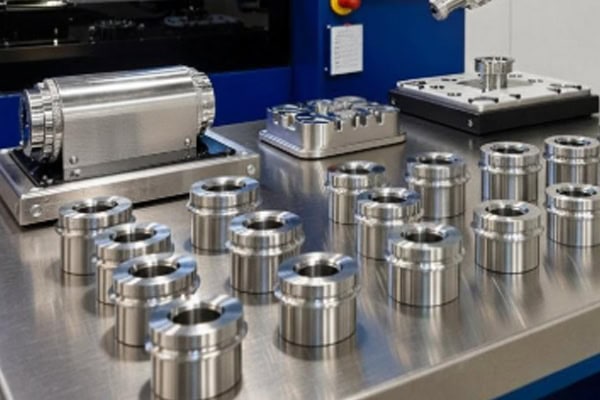
Robot joints determine flexibility and movement capability while representing one of the most demanding areas of robotic manufacturing. Joint assemblies contain numerous shafts, connectors, mounting structures, and bearing supports that must maintain exceptional dimensional consistency to guarantee smooth and accurate movement.
Joint Connection Component Machining
Robot joints operate under continuously changing loads, requiring components with excellent strength, wear resistance, and dimensional precision.
- Precision connection sleeves
- Mounting flanges
- Rotary joints
- Support sleeves
- Fastening components
- High-precision positioning parts
High-quality connection components improve joint stability while maintaining long-term positioning accuracy.
Bearing Mating Component Manufacturing
Robot joints utilize precision bearings extensively, requiring bearing mounting surfaces with extremely tight tolerances.
- Bearing housings
- Precision sleeves
- Mounting holes
- Positioning structures
- Support components
- Precision connection assemblies
Stable machining quality guarantees proper bearing installation while improving smooth operation throughout the robot’s service life.
Robot End Effectors Depend on Precision CNC-Turned Components
End effectors perform tasks such as gripping, handling, welding, painting, assembly, and inspection. Their internal mechanisms contain numerous precision components that directly influence operating efficiency and movement accuracy.
Gripper Component Manufacturing
Robot grippers require precise movement and stable clamping force. Their internal components must be manufactured with exceptional accuracy.
- Gripper connectors
- Precision gripping shafts
- Guide sleeves
- Mounting fittings
- Positioning assemblies
- Transmission connectors
Consistent machining improves gripping precision while ensuring reliable long-term operation.
Automatic Tool Changer Components
Modern industrial robots frequently utilize automatic tool-changing systems. Every tool interface requires extremely accurate machining to maintain repeatable positioning during tool replacement.
- Tool interfaces
- Positioning flanges
- Locking mechanisms
- Precision connectors
- Mounting structures
- Automatic switching components
High-precision machining improves tool-changing efficiency while maintaining excellent positioning repeatability.
Advanced Materials Continue Driving Robotic Component Manufacturing
Robotic systems are commonly manufactured using aluminum alloys, stainless steel, alloy steel, copper alloys, and other advanced engineering materials. Each material requires different machining strategies. Proper process optimization improves both manufacturing efficiency and product quality.
Aluminum Alloy Robot Components
Aluminum alloys are lightweight and highly machinable, making them one of the preferred materials for lightweight robotic structures.
- Robot housings
- Mounting brackets
- Motor housings
- Precision connectors
- Structural supports
- Guide components
Lightweight components reduce moving mass, improve motion efficiency, and enhance robotic response speed.
Alloy Steel and Stainless Steel Components
Critical load-bearing robot components are often manufactured from high-strength materials to improve durability and long-term reliability.
- High-strength shafts
- Structural supports
- Precision flanges
- Connecting sleeves
- Fastening assemblies
- Wear-resistant components
Optimized machining processes allow these materials to achieve excellent strength and precision while supporting demanding industrial applications.
Smart Manufacturing Continues Advancing Robotic Component Production
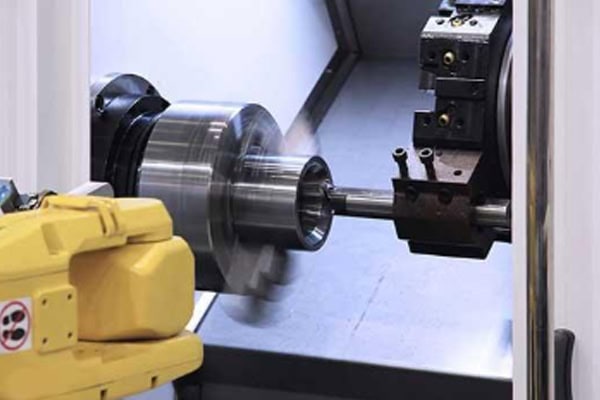
As industrial automation continues expanding worldwide, robotic manufacturing demands increasingly advanced precision machining technologies. CNC turning not only delivers outstanding dimensional accuracy, production efficiency, and batch consistency, but also integrates intelligent inspection systems, automatic compensation, digital manufacturing management, and automated loading and unloading systems to improve overall productivity. Advanced CNC turning equipment enables manufacturers to efficiently produce complex rotational components while shortening development cycles and improving production consistency.
Looking ahead, continued advancements in artificial intelligence, digital factories, high-speed CNC equipment, and multi-axis machining technologies will further strengthen the role of CNC turning within the robotics industry. Higher machining precision, greater automation, and improved manufacturing efficiency will help robotic manufacturers produce more reliable, higher-quality products while supporting the ongoing growth of smart manufacturing and industrial automation around the world.