In high-end manufacturing, precision machining is often considered expensive. However, from a project management perspective, cost is not determined solely by the unit price of machining. Instead, it is influenced by design decisions, process planning, material utilization, defect rates, and overall production efficiency. Many companies overlook these system-level factors in the early stages, which leads to inflated total project costs. In reality, with proper design optimization and manufacturing strategy, precision machining can significantly reduce total lifecycle costs while improving overall value and efficiency.
Reducing Costs at the Design Stage
A large portion of manufacturing cost is actually determined before production even begins.
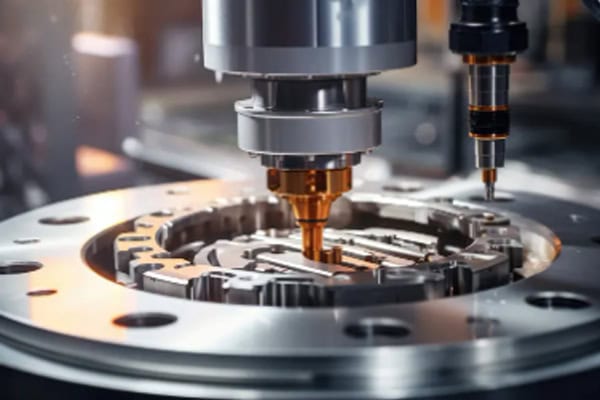
Design for Manufacturability Optimization
In precision machining, whether a design is manufacturable efficiently has a direct impact on cost.
- Overly complex curved surfaces significantly increase machining path time and machine hours
- Unnecessary deep cavities or narrow slots increase tooling costs and reduce machining efficiency
- Uniform wall thickness design helps reduce stress concentration and minimizes deformation risk and rework
- Proper hole layout reduces repeated clamping and improves machining continuity
- Modular standardized structures support mass production and reduce per-unit cost
The more “engineering-oriented” the design is, the easier it is to control cost.
Avoiding Over-Specification
Not every feature requires ultra-high precision, and over-design directly increases budget.
- Overly tight tolerances on non-critical surfaces increase machining and inspection costs
- Excessively strict surface roughness requirements lead to additional finishing or polishing processes
- A properly tiered tolerance system avoids unnecessary high-standard processing across the entire part
Reasonable precision allocation is a key cost-control strategy.
Optimizing Material Selection
Material costs account for a significant portion of precision machining expenses and also affect processing efficiency.
Material Compatibility Optimization
Choosing the right material is often more important than choosing the strongest material.
- Aluminum alloys are suitable for lightweight structures, offering low cost and high machining efficiency
- Stainless steel provides corrosion resistance but increases machining difficulty and cost
- Titanium alloys offer excellent performance but should be reserved for critical load-bearing components due to high cost
- Composite materials require specialized processes and should be avoided in non-essential structures
Material selection is essentially a balance between performance and cost.
Improving Material Utilization
Material waste is one of the most overlooked hidden costs.
- Optimized nesting and layout significantly reduce raw material waste
- Near-net-shape blanks reduce machining volume
- Reducing excessive stock allowance lowers tool wear
- Proper selection of bar or sheet specifications reduces scrap
- Standardizing material sizes in batch production reduces procurement costs
Higher material utilization directly leads to lower overall cost.
Optimizing Machining Processes and Production Paths
Process planning and toolpath strategy directly affect machine time, which is one of the largest cost drivers.
Integrated Process Optimization
Well-designed machining processes can significantly reduce production time.
- Combining multiple operations into a single setup reduces positioning errors
- Optimized toolpaths reduce idle movements and increase efficiency
- Proper cutting parameters extend tool life and reduce consumable costs
- Reducing tool changes decreases machine downtime
- High-efficiency machining strategies improve overall machine utilization
Smoother processes directly translate into lower total cost.
Reducing Rework and Scrap Rates
Rework costs are often far higher than normal machining costs.
- Simulation before machining helps prevent programming errors
- In-process inspection allows early detection of dimensional deviations
- Stable fixture design reduces deformation during machining
- Standardized processes reduce human error
Reducing scrap is essentially a form of cost saving.
Improving Efficiency Through Production Methods
Production strategy has a direct impact on unit cost structure.
Batch Strategy Optimization
Different production scales lead to different cost behaviors.
- Small-batch production is suitable for validation and avoids large-scale trial errors
- Mass production reduces unit cost by spreading fixed expenses
- Hybrid production strategies balance flexibility and cost efficiency
Production strategy itself is a cost-control tool.
Automation and Digital Manufacturing
Automation significantly reduces labor and variability costs.
- CNC automation reduces manual intervention and improves consistency
- Digital programming reduces human errors and setup time
- Online inspection systems reduce manual quality control costs
- Data-driven process management improves production stability
- Equipment networking optimizes scheduling and increases utilization
Higher automation levels result in more stable and predictable costs.
Supply Chain and Outsourcing Optimization
Many companies underestimate the impact of supply chain structure on total cost.
Choosing the Right Manufacturing Partners
Different outsourcing models significantly affect cost structure.
- Specialized precision machining providers reduce capital equipment investment
- Centralized procurement and machining lower unit production costs
- Integrated manufacturing services reduce intermediate handling costs
- Stable suppliers reduce hidden losses caused by quality variation
Supply chain optimization is a long-term cost reduction strategy.
Precision machining cost control is not simply about lowering unit prices. It is a systematic optimization process involving design, materials, processes, production methods, and supply chain structure. When all these elements are properly aligned, companies can significantly reduce overall budget while improving quality and consistency. In the high-end manufacturing ecosystem, platforms such as Tirapid, which specialize in complex parts and high-precision machining, help companies achieve both cost efficiency and manufacturing excellence through mature processes and system-level production control.