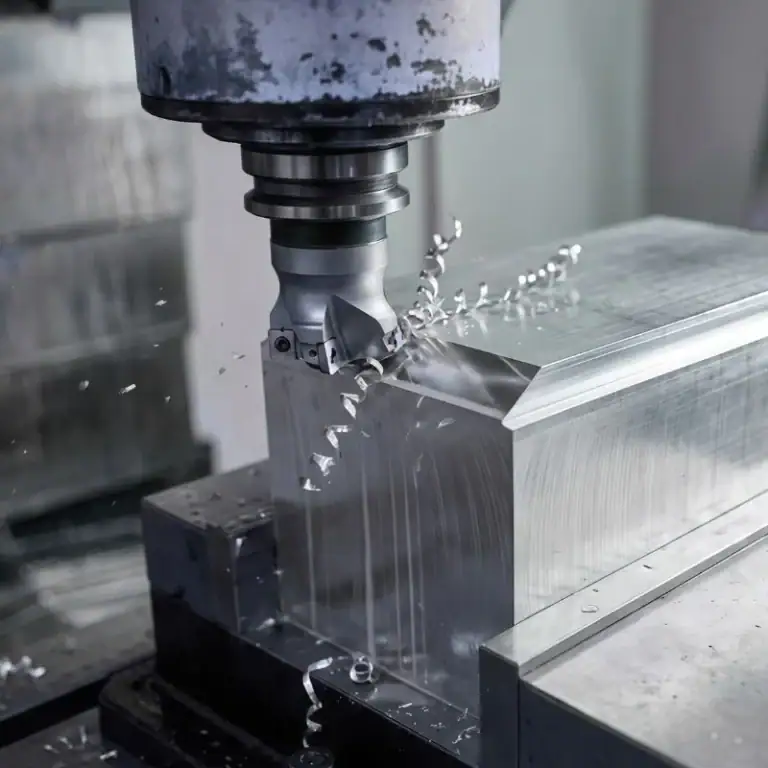
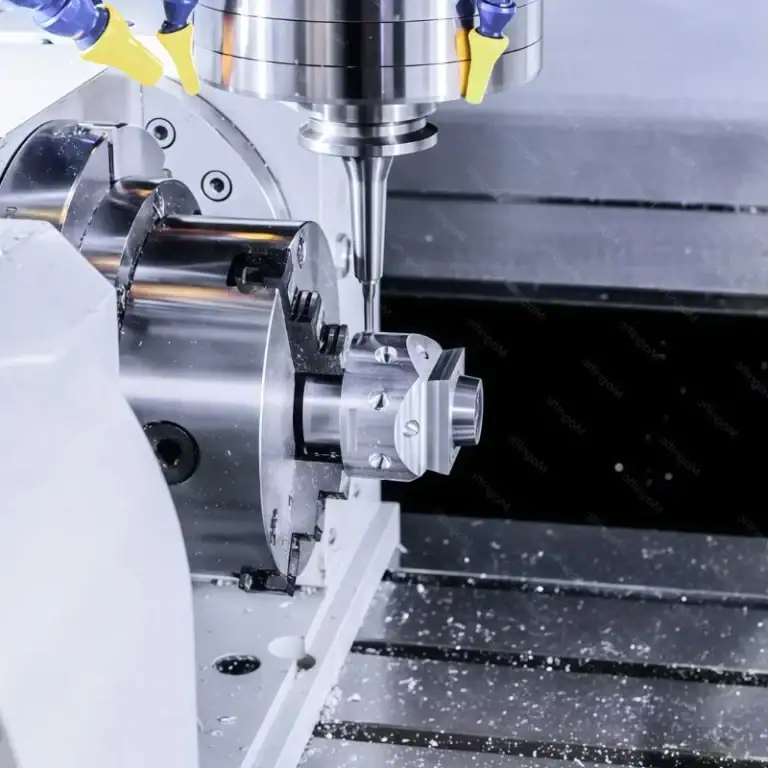
In precision machining, errors are an unavoidable reality. Even with high-precision CNC machines, five-axis machining centers, and strict process control systems, final parts will still exhibit small deviations. These deviations are not caused by a single factor, but by the combined influence of equipment, process design, material properties, environmental conditions, and human operations. Understanding error sources is not about achieving absolute “zero error,” but about systematically controlling and stabilizing errors within acceptable limits to ensure high consistency and reliable manufacturing results.
Errors Caused by Machine Tools and Equipment
Machine tools form the foundation of precision machining, and their inherent accuracy determines the upper limit of machining capability.
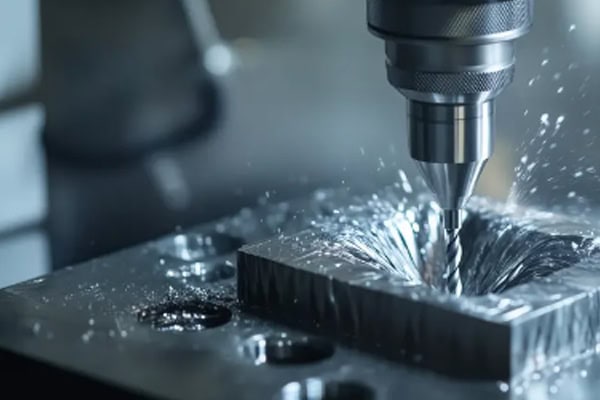
Mechanical structure and assembly errors
Machine tools already contain inherent errors during manufacturing and assembly, which become more evident during machining.
- Guideway straightness deviation affects tool motion accuracy
- Lead screw and nut clearance causes reverse motion backlash
- Spindle alignment errors affect cutting center stability
- Assembly imperfections are amplified during high-speed operation
- Long-term wear further accumulates dimensional deviation
These are structural errors that can only be reduced through machine quality and maintenance.
Thermal deformation and temperature drift
Temperature changes are one of the most hidden yet influential error sources in precision machining.
- Heat generated by high-speed spindle rotation causes expansion
- Machine bed deforms slightly due to ambient temperature changes
- Long machining cycles shift the overall thermal balance
- Uneven cooling systems create localized thermal distortion
- Day-night temperature variations cause coordinate drift
In micron-level machining, temperature control often directly determines precision stability.
Errors Caused by Process Design and Cutting Tools
Many machining errors are not caused by equipment, but by process planning and tool conditions.
Tool wear and condition changes
Cutting tools continuously change during machining, directly affecting dimensional accuracy.
- Tool tip wear gradually shifts part dimensions
- Tool dulling increases cutting heat and force
- Tool runout affects machining path stability
- Small differences exist between tool batches
- Improper installation introduces eccentricity errors
Tool-related errors are usually gradual and difficult to detect early.
Elastic deformation caused by cutting forces
During machining, both the tool and workpiece undergo elastic deformation.
- Clamping force may cause micro deformation of the workpiece
- Cutting forces can slightly bend the tool
- Thin-walled structures are highly deformation-sensitive
- Multi-directional forces increase instability
- Improper cutting parameters amplify overall errors
These errors often appear only after unclamping.
Process path and machining strategy issues
Toolpath design directly determines how errors are generated and propagated.
- Improper machining sequence leads to error accumulation
- Multiple setups introduce reference conversion deviations
- Unbalanced roughing and finishing allowances affect stability
- Poor toolpath transitions create localized deviations
- Frequent process switching increases uncertainty
Process design essentially defines how errors are “created.”
Errors Caused by Material and Environmental Factors
Even with perfect machines and processes, materials and environment still influence final accuracy.
Internal stress and deformation in materials
Materials are not perfectly stable structures.
- Residual stress exists unevenly inside raw materials
- Stress release during machining causes deformation
- Heat treatment leads to dimensional changes
- Complex thin-walled parts deform more easily
These errors are delayed and often appear after machining.
Temperature and environmental fluctuations
Environmental conditions have a direct impact on high-precision machining.
- Workshop temperature changes affect dimensional reference
- Mismatch between machining and measurement environments causes deviation
- Seasonal temperature shifts lead to dimensional drift
In precision manufacturing, temperature control is often a basic requirement.
Vibration and external disturbances
External vibration can directly disrupt machining stability.
- Floor vibration affects machine positioning accuracy
- Nearby equipment generates micro-vibrations
- High-speed cutting may induce resonance
- Long overhang tools amplify vibration errors
- Weak machine foundations increase instability
Vibration often directly affects surface quality and consistency.
Errors Caused by Measurement and Human Factors
Errors may also arise during measurement and execution stages.
Measurement system errors
Inaccurate measurement systems lead to incorrect judgment.
- Low-precision measuring equipment fails to reflect true errors
- Non-controlled temperature environments cause data drift
- Improper measurement methods introduce reading errors
- Lack of calibration leads to systematic deviation
Sometimes measurement errors are more critical than machining errors.
Human operation errors
Human factors remain unavoidable in precision machining.
- Programming or input mistakes
- Improper clamping and positioning
- Deviations in process execution
- Parameter misjudgment due to inexperience
Human errors are random and difficult to predict.
Process management errors
Weak system management amplifies overall errors.
- Inconsistent process standards
- Poor batch production control
- Delayed quality feedback loops
- Unstable inter-process coordination
- Incomplete data tracking and records
Management level directly affects overall consistency.
Sources of errors in precision machining represent a complex systemic engineering problem rather than a single-point issue. They arise from the combined effects of equipment, process design, materials, environment, and human operations. True high-precision manufacturing is not about eliminating all errors, but about systematically controlling them within a stable and repeatable range. In high-end manufacturing, platforms like Tirapid, which specialize in complex parts and high-precision machining, achieve stable and consistent output through mature process systems and strict quality control.