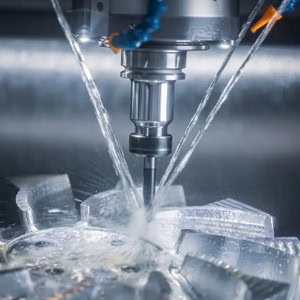
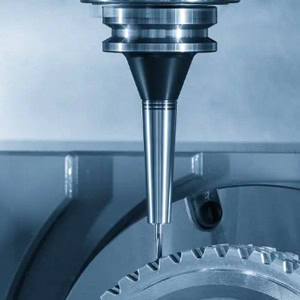
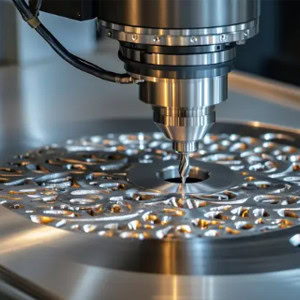
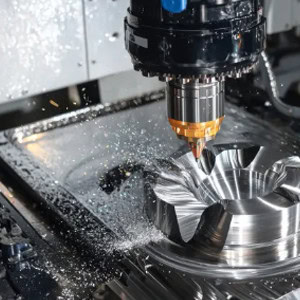
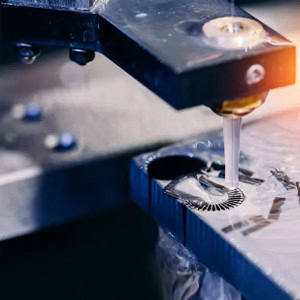
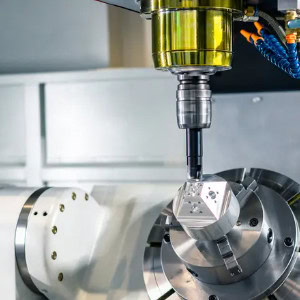
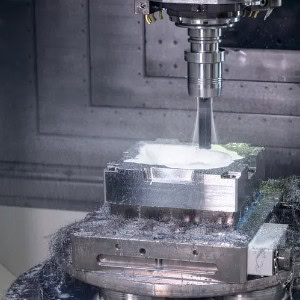
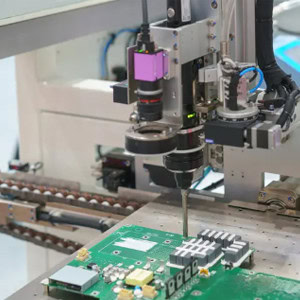
A part’s long-term performance depends not only on dimensional accuracy but also on surface quality. In many high-end manufacturing fields, such as automation equipment, medical devices, semiconductor equipment, and aerospace
During precision machining, tool breakage is one of the most common issues faced by manufacturing companies. A broken tool may seem like a small loss, but the actual impact can
Whether a part can operate reliably often does not depend on its size, but on how accurately it is manufactured. In industries such as automation equipment, medical devices, aerospace components,
Many machines may look complex, but their actual performance often depends on small internal components. A slight deviation in a hole position or an unstable dimension can affect the assembly
A part must go through multiple manufacturing processes before it can become a finished component that meets design requirements. Especially in industrial equipment, automation systems, medical devices, aerospace components, and
Composite materials are increasingly used in aerospace, lightweight automotive applications, medical equipment, and advanced industrial products. They offer excellent advantages such as low weight, high strength, and corrosion resistance. However,
After industrial equipment has been used for several years, many companies face a similar situation: the equipment can still operate, but its production efficiency and processing capabilities can no longer
Why are semiconductor equipment systems so valuable? In addition to complex control systems and advanced technologies, countless precision components inside the equipment also play a critical role. Many of these
Optical parts may look like small and simple components, such as lenses, reflectors, or precision structural elements, but manufacturing them is far more challenging than machining ordinary mechanical parts. Even
When people talk about robots, they often think first about intelligent systems, programming control, or sensors. However, the ability of a robot to operate accurately, quickly, and reliably also depends
Many companies face the same question when they receive a drawing for a complex part: “Can this structure actually be manufactured?” Compared with ordinary components, complex structural parts often include
Many customers who work with carbon fiber machining for the first time often think this material is simply “lighter and stronger,” so processing it should not be too difficult. However,
Scroll to Top
Your 24 hour quote
Send us a message if you have any questions or request a quote. We will be back to you within 1-2 hours!