As the automotive industry rapidly evolves toward electrification, high performance, and intelligent manufacturing, the requirements for component manufacturing accuracy are continuously increasing. Production is no longer focused on basic “functionality,” but has shifted toward high consistency and high reliability control. From engine systems to transmission structures, and further to core components of new energy vehicle electric drives and battery systems, even the smallest dimensional deviations or surface defects can significantly affect overall vehicle performance and long-term reliability. Against this backdrop, precision machining has become a key technical foundation in automotive component manufacturing and plays an increasingly important role in enhancing vehicle performance.
Precision Machining in Engine Systems
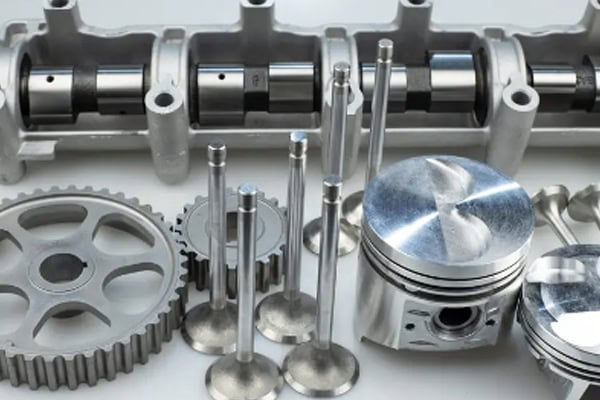
As the core power unit of a vehicle, the engine operates under high temperature, high pressure, and high-speed conditions for long periods. It requires extremely strict machining accuracy for its components. Machining quality not only affects combustion efficiency but also determines power stability and engine lifespan, making precision machining a fundamental requirement in this system.
Cylinder and Block Machining
The cylinder and engine block are the structural foundation of the engine, and their machining accuracy directly affects performance and sealing reliability.
- Cylinder bore consistency affects piston resistance and compression efficiency
- High-precision boring ensures stable combustion chamber structure and sealing performance
- Surface roughness optimization reduces friction loss and improves fuel efficiency
- Thermal deformation control improves dimensional stability under high-temperature conditions
Crankshaft and Camshaft Machining
Crankshafts and camshafts are key rotating components requiring extremely high dynamic balance and geometric accuracy.
- Crankshaft eccentricity errors cause high-speed vibration and power loss
- Cam profile accuracy affects valve timing and combustion efficiency
- Precision machining improves smooth operation and durability
Fuel Injection Components
Fuel injection systems are high-precision micro-structured parts with strict consistency requirements.
- Injector hole size directly affects fuel atomization quality
- Machining accuracy determines combustion efficiency and emission levels
- Plays a key role in engine responsiveness and stability
Key Precision Machining Technologies in Transmission Systems
The automotive transmission system is responsible for power delivery and gear shifting control. Its components operate under high load and high-speed conditions, requiring extremely strict control of fit accuracy, gear profile errors, and surface quality. Precision machining directly determines driving smoothness, power efficiency, and system reliability.
Gear Machining Accuracy Control
Gears are core components of transmission systems, and their machining quality directly affects noise, vibration, and efficiency.
- Gear profile errors cause meshing impact and vibration
- Precision finishing improves efficiency and load capacity
- Ensures long-term operational stability and reliability
Shaft Component Machining
Shafts are key power transmission components requiring strict geometric accuracy and concentricity.
- Concentricity errors lead to system vibration and efficiency loss
- Surface quality affects bearing wear and service life
- High-precision machining improves high-speed stability
Bearing Mating Surface Machining
Bearing mating surfaces are critical for stable rotational systems and are highly sensitive to dimensional and surface conditions.
- Fit clearance affects rotational resistance and energy loss
- Lower surface roughness reduces friction and heat generation
- Precision machining reduces operating temperature and extends lifespan
Precision Machining in Core New Energy Vehicle Components
The development of new energy vehicles drives continuous upgrades in electric drive systems and battery structures. This increases the demand for lightweight, high-efficiency, and high-safety components, making precision machining even more important for improving overall vehicle performance and driving range.
Motor Rotor and Stator Machining
Electric drive performance heavily depends on the machining accuracy and assembly consistency of rotors and stators.
- Rotor dynamic balance affects high-speed stability and noise control
- Stator slot accuracy impacts electromagnetic efficiency and energy consumption
- Precision machining reduces energy loss and improves driving range
- Enhances overall system consistency and reliability
Battery Structural Component Manufacturing
Battery structural components must balance lightweight design and structural strength with high precision requirements.
- Aluminum structures require strict dimensional consistency
- Assembly errors affect overall battery pack safety and stability
- Precision machining improves module consistency and reliability
Thermal Management Components
Thermal systems are critical for safe operation and lifespan of new energy vehicles.
- Cooling channel accuracy affects heat dissipation efficiency
- Micro-channel structures require high machining stability
- Precision machining ensures long-term reliable thermal performance
- Thermal control directly impacts battery safety and lifespan
Core Value of Precision Machining in Automotive Components
Precision machining is not only a manufacturing process but also a critical capability for improving vehicle performance, reliability, and service life. It plays a role throughout design, production, and operation.
Improved Vehicle Performance Stability
Vehicle stability heavily depends on component machining consistency.
- Reduces vibration and operating noise
- Improves power transmission efficiency
- Enhances driving smoothness
Extended Component Lifespan
High-precision machining significantly reduces wear and failure risk.
- Reduces friction and contact wear
- Minimizes thermal deformation effects
- Improves long-term reliability
Supports Lightweight Design Trends
Enables optimized structures while maintaining strength and reliability.
- Supports thin-wall and complex designs
- Reduces overall vehicle weight
- Improves fuel efficiency and driving range
In the continuous advancement of the automotive industry toward high-end manufacturing and intelligent systems, precision machining has evolved from a traditional process into a core competitive capability. Its influence spans the entire supply chain of automotive components. As technology continues to progress, the requirements for machining accuracy and stability will keep increasing. Tirapid provides high-performance precision machining solutions, offering reliable technical support and manufacturing assurance for automotive component production.