During product development and new project launches, prototyping is an essential step for verifying whether a design is feasible. Compared with mold-based production, which requires lengthy preparation time, plastic CNC machining has become the preferred method for product validation for many companies due to its advantages of no mold requirement, high machining accuracy, and fast delivery speed.So, how long does plastic CNC prototyping usually take?
What Is Plastic CNC Prototyping?
Plastic CNC prototyping is currently one of the most common manufacturing methods used during the product development stage. It can quickly produce physical samples according to engineering drawings, helping companies verify product structures, assembly performance, and functional characteristics. Therefore, it is widely used in electronic equipment, automation systems, medical devices, and industrial machinery.
Basic Concept of Plastic CNC Prototyping
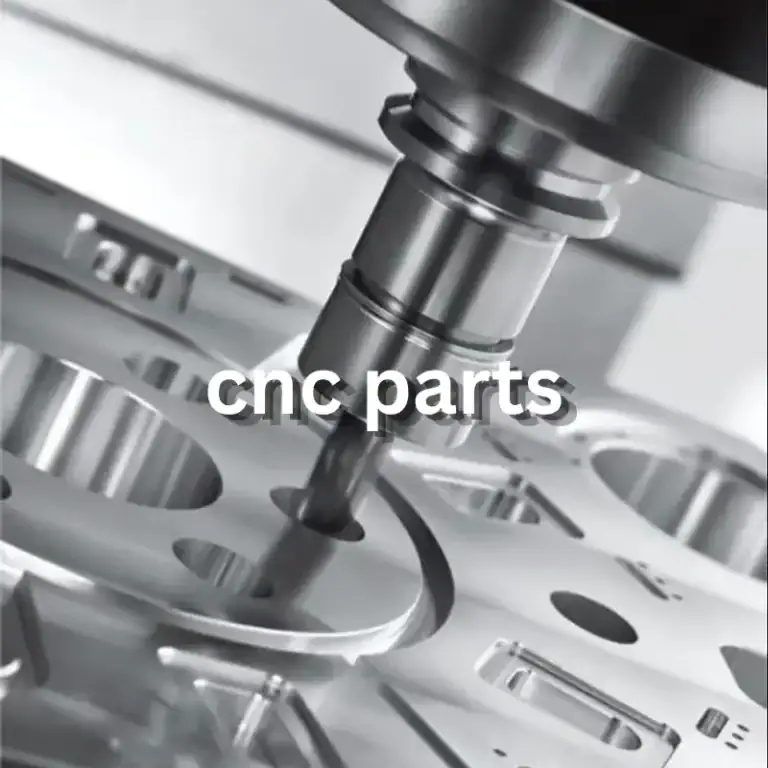
Before a product enters mass production, companies usually need to create samples for testing and validation. Plastic CNC prototyping uses CNC machining equipment to directly machine plastic sheets or rods into parts that meet drawing specifications.
Its main purposes include:
- Verifying product designs
- Checking structural feasibility
- Testing assembly performance
- Optimizing product details
- Reducing risks in future mass production
Compared with traditional manufacturing methods, CNC prototyping can transform engineering drawings into actual products much faster.
Why Do Many Companies Choose CNC Prototyping?
For new product development, time is often critical. Compared with injection molding, which requires mold fabrication, the biggest advantage of CNC prototyping is that it eliminates the mold development process.
Its main advantages include:
- Production without molds
- Easier design modifications
- Fast sample delivery
- Suitable for low-volume production
- Capable of achieving high machining accuracy
Many companies choose CNC prototyping first to validate product concepts before deciding whether to proceed with mold development.
Common Materials Used for Plastic CNC Prototyping
Different products require different material properties, so prototyping materials vary accordingly. Machining manufacturers typically recommend suitable plastic materials based on product applications.
Common materials include:
- POM
- ABS
- PA (Nylon)
- PEEK
- PEI
- PTFE
- PVC
- PP
- PMMA
Among these materials, ABS and POM generally offer faster machining speeds, while high-performance engineering plastics such as PEEK and PEI usually require longer prototyping cycles because of their higher machining difficulty.
How Is Plastic CNC Prototyping Completed?
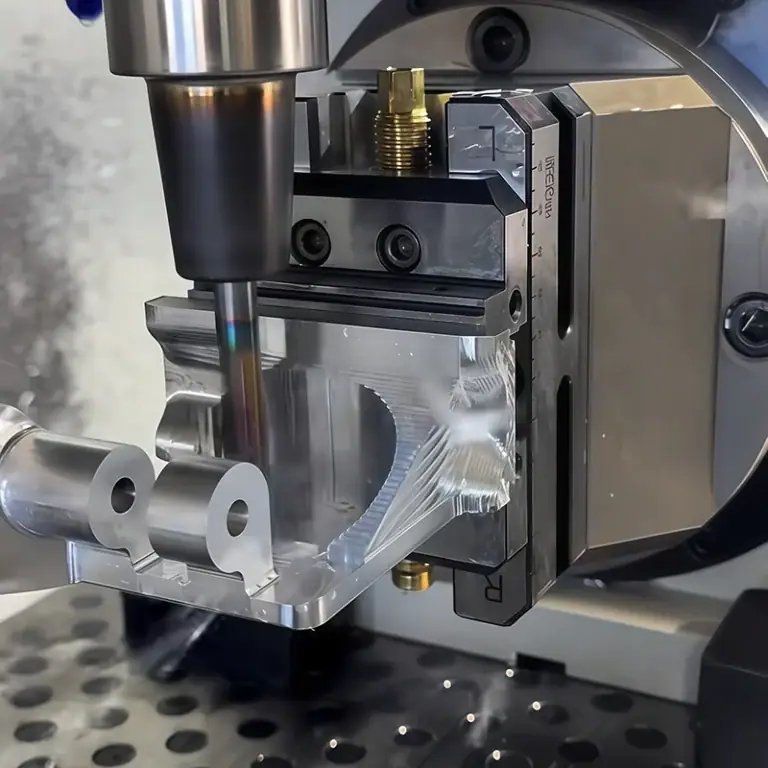
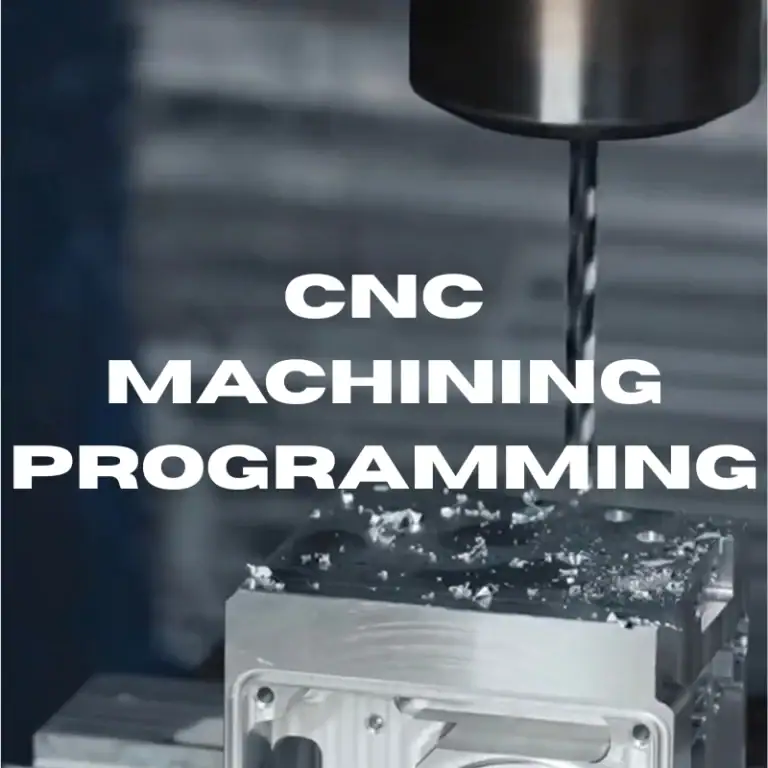
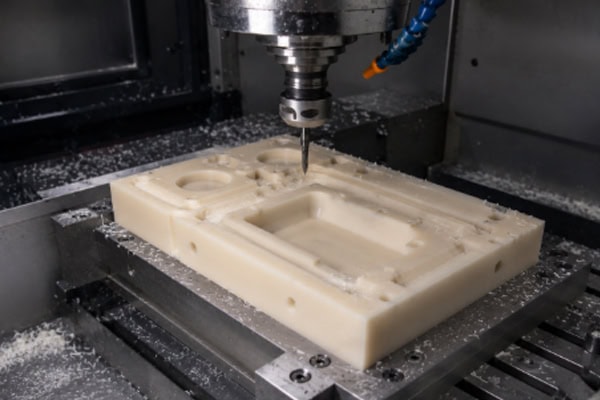
The process usually begins when the customer provides engineering drawings. Engineers first conduct a technical evaluation to confirm whether the material selection, structure, and machining process are suitable.Next, CNC programming is performed to establish machining paths and cutting parameters.Once production begins, CNC machines automatically perform operations such as milling, drilling, slotting, and tapping according to the program.
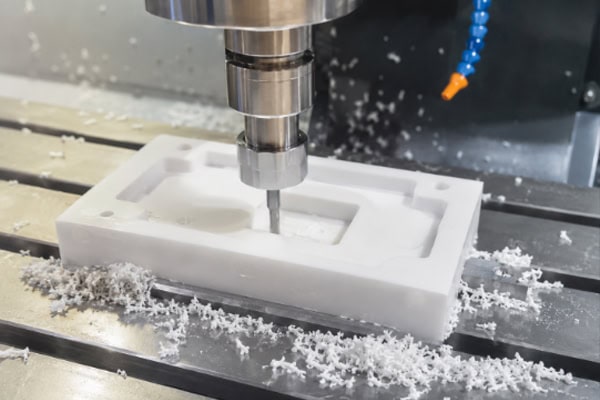
For products with complex structures or high precision requirements, multiple stages may be required, including rough machining, semi-finishing, and finishing.After machining is completed, technicians perform dimensional inspections, visual inspections, and necessary post-processing procedures. Once the product is confirmed to meet requirements, it is packaged and shipped.Every step in this process is interconnected, and each stage affects the final delivery time.
What Factors Affect the Plastic CNC Prototyping Lead Time?
Although many plastic parts can be prototyped within a few days, the actual lead time is not fixed. The following factors often have a direct impact on delivery schedules.
Product Structural Complexity
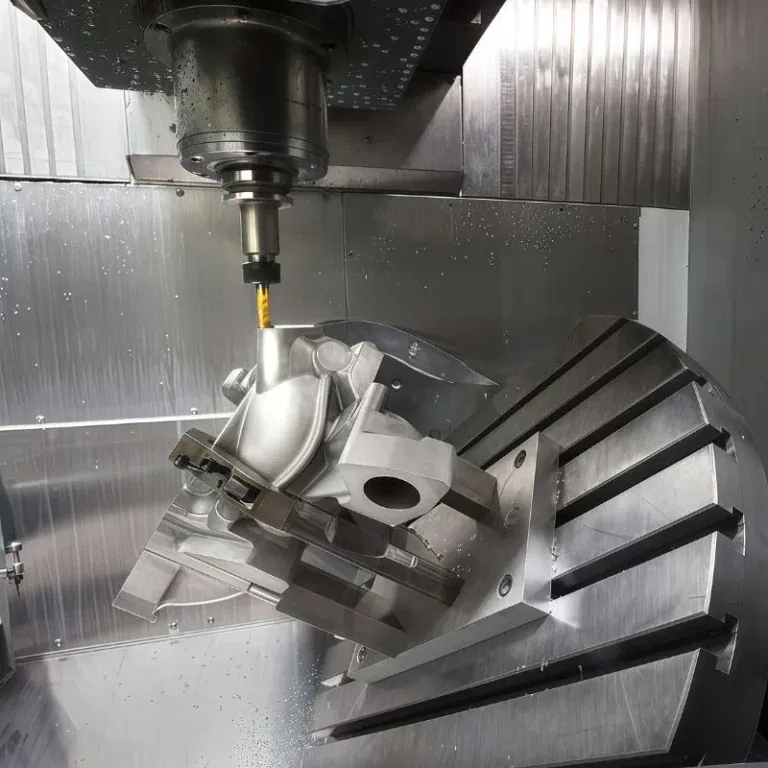
If the product is simply a flat plate, mounting panel, or standard bracket, programming and machining are relatively straightforward and can usually be completed quickly.However, if the product includes complex curved surfaces, deep grooves, irregular contours, multi-sided machining, or high-precision hole locations, engineers need to invest more time in programming and process planning.
Material Type
Different plastic materials have significantly different machining characteristics.
For example:
- ABS and POM offer high machining efficiency
- Nylon has moderate machining difficulty
- PTFE is prone to deformation
- PEEK and PEI require more advanced machining control
The more specialized the material, the more difficult it is to process, and the longer the lead time usually becomes.
Precision Requirements
The higher the dimensional accuracy requirements, the longer the machining cycle tends to be.For standard parts, production can often be completed as long as normal tolerance requirements are met. However, precision components frequently require additional machining operations to ensure dimensional accuracy.
High-precision products typically require:
- Rough machining with stock allowance
- Semi-finishing to refine contours
- Finishing to achieve final dimensions
- Multiple inspections for verification
Some critical dimensions may even require measurement during machining to ensure the final product meets design specifications.
Product Quantity
The time required for a single prototype differs from that of a small-batch trial production run.As quantity increases, machining time, inspection time, and post-processing time also increase, resulting in a longer delivery cycle.
Factory Production Scheduling
Even if a product has a simple structure, production may be delayed during peak manufacturing seasons or periods of high order volume.Therefore, communicating delivery expectations in advance is extremely important.
Frequently Asked Questions
Q1: How long does plastic CNC prototyping usually take?
A: Simple products can typically be completed within 1–3 days, while complex products generally require approximately 3–7 days.
Q2: Can prototyping be completed within the same day?
A: Some simple parts can be machined and shipped on the same day if materials are readily available in stock.
Q3: Does prototyping high-performance engineering plastics take longer?
A: Usually yes. Materials such as PEEK, PEI, and PTFE have higher machining requirements and often require additional inspections and adjustments.
Q4: Will increasing the prototype quantity affect the lead time?
A: Yes. Although programming time remains unchanged, machining and inspection time increase as quantities rise.
Q5: How can prototyping lead times be shortened?
A: Providing complete engineering drawings in advance, clearly specifying material requirements and dimensional standards, and selecting a manufacturer with available stock materials and extensive machining experience can effectively reduce delivery times.
Conclusion
The lead time for plastic CNC prototyping is generally much shorter than traditional mold-based production. Most projects can be completed within 1 to 7 days. For products with simple structures and commonly used materials, even faster delivery may be possible.However, products with complex geometries, tight tolerances, or special engineering plastics require additional process control and inspection time.For companies, planning development schedules in advance, improving drawing quality, and selecting experienced machining manufacturers can not only increase prototyping efficiency but also reduce modification costs later in the development process, making product development smoother and more efficient.