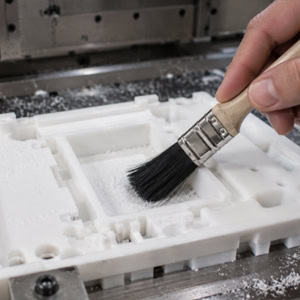
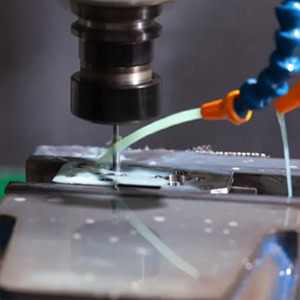
After CNC plastic parts are machined, their surfaces are usually left with cutting chips, coolant residue, electrostatically adsorbed dust, and slight oil contamination. If these residues are not cleaned in
In the precision manufacturing industry, machining quality has always been one of the most critical indicators for businesses. Whether it is aerospace components, medical device parts, automotive accessories, or industrial
Plastic parts are widely used in fields such as electronic devices, medical equipment, automation systems, automotive components, communication devices, and industrial machinery. With the accelerating pace of product updates, more
In precision machining production, unstable quality is one of the most common challenges faced by manufacturers. It often appears as dimensional variation, inconsistent surface finish, local deformation, burr formation, and
In precision machining, vibration is one of the most common and challenging factors affecting machining quality, especially in high-speed milling, deep cavity machining, and thin-walled part production. Vibration not only
As modern manufacturing continues to evolve toward higher precision, greater efficiency, and smarter production, the choice of machining technology directly impacts product quality, production costs, and market competitiveness. From aerospace
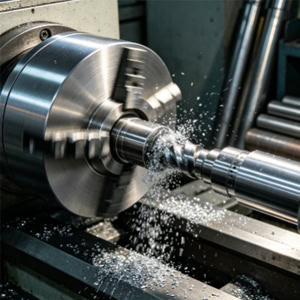
CNC turning is widely used in machinery manufacturing, automotive production, aerospace, medical equipment, energy systems, and automation industries. Different metals vary significantly in hardness, strength, thermal conductivity, corrosion resistance, and
In precision machining, material cracking is a critical issue that can significantly increase production cost and reduce yield rate, especially when working with high-strength alloys, hardened steels, aluminum alloys, and
In modern high-end manufacturing systems, milling is one of the most fundamental and critical processes in precision machining, widely used in mold making, automotive components, aerospace structures, and medical devices.
In the context of increasingly fierce competition in the modern manufacturing industry, machining efficiency has become a crucial indicator for enterprises to control costs and improve delivery capabilities. For companies
Polycarbonate (PC) is one of the most widely used industrial plastics and holds an important position in modern manufacturing. Thanks to its excellent impact resistance, high transparency, outstanding dimensional stability,
Aluminum is one of the most widely used metal materials in modern manufacturing. It is commonly found in aerospace, automotive manufacturing, electronics, automation equipment, medical devices, and new energy industries.
Scroll to Top
Your 24 hour quote
Send us a message if you have any questions or request a quote. We will be back to you within 1-2 hours!