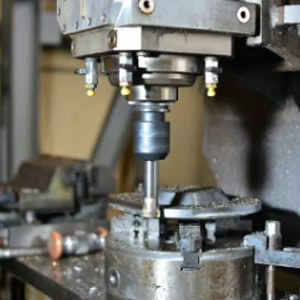
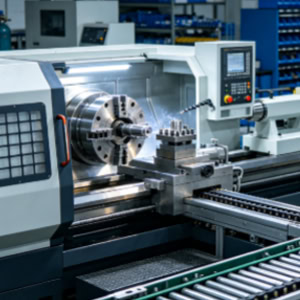
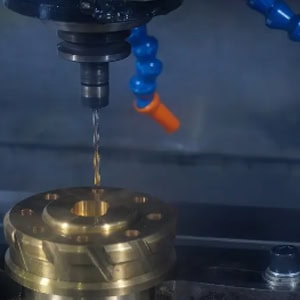
In today’s increasingly competitive manufacturing industry, delivery lead time has become a critical factor influencing customers’ choice of suppliers. For companies that require mass production of precision parts, improving CNC
CNC turning technology has become an essential manufacturing process in modern industry due to its high precision, efficiency, and stable mass-production capabilities. From traditional machinery manufacturing to advanced aerospace engineering,
In the field of modern precision manufacturing, enterprises are increasingly focused on part machining quality, production efficiency, and long-term stability. When it comes to CNC milling, many people prioritize equipment
In mold manufacturing, aerospace components, automotive critical structural parts, and high-strength mechanical components, high-hardness materials are increasingly widely used. These materials offer excellent wear resistance and strength, but they also
In high-end equipment manufacturing—such as aerospace, medical devices, semiconductor equipment, and precision molds—there are extremely strict requirements for component accuracy, stability, and consistency. These products typically feature complex structures, fine
After CNC machining, plastic parts already have accurate dimensions and structures, but the surface often retains tool marks, minor burrs, or machining traces. For products such as electronic device housings,
In aerospace manufacturing, even the slightest dimensional deviation in a single component can be greatly amplified under high-speed, high-pressure, and high-temperature operating conditions, ultimately affecting overall aircraft performance and even
In modern manufacturing systems, the quality of precision machining does not depend solely on equipment capabilities. Material selection is a more fundamental and critical factor. With the same drawing, using
In the field of CNC turning, different materials exhibit significantly different machining characteristics. Material hardness, thermal conductivity, toughness, chip formation behavior, and wear resistance all influence machining efficiency and tool
The automotive manufacturing industry places extremely high demands on component accuracy, production efficiency, and product consistency. From engine systems and transmission assemblies to chassis structures and new energy vehicle components,
In today’s manufacturing industry, which is continuously moving toward higher precision and larger-scale production, precision machining has become a core capability for ensuring product quality stability and mass production efficiency.
Thin-walled parts are a typical high-difficulty workpiece type in precision machining. Their main characteristics include thin wall thickness, low structural rigidity, high sensitivity to deformation under force, and strong susceptibility
Scroll to Top
Your 24 hour quote
Send us a message if you have any questions or request a quote. We will be back to you within 1-2 hours!