Turning a metal part from an engineering drawing into a finished component involves several manufacturing stages. Although CNC machining offers high dimensional accuracy and consistent processing quality, problems such as incomplete dimensions, unsuitable part structures, or incorrect material selection can still lead to machining difficulties, higher costs, or even part rejection.Before production begins, engineers need to conduct a comprehensive technical review to ensure that the design requirements are compatible with actual manufacturing capabilities.
Check the Completeness of Engineering Drawings
Verify Dimensions and Geometric Specifications
Engineers should confirm that all essential dimensions are clearly specified, including length, width, height, hole diameter, slot width, and other machining features. When a part includes multiple views, the front, top, and sectional views must be consistent to avoid conflicting dimensions or missing information.
For complex metal components, the 3D model must also match the 2D engineering drawing. Any discrepancies between the model and drawing should be resolved before machining begins.
Review Dimensional and Geometric Tolerances
Different components have different precision requirements. Engineers should pay particular attention to tolerances for hole diameters, shaft diameters, mating surfaces, and installation positions.
In addition to dimensional tolerances, geometric tolerances such as flatness, perpendicularity, concentricity, and position tolerance should also be reviewed.
Overly tight tolerances can increase machining time, inspection difficulty, and manufacturing costs. Therefore, tolerance requirements should reflect the actual assembly and functional needs of the component.
Confirm Metal Materials and Machinability
Verify Material Grades
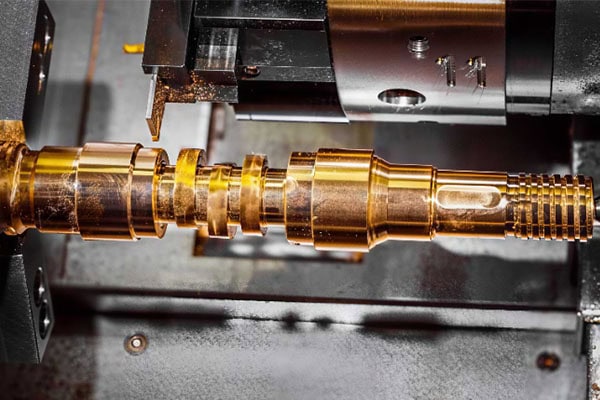
Aluminum alloys, stainless steel, carbon steel, and brass have different mechanical properties and machining characteristics. Engineers should confirm the material grade, condition, and applicable technical standards specified in the drawing to prevent material substitutions from affecting component performance.
For example, aluminum alloys are generally lightweight and offer good machinability, making them suitable for weight-sensitive structural components. Stainless steel provides good corrosion resistance, although certain grades can be more challenging to machine.
Evaluate How Materials Affect Machining Processes
Material hardness, toughness, and thermal conductivity influence tool selection, cutting speed, feed rate, and cooling methods.
For mass production projects, engineers should also consider material availability and raw material costs. Evaluating these factors in advance helps establish a suitable CNC metal machining solution while reducing tool wear and quality variations during production.
Evaluate Whether the Part Structure Is Suitable for CNC Machining
Inspect Holes, Slots, and Deep Cavities
Deep holes, narrow slots, and complex internal cavities can make tool access more difficult. They may also cause poor chip evacuation, vibration, or reduced machining accuracy.
Engineers should evaluate the depth-to-diameter ratio of holes, slot widths, and internal corner designs to determine whether they are compatible with conventional cutting tools.
For features that do not affect product functionality, design modifications such as adding internal corner radii or adjusting slot dimensions can help simplify machining.
Pay Attention to Thin Walls and Clamping Positions
Thin-walled metal components are more susceptible to cutting forces and may experience deformation or dimensional deviations during machining.
Engineers should check whether the wall thickness is appropriate and consider how the component will be supported throughout the machining process.
Clamping positions must also be evaluated to prevent fixtures from blocking critical machining areas or excessive clamping forces from deforming the workpiece.
Develop a Suitable CNC Machining Process
Select the Appropriate Machine and Operations
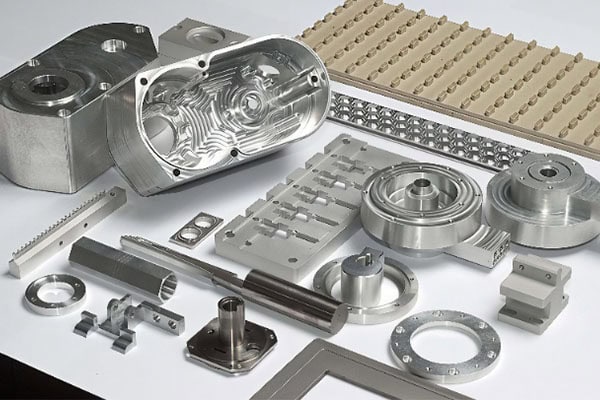
Based on the component’s dimensions, geometry, and precision requirements, engineers need to determine whether three-axis, four-axis, or five-axis CNC machining is appropriate.
Relatively simple components can usually be manufactured using three-axis equipment. Parts with multiple angled surfaces or complex spatial features may require multi-axis machining to reduce the number of setups.
Properly arranging roughing, semi-finishing, and finishing operations also helps control material removal stress and potential deformation.