Telecommunications equipment has high requirements for component dimensional accuracy, signal transmission, and heat dissipation. RF cavities, shielding enclosures, mounting brackets, and thermal components have different requirements for dimensions, materials, and surface treatments, making standard parts unsuitable for every customized device. Components used in high-frequency communication equipment must also meet electromagnetic shielding, grounding continuity, and dielectric performance requirements. When developing a machining solution, manufacturers need to consider the equipment’s application, operating frequency, and structural layout to select suitable materials, arrange CNC machining processes, and establish quality inspection procedures. This helps improve component compatibility with the complete equipment and reduce assembly and production issues.
Main Machining Requirements for Non-Standard Telecommunications Components
Telecommunications equipment has a compact internal structure. Different components perform supporting, connecting, shielding, and heat dissipation functions, so their machining requirements must be determined according to their intended applications.
Common Types of Non-Standard Components
Customized telecommunications components mainly include mechanical structures and functional assemblies, each with different machining priorities.
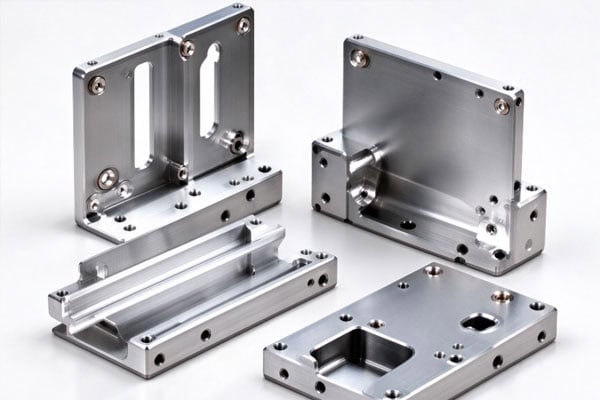
- Structural support components: These include equipment baseplates, mounting brackets, connecting plates, and fixing blocks. Key requirements include mounting hole positions, flatness, and assembly dimensions.
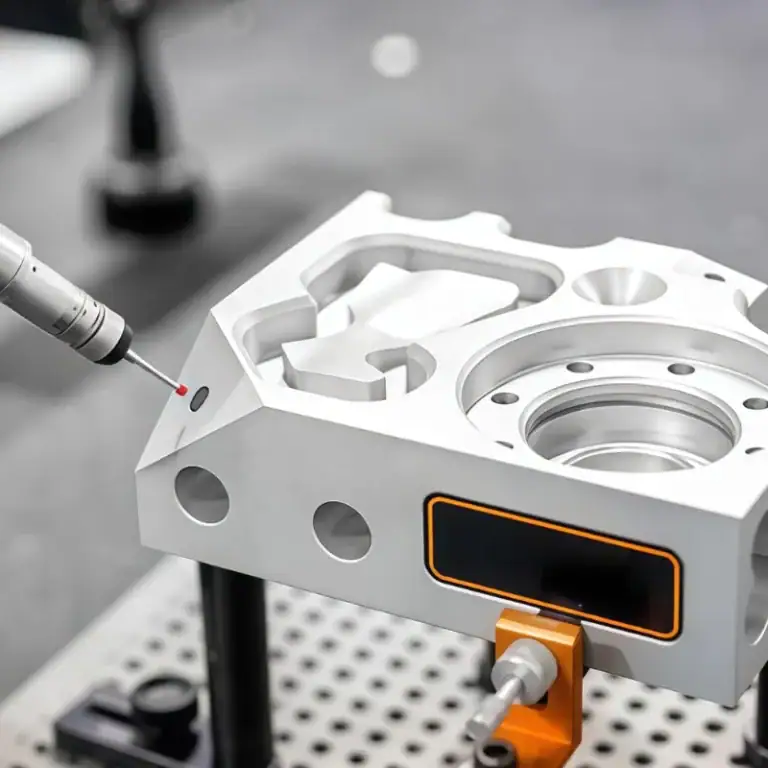
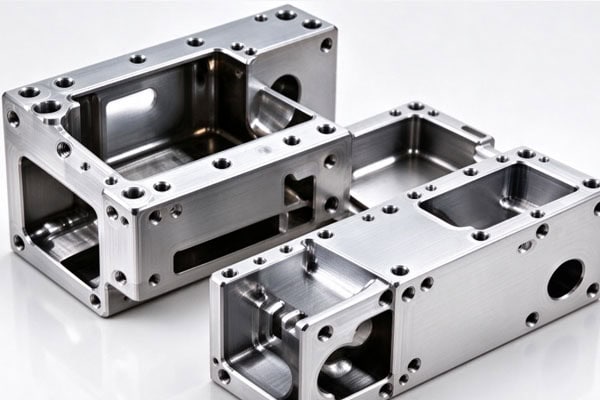
- RF and shielding components: These include RF cavities, shielding covers, and module enclosures. Cavity dimensions, contact surfaces, and electrical continuity require particular attention.
- Thermal components: These include heat sink bases, thermal plates, and customized heat dissipation structures. Their designs should account for heat distribution, contact area, and available installation space.
- Protective enclosures: These include equipment housings, end covers, and connecting structures. They must meet protection requirements while accommodating the internal layout.
Clearly defining each component’s function helps establish its specific mechanical and electrical requirements.
Precision and Electromagnetic Compatibility Requirements
Dimensional deviations in telecommunications components may affect module installation, circuit layout, and RF performance. Machining must control locating holes, mounting reference surfaces, cavity dimensions, and cover fit. RF shielding structures also require careful attention to cover contact surfaces and grounding positions to prevent surface treatments or assembly gaps from compromising electrical continuity. For components associated with high-frequency signals, geometric dimensions, surface conditions, and dielectric properties must meet the design requirements. Mechanical dimensional accuracy alone is not sufficient to determine whether a component is suitable for its intended application.
CNC Machining Solutions for Non-Standard Telecommunications Components
After confirming the structural design and technical requirements, manufacturers need to develop a suitable process route based on material condition, component geometry, and machining accuracy.
CNC Machining Processes and Deformation Control
CNC milling, turning, drilling, and precision finishing are suitable for different types of non-standard telecommunications components. Deep-cavity aluminum housings and thin-wall structures also require careful control of machining stress and dimensional changes.
- Milling: Suitable for mounting plates, RF cavities, shielding enclosures, and heat sink bases. It can produce flat surfaces, cavities, slots, and complex contours.
- Turning and drilling: Suitable for bushings, cylindrical connectors, and precision mounting holes. Key dimensions include outer diameters, inner bores, hole spacing, and concentricity.
- Staged material removal: For deep-cavity components made from thick stock, roughing and finishing can be separated, with symmetrical material removal and layered machining used to reduce deformation caused by uneven material removal.
- Stress control: For aluminum components with a high risk of deformation, aging or stabilization treatment after rough machining can be evaluated according to the material condition and accuracy requirements. Secondary finishing may be necessary.
A well-planned material removal sequence and machining process help improve the dimensional stability of deep-cavity and thin-wall components.
Material Selection and Surface Treatment
Materials should be selected according to the component’s strength, weight, thermal conductivity, dielectric properties, and electromagnetic shielding requirements. Different functional areas may require different materials and surface treatment methods.
| Component Application | Available Materials or Solutions | Key Considerations |
| Equipment mounting brackets | Aluminum alloys, steel | Structural strength, weight, and mounting stability |
| RF cavities and shielding structures | Aluminum alloys and suitable metals | Cavity dimensions, shielding performance, and electrical contact |
| High-frequency dielectric supports | PTFE and high-frequency modified materials | Dielectric constant, dielectric loss, and dimensional stability |
| General insulating supports | POM, PA, PEEK | Insulation performance, wear resistance, and operating temperature |
| Thermal components | Aluminum alloys, copper, copper-inlaid structures, or vapor chambers | Heat flux density, weight, available space, and cost |
Surface treatment must be selected according to the component’s electrical function. RF contact surfaces, grounding points, and shielding connection areas must retain electrical conductivity. Depending on the design, suitable methods may include local masking, conductive chemical conversion treatment, or metal plating. For thermal structures, copper inserts or vapor chambers can be combined with aluminum bases according to heat flux density and installation space.
Quality Control and Delivery of Non-Standard Telecommunications Components
Telecommunications components must work with circuit modules, shielding structures, and thermal management systems. Inspection should therefore cover both mechanical dimensions and key functional requirements.
Critical Dimensional and Functional Inspection
Acceptance criteria vary according to the component’s intended function. Specific inspection items should correspond to the drawings and technical requirements.
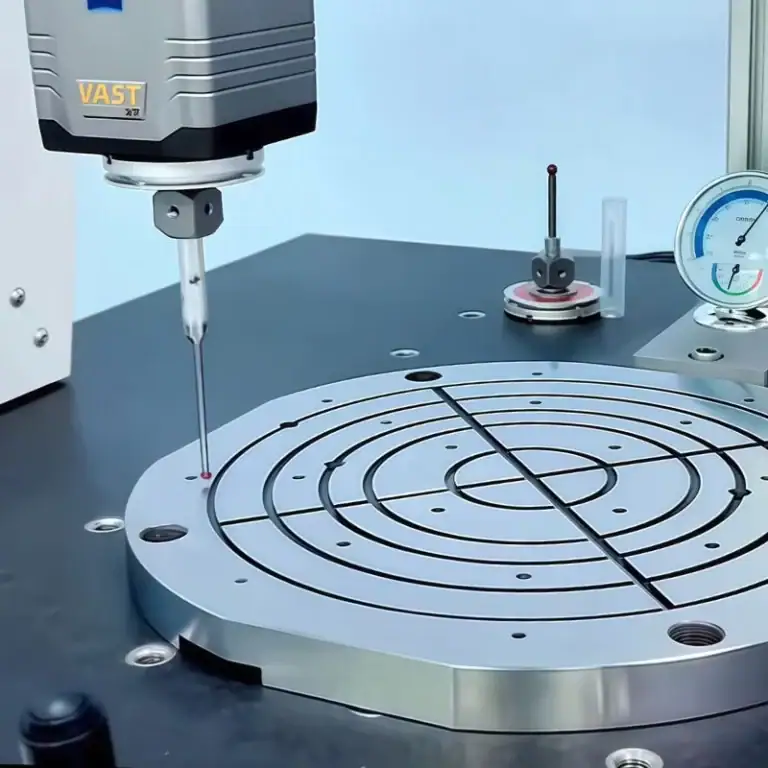
- Dimensional and geometric inspection: Check overall dimensions, hole diameters, hole spacing, slot positions, flatness, and concentricity to confirm that critical features meet the requirements.
- Electrical conductivity inspection: For RF shielding and grounding contact areas, inspect electrical continuity, contact resistance, and surface treatment conditions according to the design requirements.
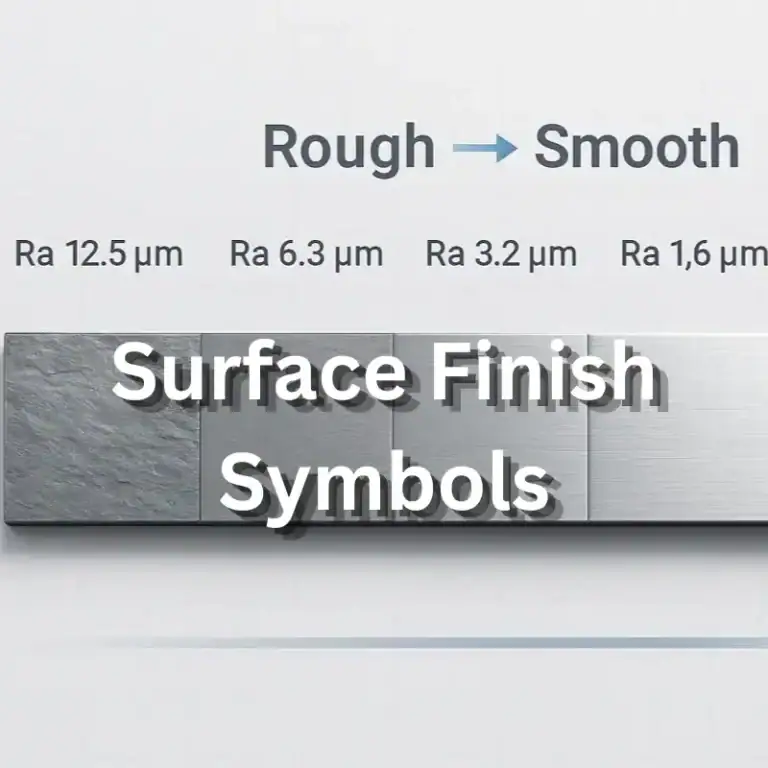
- Surface quality inspection: Check for machining burrs, scratches, and the condition of plating or conversion coatings to prevent surface defects from affecting assembly and operation.
- Assembly verification: Conduct trial assembly to inspect the fit of covers, interfaces, and fastening structures. Relevant RF performance can also be tested when required.
Combining mechanical dimensional inspection with critical electrical performance checks helps reduce assembly and functional risks after delivery.
Prototype Validation and Batch Delivery
Telecommunications product development generally involves prototype production and assembly verification. During the prototype stage, manufacturers should confirm structural dimensions, material condition, surface treatment, and functional compatibility. RF cavities and shielding assemblies may also require grounding connection and related RF performance verification according to project requirements. During batch production, material specifications, machining reference points, and surface treatment processes should remain consistent. Coordinating material procurement, machining, post-processing, and inspection schedules in advance helps maintain stable production timelines.
How to Choose a CNC Machining Service Provider for Non-Standard Telecommunications Components
Telecommunications components may involve precision mechanical manufacturing, specialized materials, and functional surface treatments. When selecting a supplier, buyers should evaluate its technical coordination and manufacturing capabilities.
Evaluate Process Analysis and Customization Capabilities
Non-standard components are generally manufactured according to customer drawings and equipment structures. A machining service provider should be able to understand critical technical requirements and develop an appropriate process plan.
- Drawing evaluation: The provider should be able to identify dimensional tolerances, material specifications, cavity structures, and assembly relationships, while promptly clarifying any ambiguous design requirements.
- Machining planning: For deep cavities, thin walls, and complex structures, the provider should arrange suitable workholding methods, material removal sequences, and deformation control measures.
- Special process coordination: The provider should be able to coordinate conductive surface treatments, insulating material machining, and thermal structure manufacturing according to project requirements.
A thorough process evaluation helps reduce discrepancies between design specifications and actual machining results.
Clarify Quotation and Delivery Requirements
Before placing an order, buyers should provide component drawings, material specifications, order quantities, and surface treatment requirements, then confirm which machining operations are included in the quotation. For RF structural components, conductive contact areas and special inspection items should also be clearly specified. For thermal components, structural and assembly requirements need to be communicated in advance. Delivery schedules, packaging methods, and quality documentation should also be confirmed to help manage procurement costs and project timelines.
CNC machining of non-standard telecommunications components must balance mechanical precision, RF shielding, electrical continuity, dielectric performance, and heat dissipation. Aluminum components with deep cavities require careful stress control, while RF functional areas need appropriately selected surface treatments. TiRapid provides precision CNC machining services based on customer drawings, material specifications, and customization requirements, supporting the development and production of telecommunications equipment components.