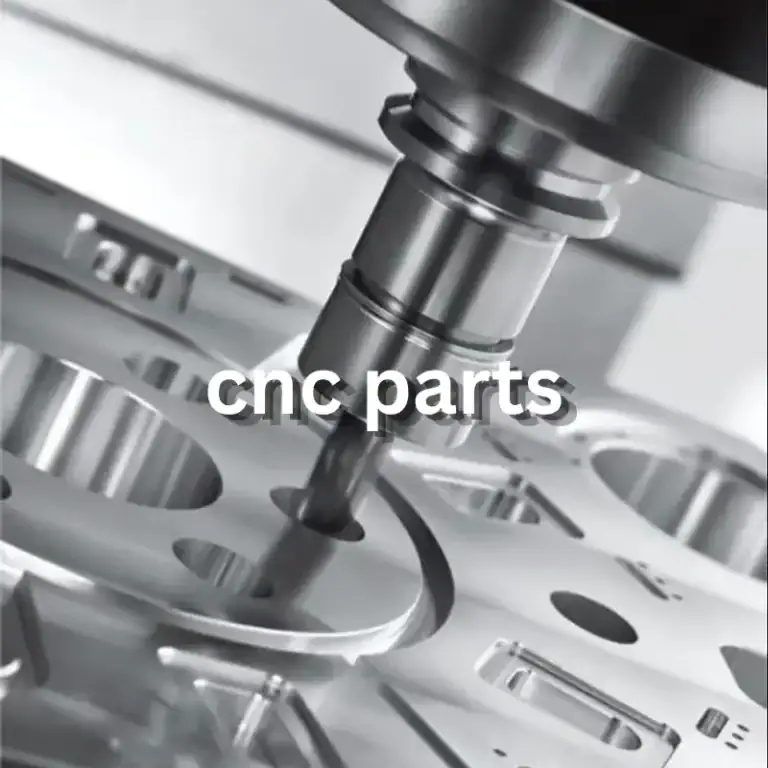
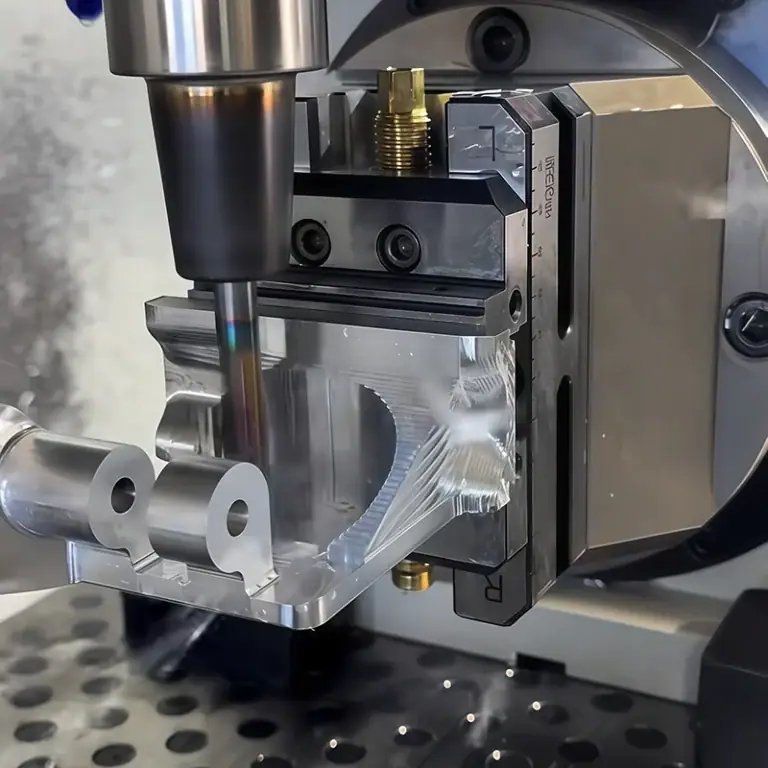
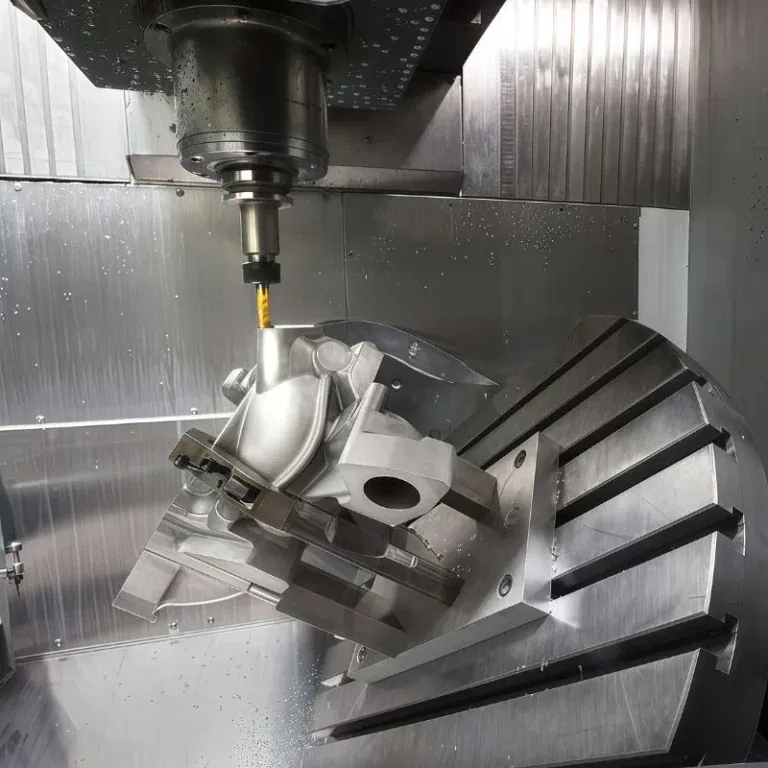
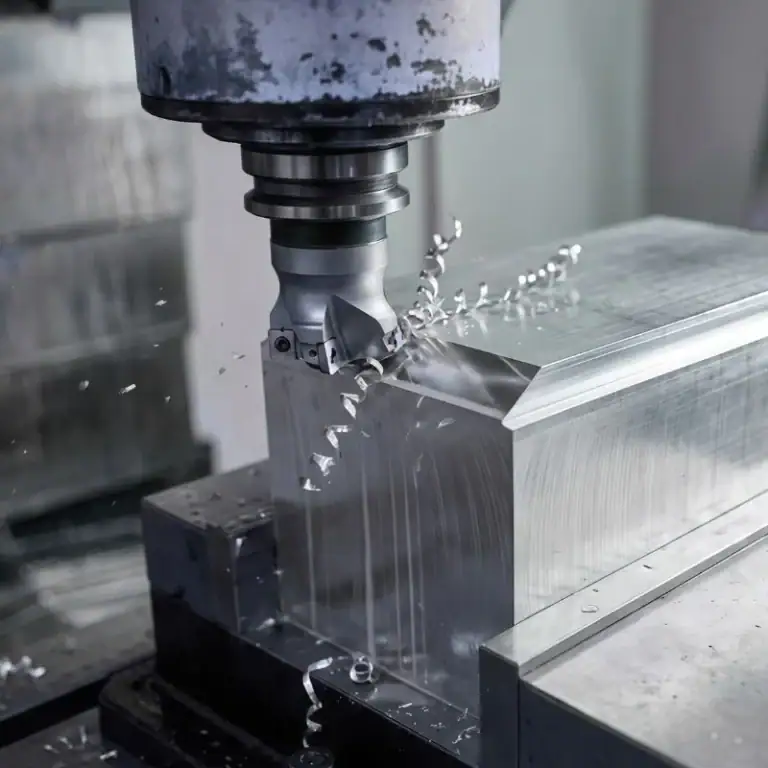
In CNC milling programming, automatic feature recognition can quickly identify machining features such as holes, slots, pockets, planes, and chamfers from 3D models, while also assisting in the generation of machining processes. For parts with regular structures, this function can reduce the time spent manually locating features and repeating programming tasks. However, automatic recognition is not 100% accurate. Model quality, feature complexity, geometric relationships, and software algorithms can all affect the results. Therefore, automatic recognition is better used as an efficiency-enhancing tool rather than as a complete replacement for engineering judgment.
What Factors Affect the Accuracy of Automatic Feature Recognition in CAM?
The performance of automatic feature recognition is closely related to the part model itself. The more standardized the model, the easier it is for the software to establish correct machining features.
3D Model Quality Directly Affects Recognition Results
The completeness and standardization of a 3D model are important factors affecting the recognition accuracy of CAM software:
- If models such as STEP or IGES files contain surface breaks, missing geometry, or topological abnormalities, the software may be unable to correctly identify machining features.
- Complete models are more likely to be recognized as standard holes, planes, and pockets.
- Minor geometric errors may cause features to be split, omitted, or incorrectly merged.
- Auxiliary surfaces in the design model may also be mistakenly identified as actual machining areas.
- Checking and repairing the model before programming can help reduce recognition errors.
Repairing model issues in advance and standardizing the model format can help improve the stability of automatic feature recognition.
Standardized Structures Are Easier to Recognize Automatically
The more regular the part structure and the clearer the feature boundaries, the easier it is for CAM software to complete recognition:
- Regular through holes, blind holes, steps, slots, and pockets can usually be recognized quickly.
- Complex surfaces, non-standard holes, or interconnected features increase recognition difficulty.
- Parts with a high degree of structural standardization are more suitable for automatic feature recognition.
- Parts with significant structural variations require a combination of manual judgment and manual correction.
In actual CNC machining, it is recommended to standardize the 3D model first and then combine automatic recognition with manual review to improve programming efficiency and machining reliability.
Which Machining Features Are Easier for CAM to Recognize?
Different types of geometric structures have noticeably different levels of difficulty for automatic recognition. Generally speaking, features with clear boundaries and regular dimensions are easier for software to identify accurately.
Hole Features Usually Have a High Recognition Efficiency
Round holes, counterbored holes, countersunk holes, and threaded holes have clear diameter, depth, and axis information, making them relatively easy to recognize. The software can establish features based on these parameters and assist in selecting drilling, reaming, or tapping processes. For parts containing a large number of repeated hole positions, automatic recognition can reduce manual operations.
Planes and Regular Pockets Are Also Suitable for Automatic Recognition
Planes and regular pockets have clear boundaries and are generally easy for CAM software to recognize:
- Planes, rectangular pockets, and steps have clearly defined geometric boundaries.
- The software can quickly establish machining areas.
- Regular pockets make it easier to match roughing, finishing, and corner-cleaning processes.
- In batch production, automatic recognition can reduce repetitive programming time.
Regular planes and pockets are generally among the more stable application scenarios for automatic feature recognition.
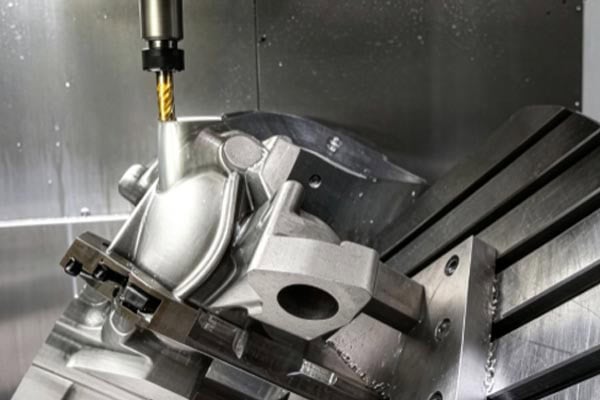
Complex Surfaces Are More Difficult to Recognize
Complex surfaces involve multiple geometric relationships and machining conditions, making them more difficult to recognize accurately:
- The boundaries of blades, freeform surfaces, and complex fillets may not be clearly defined.
- During continuous surface transitions, it can be difficult for the software to determine the machining area and feature type.
- Surface machining requires consideration of the machining direction, tool type, and tool-axis orientation.
- These areas usually require engineers to manually divide, correct, and plan the machining process.
Complex surfaces can be assisted by CAM software, but the final machining solution still depends on engineering judgment.
What Problems Can Result from Incorrect Automatic Recognition?
Once automatic feature recognition produces an error, subsequent processes may also be affected. Therefore, attention should be paid not only to recognition speed but also to the reliability of the recognition results.
Missing Features Can Cause Incomplete Machining
If the software fails to recognize a hole, slot, or step, the subsequent automated process may skip that area entirely. Specific risks include:
- Unrecognized hole positions may not generate the corresponding drilling or tapping programs.
- Omitted slots or steps may result in an incomplete part structure.
- For precision parts, one missing feature may prevent the entire product from being assembled.
- If the problem is not discovered in time during batch production, it may create ongoing quality risks.
- Subsequent rework may also increase material, labor, and delivery costs.
After automatic recognition is completed, the number and positions of features must be checked to avoid incomplete machining.
Incorrect Recognition May Generate Unreasonable Toolpaths
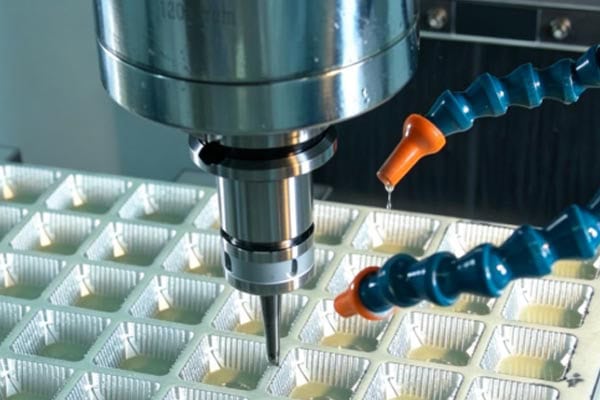
If the software mistakenly identifies auxiliary geometric surfaces or non-machining areas as machining areas, it may generate invalid cutting paths, increase machining time, and even cause overcutting, collisions, or abnormal tool loads. Unreasonable toolpaths may also affect surface quality and dimensional accuracy. Toolpath simulation, interference checking, and manual review are still required after recognition is completed.
How Can the Practical Reliability of Automatic Feature Recognition in CAM Be Improved?
The key to making automatic recognition truly valuable is to establish a standardized, verifiable, and traceable workflow.
Standardize Models and Design Specifications
Companies can standardize CAD modeling rules to provide CAM recognition with a consistent model foundation:
- Reduce duplicate surfaces, abnormal surfaces, and unnecessary auxiliary geometry.
- Standardize the modeling methods for features such as holes, slots, pockets, and chamfers.
- Define rules for model naming, layer management, and version control.
- Perform completeness and topology checks before delivering the model for CAM programming.
Standardized design can reduce uncertainty during the recognition process.
Establish a Review Process After Feature Recognition
After automatic recognition is completed, the following points should be carefully confirmed:
- Whether the number of features matches the drawings and the 3D model.
- Whether the positions, dimensions, and orientations of the features are correct.
- Whether parameters such as hole depth, blind-hole bottoms, and thread specifications are accurate.
- Whether pocket boundaries, step heights, and special chamfers are complete.
- Whether the toolpaths have passed simulation and interference checks.
Areas of uncertainty should be manually corrected or redefined in a timely manner.
Improve Programming Efficiency with Template-Based Processes
Combining automatic feature recognition with standard CAM templates can further improve CNC milling programming efficiency. The software identifies and classifies machining features, process templates match roughing, finishing, drilling, or tapping strategies, and engineers confirm the machining sequence, tool parameters, and final toolpaths. Mature templates can also be reused for similar parts, reducing repetitive setup and input errors. This collaborative approach balances programming efficiency with quality control.
Should Customers Focus on Recognition Accuracy or Overall Efficiency?
Pursuing recognition accuracy alone does not fully represent the practical value of a CAM system. The following aspects should also be evaluated comprehensively.
Focus on the Amount of Manual Modification Required After Recognition
In addition to the number of recognized features, attention should also be paid to the following:
- Whether the software can quickly recognize common machining features.
- Whether engineers need to frequently redefine features.
- The proportion of manual intervention required after automatic recognition.
- Whether the time required for modifications is lower than that of traditional manual programming.
- Whether the recognition results can be applied consistently to different batches and similar parts.
If extensive modification is still required after recognition, the actual efficiency gains will be limited.
Focus on the Final Machining Results
The value of CAM software is ultimately reflected in CNC machining results. The following aspects should be given particular attention:
- Whether machining time is reduced.
- Whether tool life and utilization are improved.
- Whether part dimensional accuracy and surface quality remain stable.
- Whether program operation is safe and reliable.
- Whether rework, scrap, and on-site debugging time are reduced.
Recognition accuracy is only one indicator for evaluating a CAM system. Final machining quality and overall production efficiency are more important.
Conclusion
There is no fixed value for the accuracy of automatic feature recognition in CAM software that applies to all parts. For CNC milling production, a more practical approach is to let automatic feature recognition handle repetitive tasks, while using templates, simulation, and engineering review to ensure program quality. TiRapid can optimize CNC milling processes based on part structures and machining requirements, helping customers shorten programming cycles while maintaining machining accuracy and production stability.