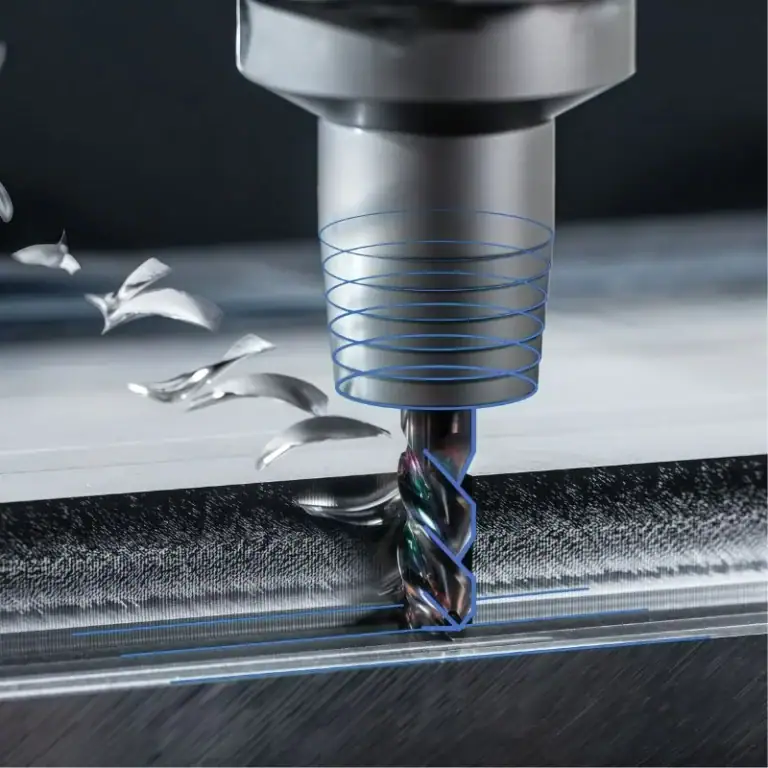
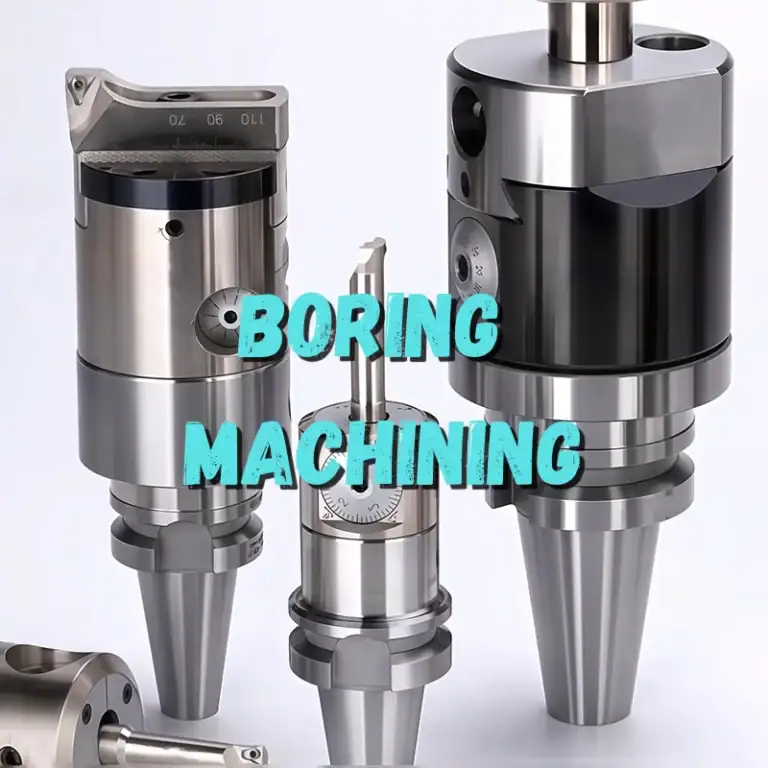
In CNC milling, constant-speed cutting is widely used, but when the tool enters corners, deep cavities, narrow slots, or areas with significant variations in material allowance, the actual load on the tool changes continuously. Adaptive feed strategies dynamically adjust the feed rate through real-time or toolpath-based load analysis, allowing the tool to maintain a more stable cutting condition across different machining areas. For manufacturers seeking higher machining efficiency, longer tool life, and better dimensional consistency, the advantages of adaptive feed are reflected not only in increased speed, but also in reduced idle time and lower risk of abnormal wear.
Why Does Constant-Speed Cutting Easily Reach an Efficiency Bottleneck?
To understand the difference between the two strategies, it is first necessary to recognize the limitations of constant feed in complex-part machining.
Material Allowance Is Easily Wasted in Straight-Line Areas
A constant feed rate means that the tool runs at the preset speed regardless of how much material it is cutting, which can prevent the machining capability from being fully utilized in certain areas.
- When the local material allowance is small, the preset feed rate may be overly conservative.
- In parts with significant variations in material allowance, the actual cutting load differs considerably from one area to another.
- Fixed parameters make it difficult to achieve both high machining efficiency and stable cutting conditions.
In straight-line areas or areas with a small material allowance, constant-speed cutting often results in a certain amount of efficiency loss.
Load Easily Increases in Corner Areas
When the tool enters internal corners or narrow areas, the instantaneous material engagement may increase. If the original feed rate is maintained, cutting forces and spindle load may rise rapidly, causing tool vibration and wear. For materials such as aluminum alloys, stainless steel, and titanium alloys, load variations may further affect surface quality and dimensional stability. Therefore, constant-speed strategies often require the overall machining speed to be reduced for safety.
What Are the Core Advantages of Adaptive Feed Strategies?
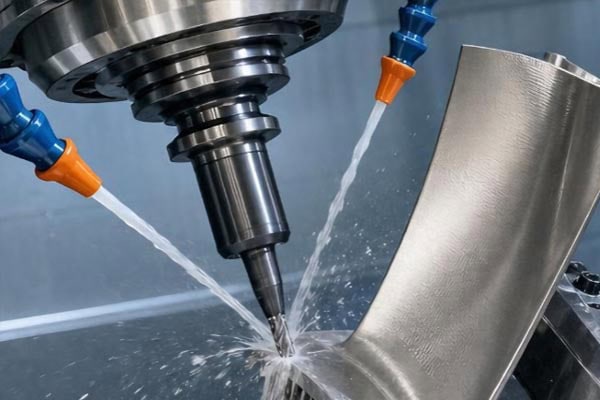
The purpose of adaptive feed is not simply to increase speed, but to adjust the tool’s operating rhythm according to the machining conditions so that different areas use more suitable cutting parameters.
Accelerating the Tool in Low-Load Areas
When the cutting allowance is small and the load is low, the feed rate can be increased appropriately to reduce machining time in low-load areas.
- Shorten nonproductive time and improve material removal efficiency per unit of time.
- Make fuller use of the capabilities of the machine tool, spindle, and cutting tool.
- Improve overall toolpath efficiency while maintaining machining quality.
Adaptive feed can reduce the conservative operating time commonly found in constant-speed cutting.
Actively Reducing Speed in High-Load Areas
When the tool enters deep slots, corners, or areas with a large material allowance, the adaptive strategy can actively reduce the feed rate to make the cutting process more stable.
- Reduce instantaneous cutting forces.
- Lower the risk of tool chipping and abnormal wear.
- Reduce sudden increases in spindle load.
- Keep cutting temperature and machining conditions within a more stable range.
This dynamic adjustment avoids sacrificing the efficiency of the entire toolpath for the sake of a few high-load areas.
How Much Better Can Adaptive Feed Actually Be?
The actual improvement depends closely on the material, tool, machine tool, toolpath complexity, and original parameters. No single percentage can represent all CNC milling projects. In general, the results should be evaluated comprehensively based on machining time, tool life, and machining quality.
Machining Time May Improve Significantly
For parts with large variations in material allowance, many corners, or complex cavities, adaptive feed generally offers more room for optimization than a purely constant-speed strategy.
- Reducing conservative feed rates in low-load areas can shorten overall machining time.
- In complex toolpaths, dynamically adjusting the feed rate can reduce unnecessary deceleration.
- For parts with deep cavities, narrow slots, and multiple corners, the optimization effect is usually more noticeable.
- The more complex the toolpath and the more unevenly distributed the material, the greater the value of adaptive feed tends to be.
Improvements in machining time mainly come from allocating feed rates appropriately across areas with different loads, rather than simply increasing the feed rate throughout the entire process.
Tool Life Is Also an Important Indicator
If the feed rate is increased solely to pursue higher productivity, tool wear may also increase. Adaptive strategies control cutting intensity in high-load areas and improve operating efficiency in low-load areas, thereby reducing the risks of continuous tool overload, localized temperature rise, abnormal wear, chipping, and tool breakage while maintaining a stable cutting-edge condition. The true advantage should be evaluated by comparing machining time, tool consumption, and part acceptance rate, rather than looking only at the cycle time of a single part.
Which CNC Milling Applications Are More Suitable for Adaptive Feed?
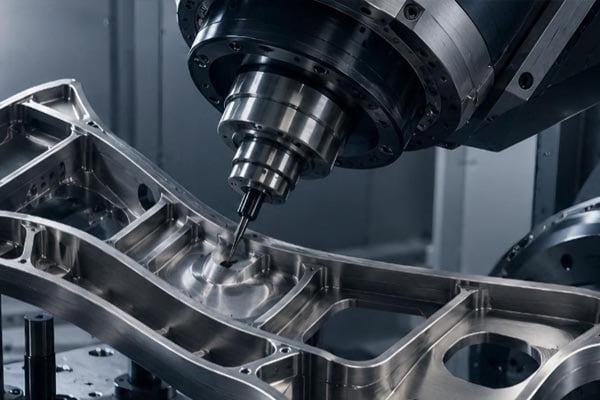
Not every part requires complex dynamic feed control, but the value of adaptive feed is usually more significant in the following machining applications.
Deep-Cavity and Complex-Cavity Machining
Deep-cavity machining often involves tool overhang, limited space, and variations in material allowance. Adaptive feed can adjust the machining rhythm according to the load in different areas.
- Reduce the risk of tool overload in narrow areas.
- Lower the possibility of vibration caused by long tool overhangs.
- Improve cutting stability at the bottom and on the side walls of deep cavities.
- Improve dimensional consistency during complex-cavity machining.
This helps deep-cavity CNC milling achieve a better balance among efficiency, stability, and machining quality.
Difficult-to-Machine Materials
Titanium alloys, high-temperature alloys, and certain high-strength stainless steels are more sensitive to cutting conditions. Adaptive strategies can help control cutting load and machining temperature.
- Prevent the tool from remaining under high load for extended periods.
- Reduce the impact of concentrated cutting heat on tool life.
- Lower the risk of material adhesion and abnormal wear.
- Improve process stability when machining difficult-to-machine materials.
For these materials, adaptive feed is generally more effective when used together with suitable tools, cooling methods, and cutting parameters.
Roughing and Large Material Removal
During roughing, the amount of material removed can vary significantly. Fixed feed rates may cause some areas to be overly conservative while placing excessive loads on other areas. Adaptive feed can adjust the tool speed according to the actual material allowance, reduce cutting impact in areas with a large allowance, improve material removal efficiency in areas with a smaller allowance, and reduce spindle-load fluctuations.
How Can You Determine Whether Adaptive Strategies Are Truly Creating Value?
When selecting a machining strategy, manufacturers should not compare only theoretical parameters. They should also validate the results through actual production data. Only by considering efficiency, cost, and quality together can the real benefits of adaptive feed be accurately determined.
Compare the Machining Time per Part
Record the machining time under the same part, tool, and equipment conditions to determine the actual improvement in production cycle time achieved by adaptive feed.
- Compare the machining time per part for constant-speed cutting and adaptive feed.
- Record the actual operating time in different machining areas.
- Observe whether deceleration and waiting time are significantly reduced.
- Use batch-production data to determine whether the cycle-time improvement is consistent.
By continuously recording and analyzing machining data, the actual benefits of adaptive feed strategies can be evaluated more accurately.
Track Tool Consumption
At the same time, record the number of tools used for each batch of parts and the number of abnormal tool changes to evaluate the machining strategy from the perspective of total cost.
- Record the number of parts that can be machined with a single tool.
- Document cases of chipping, tool breakage, and abnormal wear.
- Compare tool-change frequency under different machining strategies.
- Calculate the impact of tool costs on the machining cost per part.
If machining time is reduced while tool consumption increases significantly, the range of feed-rate adjustments should be optimized again.
Inspect Machining Quality
Dimensional consistency, surface roughness, and edge quality should also be evaluated to ensure that efficiency improvements do not come at the expense of product quality.
- Check whether critical dimensions remain stable.
- Compare surface roughness in different areas.
- Observe whether quality defects occur at corners, slot bottoms, or thin-wall areas.
- Evaluate the product acceptance rate during batch production.
Adaptive feed can be considered truly valuable only when a reasonable balance is achieved among machining efficiency, tool life, and product quality.
Conclusion
The advantage of adaptive feed strategies over constant-speed cutting lies in their ability to dynamically adjust tool movement according to the machining load, rather than forcing the tool to face different cutting conditions at the same speed throughout the process. For complex cavities, deep cavities, difficult-to-machine materials, and CNC milling tasks involving large material allowances, this strategy offers greater potential to improve machining cycle time, tool life, and production stability simultaneously. TiRapid can optimize CNC milling processes according to the material, part structure, and equipment conditions, ensuring that improvements in machining efficiency are built on a foundation of stable quality.