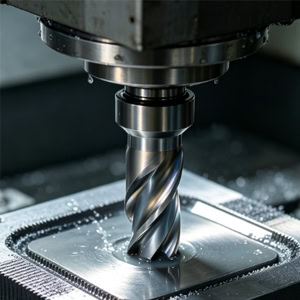
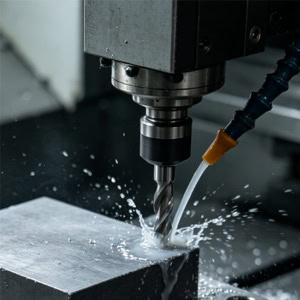
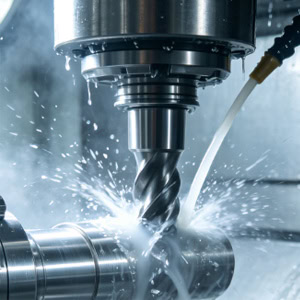
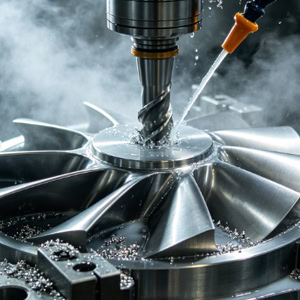
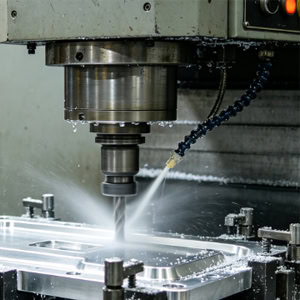
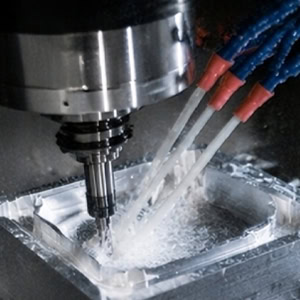
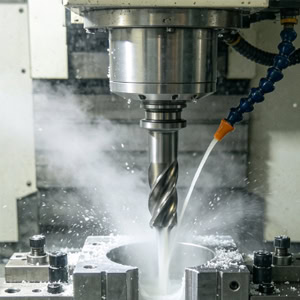
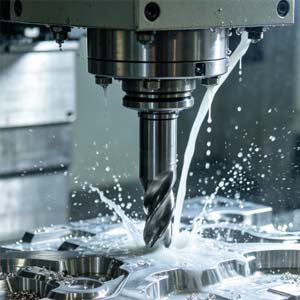
In CNC milling, tool coatings may seem like just a thin surface layer, but they directly affect wear resistance, cutting temperature, edge condition, and tool life. PVD and CVD are
In the manufacturing of precision parts, aluminum alloys are widely used in aerospace components, automotive structural parts, electronic device housings, and industrial products due to their lightweight nature, good thermal
Magnetic chucks are widely used in precision milling for fast clamping of flat workpieces. They are known for high efficiency and convenience, but in high-precision CNC milling applications, their positioning
In CNC milling, efficiency is determined not only by spindle speed or tool performance, but more importantly by the choice of machining strategy. Especially in complex parts or high-strength material
High-temperature alloys, with their excellent heat resistance, corrosion resistance, and high strength, are widely used in high-end manufacturing fields such as aerospace, energy equipment, and gas turbines. However, these advantages
Copper and aluminum are both commonly used non-ferrous metals in manufacturing, but they exhibit significantly different machining characteristics. Copper has excellent electrical conductivity and ductility, which makes it prone to
In high-precision part machining, surface quality, dimensional accuracy, and process stability are key indicators that customers focus on. Chatter in CNC milling is one of the most common issues, which
In CNC milling, many companies tend to focus on machine accuracy, tool performance, and machining quality, while often overlooking a key factor that directly affects productivity and cost—cycle time. Even
In precision part machining, deep cavity structures have always been one of the more challenging aspects of CNC milling due to their complex internal walls, deep machining areas, and high
In modern CNC milling, high-speed cutting has become the mainstream method for improving efficiency. However, one seemingly simple yet extremely challenging issue continues to trouble engineers—chip breaking. Especially in aluminum
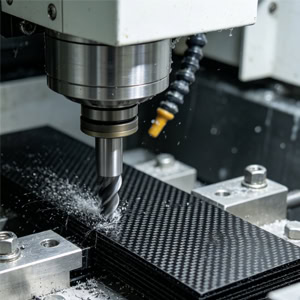
In aerospace, automotive lightweighting, and high-end sports equipment, composite materials are being used more and more widely. However, one long-standing and difficult problem that comes with them is milling delamination.
In today’s parts manufacturing environment, where precision, lead time, and stability matter more than ever, what customers truly care about is often not whether a part can be made, but
Scroll to Top
Your 24 hour quote
Send us a message if you have any questions or request a quote. We will be back to you within 1-2 hours!