In CNC milling, shortening the tool travel distance is generally regarded as a direct way to improve machining efficiency. A shorter toolpath can reduce machine operating time and some air-cutting time, but simply pursuing the shortest path does not necessarily mean achieving the lowest machining cost. If the toolpath contains frequent sharp turns, improper tool entry and exit arrangements, or causes the tool to repeatedly change direction in narrow areas, it may increase cutting impact, vibration, and localized heat, thereby accelerating tool wear. Reasonable toolpath optimization should strike a balance between path length, cutting stability, and tool life.
Why the Shortest Toolpath Is Not Necessarily the Best
Toolpath length is only one of the factors affecting CNC milling efficiency. The actual load borne by the tool also requires careful consideration.
Frequent Direction Changes Increase Tool Impact
To shorten travel distance, some toolpaths use numerous sharp turns and short-distance connections, which may cause the following problems:
- When the tool direction changes rapidly, cutting forces are likely to fluctuate significantly.
- During the machining of hard materials, turning impacts can accelerate cutting-edge wear.
- When the machine tool lacks sufficient dynamic performance, sharp turns may cause vibration and surface marks.
- Unstable tool movement can affect machining quality.
The path with the shortest geometric distance may not allow the tool to run smoothly. While reducing path length, the frequency of direction changes should also be controlled appropriately.
Excessive Pursuit of Short Distances May Increase Cutting Loads
Some shortest-path algorithms cause the tool to enter and exit the material frequently. Although the travel distance is reduced, the cutting conditions become more complex:
- Repeated tool entry can generate significant instantaneous impact.
- Repeated cutting may occur in local areas, increasing the load on the tool.
- Heat and wear may become concentrated on specific cutting edges or areas.
- Materials such as aluminum alloys, stainless steel, and titanium alloys have higher requirements for cutting stability, making this effect more pronounced.
Reducing travel distance should not come at the cost of increased cutting impact. The number of tool entries and exits and the actual cutting conditions should also be evaluated comprehensively.
What Toolpath Problems Mainly Cause Tool Wear
Reduced tool life is usually the result of multiple machining conditions acting together. The following issues require particular attention.
Improper Tool Entry and Exit Methods
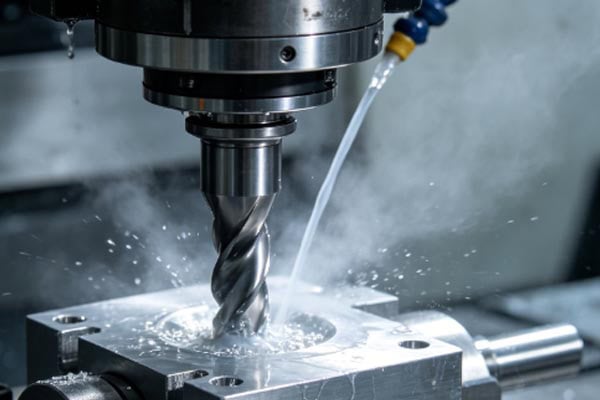
Plunging vertically directly into the material causes the tool to instantly bear significant axial and radial loads. This can easily damage the cutting edge, especially when machining hard materials. Reasonable tool entry and exit methods include:
- Using ramp entry so that the cutting load builds gradually.
- Using arc entry to reduce instantaneous impact.
- Selecting the entry position appropriately to avoid directly striking the workpiece edge.
- Adjusting tool entry and exit speeds according to the material and tool type.
Optimizing tool entry and exit methods can reduce cutting impact and improve process stability.
Lack of Speed Control at Corners
When the tool enters an internal corner, the material contact conditions usually change. If the feed rate remains high, the instantaneous cutting load may increase significantly. The following measures can be adopted:
- Use arc transitions to reduce sudden changes in movement direction.
- Appropriately reduce the feed rate in high-load corner areas.
- Avoid frequent sharp turns in narrow areas.
- Adjust toolpath parameters according to the internal corner radius and cutting depth.
Although speed control at corners does not significantly change the total toolpath length, it can effectively reduce abnormal wear.
Repeated Tool Passes Through the Same Area
The shortest path may sometimes cause the tool to repeatedly pass through machined areas in order to connect different machining regions. This arrangement not only extends machining time but also intensifies tool wear through repeated friction. When chip evacuation is poor, repeated cutting can further increase machining temperature, while localized repeated heating may also affect surface quality. Therefore, when designing a toolpath, priority should be given to reducing repeated cutting and ineffective movements rather than simply compressing travel distance.
How to Design a More Reasonable CNC Milling Toolpath
The goal of an excellent toolpath should shift from pursuing the shortest path to improving overall efficiency, with a focus on cutting continuity and material adaptability.
Prioritize Cutting Continuity
Keeping the tool’s cutting direction and load stable can reduce frequent acceleration, deceleration, and cutting impact. Specific measures include:
- Using arc connections instead of sharp corners.
- Reducing unnecessary tool retractions and re-entries.
- Arranging machining areas reasonably to avoid frequent back-and-forth tool movement.
- Appropriately adding smooth connection segments while ensuring machining quality.
Although the path length may increase slightly, this approach is generally more conducive to stable machining and can reduce the risk of abnormal wear.
Adjust Toolpath Strategies According to the Material
Different materials have different tool-load and heat-dissipation characteristics, so toolpath design should vary accordingly:
- Aluminum alloy machining can focus on high-speed cutting and chip evacuation efficiency.
- Stainless steel machining requires control of work hardening and tool load.
- Titanium alloy machining should focus on controlling cutting heat and cutting-edge condition.
- Hard-material machining should reduce sharp turns, impacts, and excessive instantaneous cutting depth.
- Match the feed rate, cutting depth, and cooling method to the material characteristics.
Designing toolpaths according to material characteristics is more beneficial for extending tool life than simply pursuing the shortest path.
How to Balance Machining Time and Tool Life
What companies truly care about is the overall manufacturing cost. Therefore, toolpath evaluation should consider machining efficiency, tool consumption, and product quality at the same time.
Do Not Look Only at Total Toolpath Length
When evaluating a toolpath, the following factors should also be considered:
- Actual cutting time.
- Air-cutting time.
- Number of tool entries and exits.
- Number of sharp corners.
- Material removal efficiency.
- The time the tool operates in high-load areas.
Some toolpaths may be longer overall but provide more stable cutting conditions, resulting in shorter total machining time. Total toolpath length should not be used as the sole evaluation criterion.
Include Tool Life in Cost Calculations
If shortening the toolpath saves only a small amount of machining time but causes the tool to be replaced prematurely, the result may be counterproductive. In actual production, the number of workpieces machined by each tool can be recorded, tool wear and replacement intervals can be tracked, the downtime required for tool changes can be calculated, and the per-piece machining cost under different toolpaths can be compared. Machining time, tool costs, and product yield should also be evaluated comprehensively. Using production data to determine which toolpath truly reduces the per-piece manufacturing cost can prevent excessive focus on path length while overlooking overall benefits.
Use CAM Software for Toolpath Simulation
Simulating the toolpath before machining can help identify sharp turns, repeated cutting, and abnormal tool entry in advance. The inspection should include:
- Whether the tool makes excessively sharp turns.
- Whether the tool entry and exit positions are reasonable.
- Whether repeated cutting or excessive air cutting exists.
- Whether the tool moves smoothly in narrow areas.
- Whether machining parameters need to be adjusted after actual trial cutting.
Continuously correcting the toolpath through simulation and production feedback can reduce trial-and-error costs and improve design reliability.
Better Toolpath Optimization Objectives
The optimal toolpath is not the one with the shortest geometric distance, but the one that achieves a balance among machining quality, efficiency, and tool life.
Shift from the Shortest Path to the Optimal Load
Maintaining a relatively stable cutting load can reduce the risk of abnormal wear and edge chipping. Optimization should focus on:
- Reducing sudden changes in cutting load.
- Controlling sharp corners and frequent tool entries and exits.
- Maintaining reasonable cutting depth and cutting width.
- Prioritizing continuous and smooth movement trajectories.
- Avoiding prolonged operation under localized high loads.
Only by allowing the tool to operate under stable loads can machining efficiency and tool life be balanced.
Shift from Simply Increasing Speed to Managing Overall Cost
Machining time, tool consumption, equipment utilization, and product yield should all be included in the final evaluation. During actual optimization, particular attention can be paid to:
- Whether shortening the path can truly reduce total machining time.
- Whether tool wear will offset the machining time saved.
- The impact of tool changes, machine setup, and downtime on the production cycle.
- Whether machining quality will decline because the toolpath is too aggressive.
- Which solution is more suitable for batch production.
Truly efficient CNC milling means creating stable coordination among the machine, tool, and machining program, rather than simply pursuing the shortest travel distance.
Conclusion
The shortest toolpath is not without value, but focusing only on geometric distance while ignoring cutting load, tool entry and exit methods, and corner conditions may cause unnecessary tool wear. For complex parts and high-value materials, a reasonable toolpath should prioritize cutting stability before further reducing air-cutting time and machining cycles. TiRapid can optimize CNC milling toolpaths according to part structure, material characteristics, and production requirements, creating a more reasonable balance among machining efficiency, tool life, and part quality.