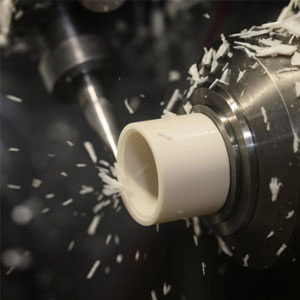
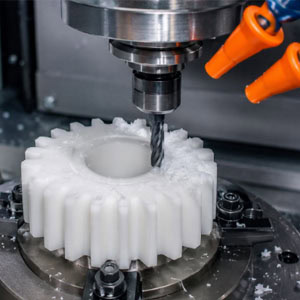
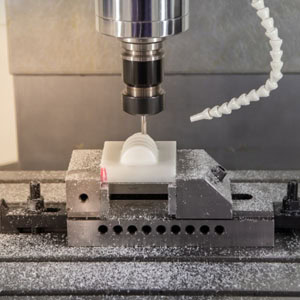
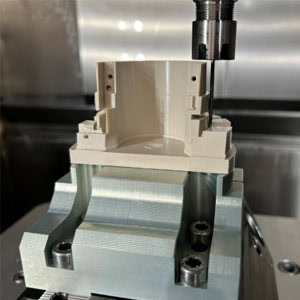
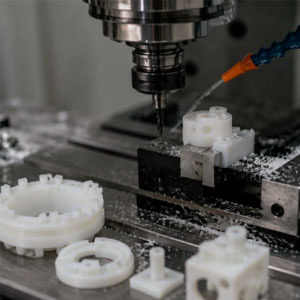
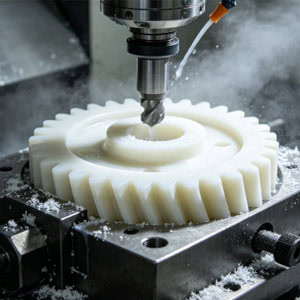
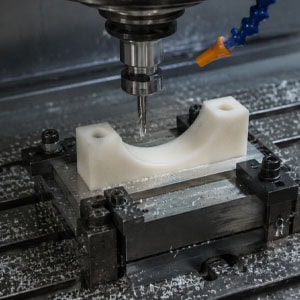
POM (polyoxymethylene) is a common engineering plastic with good hardness, wear resistance, dimensional stability, and machinability. It is commonly used to machine gears, bushings, sliders, guide components, washers, positioning parts,
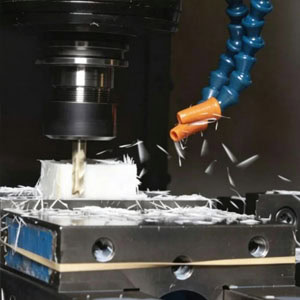
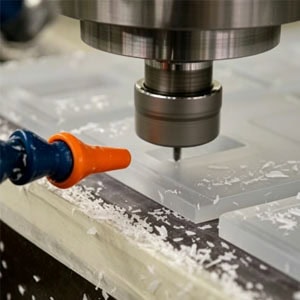
In plastic CNC machining, chip evacuation is an important factor that affects machining quality. Compared with metal materials, most engineering plastics have relatively low thermal conductivity, relatively low hardness, and
When machining plastic parts with CNC, “springback” is a relatively common dimensional abnormality, especially in thin-walled parts, long strip-shaped parts, deep-groove parts, narrow-edge structures, and engineering plastic components with high
CNC plastic machining has certain requirements for material condition, machining environment, tool condition, and dimensional inspection. Many production sites pay more attention to cutting speed, feed rate, tool selection, and
POM (polyoxymethylene) is a common engineering plastic with good hardness, wear resistance, dimensional stability, and mechanical strength. It is widely used to manufacture gears, bushings, sliders, washers, guide rails, connectors,
Plastic gaskets are widely used in sealing, positioning, cushioning, and insulation applications, and are common parts in mechanical equipment, piping connections, and electronic assemblies. Compared with traditional metal gaskets, plastic
PVC is a relatively common plastic material in both industrial production and daily life, found in products such as water pipes, window frames, electrical conduit, and decorative panels. Compared to
CNC machining of plastic parts has become increasingly common in industrial production today. Many businesses consider this processing method when manufacturing components, prototypes, or small-batch products. Compared to traditional manual
Printers, copiers, automotive door-lock actuators, small gear reducers—POM gears show up in nearly every power-transmission application that is noise-sensitive and does not need to carry heavy loads. POM has one
Nylon positioning blocks are widely used in automation equipment, workholding fixtures, and inspection jigs, where they perform part-locating, guiding, and limiting functions. These components typically carry stringent requirements for dimensional
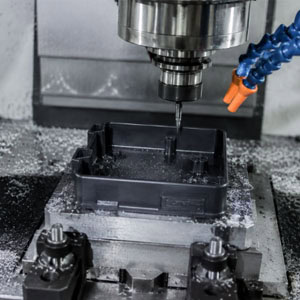
A charger housing is a functional structural component that must simultaneously satisfy requirements for electrical safety, heat dissipation, assembly accuracy, and visual quality. Compared with the traditional injection-molding route, CNC
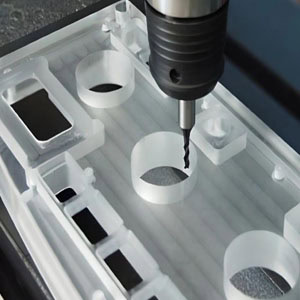
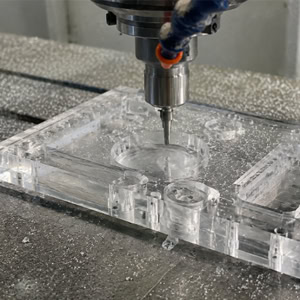
Surface hazing on acrylic after CNC machining is a very common problem in transparent-part manufacturing. The hazed surface looks as though a thin layer of fog has settled on it;
Scroll to Top
Your 24 hour quote
Send us a message if you have any questions or request a quote. We will be back to you within 1-2 hours!