Deepwater oil extraction involves challenging operating conditions, including high water pressure, low temperatures, seawater corrosion, continuous vibration, and complex subsea environments. These conditions place strict demands on the dimensional accuracy, structural strength, and long-term stability of equipment components. Subsea trees, subsea manifolds, connectors, control systems, and wellhead equipment all require precision-manufactured parts. Dimensional deviations, damaged sealing surfaces, or connection failures can affect equipment operation and increase subsea maintenance costs.
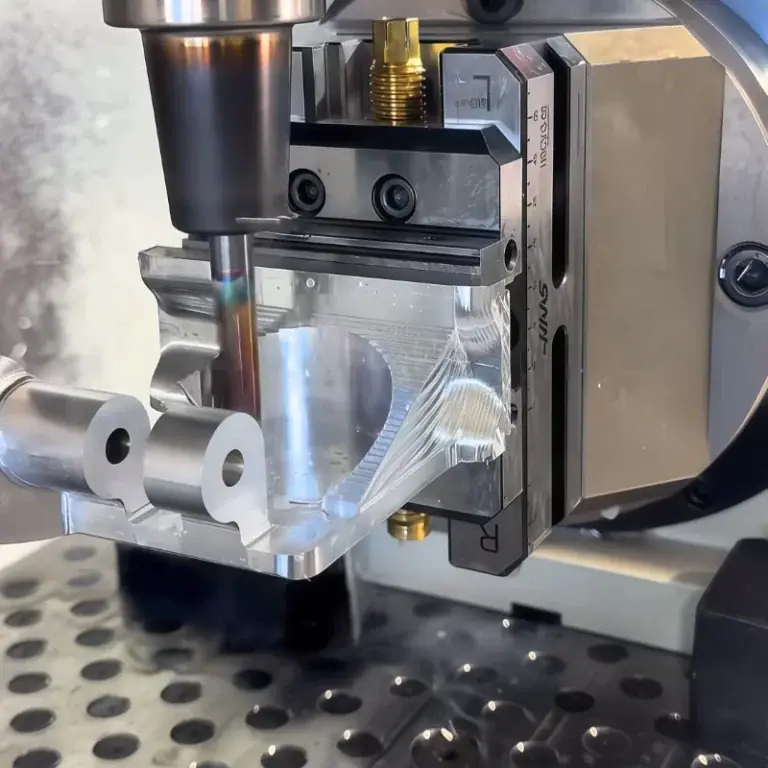
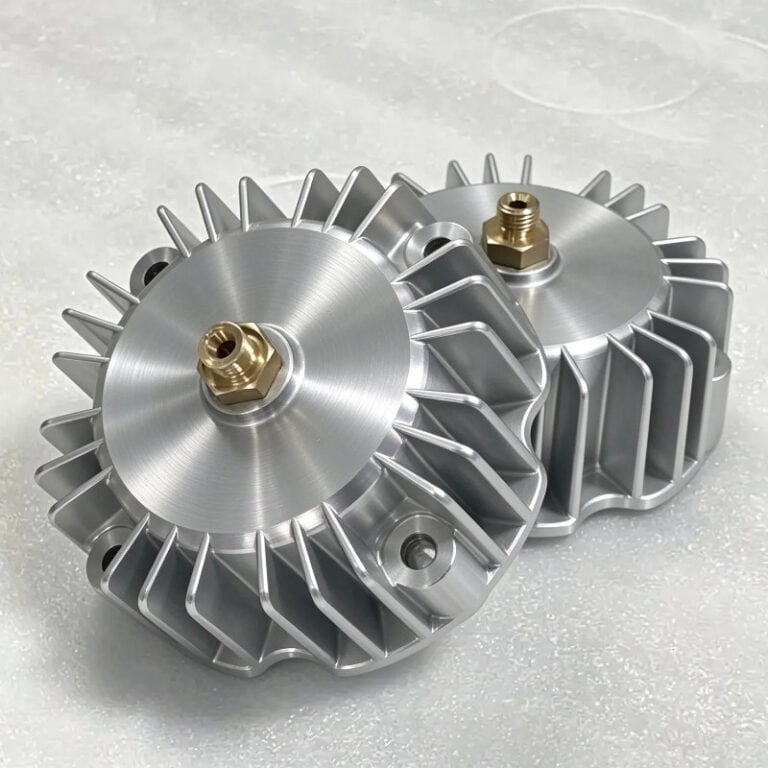
CNC precision machining uses processes such as CNC turning, milling, drilling, boring, and multi-axis machining to produce complex deepwater oil equipment components with accurate dimensions and tight fits. By selecting suitable materials, optimizing machining processes, controlling critical dimensions, and implementing strict inspections, manufacturers can provide reliable components for deepwater oil and gas equipment operating under different water depths and working conditions.
Key Advantages of CNC Machining for Deepwater Oil Equipment Parts
Deepwater oil equipment must operate reliably in demanding marine environments. Its components need to meet assembly requirements while maintaining the strength and durability required to withstand high pressure, corrosion, and mechanical loads. CNC precision machining improves dimensional consistency through controlled machining programs and optimized manufacturing processes. With appropriate material selection, accurate fit control, and proper surface finishing, manufacturers can improve assembly quality and support the stable operation of subsea equipment.
High-Precision Machining Improves Subsea Equipment Assembly
Deepwater oil equipment contains numerous connectors, sealing components, positioning structures, and transmission parts. These components must maintain accurate dimensional relationships. CNC machining follows 2D drawings, 3D models, and technical specifications to control outside diameters, internal bores, threads, flatness, and concentricity, reducing dimensional variations caused by manual machining. Precision turning is suitable for shafts, sleeves, threaded connectors, and cylindrical parts. CNC milling produces irregular structures, mounting slots, positioning holes, and complex surfaces, while multi-axis machining handles components with angled holes, intersecting passages, and curved geometries. Combining these processes can reduce positioning errors caused by repeated setups and improve machining consistency at critical fitting locations. For subsea trees and manifolds, valve interfaces, control module mounting bases, and pipeline connectors must meet specified dimensional tolerances. Accurate fits improve assembly conditions and provide a reliable foundation for subsequent sealing inspections and functional testing.
Corrosion-Resistant Materials for Deepwater Environments
Deepwater equipment is continuously exposed to seawater, salt, and different oil and gas media. Ordinary materials may experience corrosion, pitting, or stress corrosion cracking under these conditions. Material selection must consider operating pressure, media composition, temperature, and the expected service life of the component. Common material options include duplex stainless steel, super duplex stainless steel, nickel-based alloys, corrosion-resistant alloys, and appropriately treated alloy steels. Duplex stainless steel offers good strength and pitting resistance, making it suitable for certain subsea pipeline connectors and structural components. Nickel-based alloys can be used in highly corrosive oil and gas environments, although machining requires careful control of cutting heat, tool wear, and work hardening. Material selection should not depend on corrosion resistance alone. Applicable standards, media compatibility, mechanical properties, and actual design requirements must also be considered. Material verification, machining process evaluation, and required material inspections help reduce the risk of material failure during service.
Complex Structural Machining for Customized Subsea Equipment
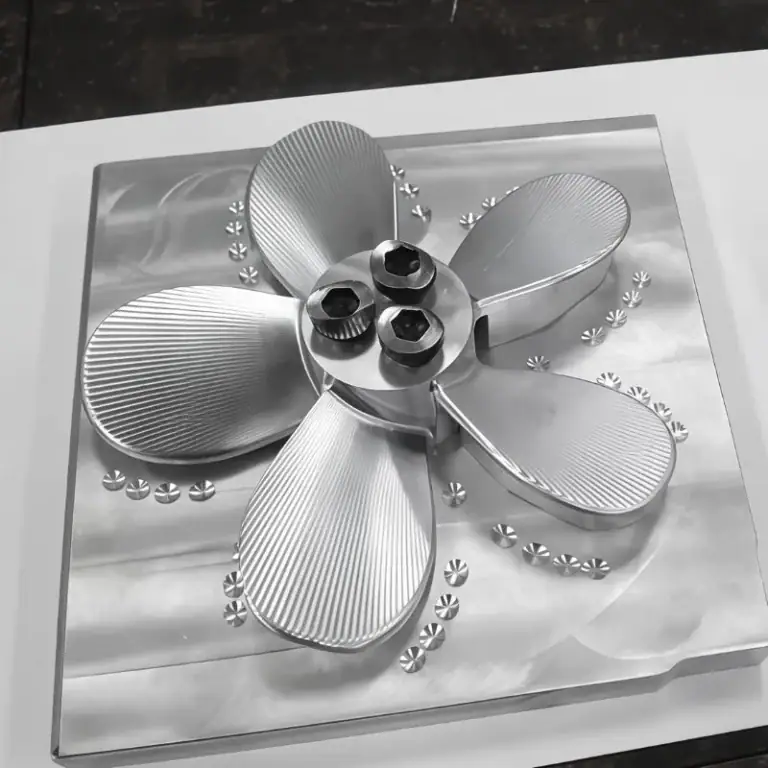
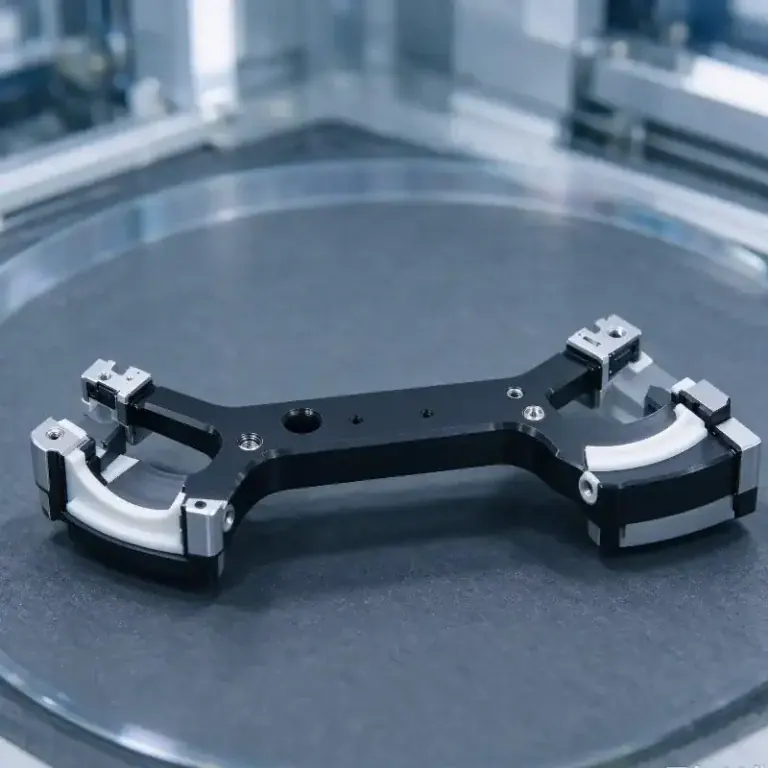
The structure of deepwater oil equipment is often restricted by installation space, pipeline layouts, control systems, and load-bearing requirements. Many components cannot be replaced with standard parts. CNC machining allows manufacturers to produce customized components in different dimensions, shapes, and interface configurations according to customer drawings, 3D models, and technical specifications. Parts with multiple connection holes, irregular cavities, deep bores, and complex curved surfaces can be manufactured using multi-axis machining, deep-hole drilling, and precision boring. For small-batch equipment upgrades, specialized deepwater projects, and non-standard structural components, custom CNC machining also makes it easier to adjust dimensions and structures to meet actual assembly requirements.
Machining Methods and Applications for Key Deepwater Oil Equipment Components
Deepwater oil equipment consists of subsea trees, subsea manifolds, connectors, hydraulic control systems, and various pipeline components. Each part performs specific functions, including connection, fluid transportation, control, and sealing. Complex equipment structures require precise machining processes and accurate assembly dimensions. Manufacturers need to develop suitable CNC machining solutions based on component geometry, material properties, and operating conditions. This helps ensure that hole positions, interfaces, sealing grooves, and fitting dimensions meet the specified design requirements.
Machining Components for Subsea Trees and Manifolds
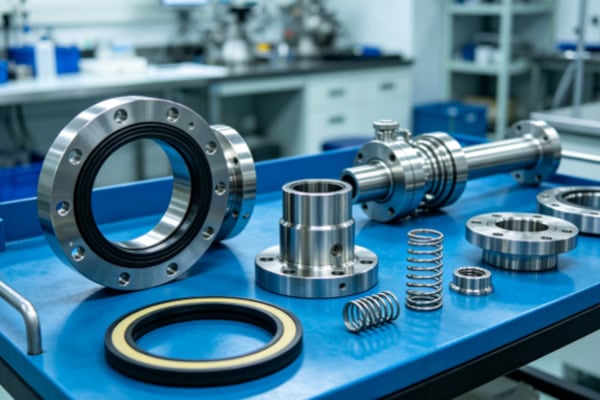
Subsea trees control oil and gas production from underwater wells, while subsea manifolds collect, distribute, and transport production fluids. These systems contain valve bodies, valve stems, valve seats, connecting flanges, pipeline connectors, and control module mounting structures. Their components must withstand specified pressure, mechanical loads, and marine environmental conditions, making dimensional accuracy and material quality particularly important. Manufacturing commonly involves precision milling, boring, drilling, and threading. Valve sealing surfaces require controlled surface quality and geometric accuracy. Flange faces need appropriate flatness and sealing groove dimensions, while pipeline interfaces must meet the specified hole positions and connection dimensions. For components with complex internal flow passages, machining plans must consider tool accessibility, chip evacuation, and intersecting hole locations. A well-planned machining sequence helps reduce deformation in thin-wall structures and positioning errors caused by repeated setups. Finished components should undergo dimensional inspection, non-destructive testing, and pressure or leakage testing when required by the design and applicable standards.
Manufacturing Deepwater Connectors and High-Pressure Sealing Components
Deepwater connectors are used for mechanical connections, pipeline connections, and hydraulic control interfaces between subsea equipment. Since installing and maintaining underwater equipment can be expensive, connection structures must maintain stable fitting conditions and meet the required load-bearing and sealing specifications. Connectors typically include metal housings, positioning shoulders, threaded interfaces, guide structures, and sealing grooves. CNC turning can produce cylindrical fitting surfaces, end faces, and external threads. Precision milling creates positioning slots and anti-rotation structures, while internal boring controls the dimensions required for assembly. For high-pressure sealing structures, groove width, depth, corner radius, and surface roughness must meet the design specifications. Depending on the application, sealing systems may use metal seals, elastomeric seals, or other validated designs. During manufacturing, seal dimensions, installation space, and contact surfaces must comply with technical requirements. Machining accuracy alone cannot confirm final sealing performance, so the finished components must undergo the specified inspections and tests.
CNC Machining Processes and Quality Control for Deepwater Components
Deepwater components often involve expensive materials, complex structures, and long manufacturing cycles. Process planning must balance dimensional stability, material utilization, production efficiency, and quality traceability. For high-strength stainless steels and nickel-based alloys, tool selection, cutting parameters, cooling methods, and workpiece clamping require careful evaluation. A typical manufacturing process can include the following steps:
- Drawing and Technical Requirement Review: Check component dimensions, tolerances, material grades, surface treatments, and inspection requirements. Identify critical dimensions and special technical conditions.
- Material Inspection: Verify material certificates, heat or batch numbers, and material identification. Conduct chemical composition, hardness, or other required tests when necessary.
- Machining Process Planning: Select turning, milling, drilling, boring, and multi-axis machining according to the component structure. Establish suitable machining references and setup sequences.
- Rough Machining and Stress Control: Remove the main material allowance while monitoring deformation. Arrange intermediate inspections or specified heat treatment for components that are prone to distortion.
- Finish Machining and Surface Treatment: Finish sealing surfaces, fitting surfaces, threads, and positioning areas. Apply surface treatments according to the design specifications.
- Final Inspection and Documentation: Check dimensions, geometric tolerances, and surface quality. Organize material certificates, inspection records, and batch information.
This process helps improve machining consistency. For pressure-containing or safety-critical components, non-destructive testing, pressure testing, or leakage testing must also be performed according to project specifications and applicable acceptance requirements.
Common Deepwater Oil Equipment Parts and Material Selection
Different subsea components have different load conditions, media exposure, and assembly requirements. Material selection and machining methods should be determined according to actual operating conditions. The following table outlines common component requirements. Final material selection must follow the equipment design specifications and project technical documents.
| Component Type | Common Material Options | Main Machining Processes | Key Quality Requirements |
| Subsea valve body | Duplex stainless steel, nickel-based alloys | Milling, boring, drilling | Flow passage dimensions, sealing surfaces, material properties |
| Subsea manifold connector | Super duplex stainless steel, corrosion-resistant alloys | Turning, milling, threading | Interface dimensions, concentricity, thread accuracy |
| Deepwater connector | Stainless steel, nickel-based alloys | Precision turning, internal boring | Fitting dimensions, positioning accuracy, surface quality |
| Sealing gland | Stainless steel, alloy steel | Turning, milling, precision grinding | Sealing groove dimensions, flatness |
| Control module housing | Stainless steel, aluminum alloy (subject to operating conditions) | Milling, drilling, tapping | Mounting hole positions, structural dimensions, environmental resistance |
| Hydraulic control spool | Stainless steel, wear-resistant alloys | Precision turning, grinding | Roundness, surface roughness, fitting clearance |
More expensive materials are not necessarily better for every deepwater application. Designers need to consider media corrosiveness, operating pressure, temperature variations, mechanical loads, manufacturing difficulty, and future maintenance requirements. Different materials also require appropriate cutting tools, machining parameters, and surface treatment methods to prevent incompatibility between material properties and machining processes.
Performance Requirements and Quality Assurance for Deepwater Oil Equipment Parts
Deepwater equipment components often operate underwater for extended periods, making maintenance and replacement difficult. Dimensional accuracy, material quality, surface condition, and connection sealing performance all influence equipment reliability. Manufacturers need a complete quality control process, from incoming material inspection to finished product delivery, to verify compliance with drawings, tolerances, and project acceptance specifications. Pressure-containing components, sealing assemblies, and safety-critical structures may also require additional inspections and performance verification.

Dimensional Inspection, Corrosion Verification, and Final Performance Testing
Precision components for deepwater oil equipment require strict quality inspections before entering assembly and further testing. Inspection procedures should be determined according to component applications, drawing requirements, and project acceptance specifications. Visual inspection or a single dimensional measurement is not sufficient to confirm that a component meets all requirements. Common quality inspection procedures include:
- Dimensional and Geometric Tolerance Inspection: Use coordinate measuring machines, precision measuring instruments, and dedicated gauges to inspect bore diameters, outside diameters, positional accuracy, concentricity, flatness, and other critical dimensions.
- Surface Quality Inspection: Measure surface roughness on sealing surfaces, sliding fits, and connection areas. Check for scratches, burrs, machining defects, and surface damage.
- Material Property Verification: Review material certificates, hardness, chemical composition, and mechanical properties according to project requirements to confirm compliance with the specified material grade and technical standards.
- Non-Destructive Testing: Use liquid penetrant testing, ultrasonic testing, or other suitable methods to inspect surface and internal defects according to component geometry and applicable standards.
- Corrosion Resistance Verification: Conduct corrosion testing under specified standards and test conditions for materials or components that require corrosion performance verification.
- Pressure and Sealing Tests: Perform pressure or leakage tests on applicable pressure-containing components and connection assemblies according to the design pressure, test procedures, and safety requirements.
These inspections help manufacturers identify dimensional deviations, material defects, and potential machining problems, reducing the risk of nonconforming components entering the assembly process. For equipment operating in deepwater environments over extended periods, material batch traceability, machining records, inspection reports, and product identification must also be maintained to support quality audits and future maintenance. High-quality deepwater oil equipment manufacturing requires precision machining, material control, process planning, and quality verification to work together. CNC turning, milling, and multi-axis machining can meet the customization requirements of subsea trees, manifolds, connectors, and control system components. By following engineering drawings, project specifications, and inspection procedures, manufacturers can supply precision-machined parts with stable dimensions, reliable structures, and performance suited to their intended operating conditions.