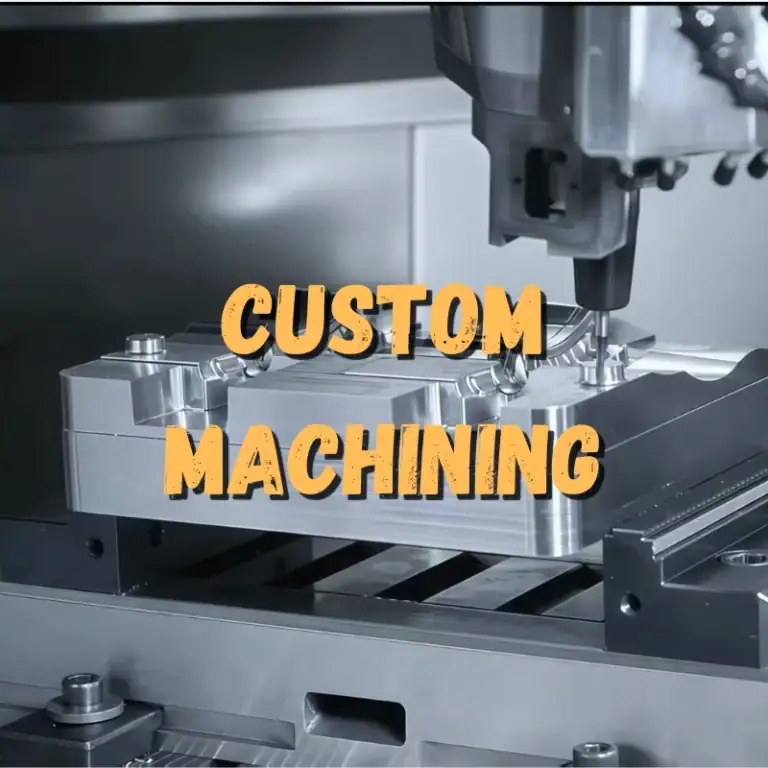
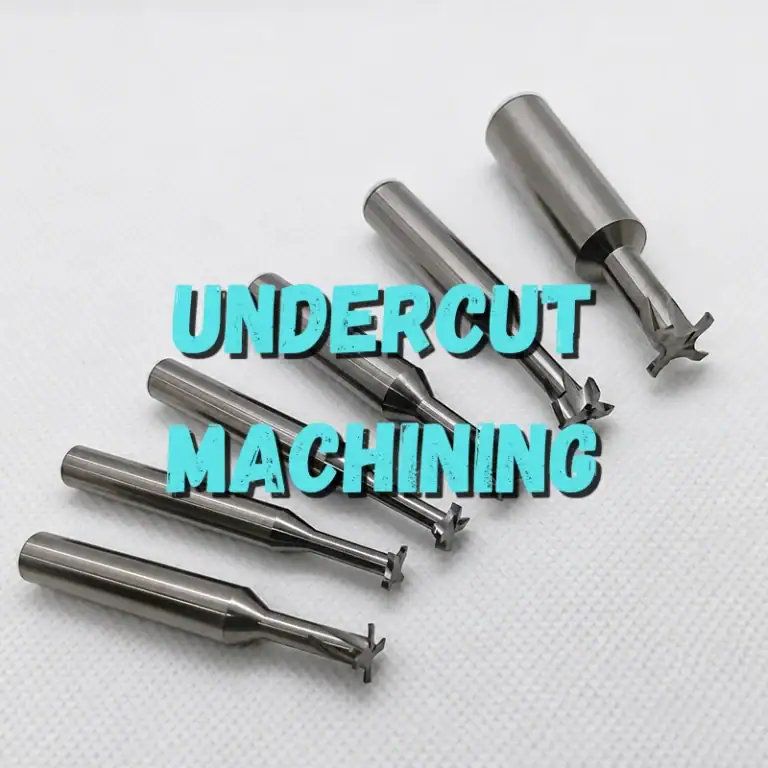
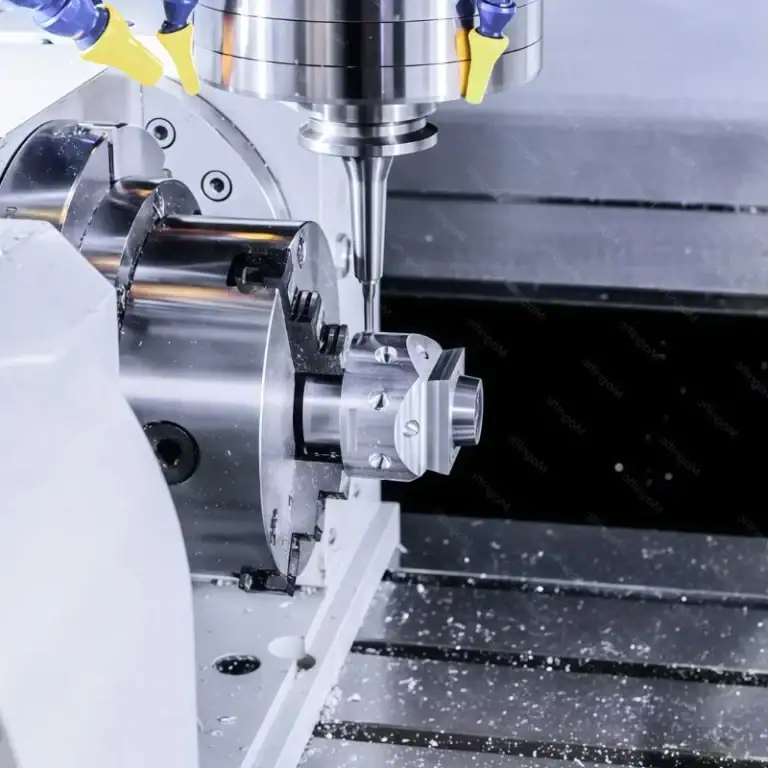
POM (polyoxymethylene) is a common engineering plastic with good hardness, wear resistance, dimensional stability, and mechanical strength. It is widely used to manufacture gears, bushings, sliders, washers, guide rails, connectors, precision brackets, and various mechanical structural parts. Compared with ordinary plastics, POM can maintain good dimensional accuracy and surface quality after machining, making it highly valuable for the production of plastic parts that require relatively high machining precision. For POM plastic parts with complex structures, strict dimensional requirements, or custom designs based on engineering drawings, CNC machining is a suitable manufacturing method. The reasons for choosing CNC machining for POM plastic parts are mainly related to the material properties, part structure, dimensional requirements, and production volume.
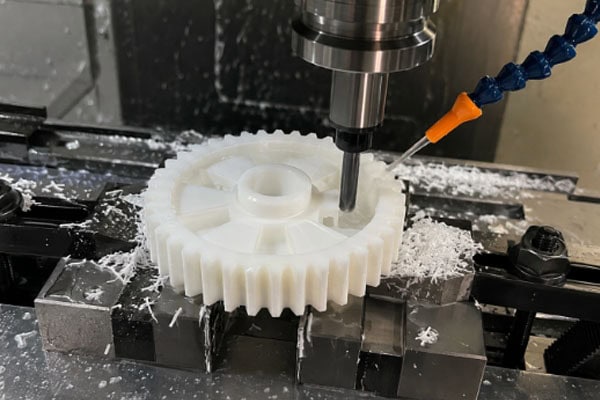
Traditional manual machining is more suitable for simple cutting and minor adjustments, while POM parts often contain holes, slots, steps, chamfers, curved surfaces, and other features that need to be accurately machined according to CAD drawings. CNC equipment can control tool movement according to a preset program, making the machining process more stable and facilitating repeated production of identical parts. For non-standard POM parts provided by customers, the required machining preparation can be completed by programming based on drawings or 3D models. Although POM has good machinability, cutting parameters still need to be properly controlled. Excessively high machining speeds, insufficiently sharp tools, or inadequate chip removal may cause localized heat buildup, burrs, dimensional changes, and other problems.
Reasons Why POM Plastic Parts Are Suitable for CNC Machining
More Stable Dimensional Control
POM is often used for mechanical transmission and mating components, which have certain requirements for hole diameter, outer diameter, thickness, slot width, and the assembly relationship between parts. CNC machining can perform cutting according to preset dimensions, reducing errors caused by manual operation. For POM parts that need to be machined repeatedly, the program can be saved and called up again. As long as the raw material specifications, tool condition, and machining conditions remain stable, the dimensional consistency of parts within the same batch is generally easier to control. This is particularly important for parts such as bushings, gears, and slide rails that need to work together.
Suitable for Complex Structural Machining
POM parts are not necessarily simple cylindrical or flat structures. Some mechanical parts may contain counterbores, through holes, positioning grooves, steps, chamfers, and irregular outer shapes at the same time. If ordinary manual equipment is used to machine each feature individually, the operation time will be relatively long, and dimensional deviations may occur more easily. CNC machining can plan tool paths according to part drawings and perform continuous cutting at different positions. For POM plastic parts with multiple machining features, it can reduce positional errors caused by repeated clamping, helping maintain a good corresponding relationship between holes, grooves, and outer contours.
Surface Quality Is Easier to Control
POM itself has good machinability. When sharp tools suitable for plastic machining are used, relatively smooth machined surfaces can be obtained. For sliding surfaces, positioning surfaces, and mating surfaces that need to contact other parts, surface quality directly affects the assembly performance. Attention needs to be paid to tool wear and cutting heat during machining. If the tool becomes dull, burrs, stringing, or localized heat buildup may occur on the material. CNC machining makes it easier to produce parts using fixed parameters, while also allowing timely tool replacement and adjustment of machining conditions to maintain relatively stable machining results.
Suitable for Customization and Small-Batch Production
POM plastic parts are often used in equipment modifications, mechanical repairs, automation equipment, and prototype development. Many parts are not standard products but are individually designed according to equipment dimensions. Such products usually need to be machined according to customer drawings. CNC does not require traditional molds to perform cutting, making it well suited for prototypes, small orders, and non-standard POM parts. Customers only need to provide 2D drawings, 3D models, or clear dimensional requirements, and machining preparation can then be carried out according to the part structure.
What Should Be Considered When CNC Machining POM?
Although POM is easy to cut, machining quality is still closely related to tools and machining parameters. Proper machining conditions can reduce deformation, burrs, and dimensional deviations in plastic parts.
The Tool Needs to Remain Sharp
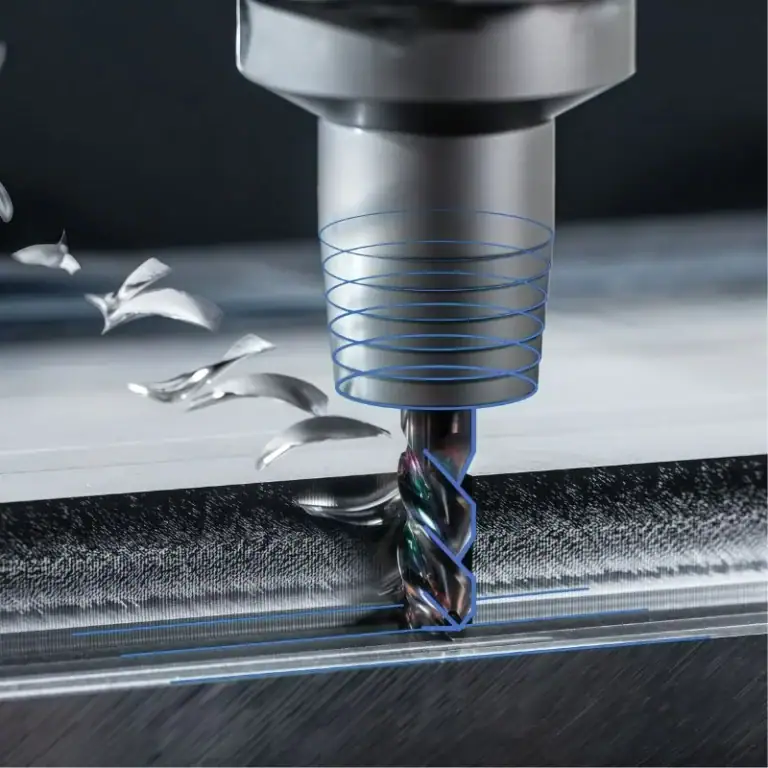
Sharp tools are generally required when machining POM to reduce the heat generated by material compression and friction. As the tool wears, cutting resistance increases, and burrs or machining marks may appear on the part surface. Therefore, during continuous production, the tool needs to be checked according to its actual machining condition.
Control the Machining Temperature
The heat resistance of POM is not unlimited. If excessive heat is generated during cutting, a rise in local temperature may affect the dimensions of the part. During machining, heat accumulation can be reduced by using appropriate spindle speeds, feed rates, and cutting depths, while chips should be removed promptly. For parts with high dimensional accuracy requirements, necessary dimensional inspections can also be carried out after machining to avoid judging the final result solely based on the immediate dimensions during machining.
Do Not Apply Excessive Clamping Force
Plastic materials differ from metals, and excessive clamping pressure may cause deformation. For thin-walled POM parts, ring-shaped parts, and elongated parts in particular, clamping should provide reliable fixation while avoiding obvious compression.
What Types of Plastic Parts Are Suitable for POM CNC Machining?
Different POM part structures have different machining requirements. CNC machining is particularly suitable for parts that require dimensional control according to drawings while also having a certain level of structural complexity.
Common products include:
POM Gears: Used in mechanical transmission systems, generally requiring control of tooth profiles, center holes, and outer diameter dimensions.
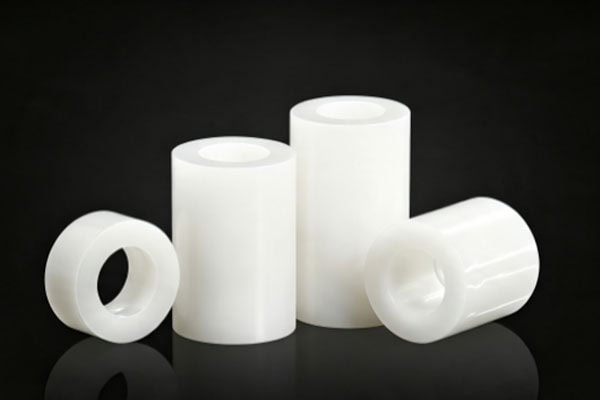
POM Bushings: Commonly used for rotational or sliding fits, requiring attention to inner hole dimensions, outer diameter, and concentricity.
POM Washers: Relatively simple in structure, but may still have high requirements for thickness, hole diameter, and outer dimensions.
POM Sliders and Guide Components: Usually require good surface quality and dimensional stability to meet sliding fit requirements.
For the above parts, if the product has non-standard dimensions or special machining requirements, CNC can perform targeted machining according to drawings without being restricted by the dimensions of standard parts.
Frequently Asked Questions
Q: Can POM Be Machined Directly Using Ordinary Machine Tools?
Yes. For POM parts with simple structures and relatively low dimensional requirements, equipment such as conventional lathes and milling machines can also complete some machining operations. However, if the part contains many holes, slots, or complex outer shapes, CNC machining is generally more convenient for dimensional control and repeated production.
Q: Will CNC Machining POM Produce Burrs?
It may. Burrs are related to tool sharpness, cutting parameters, machining direction, and part structure. Using suitable tools and controlling cutting conditions can reduce burr formation. For hole openings and edges, chamfering or deburring can also be performed according to the drawing requirements.
Q: Will the Dimensions of POM Change After Machining?
Under appropriate machining conditions, POM has good dimensional stability, but the material can still be affected by temperature, clamping pressure, and machining stress. For precision parts, appropriate machining allowances should be planned, and actual dimensions should be checked during production.
Conclusion
Choosing CNC machining for POM plastic parts is not simply because the equipment provides automated machining capabilities. More importantly, CNC machining can effectively meet the customization requirements of engineering plastic parts. POM has good mechanical and machining properties and is suitable for gears, bushings, washers, sliders, guide components, and mechanical structural parts. CNC machining can create machining programs based on 2D engineering drawings or 3D models and use cutting tools to process features such as outer contours, hole positions, slots, steps, and chamfers. Compared with machining methods that rely entirely on manual operations, CNC makes it easier to maintain dimensional consistency and is also suitable for repeated production. This characteristic is particularly evident in small-batch custom POM part production.
It should be noted that CNC cannot automatically solve all machining problems. The specific POM grade, part structure, dimensional tolerances, wall thickness, and surface requirements can all affect the machining method. During production, it is still necessary to select suitable tools and cutting parameters, while properly managing clamping, chip removal, and dimensional inspection. For thin-walled parts and precision mating components, unnecessary clamping pressure should also be minimized, and an appropriate finishing allowance should be reserved according to the actual machining conditions. Therefore, when POM plastic parts have non-standard dimensions, complex structures, relatively high dimensional accuracy requirements, or require prototype and small-batch production, CNC machining is generally a suitable choice. Through appropriate machining processes and quality inspections, POM parts can meet drawing dimensional requirements while achieving stable surface quality and assembly performance.