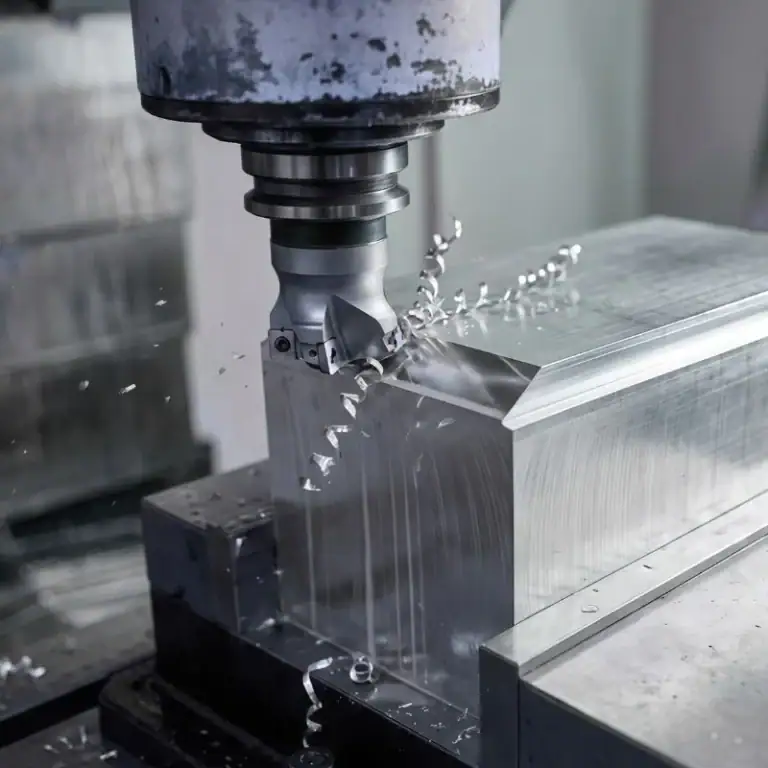
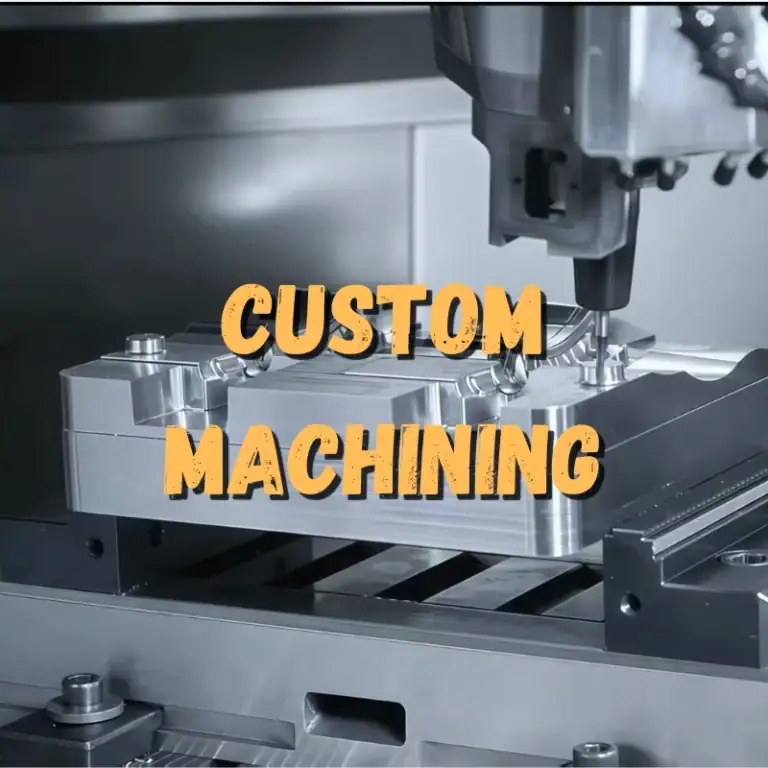
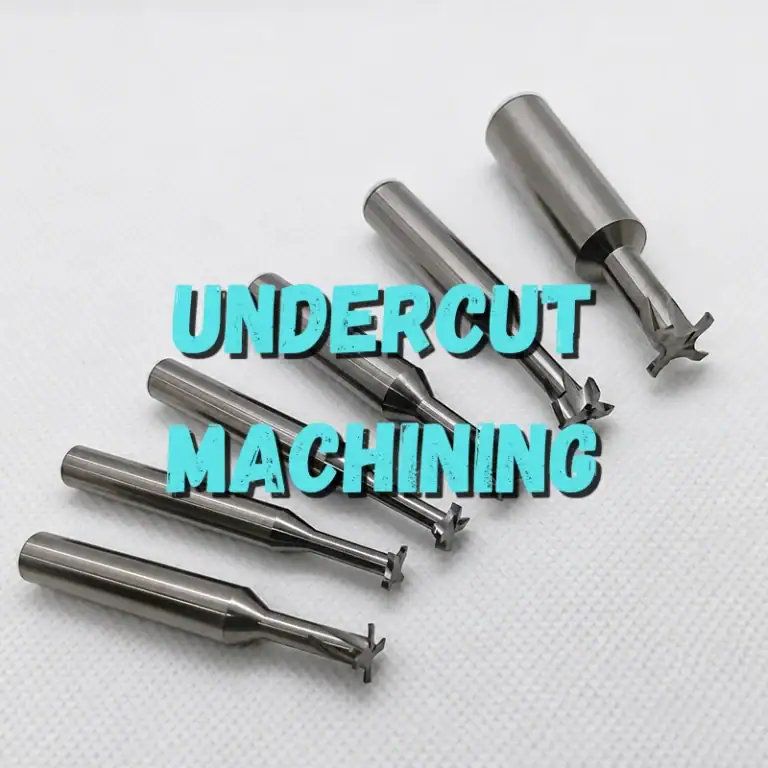
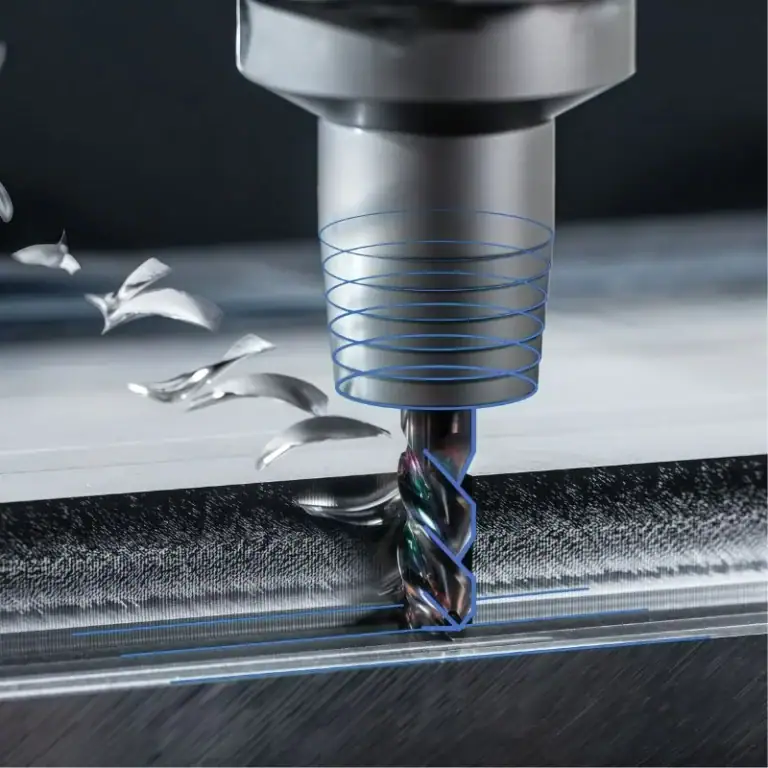
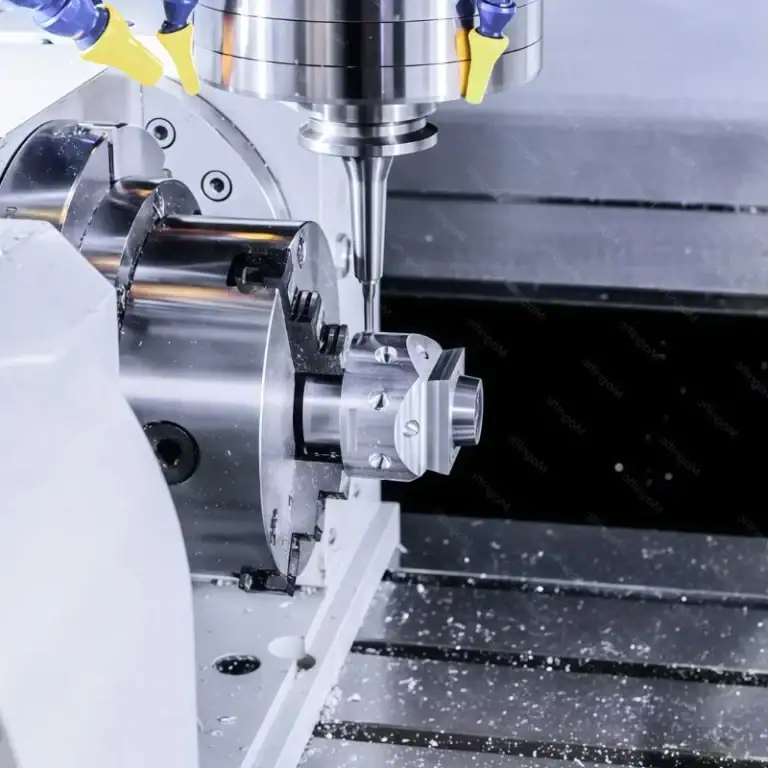
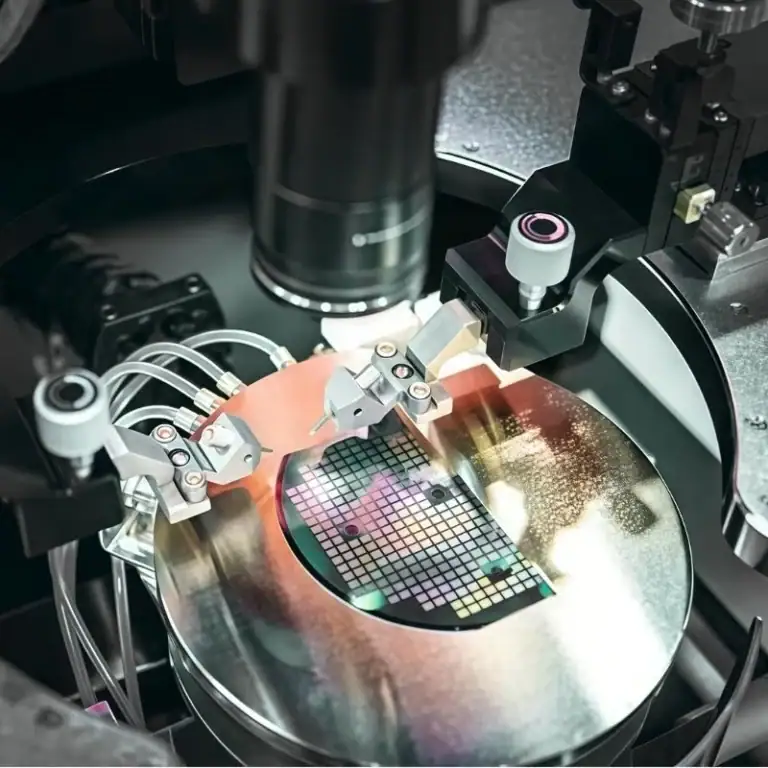
CNC machining of plastic parts has become increasingly common in industrial production today. Many businesses consider this processing method when manufacturing components, prototypes, or small-batch products. Compared to traditional manual machining, CNC machining performs precise cutting according to design drawings, resulting in more dimensionally stable plastic parts with smoother surfaces. However, the machining results for different plastic materials are influenced by factors such as hardness, heat resistance, processing parameters, and equipment precision. So, how effective is CNC machining for plastic parts in practice? Whether the finished parts meet application requirements ultimately needs to be evaluated from the perspectives of real-world use and the machining process itself.
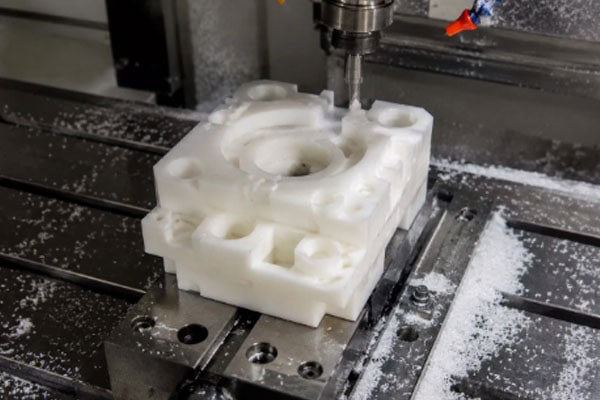
Accuracy Capability
Typical Tolerance Ranges
For common engineering plastics—ABS, POM, nylon, acrylic, and similar materials—the standard CNC machining tolerance is ±0.05 mm. With well-maintained equipment and tooling, ±0.03 mm is consistently achievable. Materials with higher rigidity, such as POM and glass-fiber-reinforced nylon, can hold ±0.02 mm on certain dimensions after finish machining. Glass-fiber-filled materials exhibit noticeably improved rigidity and reduced machining deformation, making tight tolerances paradoxically easier to maintain than with unfilled grades. It should be noted that not all features can achieve the tolerance levels stated above. Deep holes, thin walls, and long narrow slots will see their accuracy degrade. When hole depth exceeds five times the diameter, positional error from drill wandering becomes non-negligible. With wall thicknesses below 1 mm, elastic deflection of the material under cutting forces will cause the actual dimension to deviate from the programmed value. Accuracy depends not only on the machine tool’s positioning precision but equally on the part’s geometry and the material’s mechanical behavior.
Primary Factors Affecting Accuracy
The foremost factor affecting accuracy in plastic machining is deformation. Internal stress release, localized thermal expansion from cutting heat, and elastic deformation from clamping forces can combine to produce deviations of tens of microns between the actual machined result and the nominal toolpath. A commonly observed scenario: the part measures within tolerance immediately after being removed from the machine, but dimensions drift after a period of rest.
Controlling deformation depends on coordinating several measures: separating roughing and finishing operations, keeping the finishing stock allowance within a small range (0.2 to 0.5 mm), distributing clamping forces evenly, and allowing sufficient stabilization time after machining before final inspection. These are experience-based process control techniques; the specific implementation details vary between shops, but the underlying principles are consistent.
Surface Quality Performance
Surface Characteristics of Different Plastics
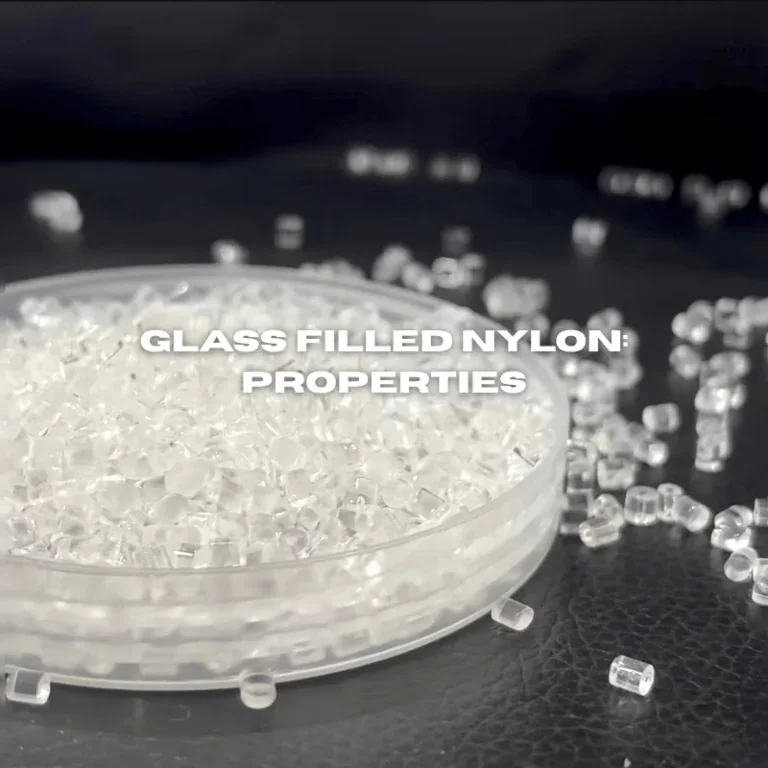
Material type is the primary variable affecting CNC-machined surface quality. Acrylic performs particularly well in this regard: with a sharp tool and appropriate parameters, the machined surface can achieve a semi-transparent finish with roughness below Ra 0.4 µm, and subsequent flame polishing or vapor polishing can bring it to optical-grade clarity. POM typically produces a fine, uniform surface finish in the Ra 0.8 to 1.6 µm range, with a naturally lubricious tactile quality. ABS machined surfaces tend to show whitening and fine tool marks, though these remain within acceptable limits for structural parts. Nylon surfaces are prone to fuzzing; when tool sharpness is insufficient, fibrous burrs are difficult to eliminate entirely. Glass-filled plastics exhibit different surface behavior. Glass fibers are torn rather than cleanly severed during cutting, producing a matte, frosted surface texture. The roughness reading may not be particularly high, but the surface lacks visual smoothness. This phenomenon is determined by the material’s microstructure, and the improvement achievable through tool changes or parameter adjustments is limited.
Tool Mark Control and Post-Processing
Tool marks are an inherent signature of CNC machining. They are typically more visible on plastic parts than on metal ones because plastics have a low elastic modulus, and each tool entry and exit leaves a trace of elastic recovery on the surface. Using a small radial stepover for finishing (5% to 10% of tool diameter) and running the toolpath along contours can reduce tool marks to the point of being nearly imperceptible to the naked eye. Post-processing can further elevate surface quality. Flame polishing is an acrylic-specific technique; the effect is pronounced but demands skilled execution, as excessive heat will cause surface yellowing or blistering. Vapor polishing is suitable for acrylic and polycarbonate: exposure to solvent vapor causes the surface to micro-melt and reflow, producing a uniform finish even on complex geometries. Physical sanding is universally applicable to most plastics; working progressively through 600 to 1,200 grit wet sandpaper followed by polishing compound can achieve a mirror-grade finish, though the associated labor cost should not be overlooked.
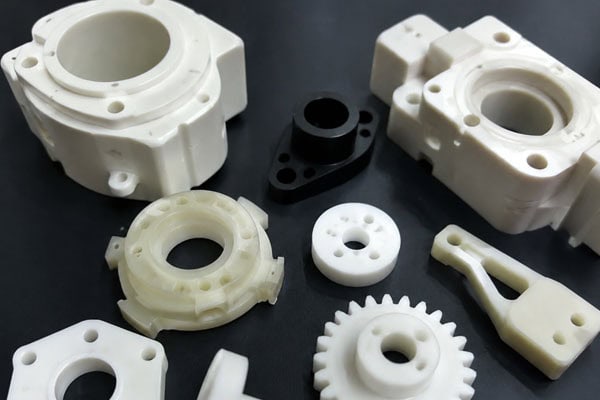
Machining Characteristics of Different Plastics
Materials with Good Machinability
POM stands out as the most machinable engineering plastic: its chips are granular and resist wrapping around the tool, its dimensional stability is excellent, and its machined surface is naturally smooth. Precision transmission components such as gears, bearing retainers, and sliding blocks are typically produced in POM as the first-choice material. Acrylic, though brittle and prone to edge chipping, can deliver high levels of accuracy and surface quality provided the tool is sharp and feed parameters are conservative. ABS occupies the upper-middle range of machinability—moderate in hardness, relatively trouble-free, and the most frequently used material for prototype manufacturing.
Materials Requiring Special Process Handling
Nylon’s machining characteristics differ markedly from those of POM. Nylon is tough, hygroscopic, and deformation-prone; its chips are long and stringy and tend to wrap around the tool, making continuous compressed-air chip blowing essential throughout the machining process. Adequate drying before machining and post-machining stabilization are non-negotiable steps for nylon parts. The primary risk with polycarbonate (PC) is stress cracking: using an incompatible cutting fluid (certain oil-based fluids will attack PC) may result in a network of fine, web-like cracks on the finished part surface. PE and PP have insufficient hardness; during cutting, the material undergoes plastic displacement rather than clean severing, making it difficult to achieve satisfactory dimensional accuracy and surface quality. CNC machining of precision parts in these two materials is generally not recommended.
For filled and reinforced materials—glass-fiber or carbon-fiber reinforced plastics—tool wear is a factor that must be incorporated into cost estimation. The higher the filler content, the more pronounced the reduction in tool life. With 30% glass-fiber-filled nylon, carbide tool life is approximately one-third to one-half of that achieved in the unfilled grade. Failure to account for this factor when quoting batch work will result in tool consumption significantly eroding the profit margin.
Process Comparison: CNC vs. Injection Molding vs. 3D Printing
Prototyping and Small-Batch Production
For quantities ranging from several pieces to several hundred, CNC machining of plastic parts offers the highest cost-performance ratio among the three processes. No mold fabrication is required, lead times are short (several days to one or two weeks), and design changes are flexible—revising the drawing and reprogramming is sufficient, with no additional tooling cost incurred. Injection mold costs range from several thousand to tens of thousands of dollars; for an order of a few dozen parts, the per-piece mold amortization may exceed the machining cost itself. 3D printing, while free of tooling costs, generally falls short of CNC-machined parts in surface quality, material properties, and dimensional accuracy—acceptable for functional concept validation, but often inadequate as end-use parts.
High-Volume Production
When quantities reach several thousand pieces and above, injection molding’s per-piece cost advantage becomes apparent. Amortizing a mold over ten thousand pieces adds only cents to a dollar or two per part; combined with injection molding’s cycle time of seconds per part, the total cost is substantially lower than piece-by-piece CNC machining. Injection molding carries a hidden cost that tends to be underestimated, however: the mold trial and debugging cycle before the first conforming part is produced. It is not uncommon for a complex part to require three or four rounds of mold trials before passing qualification, with each round adding both time and expense. At this stage, CNC machining is actually the higher-certainty option—using CNC to complete validation before the design is finalized, then transitioning to injection molding for production after the drawing is confirmed, represents a more prudent process route.
The Role of 3D Printing
3D printing offers unique advantages in concept validation and highly complex internal geometries—conformal cooling channels, lattice infill structures—that CNC tooling cannot physically access. During functional testing and aesthetic review stages, however, CNC-machined parts are produced from genuine engineering plastics (rather than the “ABS-like” or “nylon-like” approximations of printing materials), a distinction that 3D printing cannot replicate. A common pattern observed in practice is: 3D printing for rapid form-factor confirmation, CNC for functional prototypes, injection molding for volume production—the three processes leveraged complementarily according to their respective strengths.
Application Suitability for CNC Machining of Plastics
Well-Suited Applications
Functional parts with demanding accuracy requirements—gears, cams, positioning blocks, sensor mounts, and other components with clearly specified dimensions and fits—are prime candidates for CNC machining. For quantities from single digits to several hundred pieces, CNC offers the best economics. Parts with moderate wall thickness (3 mm and above) and relatively regular geometry present good workholding and machining feasibility. Samples requiring genuine engineering-plastic properties for testing and validation: the reliability of data from CNC-machined parts is markedly superior to that from 3D-printed parts.
Applications with Limitations
Large-area, thin-walled parts—for example, a 400 × 300 mm flat panel with 1.5 mm wall thickness—present extreme difficulty in maintaining flatness after machining, regardless of the material chosen. When walls are excessively thin and surface area is large, warping caused by residual stress release cannot be fully resolved through parameter adjustment alone. Elastomeric materials (TPU, soft PVC) are too flexible to be stably clamped or effectively cut and are unsuitable for CNC machining. Plastics with high abrasive filler content (glass fiber exceeding 40%) will consume tools at an excessive rate, and the economics require careful evaluation.
Micro-scale features—holes below 0.5 mm in diameter, slots narrower than 0.3 mm—are not entirely impossible to machine, but they require dedicated micro-tooling and high-precision spindles that general-purpose machining centers may not be equipped with. Where accuracy requirements are moderate and quantities are small, 3D printing may be the more appropriate choice for such cases.
Frequently Asked Questions
Can CNC-machined plastic parts achieve the same accuracy as metal parts?
Certain plastics can approach metal-level accuracy under specific conditions, but overall the accuracy ceiling for plastic parts is lower than that for metal parts. The root cause is not insufficient machine tool precision but the intrinsic properties of plastic materials: high thermal expansion coefficients (POM at approximately 110 × 10⁻⁶/K vs. aluminum at approximately 23 × 10⁻⁶/K, a difference of nearly five times), low elastic modulus (susceptibility to deformation under load), and significant hygroscopicity in certain grades (particularly pronounced in nylons). At tolerances of ±0.01 mm and tighter, metal parts fall within the routine capability range; plastic parts require rigorous process control and stable environmental conditions to achieve such figures even occasionally, and batch-to-batch consistency is difficult to guarantee.
Why do plastic parts machined with the same program show dimensional variation between morning and afternoon?
The primary cause is temperature variation. The thermal expansion coefficient of plastics is substantially higher than that of metals. With a shop temperature of 25°C in the morning and 32°C in the afternoon—a 7°C differential—a 100 mm long POM part experiences a theoretical thermal expansion of approximately 0.08 mm, a magnitude that is no longer negligible for precision components. The secondary factor is tool wear: a fresh tool in the morning produces parts on the upper side of the tolerance band; by the afternoon, microscopic wear at the cutting edge causes the same program to produce parts on the lower side. A temperature-controlled shop environment and disciplined tool life management are two foundational requirements for high-precision plastic part machining.
Is a dedicated machine required for plastic CNC machining?
A dedicated machine is not required; standard CNC machining centers are fully capable of plastic machining. There are, however, several configuration recommendations: spindle speed should be as high as practical (20,000 RPM and above is preferable), because plastics require high surface speeds paired with lower feeds to achieve good surface quality; chip evacuation and cooling methods differ from metal machining, with plastics relying more on compressed-air chip blowing than on flood coolant (certain plastics have chemical compatibility issues with cutting fluids); clamping force control requires greater refinement, as the hydraulic vise pressure safely used for metal parts may already cause elastic deformation when applied to plastic parts. If a minimum-quantity lubrication (MQL) system can be configured on the machine, it provides a tangible benefit to surface quality in plastic machining.
Conclusion
CNC machining of plastic parts delivers solid overall performance in accuracy, surface quality, and material versatility, and is particularly well suited to functional validation, small-batch production, and the manufacture of precision plastic components. Its core advantages lie in the absence of mold investment, short lead times, flexible design iteration, and the ability to work with genuine engineering plastics rather than simulated materials. Its principal limitations center on deformation control in large-area thin-walled parts, tool consumption with highly filled materials, and the machinability boundaries of micro-scale features. For medium-to-high-volume production requirements (several thousand pieces and above), the per-piece cost advantage of injection molding cannot be disregarded, but CNC machining can complete rapid validation and iteration during the early stages of product development. CNC, injection molding, and 3D printing each have their optimal application window; selecting the process that matches the actual requirements is more important than pursuing the most advanced equipment. If you have plastic part machining requirements, providing drawings or samples in advance allows a team with engineering-plastics machining experience to propose a process plan based on the part geometry, quantity, and application requirements, facilitating faster delivery of technically compliant parts.