When sourcing precision CNC machining suppliers in China, overseas procurement teams and mechanical engineers frequently encounter several typical pain points: difficulty verifying the authenticity of online factory listings, where middleman subcontracting leads to overly long communication chains and inflated costs; high-precision geometric tolerances on drawings that barely pass during prototyping but suffer from dimensional drift during low-volume trial runs; or complex multi-face parts that accumulate errors beyond assembly limits due to repeated flipping and re-clamping.
As a direct source manufacturer rooted in the precision manufacturing hub of Zhongshan, Guangdong, China, TiRapid has focused exclusively on serving European, American, and global custom machining markets for more than 16 years. Backed by hands-on experience from delivering over 30,000 5-axis CNC machining projects, a comprehensive precision machining equipment lineup, and a strictly enforced ISO 9001 quality management system, we stably hold dimensional tolerances within ±0.01mm (±0.0004in) for standard precision machining—providing multinational enterprises with reliable, transparent print-to-part manufacturing support.
16+ Years of Export Manufacturing Experience: An Engineer-Led Technical Communication System
Export precision machining demands an exceptionally accurate understanding of engineering drawings. Whether working with ASME Y14.5 or ISO 2768 tolerancing standards, any upfront misinterpretation can throw subsequent machining completely off track. Unlike trading companies that rely on general export salespeople to relay messages, TiRapid has built an engineering team with years of hands-on programming, fixturing, and machine operation experience to directly participate in upfront inquiry evaluations and process planning.
Clients simply send 3D CAD models—such as STEP, IGS, SolidWorks, or X_T—alongside 2D PDF drawings with complete tolerance callouts. Our engineers directly review datum setups, critical mating dimensions, and tool accessibility, typically returning a clear process evaluation and quote within 1 to 2 hours. Additionally, for every order, our engineering team provides complimentary DFM (Design for Manufacturability) drawing recommendations prior to cutting raw material—flagging thin-wall areas prone to cutting chatter, sharp internal corners difficult for end mills to clear, or overly tight tolerances on non-mating surfaces that drive up manufacturing costs, helping clients optimize part designs and procurement budgets before production begins.
How Do We Stably Hold Standard Tolerances Within ±0.01mm?
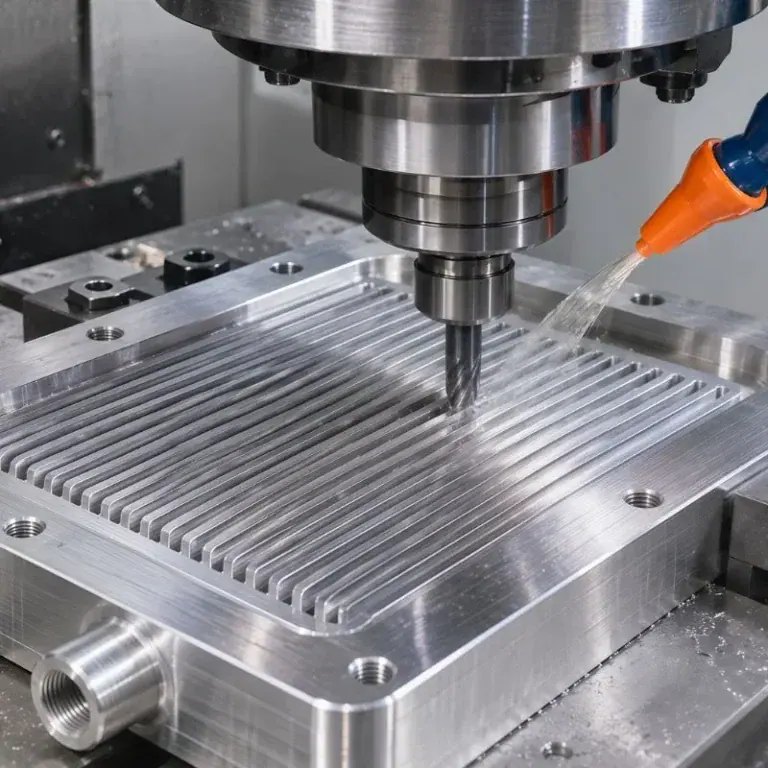
In precision mechanical manufacturing, achieving high accuracy on a single piece is not the hardest part; the real test lies in maintaining dimensional consistency across multiple batches and process transfers. TiRapid has established a systematic accuracy assurance mechanism centered on three core pillars: machine rigidity, workholding methods, and thermal deformation control:
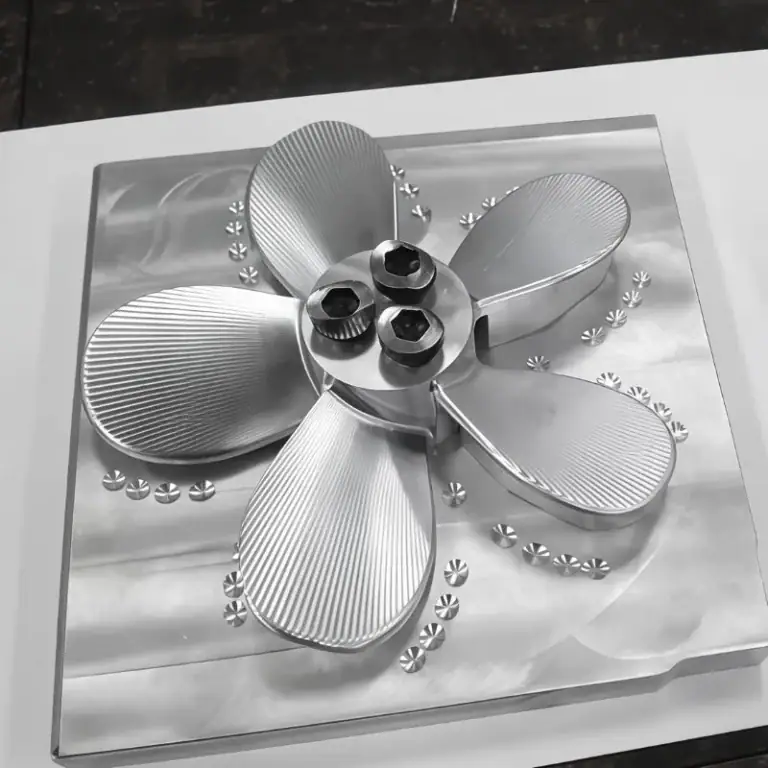
- 5-Axis Simultaneous Machining Reduces Repeated Setup Errors: When machining multi-face parts or compound angled surfaces on traditional 3-axis mills, workpieces often require multiple unclamping, flipping, and datum re-alignment steps—each setup introducing minor positional deviations. TiRapid operates multiple 5-axis simultaneous machining centers covering part sizes up to 600mm, completing multi-angle cutting of complex spatial features in a single or minimal number of setups to lock in relative positional accuracy between features from the start.
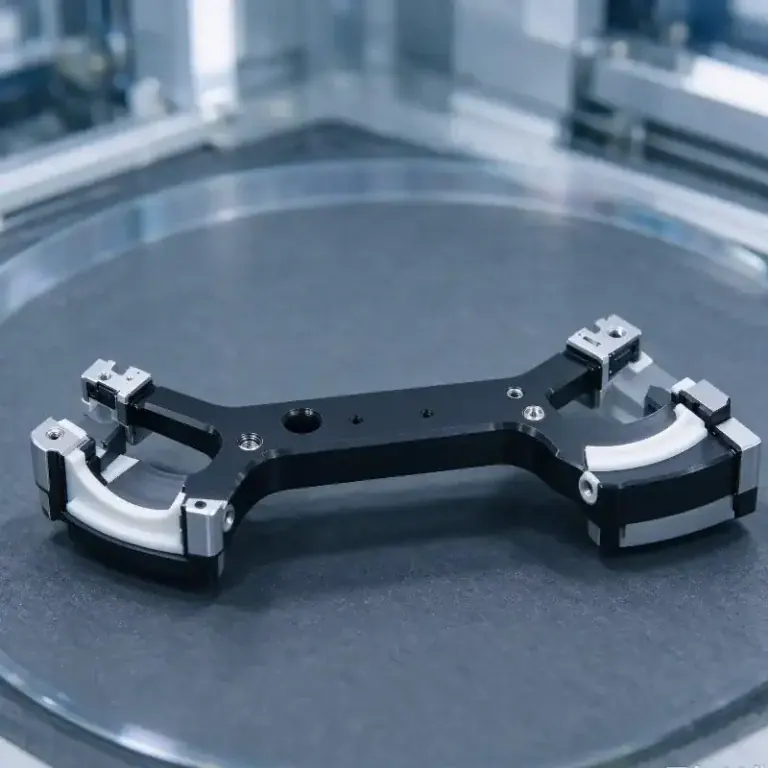
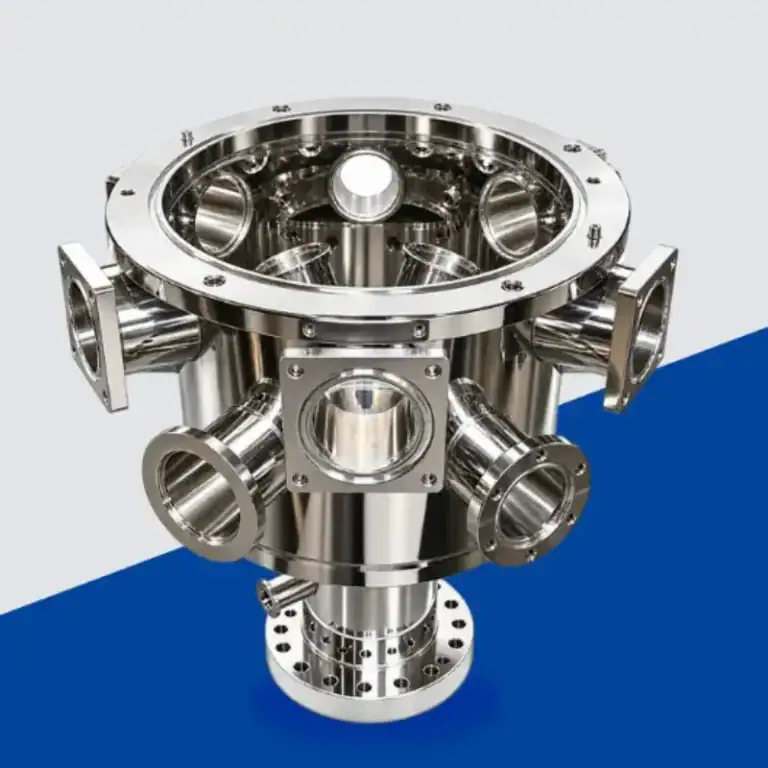
- Full-Scale Equipment Matrix & Dedicated Control for Micro and Large Parts: For precision shafts, miniature bushings, and high-precision connector components, we utilize high-precision CNC lathes and Swiss-type screw machines capable of minimum part sizes down to 2mm, routinely achieving surface roughness up to Ra0.6. For large automation equipment bases and precision tooling frames, our large-format CNC milling equipment supports monolithic cutting of workpieces up to 3000mm in length. For ultra-thin wall parts widely recognized as challenging in the industry, we separate roughing and finishing passes, apply symmetrical stress-relieving toolpaths, and use custom vacuum fixtures or compliant workholding to effectively suppress workpiece springback and deformation caused by cutting heat and clamping forces.
- Precision Wire EDM for Supplementary Finish Machining: For sharp internal right angles, micro-narrow slots, and hardened mold inserts unreachable by rotary cutters, TiRapid integrates micron-level Wire Electrical Discharge Machining (Wire EDM) to achieve clean, burr-free profiles with high perpendicularity.
Over 80 Metals & Engineering Plastics in Stock, Supporting One-Stop Multi-Process Synergy
Different industrial applications impose strict requirements on mechanical strength, corrosion resistance, thermal stability, or electrical insulation. TiRapid maintains a stable raw material supply chain, stocking and supporting print-to-part machining for over 80 industrial-grade metals and engineering plastics:
- Metal Material Library: Covers aerospace and industrial-grade aluminum alloys (6061-T6, 7075-T651, 2024, 5052, etc.), stainless steels (303, 304, 316, 316L, 17-4PH, etc.), carbon and alloy steels (1018, 1045, 4140, etc.), brass (H59/H62), red copper (T2), and titanium alloy (TC4/Grade 5). All metal batches are verified against original mill test certificates prior to warehousing to ensure chemical compositions and mechanical properties meet specifications.
- Engineering Plastics Library: Skilled in low-stress cutting processes for PEEK, PTFE (Teflon), POM (Delrin/Acetal), PA6/PA66 (Nylon), ABS, PC, and PMMA (Acrylic), utilizing dedicated sharp tooling and temperature-controlled feed parameters to prevent stress cracking or dimensional creep in plastic parts after finish machining.
Beyond core CNC machining, TiRapid integrates supporting processes including sheet metal fabrication, vacuum casting, and rapid injection molding, alongside a full suite of surface finishing services such as clear and color anodizing, hardcoat anodizing, bead blasting, brushing, electroless nickel plating, electroplating, stainless steel passivation, black oxide, powder coating, and laser engraving. Clients do not need to shuttle semi-finished parts back and forth between different subcontractors, completing the entire workflow from prototype validation to low-volume delivery within a single factory system.
ISO 9001 Quality Management System & Full-Dimensional CMM Inspection
Consistent precision output relies on rigorous inspection and verification. TiRapid strictly enforces the ISO 9001 quality management system, embedding quality control across incoming, in-process, and outgoing stages:
- Incoming Quality Control (IQC): Raw materials are verified against mill certificates and spot-checked via spectrometer composition testing prior to warehousing, eliminating material grade mix-ups;
- First Article Inspection & In-Process Patrol Inspection (FAI & IPQC): Every batch must complete First Article dimensional measurement and receive inspector sign-off prior to full production; during machining, critical dimensions are spot-checked at fixed intervals to apply timely tool wear compensation;
- Outgoing Quality Control & Lab Verification (OQC): Our quality inspection laboratory is equipped with high-precision Coordinate Measuring Machines (CMM), 2D optical vision measuring systems, surface roughness testers, hardness testers, and regularly calibrated precision gauges. For high-precision or structurally complex orders, we provide complete, traceable dimensional inspection reports along with the shipment.
No Minimum Order Quantity & Transparent, Controllable Production Lead Times
To match the agile, iterative requirements of R&D institutions and overseas hardware teams, TiRapid enforces a No Minimum Order Quantity (No MOQ) policy starting from 1 piece. Whether for a single prototype validation or a low-volume production run of tens to hundreds of units, every order follows identical engineering evaluation and quality control standards.
Backed by digital production scheduling and ample machine capacity, our factory production lead times start from 3 working days for standard CNC rapid prototyping orders of moderate structural complexity. Once machining and surface finishing are completed, finished parts are individually packed in shockproof, moisture-resistant packaging and dispatched worldwide via DHL, FedEx, UPS, or dedicated air freight—accompanied by clear production progress and logistics updates throughout, helping overseas clients advance project execution efficiently.