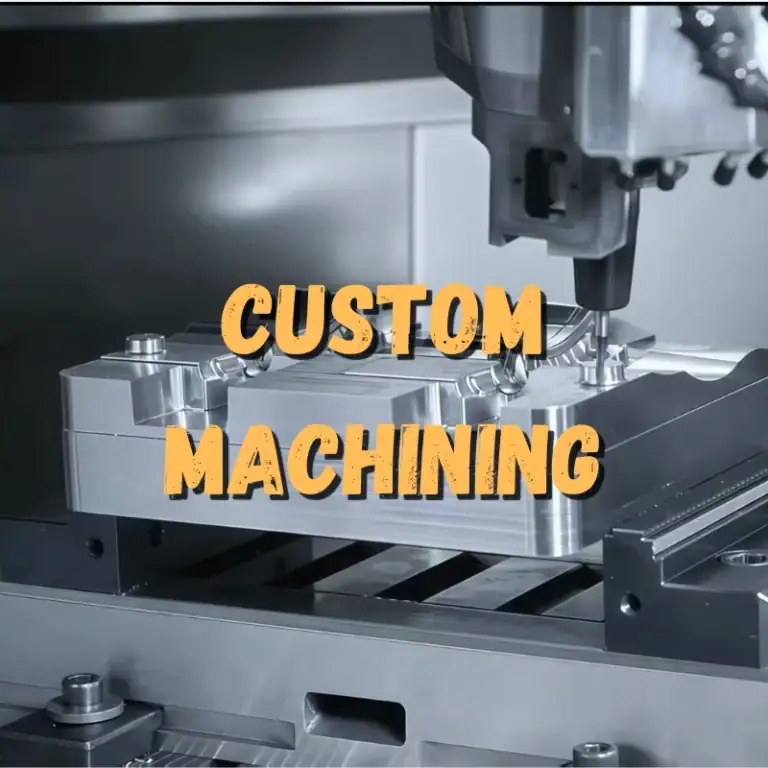
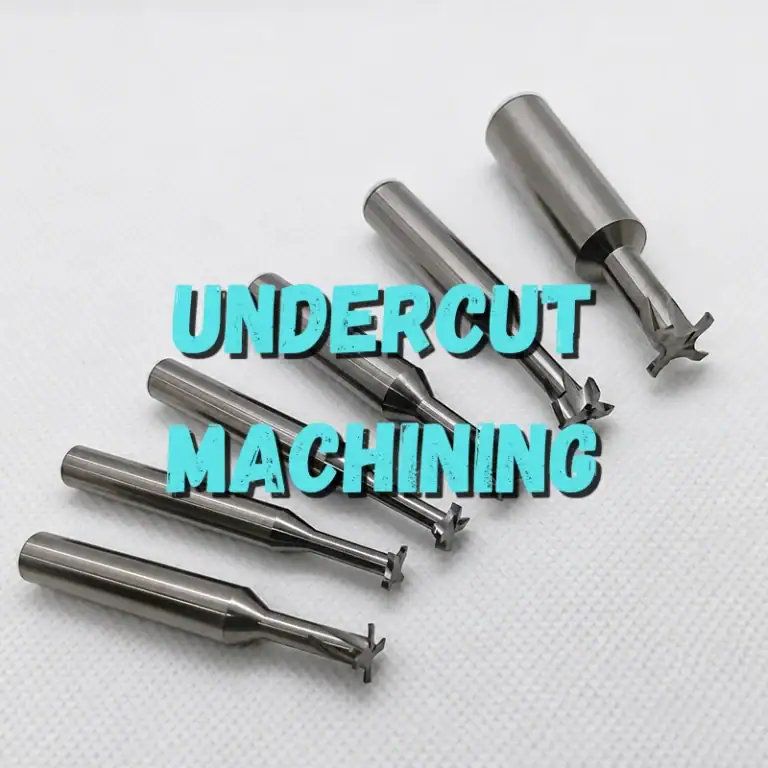
Many companies encounter the need for custom part machining during new product development. Whether it is prototype manufacturing in the R&D stage or later small-batch production, parts must be produced according to drawings and real application requirements. Unlike standard components, custom parts often have unique structures, dimensions, and performance requirements, which place higher demands on machining processes and quality control. In precision machining, turning a drawing into a finished part is not a simple production step, but a systematic process involving multiple stages. Any deviation in one stage can affect the final result.
Requirement Confirmation Is the First Step
Before production begins, the machining supplier must fully understand the customer’s design intent and application scenarios. The more complete the initial information, the smoother the manufacturing process will be, and the lower the risk of rework and cost loss.
Drawing and Technical Requirement Review
In the early stage of custom part machining, drawing review is one of the most fundamental and critical steps. Engineers must analyze manufacturability from a production perspective to ensure the design can be realized in actual manufacturing while avoiding hidden risks. This stage is not just about reading drawings—it is about evaluating whether the structure is feasible and whether key dimensions can be reliably achieved in production.
Key inspection points include:
- Whether tolerances are reasonable and machinable;
- Whether material specifications are clearly defined;
- Whether key functional dimensions are fully marked;
- Whether structural interference or machining difficulties exist;
- Whether surface treatment requirements are achievable;
A systematic review at this stage helps identify conflicts between design and manufacturing in advance. It reduces the risk of rework or batch failures and provides a solid foundation for subsequent process planning, making the entire precision machining workflow more controllable.
Material and Machinability Confirmation
After drawing review, the next step is to confirm material selection and overall machinability. Different materials not only affect product performance but also significantly change machining paths and cost structures. Engineers evaluate material suitability based on application conditions, mechanical requirements, and machining characteristics to ensure stability during production.
- Select materials based on working environment;
- Evaluate machinability and cutting performance;
- Determine whether alternative materials are needed;
- Estimate production cycle and cost structure;
The main purpose of this stage is to avoid situations where a design is feasible but difficult to manufacture. Proper material selection reduces uncertainties in machining, lowers tool wear, and improves process stability throughout production.
Initial Machining Plan Development
After confirming all initial information, engineers move to the preliminary process planning stage. This step defines the overall manufacturing approach and transforms the drawing concept into an executable production workflow, forming the foundation for detailed process design later.
- Select preliminary machining equipment type;
- Define processing methods (CNC, turning, etc.);
- Outline basic machining steps;
- Determine whether special fixtures are required;
- Identify special process requirements;
This planning stage establishes a clear structural framework for the entire machining process, improving workflow organization and allowing better estimation of production capacity and machining efficiency.
Process Planning Determines Machining Quality
Process design is the core link between drawings and actual production. A well-designed process not only improves efficiency but also directly determines final accuracy and stability.
Machining Route Decomposition and Optimization
For complex parts, engineers divide the entire machining process into multiple stages so that each step is executed under stable conditions. This layered approach reduces stress accumulation and improves dimensional consistency.
- Rough machining removes most excess material;
- Semi-finishing improves structural accuracy;
- Finishing ensures final dimensions;
- Local areas processed in separate steps;
- Special structures optimized with dedicated operations;
Stage-by-stage machining improves dimensional stability and allows gradual stress release within the material. This significantly reduces deformation risk and enhances overall precision machining reliability.
Fixture Design and Positioning Method
Fixture design directly affects stability and positioning accuracy during machining. Poor support or improper clamping can easily cause deformation or dimensional deviation, especially in thin-walled or complex structures.
- Design dedicated fixtures for higher positioning accuracy;
- Optimize support layout to reduce deformation risk;
- Control clamping force to avoid local damage;
- Improve repeatability of setup positioning;
A well-designed fixture not only holds the workpiece but also controls machining stress. Proper force distribution helps prevent structural deformation and ensures stable dimensional accuracy.
Tool Selection and Cutting Parameter Matching
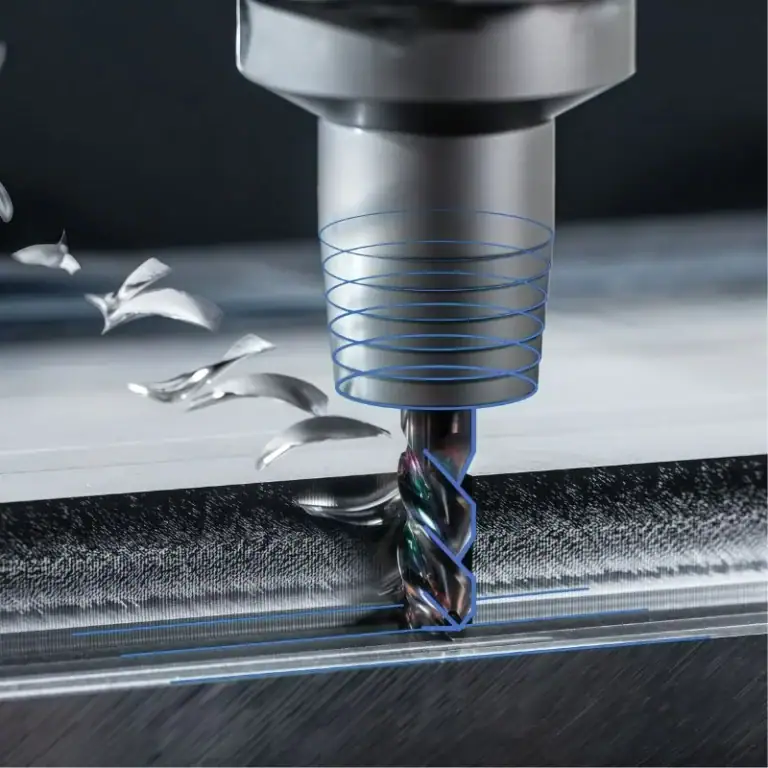
Tool selection and parameter settings determine cutting force and machining stability, making them essential in process design. Different materials require different tool and parameter combinations.
- Select tool materials based on workpiece material;
- Optimize cutting speed and feed rate;
- Control cutting depth to reduce vibration;
- Minimize tool wear rate;
- Improve surface quality;
Proper tool and parameter matching stabilizes cutting forces during machining. This ensures smoother processing, reduces vibration impact, and improves both dimensional accuracy and surface finish.
Execution Control During Production
After process planning is finalized, parts enter the production stage. At this point, both machine capability and shop-floor control determine the final outcome.
CNC Machining Execution
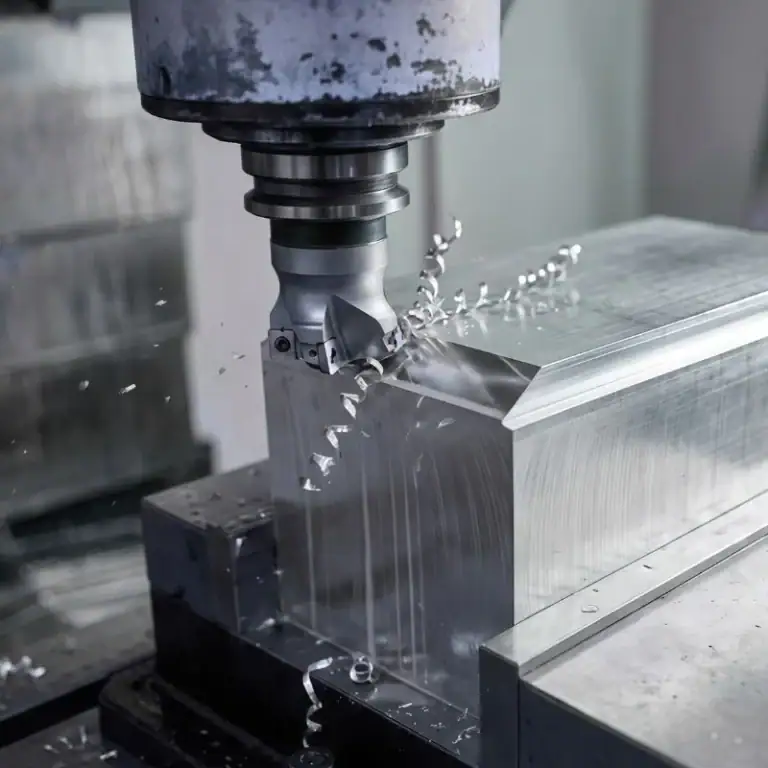
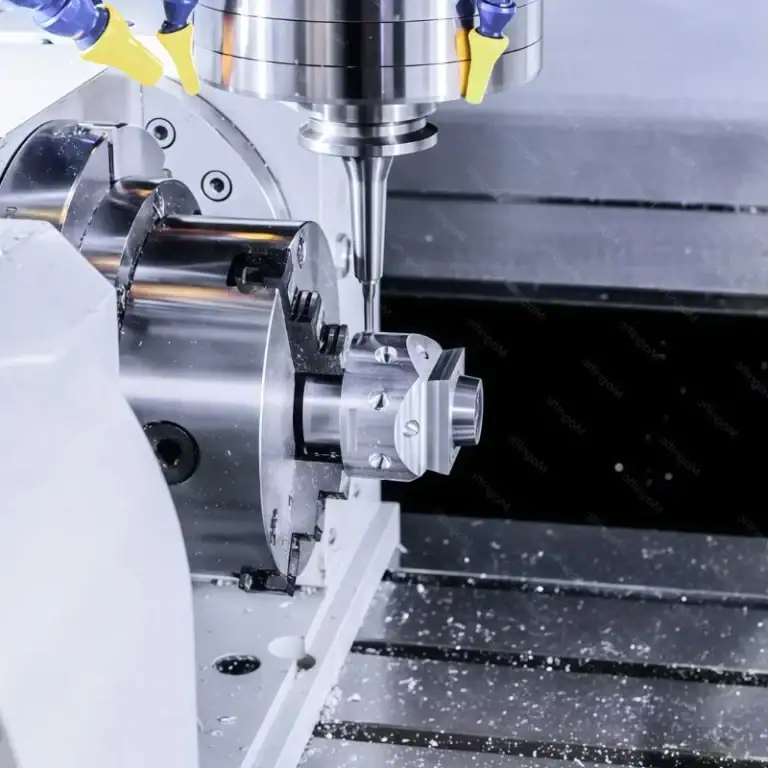
Modern custom parts are mainly produced using CNC machines, which provide high consistency and capability for complex geometries. However, strict control during execution is still required.
- Execute automated machining according to program;
- Monitor machining status in real time;
- Check tool wear regularly;
- Adjust parameters based on feedback;
Although CNC machining offers stability, the final quality depends on process control. Real-time monitoring and adjustment ensure the machining process remains within controlled conditions and prevent batch errors.
In-Process Quality Monitoring
Quality control is not limited to the final inspection stage—it runs throughout the entire production process. In-process inspection helps detect issues early and prevents large-scale defects.
- Measure key dimensional changes;
- Monitor surface condition during machining;
- Record process data variations;
- Correct deviations promptly;
In-process inspection enables early detection of potential problems. By controlling deviations at an early stage, manufacturers can significantly improve yield rate and production stability.
Final Inspection and Delivery
After machining is completed, final inspection and packaging are required to ensure products meet customer requirements and are safely delivered.
Final Quality Inspection
Final inspection is the last checkpoint before delivery, ensuring the parts fully meet design specifications and quality standards.
- Full dimensional accuracy inspection;
- Geometric tolerance verification;
- Surface quality inspection;
- Functional assembly testing;
- Batch consistency confirmation;
This stage ensures that all products meet design and application requirements, guaranteeing reliability and stability in real-world use.
Packaging and Shipping Protection
To prevent damage during transportation, parts must be properly packaged according to their characteristics, especially for high-precision components.
- Prevent impact during transportation;
- Avoid surface scratches;
- Apply anti-rust and moisture protection;
- Package according to specifications;
- Ensure safe logistics handling;
Proper packaging not only protects the parts but also ensures the integrity of machining results during delivery, preventing any external damage during transportation.
Custom part machining is a systematic process that includes requirement analysis, process planning, production execution, and final inspection. Every stage directly affects the final product quality. Only by maintaining strict control throughout the entire workflow can stable and reliable precision machining results be achieved. Tirapid specializes in high-precision manufacturing and custom machining services, providing end-to-end solutions from design support to mass production.