Tirapid

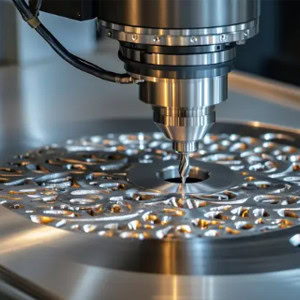
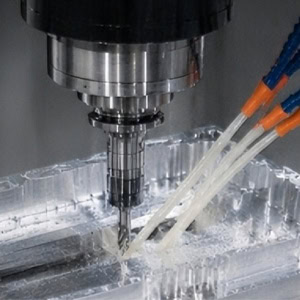
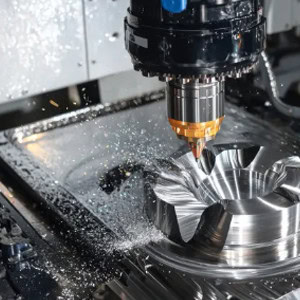
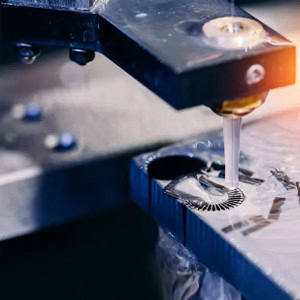
The cutting tool machines grooves inside the workpiece.

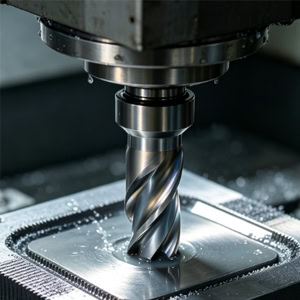
What Is the Real Difference Between PVD and CVD Coatings in Milling?

In CNC milling, tool coatings may seem like just a thin surface layer, but they directly affect wear resistance, cutting temperature, edge condition, and tool life. PVD and CVD are both common hard coating technologies, but there is no simple “better or worse” relationship between them. PVD typically has a thinner coating and better edge

What Is the Real Difference Between PVD and CVD Coatings in Milling? Read More »
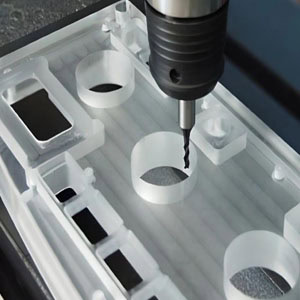
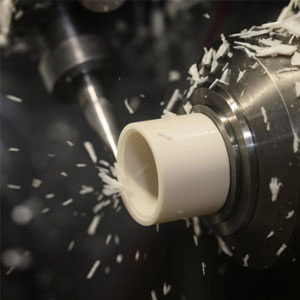
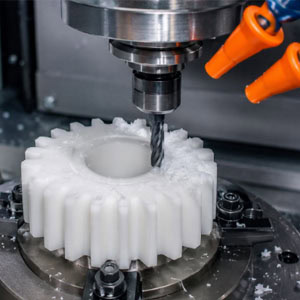
Precision CNC Machining of Plastic Parts

CNC Plastic Machining “Springback” Causes

When machining plastic parts with CNC, “springback” is a relatively common dimensional abnormality, especially in thin-walled parts, long strip-shaped parts, deep-groove parts, narrow-edge structures, and engineering plastic components with high elasticity. Plastic machining springback refers to a situation in which the material undergoes a certain degree of deformation during cutting, clamping, or under load, and

CNC Plastic Machining “Springback” Causes Read More »

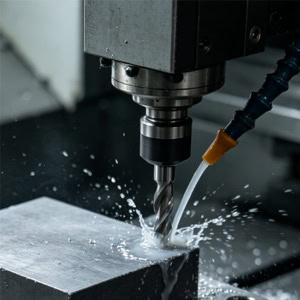
Machining process

How Are Precision Part Machining Accuracy Levels Classified?

Whether a part can operate reliably often does not depend on its size, but on how accurately it is manufactured. In industries such as automation equipment, medical devices, aerospace components, and semiconductor equipment, many parts may look small, but their tolerance requirements are extremely strict. Even a few microns of deviation can affect assembly performance

How Are Precision Part Machining Accuracy Levels Classified? Read More »

CNC machining center performs high-speed milling of aluminum alloy housing.

What Are the Effective Methods to Control Burrs in High-Speed Milling of Aluminum Alloys?

In the manufacturing of precision parts, aluminum alloys are widely used in aerospace components, automotive structural parts, electronic device housings, and industrial products due to their lightweight nature, good thermal conductivity, and high machining efficiency. However, in high-speed machining environments, the excellent ductility of aluminum alloys also brings new challenges, among which burr formation has

What Are the Effective Methods to Control Burrs in High-Speed Milling of Aluminum Alloys? Read More »

What Are the Effects of Humidity on CNC Plastic Machining

What Are the Effects of Humidity on CNC Plastic Machining?

CNC plastic machining has certain requirements for material condition, machining environment, tool condition, and dimensional inspection. Many production sites pay more attention to cutting speed, feed rate, tool selection, and cooling methods, but often overlook the effects of air humidity on certain plastic materials. Ordinary plastic parts generally do not show obvious changes immediately when

What Are the Effects of Humidity on CNC Plastic Machining? Read More »

Applications of CNC Turning in Automation Equipment

Applications of CNC Turning in Automation Equipment

With the continuous development of industrial automation, smart manufacturing, and digital production, automation equipment has increasingly high requirements for component machining accuracy, dimensional consistency, operational stability, and batch production efficiency. Automated production lines, industrial robots, conveying systems, packaging equipment, inspection machines, assembly equipment, and intelligent warehousing systems all require large quantities of shafts, sleeves, connectors,

Applications of CNC Turning in Automation Equipment Read More »

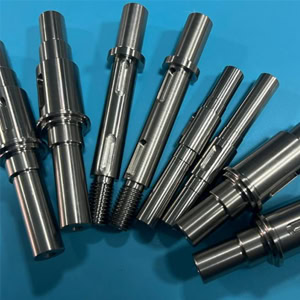
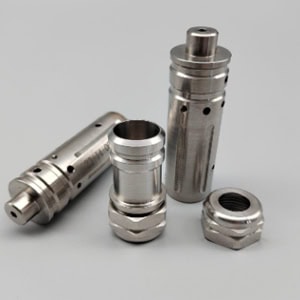
Precision parts CNC machining

What Does Precision Part Machining Include?

Many machines may look complex, but their actual performance often depends on small internal components. A slight deviation in a hole position or an unstable dimension can affect the assembly and operation of the entire system. Precision part machining is designed to meet these demanding manufacturing requirements by processing metals, plastics, and composite materials into

What Does Precision Part Machining Include? Read More »

Why choose CNC machining for POM plastic parts

Why choose CNC machining for POM plastic parts?

POM (polyoxymethylene) is a common engineering plastic with good hardness, wear resistance, dimensional stability, and mechanical strength. It is widely used to manufacture gears, bushings, sliders, washers, guide rails, connectors, precision brackets, and various mechanical structural parts. Compared with ordinary plastics, POM can maintain good dimensional accuracy and surface quality after machining, making it highly

Why choose CNC machining for POM plastic parts? Read More »

Is the positioning stability of magnetic chucks sufficient for precision milling

Is the positioning stability of magnetic chucks sufficient for precision milling?

Magnetic chucks are widely used in precision milling for fast clamping of flat workpieces. They are known for high efficiency and convenience, but in high-precision CNC milling applications, their positioning stability remains a key concern for engineers. Especially in thin-walled parts, mold steels, and high-precision datum surface machining, whether the holding force is sufficient and

Is the positioning stability of magnetic chucks sufficient for precision milling? Read More »

Applications of CNC Turning in the Aerospace Industry

Applications of CNC Turning in the Aerospace Industry

The aerospace industry has extremely high requirements for component manufacturing accuracy, material performance, structural reliability, and production consistency. Aircraft engines, aerospace transmission systems, landing gear, hydraulic systems, fuel systems, satellites, spacecraft, and various precision control devices contain numerous shafts, sleeves, discs, connectors, and precision structural components. These components must meet strict dimensional tolerances while withstanding

Applications of CNC Turning in the Aerospace Industry Read More »

CNC cutting of machine tools and iron tools

What Processes Are Included in Precision Mechanical Machining?

A part must go through multiple manufacturing processes before it can become a finished component that meets design requirements. Especially in industrial equipment, automation systems, medical devices, aerospace components, and other high-end manufacturing fields, parts must not only achieve accurate dimensions but also maintain stable performance during long-term operation. Precision mechanical machining is not a

What Processes Are Included in Precision Mechanical Machining? Read More »

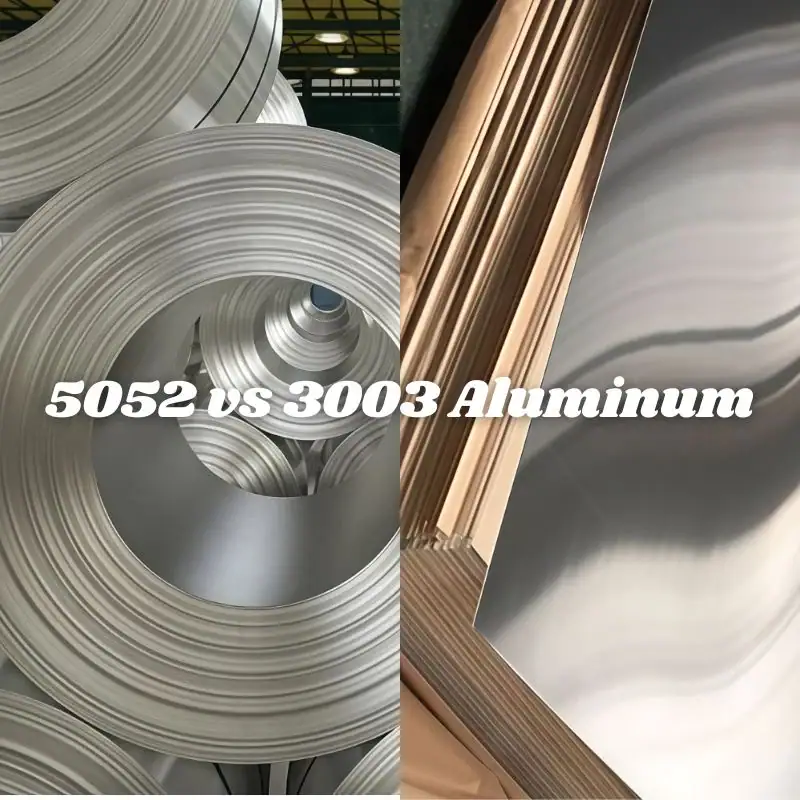
5052 vs 3003 aluminum material comparison cover showing differences in strength, formability, corrosion resistance, cost, and best uses

5052 Vs 3003 Aluminum: Strength, Cost, And Best Uses

5052 vs 3003 aluminum is a comparison between two widely used non-heat-treatable aluminum sheet alloys for formed parts, tanks, enclosures, heat exchangers, marine components, and general fabrication. 3003 aluminum is usually better when a project needs excellent formability, lower cost, and good thermal conductivity, while 5052 aluminum is usually better when the part needs higher

5052 Vs 3003 Aluminum: Strength, Cost, And Best Uses Read More »

Scroll to Top
Simplified Table

To ensure successful upload, please compress all files into one .zip or .rar file before uploading.
Upload CAD files (.igs | .x_t | .prt | .sldprt | .CATPart | .stp | .step | .pdf).