
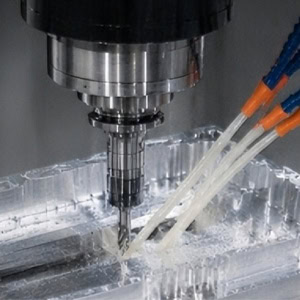
In the manufacturing of precision parts, aluminum alloys are widely used in aerospace components, automotive structural parts, electronic device housings, and industrial products due to their lightweight nature, good thermal conductivity, and high machining efficiency. However, in high-speed machining environments, the excellent ductility of aluminum alloys also brings new challenges, among which burr formation has always affected part quality and subsequent assembly efficiency. Especially in CNC milling processes, when high-speed rotating tools continuously contact the material, improper control of cutting parameters, tool condition, or machining processes can easily lead to edge deformation and burr retention. Mastering effective burr control methods is of great significance for improving machining accuracy and reducing post-processing costs.
Optimizing Cutting Parameters to Reduce Burr Formation
In high-speed milling of aluminum alloys, cutting parameters directly affect the material removal process. Proper adjustment of machining parameters can reduce burr formation at the source.
Matching Spindle Speed and Feed Rate
When machining aluminum alloys at high speed, higher spindle speed is not always better. Excessively high cutting speed may cause material softening and increased temperature in the cutting zone, thereby increasing the likelihood of burr formation.
- Adjust spindle speed reasonably according to the aluminum alloy grade and tool specifications to maintain stable cutting conditions.
- Match an appropriate feed rate to avoid excessive tool friction caused by too low feed, which may lead to edge deformation.
- Optimize feed per tooth to ensure effective cutting engagement and reduce edge rollover caused by material extrusion.
A well-balanced parameter combination ensures smoother cutting and effectively reduces burr risk in high-speed milling.
Adjusting Cutting Depth and Width
Excessive cutting load can easily cause plastic deformation at the edges of aluminum alloys. Therefore, cutting volume should be properly controlled according to machine capability and part structure, avoiding excessive material removal in a single pass to reduce tool impact on workpiece edges. Layered machining can be used to gradually remove material and improve edge stability. For thin-walled or complex parts, cutting load should be appropriately reduced to minimize deformation. By properly controlling cutting depth and width, machining quality can be improved while maintaining efficiency.
Selecting Suitable Tools to Improve Cutting Performance
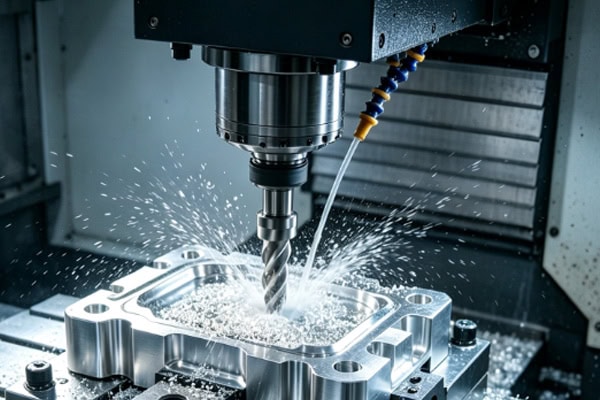
Tools are a key factor affecting aluminum alloy machining quality. Proper tool selection can reduce cutting resistance and minimize burr formation.
Using Tools Suitable for Aluminum Alloy Machining
Aluminum alloys have strong adhesion, and ordinary tools are prone to chip adhesion and built-up edge during high-speed cutting, which affects surface quality.
- Select sharp carbide end mills to improve cutting performance.
- Use large chip flute designs to accelerate chip evacuation and reduce secondary cutting.
- Adopt polished tool surfaces to reduce cutting friction and material adhesion.
Proper tools can improve CNC milling stability and reduce burr formation probability.
Maintaining Tool Sharpness
Tool wear increases cutting resistance, making aluminum edges more susceptible to extrusion and resulting in more burrs.
- Establish a tool life management system and replace worn tools in time.
- Regularly inspect cutting edges to avoid using dull tools in precision machining.
- Set reasonable tool replacement cycles based on material and production volume.
Maintaining sharp tools effectively ensures machining quality and improves part consistency.
Strengthening Cooling and Chip Removal Management
Heat generation and chip handling during high-speed milling directly affect machining stability of aluminum alloys.
Improving Cooling in the Machining Area
Although aluminum alloys have good thermal conductivity, localized heat generated during high-speed cutting can still cause material deformation and tool adhesion.
- Use air cooling or minimum quantity lubrication to reduce cutting temperature.
- Ensure coolant reaches the cutting zone in time to improve heat dissipation efficiency.
- Reduce material softening under high temperature to avoid abnormal edge deformation.
Stable cooling conditions help maintain continuous machining and reduce burr formation.
Enhancing Chip Evacuation Capability
Aluminum chips are usually sticky. If not removed in time, they may re-enter the cutting zone. Therefore, tool chip flute design should be optimized to improve chip flow efficiency, and compressed air can be used to assist chip removal to reduce chip accumulation. At the same time, repeated cutting of chips that may damage workpiece edges should be avoided. A good chip evacuation environment reduces machining interference and ensures more stable and reliable high-speed milling.
Optimizing Machining Processes to Improve Overall Quality
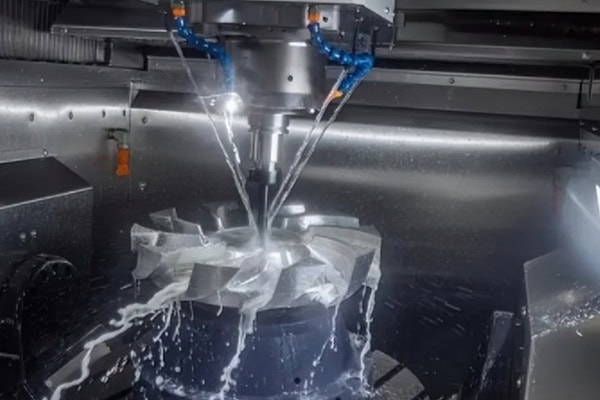
In addition to equipment and tool factors, process design also determines the final quality of aluminum alloy parts.
Reasonable Tool Path Planning
Scientific tool path design can reduce impact caused by sudden tool entry and exit, thereby reducing burr formation.
- Optimize tool entry strategy to reduce stress concentration at edges.
- Use climb milling to improve cutting stability and surface quality.
- Simulate machining processes using CAM software to identify potential issues in advance.
Proper tool path planning improves production efficiency and reduces subsequent finishing work.
Enhancing Finishing and Deburring Control
For high-precision parts, relying solely on rough machining cannot completely eliminate burrs, so finishing processes must be combined for control.
- Leave appropriate finishing allowance to improve final dimensional accuracy.
- Use finish milling to reduce edge residue and improve appearance quality.
- When necessary, combine manual or automated deburring processes to meet assembly requirements.
A well-structured process flow further improves aluminum alloy machining quality.
Conclusion
Burr formation in high-speed milling of aluminum alloys is not caused by a single factor but results from the combined effects of process parameters, tool condition, chip removal, and cooling conditions. Through systematic machining optimization, it is possible to improve production efficiency while achieving more stable dimensional consistency and surface quality. Leveraging mature CNC machining capabilities and precision manufacturing equipment, TiRapid provides high-standard aluminum alloy machining solutions to ensure reliable and consistent product quality.