Tirapid

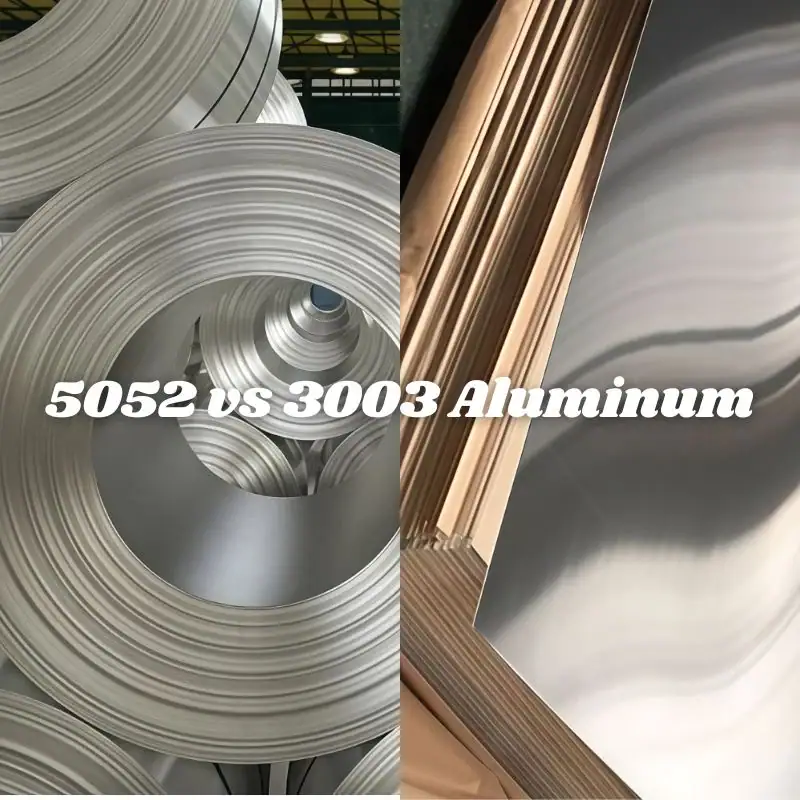
5052 vs 3003 aluminum material comparison cover showing differences in strength, formability, corrosion resistance, cost, and best uses

5052 Vs 3003 Aluminum: Strength, Cost, And Best Uses

5052 vs 3003 aluminum is a comparison between two widely used non-heat-treatable aluminum sheet alloys for formed parts, tanks, enclosures, heat exchangers, marine components, and general fabrication. 3003 aluminum is usually better when a project needs excellent formability, lower cost, and good thermal conductivity, while 5052 aluminum is usually better when the part needs higher

5052 Vs 3003 Aluminum: Strength, Cost, And Best Uses Read More »
Dimensional Control Methods for CNC Machining Plastic Gaskets

Dimensional Control Methods for CNC Machining Plastic Gaskets

Plastic gaskets are widely used in sealing, positioning, cushioning, and insulation applications, and are common parts in mechanical equipment, piping connections, and electronic assemblies. Compared with traditional metal gaskets, plastic gaskets are lightweight, corrosion-resistant, and offer good electrical insulation. At the same time, different materials can be selected for machining according to the contact medium,

Dimensional Control Methods for CNC Machining Plastic Gaskets Read More »

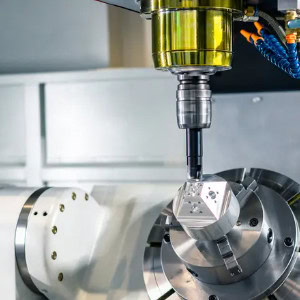
CNC dynamic milling scene diagram.

Dynamic Milling vs Traditional Layered Cutting: How Big Is the Efficiency Gap?

In CNC milling, efficiency is determined not only by spindle speed or tool performance, but more importantly by the choice of machining strategy. Especially in complex parts or high-strength material machining, the gap between traditional layer-by-layer cutting and dynamic milling becomes significantly amplified. Many factories using the same equipment can experience machining time differences of

Dynamic Milling vs Traditional Layered Cutting: How Big Is the Efficiency Gap? Read More »

Applications of CNC Turning in Medical Device Manufacturing

Applications of CNC Turning in Medical Device Manufacturing

The medical device industry has strict requirements for component accuracy, material properties, surface quality, and product consistency. Surgical instruments, orthopedic devices, dental equipment, diagnostic systems, rehabilitation equipment, and medical automation systems all contain numerous small and precision-machined metal components. Shafts, sleeves, connectors, threaded components, positioning parts, guide components, and precision supports generally require stable machining

Applications of CNC Turning in Medical Device Manufacturing Read More »

Machines in the factory

What Are the Challenges in Composite Material Part Manufacturing?

Composite materials are increasingly used in aerospace, lightweight automotive applications, medical equipment, and advanced industrial products. They offer excellent advantages such as low weight, high strength, and corrosion resistance. However, when it comes to actual part manufacturing, many companies find that composite materials are not as easy to process as expected. A structure that can

What Are the Challenges in Composite Material Part Manufacturing? Read More »

Xometry vs Protolabs comparison cover with CNC machining background

Xometry Vs Protolabs: Services, Pricing & Differences

Xometry and Protolabs both provide digital manufacturing services for CNC machining, injection molding, 3D printing, and sheet metal fabrication. However, their manufacturing models are different: Xometry mainly relies on an AI-driven network of 5,000+ suppliers, while Protolabs combines its own digital factories with about 250 manufacturing partners. This guide compares Xometry vs Protolabs in manufacturing

Xometry Vs Protolabs: Services, Pricing & Differences Read More »

Applications of CNC Turning in Electronic Component Manufacturing

Applications of CNC Turning in Electronic Component Manufacturing

As electronic devices continue to develop toward miniaturization, high performance, and high integration, electronic components require increasingly strict standards for dimensional accuracy, surface quality, material properties, and batch consistency. Communication equipment, consumer electronics, industrial control systems, smart terminals, sensors, and automation equipment all contain numerous precision-machined metal components. Connectors, terminals, precision nuts, metal sleeves, contact

Applications of CNC Turning in Electronic Component Manufacturing Read More »

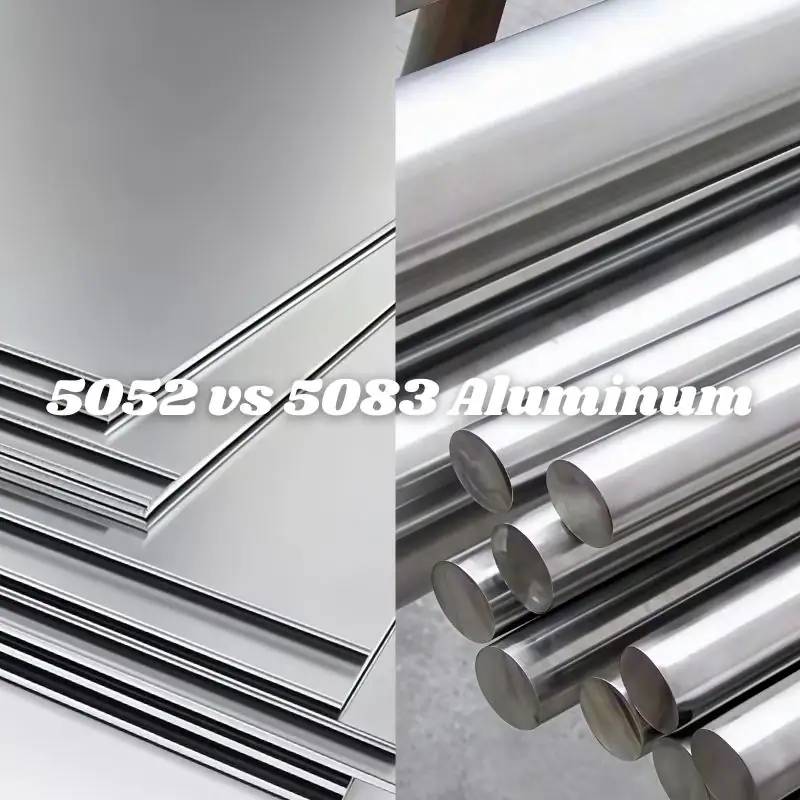
Comparison display of 5052 vs 5083 aluminum sheet material and aluminum bar raw stock, alloy difference reference

5052 Vs 5083 Aluminum: Strength, Cost, And Best Uses

5052 vs 5083 aluminum is a comparison between two non-heat-treatable 5000 series aluminum-magnesium alloys used for corrosion-resistant sheet metal parts, marine structures, welded assemblies, tanks, transportation parts, and industrial components. 5052 aluminum is usually better when formability, lower cost, and sheet metal fabrication matter more, while 5083 aluminum is usually better when higher strength, saltwater

5052 Vs 5083 Aluminum: Strength, Cost, And Best Uses Read More »
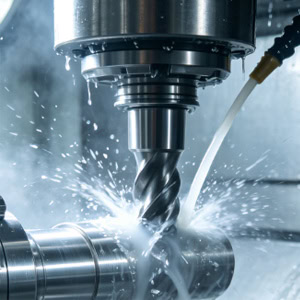
Image of CNC high-temperature alloy milling.

Why Is Heat Management in High-Temperature Alloy Milling Always a Challenge?

High-temperature alloys, with their excellent heat resistance, corrosion resistance, and high strength, are widely used in high-end manufacturing fields such as aerospace, energy equipment, and gas turbines. However, these advantages also make them typical difficult-to-machine materials. During CNC milling, cutting heat tends to concentrate at the tool tip and machining zone, while poor heat dissipation

Why Is Heat Management in High-Temperature Alloy Milling Always a Challenge? Read More »

What Products Can PVC CNC Machining Be Used For

What Products Can PVC CNC Machining Be Used For?

PVC is a relatively common plastic material in both industrial production and daily life, found in products such as water pipes, window frames, electrical conduit, and decorative panels. Compared to standard forming methods like extrusion and injection molding, CNC machining is better suited for producing PVC parts that require custom dimensions, complex geometries, small-batch production,

What Products Can PVC CNC Machining Be Used For? Read More »

Workpiece machining

What Parts Are Needed for Industrial Equipment Upgrades?

After industrial equipment has been used for several years, many companies face a similar situation: the equipment can still operate, but its production efficiency and processing capabilities can no longer meet current requirements. Replacing the entire machine is often too costly, while upgrading key components is usually a more practical solution. In many cases, the

What Parts Are Needed for Industrial Equipment Upgrades? Read More »

Machining aluminum alloy shell-type sheet metal workpieces

How to Balance Cutting Parameters in CNC Machining of Copper-Aluminum Dissimilar Materials

Copper and aluminum are both commonly used non-ferrous metals in manufacturing, but they exhibit significantly different machining characteristics. Copper has excellent electrical conductivity and ductility, which makes it prone to tool sticking and burr formation during machining. Aluminum has lower density and good thermal conductivity, but high-speed machining may still lead to built-up edge and

How to Balance Cutting Parameters in CNC Machining of Copper-Aluminum Dissimilar Materials Read More »

Scroll to Top
Simplified Table

To ensure successful upload, please compress all files into one .zip or .rar file before uploading.
Upload CAD files (.igs | .x_t | .prt | .sldprt | .CATPart | .stp | .step | .pdf).