Tirapid

Processing technology

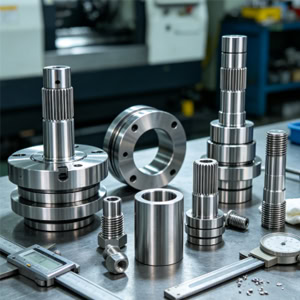
What Steel Materials Are Commonly Used in Precision Machining?

In the manufacturing industry, many parts may not be large in size, but they have very high requirements for material performance and machining accuracy. Internal equipment components such as shafts, transmission parts, structural supports, and wear-resistant components often need to withstand pressure, friction, and complex working environments during long-term operation. Steel is one of the

What Steel Materials Are Commonly Used in Precision Machining? Read More »
Introduction to the Basic Components of CNC Turning Equipment

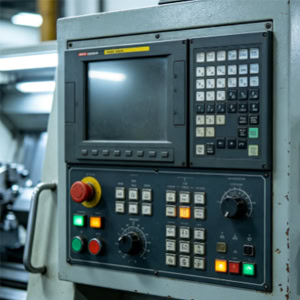
Introduction to the Basic Components of CNC Turning Equipment

CNC turning equipment is an automated machining system that uses a computer numerical control system to manage machine movements and machining operations. The spindle rotates the workpiece while cutting tools move along programmed axes to remove material and produce the required geometry. Compared with conventional lathes, CNC turning equipment incorporates numerical control systems, servo drives,

Introduction to the Basic Components of CNC Turning Equipment Read More »

What Is the Role of Compressed Air When CNC Machining POM

What Is the Role of Compressed Air When CNC Machining POM?

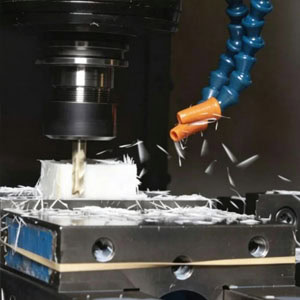
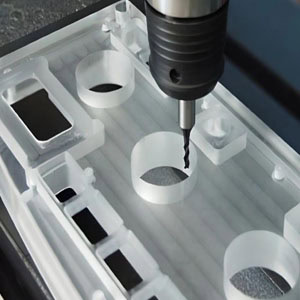
POM (polyoxymethylene) is a common engineering plastic with good hardness, wear resistance, dimensional stability, and machinability. It is commonly used to machine gears, bushings, sliders, guide components, washers, positioning parts, and mechanical structural components. During CNC machining of POM, in addition to properly selecting the tool, spindle speed, feed rate, and cutting depth, the way

What Is the Role of Compressed Air When CNC Machining POM? Read More »

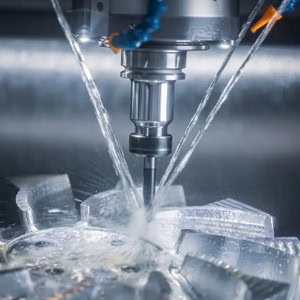
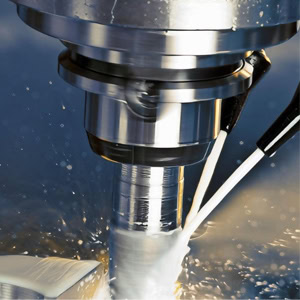
Metalworking CNC lathes and milling machines

How Does Precision Machining Reduce Surface Roughness?

A part’s long-term performance depends not only on dimensional accuracy but also on surface quality. In many high-end manufacturing fields, such as automation equipment, medical devices, semiconductor equipment, and aerospace components, even small surface differences can affect final performance. Excessive surface roughness can increase friction, accelerate wear, and affect the fitting accuracy between components. Many

How Does Precision Machining Reduce Surface Roughness? Read More »

Can Milling Deformation of Thin Walled Parts Be Suppressed at the Source

Can Milling Deformation of Thin-Walled Parts Be Suppressed at the Source?

Thin-walled parts have always been one of the most challenging workpieces in precision manufacturing. Due to their small wall thickness and limited overall rigidity, cutting forces generated during CNC milling, clamping stress, and internal residual stress of the material can all lead to deformation. This is especially critical in aerospace, automotive, medical devices, and high-end

Can Milling Deformation of Thin-Walled Parts Be Suppressed at the Source? Read More »

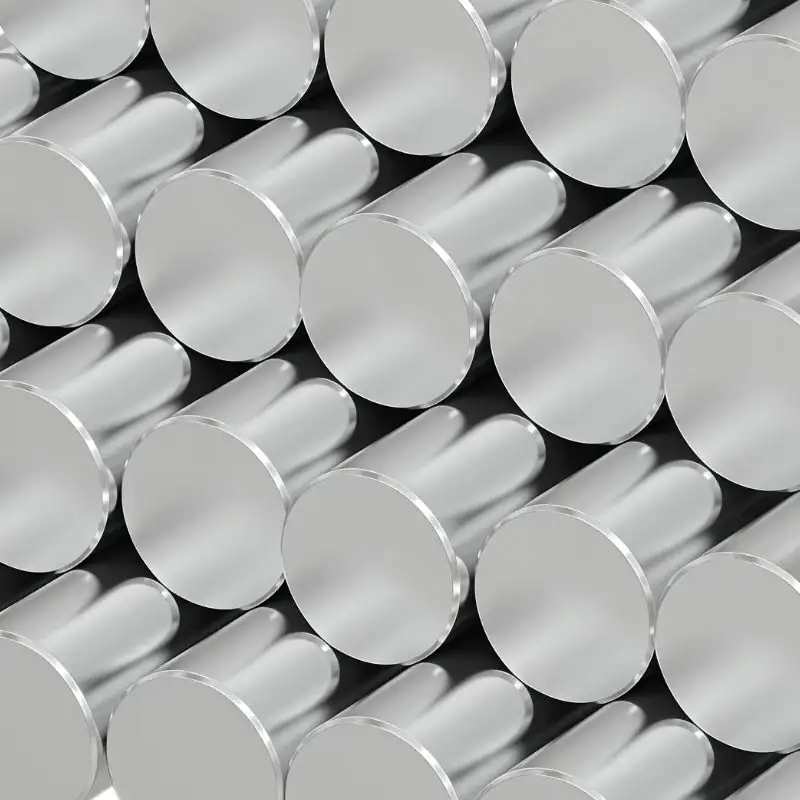
Cylindrical raw billet stock of 6063 aluminum alloy material

What Is Aluminum 6063? Properties, Uses, And Benefits

Aluminum 6063 is a heat-treatable 6000 series aluminum-magnesium-silicon alloy known for excellent extrudability, corrosion resistance, smooth surface finish, and good anodizing performance. It is commonly selected for architectural profiles, heat sinks, frames, tubing, electronic housings, automation structures, and other parts where appearance and complex extrusion geometry matter more than maximum structural strength. This guide explains

What Is Aluminum 6063? Properties, Uses, And Benefits Read More »

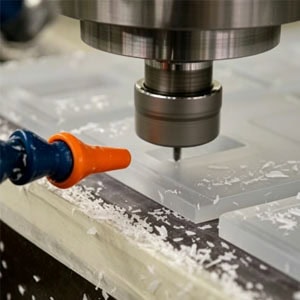
Plastic CNC machining process

Why Plastic CNC Machining Needs Timely Chip Evacuation?

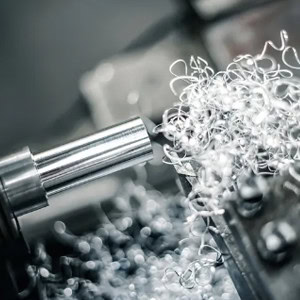
In plastic CNC machining, chip evacuation is an important factor that affects machining quality. Compared with metal materials, most engineering plastics have relatively low thermal conductivity, relatively low hardness, and limited heat deflection temperatures, so the heat generated during cutting is not easily conducted away quickly through the workpiece itself. As a result, if chips

Why Plastic CNC Machining Needs Timely Chip Evacuation? Read More »

How Can CNC Turning Reduce Material Waste

How Can CNC Turning Reduce Material Waste?

Material costs have a direct impact on the manufacturing cost of CNC-turned components. This is particularly important when machining stainless steel, copper alloys, titanium alloys, aluminum alloys, and high-strength alloy materials, where raw material prices can be relatively high. Excess material, chips, remnants, and defective components generated during machining can all increase production expenses. Proper

How Can CNC Turning Reduce Material Waste? Read More »

End milling + peripheral milling.

How Significant Is the Hidden Impact of Thermal Deformation on Machining Accuracy?

In precision manufacturing, companies usually focus on machine tool accuracy, cutting tool performance, and machining parameters, while easily overlooking a hidden factor—thermal deformation. During CNC milling, continuous contact between the tool and the workpiece generates a large amount of cutting heat. This heat affects the stability of the workpiece, cutting tool, and machine tool structure.

How Significant Is the Hidden Impact of Thermal Deformation on Machining Accuracy? Read More »

Solid ball end mill for five-axis CNC milling machine

What Are the Reasons for Tool Breakage in Precision Machining?

During precision machining, tool breakage is one of the most common issues faced by manufacturing companies. A broken tool may seem like a small loss, but the actual impact can be much greater, including interrupted production, scrapped parts, machine downtime, and delayed project delivery. The problem becomes even more common when machining difficult materials such

What Are the Reasons for Tool Breakage in Precision Machining? Read More »
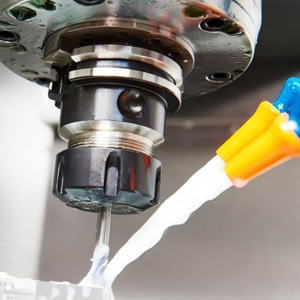
The cutting tool machines grooves inside the workpiece.

What Is the Real Difference Between PVD and CVD Coatings in Milling?

In CNC milling, tool coatings may seem like just a thin surface layer, but they directly affect wear resistance, cutting temperature, edge condition, and tool life. PVD and CVD are both common hard coating technologies, but there is no simple “better or worse” relationship between them. PVD typically has a thinner coating and better edge

What Is the Real Difference Between PVD and CVD Coatings in Milling? Read More »

Precision CNC Machining of Plastic Parts

CNC Plastic Machining “Springback” Causes

When machining plastic parts with CNC, “springback” is a relatively common dimensional abnormality, especially in thin-walled parts, long strip-shaped parts, deep-groove parts, narrow-edge structures, and engineering plastic components with high elasticity. Plastic machining springback refers to a situation in which the material undergoes a certain degree of deformation during cutting, clamping, or under load, and

CNC Plastic Machining “Springback” Causes Read More »

Scroll to Top
Simplified Table

To ensure successful upload, please compress all files into one .zip or .rar file before uploading.
Upload CAD files (.igs | .x_t | .prt | .sldprt | .CATPart | .stp | .step | .pdf).