5052 vs 3003 aluminum is a comparison between two widely used non-heat-treatable aluminum sheet alloys for formed parts, tanks, enclosures, heat exchangers, marine components, and general fabrication. 3003 aluminum is usually better when a project needs excellent formability, lower cost, and good thermal conductivity, while 5052 aluminum is usually better when the part needs higher strength, better fatigue resistance, stronger corrosion protection, and more durable sheet metal performance.
This guide explains the main differences between 3003 and 5052 aluminum by composition, strength, formability, welding, CNC machining, corrosion resistance, thermal conductivity, cost, and best uses.
What Is 3003 Aluminum?
3003 aluminum is a 3000 series aluminum-manganese alloy known for excellent formability, good corrosion resistance, good weldability, and moderate strength. It usually contains about1.0–1.5% manganese, which improves strength over pure aluminum while keeping the material easy to bend, draw, roll, and fabricate.
3003 aluminum is often used for cookware, storage tanks, HVAC components, heat exchangers, roofing, siding, ductwork, chemical equipment, and general sheet metal parts. It is a practical choice when the part needs easy forming, low cost, good heat transfer, and corrosion resistance, but does not require high structural strength.
Key features of 3003 aluminum include:
- Excellent formability and deep drawing performance
- Good general corrosion resistance
- Good weldability and brazing performance
- Better thermal conductivity than 5052
- Lower cost than 5052 in many projects
- Suitable for HVAC, cookware, tanks, roofing, and general sheet metal
What Is 5052 Aluminum?
5052 aluminum is a 5000 series aluminum-magnesium alloy known for higher strength, good formability, excellent corrosion resistance, and strong fatigue performance. It usually contains about2.2–2.8% magnesium and chromium, which gives it better strength and corrosion resistance than 3003 aluminum.
5052 aluminum sheet is widely used for marine parts, fuel tanks, electrical enclosures, automotive panels, truck bodies, covers, brackets, outdoor structures, and corrosion-resistant industrial parts. If a buyer asks what is 5052 aluminum, the simple answer is that it is a stronger, more corrosion-resistant sheet aluminum alloy for formed parts that need better durability than 3003.
Key features of 5052 aluminum include:
- Higher strength than 3003 aluminum
- Better fatigue resistance for vibration and cyclic loading
- Better corrosion resistance in marine and high-moisture environments
- Good bending and forming performance
- Excellent weldability
- Better anodizing appearance than 3003
Key Similarities Between 3003 And 5052 Aluminum
3003 and 5052 aluminum are similar because both offer good corrosion resistance, weldability, low weight, and useful sheet metal fabrication performance. Both are non-heat-treatable alloys, so their final strength depends mainly on composition, cold working, and temper instead of heat treatment.
This similarity can make material selection confusing. Both alloys may work for covers, panels, tanks, and general fabrication, but they should not be treated as identical. 3003 is better for low-cost forming, while 5052 is better for strength, fatigue resistance, and harsh environments. Cumberland also notes that both alloys’ properties vary by temper, so alloy and temper should be evaluated together.
Why Are These Two Alloys Commonly Compared?
3003 and 5052 aluminum are commonly compared because they often appear in the same buying decision for sheet metal parts, tanks, covers, enclosures, and industrial panels. Both are available in sheet form, both are weldable, and both can be used in many non-structural applications.
The comparison becomes important when the part has bending, corrosion, vibration, cost, or appearance requirements. Choosing 3003 can reduce material cost and forming difficulty. Choosing 5052 can improve strength, fatigue resistance, marine performance, and finished part durability.
5052 Vs 3003 Aluminum At A Glance
5052 Vs 3003 Aluminum can be summarized this way: choose 3003 for low-cost forming and heat transfer, and choose 5052 for stronger, more corrosion-resistant sheet metal parts. The right choice depends on load, environment, bending requirement, surface finish, and total project cost.
| Comparison Item | 3003 Aluminum | 5052 Aluminum |
| Alloy series | 3xxx Al-Mn | 5xxx Al-Mg |
| Main alloying element | Manganese | Magnesium |
| Heat treatment | Non-heat-treatable | Non-heat-treatable |
| Typical manganese content | About1.0–1.5% | Max about0.10% |
| Typical magnesium content | Max about0.05% | About2.2–2.8% |
| Strength | Moderate | Higher |
| Fatigue resistance | Lower | Higher |
| Formability | Excellent | Good |
| Corrosion resistance | Good | Better, especially marine |
| Thermal conductivity | Higher | Lower than 3003 |
| Weldability | Excellent | Excellent |
| CNC machining | Softer and easier to cut | Stronger, needs better tool control |
| Anodizing appearance | Less cosmetic | Better and more uniform |
| Cost | Lower | Higher |
| Best for | HVAC, cookware, tanks, roofing, general sheet metal | Marine parts, enclosures, fuel tanks, automotive parts |
Worthwill describes 3003 as a general-purpose alloy focused on formability and economy, while 5052 is positioned as stronger, more fatigue-resistant, and better for marine-grade corrosion protection.
When To Choose 3003 Aluminum?
Choose 3003 aluminum when the part needs excellent forming, deep drawing, rolling, low cost, good weldability, and efficient heat transfer. It is suitable for heat exchangers, HVAC ducts, cookware, storage tanks, roofing, siding, appliance panels, and many general sheet metal components.
3003 is especially useful when the part shape is more important than structural strength. If a design has tight bends, deep draws, large panels, or budget pressure, 3003 can often reduce cracking risk, tooling difficulty, and material cost.
When To Choose 5052 Aluminum?
Choose 5052 aluminum when the part needs higher strength, better fatigue resistance, better corrosion resistance, improved anodizing appearance, or stronger durability in outdoor and marine environments. It is suitable for fuel tanks, marine covers, boat parts, electronic enclosures, automotive panels, outdoor signs, and stronger sheet metal assemblies.
5052 is the better choice when vibration, saltwater, handling damage, or repeated loading matters. It costs more than 3003, but the upgrade can be justified when part failure, corrosion, dents, or fatigue cracking would create higher long-term risk.
Chemical Composition Comparison
Chemical composition explains why 3003 is easier to form and why 5052 is stronger and more corrosion-resistant. 3003 relies mainly on manganese, while 5052 relies mainly on magnesium and chromium.
| Element / Feature | 3003 Aluminum | 5052 Aluminum | Practical Meaning |
| Aluminum | Balance | Balance | Base metal |
| Manganese | About1.0–1.5% | Max about0.10% | 3003 gains moderate strength while keeping ductility |
| Magnesium | Max about0.05% | About2.2–2.8% | 5052 gains strength and marine corrosion resistance |
| Silicon | Max about0.6% | Max about0.25% | Minor control element |
| Iron | Max about0.7% | Max about0.4% | Minor impurity/control element |
| Copper | About0.05–0.20% | Max about0.10% | Low copper helps preserve corrosion resistance |
| Chromium | Max about0.10% | About0.15–0.35% | Helps grain control and corrosion behavior |
| Zinc | Max about0.10% | Max about0.10% | Minor element |
Kloeckner lists 3003 as manganese-alloyed and 5052 as magnesium-alloyed, with 3003 containing about1.0–1.5% manganese and 5052 containing about2.2% magnesium in its nominal comparison table.
Main Alloying Elements In 3003 Aluminum
The main alloying element in 3003 aluminum is manganese. Manganese improves strength over commercially pure aluminum while preserving excellent ductility, which makes 3003 suitable for forming, drawing, rolling, and general sheet fabrication.
3003 may also contain small amounts of copper, silicon, iron, and zinc depending on the specification. These elements help control material behavior, but the main practical value of 3003 comes from its balance of low cost, workability, corrosion resistance, and thermal conductivity.
Main Alloying Elements In 5052 Aluminum
The main alloying element in 5052 aluminum is magnesium. Magnesium gives 5052 higher tensile strength, higher hardness, and better fatigue resistance than 3003. Chromium also supports grain control and corrosion behavior, which improves performance in outdoor, industrial, and marine environments.
This chemistry makes 5052 one of the strongest common non-heat-treatable aluminum sheet alloys. It is not as easy to deeply form as 3003, but it provides a better balance when the part needs both sheet fabrication and durability.
Manganese Vs Magnesium Effects
Manganese and magnesium affect aluminum differently. Manganese in 3003 improves strength slightly while preserving excellent ductility, making it ideal for forming and drawing. Magnesium in 5052 provides stronger solid-solution strengthening, making the alloy more suitable for fatigue, vibration, and corrosive environments.
The practical result is simple. 3003 is better when the material must flow into shape. 5052 is better when the material must resist load, corrosion, and repeated stress after the part is made.
Mechanical Properties Comparison
Mechanical properties comparison shows that 5052 aluminum is stronger, harder, and more fatigue-resistant than 3003 aluminum. 3003 aluminum is more ductile and easier to form, especially when tight bends or deep drawing are required.
| Property | 3003-H14 Example | 5052-H32 Example | Practical Meaning |
| Ultimate tensile strength | 20–26KSI | 31–38KSI | 5052 is stronger |
| Yield strength | About21KSI | About28KSI | 5052 resists deformation better |
| Elongation | About8.3% | About12% | 5052-H32 still bends well |
| Brinell hardness | About40HB | About60HB | 5052 resists dents better |
| General tensile strength range | 110–240MPa | 190–320MPa | 5052 covers higher strength applications |
| General yield strength range | 40–210MPa | 75–280MPa | 5052 resists permanent deformation better |
| Fatigue strength range | 39–90MPa | 66–140MPa | 5052 is better for vibration and cyclic loading |
Kloeckner lists 3003-H14 at 20–26KSI tensile strength and 5052-H32 at 31–38KSI, while Cumberland lists broader 3003 vs 5052 strength ranges depending on temper.
Tensile Strength And Yield Strength
Tensile strength and yield strength are higher in 5052 aluminum than in 3003 aluminum. Cumberland lists 5052 ultimate tensile strength at 190–320MPa compared with 3003 at 110–240MPa, and 5052 yield strength at 75–280MPa compared with 3003 at 40–210MPa.
This matters when the part must resist bending under load, dents, vibration, or structural stress. 3003 is enough for many covers, ducts, trays, and panels, but 5052 is safer for fuel tanks, marine parts, automotive panels, and higher-strength enclosures.
Fatigue Strength And Hardness
Fatigue strength and hardness are higher in 5052 aluminum. Cumberland lists 5052 fatigue strength at 66–140MPa compared with 3003 at 39–90MPa, while Kloeckner lists representative Brinell hardness around60HB for 5052-H32 and40HB for 3003-H14.
This makes 5052 better for parts exposed to vibration, repeated stress, road movement, marine motion, and handling impact. For static, non-critical, low-load sheet parts, 3003 may still be more economical.
Elongation And Ductility
Elongation and ductility are usually better with 3003 aluminum when forming is the main requirement. Worthwill notes that annealed 3003-O can reach about28% elongation, while 5052-O is stronger but has slightly lower elongation at about22%.
This is why 3003 is often used for deep drawn parts, spun cookware, formed tanks, and shapes that need heavy deformation. 5052 is still formable, but it needs more careful bend radius and temper control.
Strength Changes Under Different Tempers
Strength changes under different tempers can strongly affect the 5052 vs 3003 aluminum decision. O temper is softer and more ductile, while H tempers are strain-hardened and stronger. 3003-H14 and 5052-H32 are common sheet tempers, but they do not behave the same.
For procurement and engineering teams, the alloy name alone is not enough. A 3003-O sheet and a 3003-H18 sheet will behave differently in bending, just as 5052-O and 5052-H32 will not share the same strength or formability. Always confirm alloy, temper, thickness, tolerance, and certificate before production.
Physical Properties And Weight Comparison
Physical properties and weight comparison shows that 3003 and 5052 are both lightweight aluminum alloys, but 3003 usually transfers heat better, while 5052 is slightly lighter by density. These differences are small for many parts but can matter in heat exchangers, HVAC systems, aircraft, marine parts, and large-volume sheet purchases.
Aluminum Density Comparison
Aluminum density comparison shows that 3003 is slightly denser than 5052. Kloeckner lists 3003 density at0.099lb/in³ and 5052 density at0.097lb/in³.
The difference is small, but it can affect large sheet orders, transportation projects, and weight-sensitive products. When buying by weight, density can also influence the real delivered material cost, so buyers should compare total sheet weight as well as price per pound.
Sheet Weight Calculation Logic
Sheet weight calculation is based on thickness, width, length, and density. Kloeckner gives the formula as decimal thickness × width × length × density, and shows that a0.125in ×48in ×82in sheet weighs about48.71lb in 3003 and about47.72lb in 5052.
This matters in procurement because aluminum sheet price is often affected by weight, size, thickness, quantity, and market conditions. A lower price per pound does not always equal the lowest finished project cost.
Thermal Conductivity Difference
Thermal conductivity is usually better with 3003 aluminum than with 5052 aluminum. KDM lists 3003 thermal conductivity around180W/m·K and 5052 around140W/m·K, making 3003 more suitable for HVAC, radiators, cooling systems, heat exchangers, and refrigeration parts.
This is one reason 3003 remains valuable even though 5052 is stronger. If the part must transfer heat efficiently and does not need high strength, 3003 can be the better engineering choice.
Corrosion Resistance Comparison
Corrosion resistance comparison shows that both 3003 and 5052 aluminum resist corrosion well, but 5052 is better for marine, saltwater, and harsh moisture environments. 3003 is better for normal atmospheric, freshwater, food-related, and industrial applications where severe chloride exposure is limited.
3003 Aluminum For Atmospheric And Industrial Environments
3003 aluminum is suitable for atmospheric and industrial environments because it offers good resistance to general corrosion, fresh water, and many food or chemical service conditions. Worthwill describes 3003 as strong in general atmospheric corrosion, freshwater, and organic acid conditions, but less suitable for saltwater pitting.
This makes 3003 practical for cookware, food service equipment, chemical equipment, ducts, roofing, siding, tanks, and indoor or protected sheet metal parts. It is not the best option for continuous marine exposure.
5052 Aluminum For Marine And High-Moisture Environments
5052 aluminum is better for marine and high-moisture environments because its magnesium content improves corrosion resistance, especially in saltwater and industrial atmospheres. Cumberland states that 5052 has superior corrosion resistance and is better suited for marine and highly corrosive environments.
This makes 5052 suitable for boat hulls, docks, marine covers, fuel tanks, outdoor enclosures, coastal equipment, and signs. When corrosion damage would reduce safety, appearance, or service life, 5052 often justifies its higher cost.
Surface Protection And Service Life Considerations
Surface protection and service life should be considered for both 3003 and 5052 aluminum. Even corrosion-resistant aluminum can suffer from pitting, galvanic corrosion, crevice corrosion, scratches, poor drainage, or coating failure when exposed to salt, chemicals, or dissimilar metals.
For longer service life, engineers should consider anodizing, powder coating, painting, sealing, drainage design, clean cut edges, weld cleaning, and isolation from steel fasteners. 5052 gives better corrosion resistance, but good design and finishing still matter.
Fabrication And Processing Performance
Fabrication and processing performance shows that 3003 is better for deep forming and cost-efficient sheet metal work, while 5052 is better for stronger welded, formed, and corrosion-resistant parts. Both alloys can be cut, bent, welded, machined, and finished, but their process behavior is different.
CNC Machining And Cutting Performance
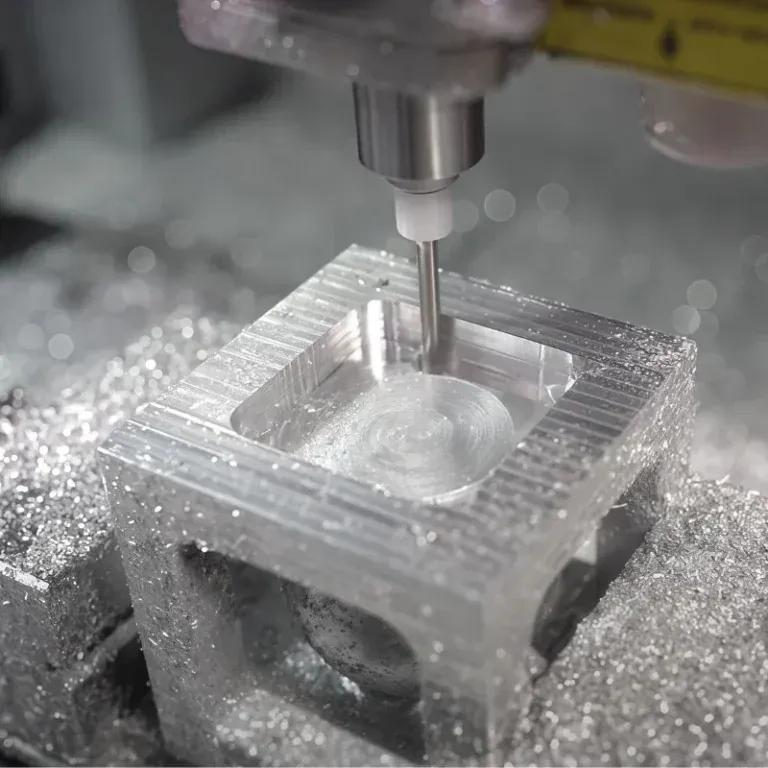
CNC machining and cutting performance is possible for both 3003 and 5052 aluminum, but neither alloy is as ideal for CNC machining as 6061. Cumberland notes that softer 3003 is generally easier to machine and produces less cutting-tool wear, while stronger 5052 may require more specific machining techniques or more advanced equipment.
For CNC milling service, drilling, tapping, routing, and cutting, use sharp tools, polished inserts, high rake angles, coolant, chip evacuation, and stable clamping. For precision CNC parts, 6061 may be reviewed if corrosion exposure is limited and machinability is the top priority.
Bending And Forming Performance
Bending and forming performance is usually better with 3003 aluminum because it is more ductile and forgiving. Worthwill notes that 3003-H14 can often bend to a very tight radius, while harder 5052 tempers such as H32 or H34 usually need about1t to1.5t inside bend radius to reduce cracking risk.
5052 still bends well compared with many stronger alloys, but the design should confirm temper, thickness, bend radius, grain direction, and tooling. For deep drawing and tight forming, 3003 is usually the safer choice.
Rolling, Working, And Sheet Metal Fabrication
Rolling, working, and sheet metal fabrication are easier with 3003 aluminum when the part needs large deformation. 3003 is often selected for drawn, rolled, spun, and shaped products because it can flow into complex geometry with lower cracking risk.
5052 is better when the formed sheet part also needs higher strength after fabrication. This is why 5052 aluminum sheet is common in stronger enclosures, tanks, covers, and vehicle parts where both bending and durability matter.
Welding Performance And Process Control
Welding performance is good for both 3003 and 5052 aluminum, but 3003 is often more forgiving while 5052 creates stronger weldments. Cumberland notes that 3003 has simpler composition and is easier during welding, while 5052 can be welded effectively but needs more attention because of its higher magnesium content and strength.
For production welding, control cleaning, filler selection, heat input, fixture support, distortion, shielding gas, and inspection. Worthwill notes that both alloys are readily weldable by TIG and MIG, and that 5052 is typically welded with5356 filler wire.
Surface Finish And Anodizing Performance
Surface finish and anodizing performance are usually better with 5052 when appearance matters. Worthwill states that 3003 can produce a grey, yellow, or brown anodized appearance, while 5052 can produce a clearer and more uniform oxide layer.
This makes 5052 a better choice for visible enclosures, panels, covers, decorative plates, and dyed anodized components. If surface appearance is not critical and the part mainly needs forming and cost control, 3003 can still be a practical option.
Best Uses Of 3003 Aluminum
3003 aluminum is best used for applications that need excellent formability, moderate strength, good thermal conductivity, good corrosion resistance, and low cost. It is especially useful in sheet metal, HVAC, cookware, tanks, roofing, and general industrial fabrication.
Heat Exchangers And HVAC Components
3003 aluminum is commonly used for heat exchangers and HVAC components because it has good formability and higher thermal conductivity than 5052. KDM lists 3003 thermal conductivity around180W/m·K and names HVAC, radiators, cooling systems, heat exchangers, and refrigeration as suitable uses.
For these applications, strength is not the only priority. Heat transfer, forming, corrosion resistance, cost, and manufacturability often matter more, which is why 3003 remains a strong choice.
Cookware, Tanks, And Storage Equipment
3003 aluminum is well suited for cookware, tanks, and storage equipment because it forms easily, resists general corrosion, and can be welded or brazed. Kloeckner lists cookware, food service equipment, HVAC components, chemical equipment, and general sheet metal fabrication as common 3003 end uses.
For pressure-bearing or highly corrosive environments, engineers should review 5052 or another alloy. For moderate-duty formed tanks and containers, 3003 is often cost-effective.
Roofing, Panels, And General Sheet Metal Parts
3003 aluminum is suitable for roofing, panels, and general sheet metal parts because it is easy to bend, roll, cut, and fabricate. It works well for building products, siding, trim, panels, covers, ducts, and low-to-moderate strength sheet applications.
For cosmetic anodized panels or marine exposure, 5052 may be better. For cost-sensitive formed panels in normal environments, 3003 usually gives better value.
Best Uses Of 5052 Aluminum
5052 aluminum is best used for stronger, more corrosion-resistant sheet metal parts that need durability, fatigue resistance, and better marine performance. It is a good upgrade from 3003 when the application involves vibration, saltwater, outdoor exposure, or higher mechanical stress.
Marine Parts And Corrosion-Resistant Structures
5052 aluminum is commonly used for marine parts and corrosion-resistant structures because it performs better than 3003 in saltwater and harsh moisture environments. Kloeckner lists marine environments among common 5052 uses, and Worthwill describes 5052 as suitable for anything touching or near saltwater.
For severe marine structural applications, 5083 or 5086 may also be reviewed. But for many formed marine sheet parts, 5052 offers a strong balance of corrosion resistance, strength, and workability.
Enclosures, Covers, And Electrical Housings
5052 aluminum is a strong choice for enclosures, covers, and electrical housings because it combines corrosion resistance, bendability, strength, and good surface finish. It is often used for control boxes, battery enclosures, outdoor cabinets, instrument housings, amplifier panels, and protective covers.
5052 h32 aluminum is especially common for formed sheet parts that need better strength than 3003 while still allowing bending. For visible parts, its better anodizing quality can also improve appearance.
Transportation And Automotive Components
5052 aluminum is suitable for transportation and automotive components because it handles vibration, fatigue, moisture, and road exposure better than 3003. Worthwill lists vehicle chassis, fuel tanks, engine brackets, and bus skins as examples where 5052 is suitable because of vibration and fatigue resistance.
If the part needs higher strength or extrusion-based framing, 6061 may be considered. But for corrosion-resistant formed sheet components, 5052 is often more suitable than 6061 because it bends more easily.
Higher-Strength Sheet Metal Applications
5052 aluminum is suitable for higher-strength sheet metal applications because it offers more tensile strength, yield strength, fatigue resistance, and hardness than 3003. It is a good option for panels, brackets, tanks, covers, and assemblies that must resist handling damage, vibration, or moderate structural load.
For buyers comparing aluminum 3003 vs 5052 vs 6061, the simple rule is: 3003 for forming and cost, 5052 for stronger corrosion-resistant sheet parts, and 6061 for CNC-machined or structural parts that need heat-treated strength.
Cost Comparison: Is 5052 Worth The Upgrade?
5052 is worth the upgrade when the part needs higher strength, marine corrosion resistance, better fatigue performance, or a better cosmetic finish. 3003 is usually more cost-effective when the part needs forming, heat transfer, moderate strength, and low-cost production.
5052 Vs 3003 Aluminum Cost Difference
5052 Vs 3003 Aluminum cost difference usually favors 3003. Worthwill states that 3003 is generally10–15% cheaper than 5052, while KDM says 5052 commonly costs15–20% more than 3003 depending on market conditions.
For buyers checking 5052 aluminum sheet price, the final number depends on thickness, temper, sheet size, quantity, surface finish, tolerance, certificate, processing method, and current aluminum market price. Price should always be compared at the finished-part level, not only by raw sheet price.
Material Price And Processing Cost
Material price and processing cost should be reviewed together because a cheaper alloy can become expensive if it causes scrap, rework, or poor performance. 3003 usually reduces material cost and forming difficulty, while 5052 may require more care during bending and machining.
However, 5052 may reduce lifecycle cost when corrosion, vibration, fatigue, and dents are major risks. A fuel tank, outdoor enclosure, or marine cover may justify the alloy upgrade even if the raw material costs more.
Large-Scale Production Cost Considerations
Large-scale production cost considerations should include sheet utilization, forming yield, cycle time, welding cost, finishing, inspection, packaging, and rejected parts. 3003 is attractive for high-volume formed parts because it bends easily and costs less.
5052 can be more cost-effective in large production only when its higher performance reduces warranty risk, coating failure, fatigue cracking, corrosion damage, or customer complaints. In short, use 3003 to reduce production cost and 5052 to reduce performance risk.
When The 5052 Upgrade Is Worth It
The 5052 upgrade is worth it when the part needs better strength, better corrosion resistance, better fatigue performance, or better anodized appearance. It is also worth it when the product operates outdoors, near saltwater, in transportation systems, or under vibration.
Choose 5052 for marine parts, fuel tanks, outdoor enclosures, vehicle panels, stronger covers, and formed parts that must remain durable over time. These are situations where the material upgrade can prevent long-term failure.
When 3003 Is More Cost-Effective
3003 is more cost-effective when the part needs excellent formability, moderate strength, better heat transfer, and lower material cost. It is ideal for HVAC parts, cookware, ducts, heat exchangers, roofing, siding, storage tanks, and general sheet metal.
Choose 3003 when the application is not marine, not highly loaded, not fatigue-sensitive, and not appearance-critical after anodizing. In these cases, paying more for 5052 may not bring enough practical benefit.
How To Choose Between 3003 And 5052 Aluminum?
Choosing between 3003 and 5052 aluminum should be based on strength, corrosion exposure, forming complexity, thermal conductivity, welding, surface finish, cost, and project risk. 3003 is the economical forming alloy, while 5052 is the stronger corrosion-resistant sheet alloy.
Choose Based On Strength Requirements
Choose based on strength requirements by selecting 5052 when the part must resist load, dents, vibration, fatigue, or permanent deformation. 5052 offers higher tensile strength, yield strength, fatigue strength, and hardness than 3003.
Choose 3003 when the part is lightly loaded, cosmetic, thermal, or mainly formed. It is strong enough for many ducts, covers, trays, tanks, and panels, but it should not be treated as a direct substitute for 5052 in demanding applications.
Choose Based On Corrosion Exposure
Choose based on corrosion exposure by selecting 5052 for marine, outdoor, saltwater, high-humidity, and harsh industrial environments. Select 3003 for indoor, atmospheric, freshwater, food-related, and normal industrial environments.
Both alloys resist corrosion well, but 5052 gives a stronger safety margin when moisture and salt are present. If the part is used near the coast, on a boat, or in a highly corrosive setting, 5052 is usually the safer choice.
Choose Based On Formability And Part Geometry
Choose based on formability and part geometry by selecting 3003 for deep drawing, tight bends, spinning, rolling, and complex formed shapes. 3003 is more ductile and easier to form without cracking.
Select 5052 when the design needs moderate forming plus better strength. For 5052-H32 or 5052-H34, confirm bend radius early because harder tempers need more bending control than 3003.
Choose Based On Thermal Conductivity Needs
Choose based on thermal conductivity needs by selecting 3003 for heat exchangers, HVAC systems, radiators, cooling panels, and thermal transfer parts. 3003 has higher thermal conductivity than 5052 and is widely used where heat movement is a primary function.
Select 5052 when thermal performance is secondary to strength, corrosion resistance, fatigue resistance, or appearance. This is common for enclosures, covers, tanks, and marine sheet parts.
Choose Based On Cost, Availability, And Project Risk
Choose based on cost, availability, and project risk by comparing finished part cost instead of only raw material cost. 3003 is usually cheaper and easier to form, while 5052 costs more but provides better durability and corrosion resistance.
For simple formed parts, 3003 is often the better value. For outdoor, marine, vibration, or stronger sheet metal applications, 5052 often reduces risk and improves long-term performance.
FAQs
Is 3003 Or 5052 Aluminum Cheaper?
3003 aluminum is usually cheaper than 5052 aluminum because manganese is less costly than magnesium and 3003 is easier to roll, form, and process. Worthwill states that 3003 is generally10–15% cheaper than 5052, while KDM notes that 5052 can cost15–20% more. Final cost still depends on sheet thickness, temper, quantity, cutting, bending, welding, finishing, scrap rate, and service risk. For simple formed parts, 3003 is usually more economical.
What Is 3003 Aluminum Used For?
3003 aluminum is used for cookware, food service equipment, HVAC ducts, heat exchangers, storage tanks, roofing, siding, chemical equipment, appliance panels, and general sheet metal fabrication. It usually contains about1.0–1.5% manganese, giving it moderate strength and excellent formability. Its thermal conductivity can reach about180W/m·K, making it useful for heat transfer parts. It is best when the project needs easy forming, good corrosion resistance, and low cost rather than high structural strength.
Is 5052 As Strong As 6061?
5052 aluminum is not as strong as 6061-T6 in most structural comparisons. 5052-H32 is often around228–230MPa tensile strength, while 6061-T6 is commonly around310MPa tensile strength and about276MPa yield strength. However, 5052 is usually easier to bend and has better corrosion resistance than 6061 in many sheet metal and marine environments. Use 5052 for formed corrosion-resistant sheet parts, and review 6061 for CNC machined, threaded, or higher-strength structural components.
Conclusion
3003 and 5052 aluminum are both practical sheet metal alloys, but they are not interchangeable in every project. 3003 is better when the part needs excellent formability, lower cost, better thermal conductivity, and moderate corrosion resistance. 5052 is better when the part needs higher strength, stronger fatigue resistance, better marine corrosion protection, cleaner anodizing, and longer service durability. The right choice depends on forming difficulty, load, corrosion exposure, thermal needs, finishing, cost, and final application.
At TiRapid, we provide precision CNC machining and manufacturing services for custom aluminum parts across industrial equipment, medical, aerospace, automation, electronics, robotics, consumer products, and transportation applications. If you are comparing 5052 vs 3003 aluminum for enclosures, panels, brackets, tanks, covers, fixtures, or CNC machined parts, our team can support material selection, DFM review, CNC machining, 5-axis CNC machining, surface finishing, inspection, and reliable low-volume production.