Whether a part can operate reliably often does not depend on its size, but on how accurately it is manufactured. In industries such as automation equipment, medical devices, aerospace components, and semiconductor equipment, many parts may look small, but their tolerance requirements are extremely strict. Even a few microns of deviation can affect assembly performance and equipment operation. Precision part machining accuracy levels are important standards for evaluating manufacturing capability. They reflect factors such as dimensional control, geometric accuracy, and surface quality. Different products require different accuracy levels, and selecting the right machining standard helps ensure performance while avoiding unnecessary manufacturing costs.
What Are Precision Part Machining Accuracy Levels?
Precision part machining accuracy levels are standards used to measure the size of machining errors. During manufacturing, the actual machined dimensions cannot be exactly the same as the designed dimensions, and a certain amount of deviation always exists. Accuracy levels are used to define the acceptable range of these deviations. For general mechanical parts, basic assembly requirements may be enough, while critical components in high-end equipment require much stricter control. In actual production, manufacturers need to determine the appropriate accuracy level based on the part’s function, installation position, and working environment instead of simply pursuing the highest possible accuracy.
How Are Accuracy Levels Generally Classified?
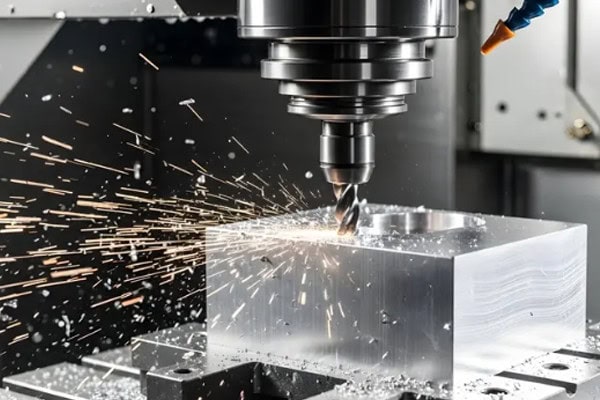
Different industries may use different accuracy classification systems, but the main purpose is the same: controlling machining errors and ensuring that parts meet actual application requirements. In precision machining, higher accuracy levels mean smaller allowable deviations, which also require better equipment, processes, and inspection capabilities. Many customers assume that higher accuracy always means better products, but accuracy should match the actual application needs. A reasonable accuracy level can achieve a better balance between quality and manufacturing cost.
Common accuracy levels include:
- Standard accuracy levels, mainly used for general structural parts, support components, and non-critical parts.
- Medium accuracy levels, commonly applied to industrial equipment, automation machinery, and regular precision components.
- High accuracy levels, suitable for medical equipment, precision instruments, and demanding mechanical parts.
- Ultra-high accuracy levels, mainly used in aerospace, semiconductor equipment, and advanced manufacturing industries.
Different accuracy levels require different machining capabilities and directly affect equipment selection, process planning, and production costs. In precision part machining, manufacturers need to first define the function of the component and then select the appropriate machining standard to achieve the best balance between performance and cost.
What Factors Determine Part Accuracy?
Many people think precision part machining only focuses on dimensional tolerance, but other factors also directly affect part performance. Two parts may have the same dimensions, but if their geometric accuracy or surface quality is different, their assembly results may also vary significantly. High-precision manufacturing requires comprehensive control of multiple factors rather than focusing on only one measurement.
Main accuracy indicators include:
- Dimensional accuracy, controlling deviations in length, diameter, thickness, and other basic dimensions.
- Geometric accuracy, ensuring flatness, roundness, concentricity, and positional accuracy.
- Surface roughness, affecting contact performance and service life.
- Assembly accuracy, determining the operating condition after multiple components are assembled.
These indicators work together to determine the final quality of precision parts. For precision machining manufacturers, controlling errors throughout the entire process is essential for producing stable and reliable components.
What Machining Requirements Are Needed for Different Accuracy Levels?
Different parts have different precision requirements. Some components only need basic dimensional control, while critical parts require micron-level accuracy. As accuracy requirements increase, every detail in the machining process becomes more important, including equipment stability, tool condition, machining parameters, and inspection methods. Without proper process planning, even advanced equipment may not achieve the required results.
Requirements for Standard Accuracy Parts
Standard accuracy parts are mainly used in general industrial equipment and mechanical structures. These components usually do not require extremely precise movement or critical positioning performance, so manufacturing efficiency and stability are often the main concerns. However, standard accuracy does not mean there are no requirements. Parts still need to meet basic dimensional standards to ensure proper installation and operation.
- Simpler machining processes.
- More conventional equipment requirements.
- Suitable for mass production.
Although these parts have relatively lower accuracy requirements, stable production is still important. Maintaining dimensional consistency during machining can reduce assembly problems and improve overall equipment reliability.
Requirements for High Accuracy Parts
High accuracy parts are commonly used in automation equipment, medical devices, and precision machinery. They require tighter dimensional control and better assembly performance. Compared with standard components, these parts require more attention to details such as temperature effects, tool wear, and small machining variations.
- Require high-precision CNC machining equipment.
- Need strict control of machining parameters.
- Require focused inspection of critical dimensions.
- Need stable machining environments.
Manufacturing high-accuracy parts relies not only on equipment capability but also on experienced process management. Proper control of every machining variable helps ensure that parts meet design requirements and maintain stable performance during long-term use.
Requirements for Ultra-High Accuracy Parts
Ultra-high accuracy parts are typically used in advanced manufacturing fields such as semiconductor equipment, aerospace systems, and precision inspection equipment. These components often have complex structures and may involve special materials, creating much higher manufacturing challenges.
- Require highly stable machining equipment.
- Need stricter inspection procedures.
- Often require specialized machining processes.
Ultra-high accuracy machining represents advanced manufacturing capability. From design analysis and process control to final inspection, every stage requires careful management to ensure parts meet the requirements of high-end equipment.
What Factors Affect Precision Part Machining Accuracy?
Many customers focus mainly on machine models when selecting machining solutions, but equipment is only one factor affecting accuracy. Material properties, machining methods, environmental conditions, and production experience can all influence final results. Sometimes, even with advanced equipment, improper process planning can still cause dimensional deviations. Precision machining requires control throughout the entire manufacturing process.
Equipment Performance Affects Machining Stability
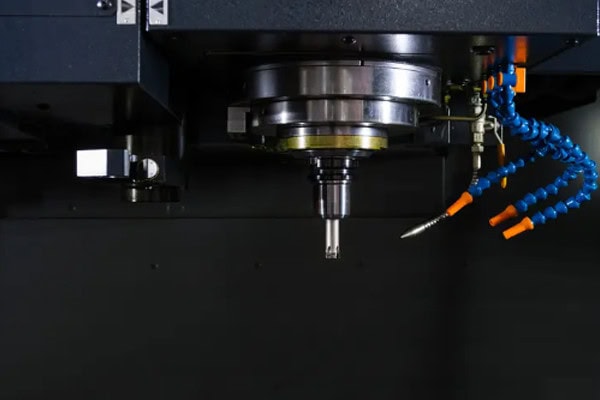
Machining equipment is a key foundation for achieving part accuracy. During continuous production, changes in equipment condition may cause dimensional fluctuations. High-precision parts require excellent machine rigidity, spindle stability, and positioning capability.
- Spindle accuracy affects machining results.
- Machine rigidity affects cutting stability.
- Positioning accuracy affects dimensional control.
Stable equipment performance helps reduce accumulated machining errors and improves consistency in batch production. For high-demand precision parts, equipment capability is an important foundation for maintaining machining quality.
Material Characteristics Affect Machining Results
Different materials behave differently during machining. For example, aluminum alloys are easier to process, while titanium alloys and high-hardness materials often require more specialized methods. Material hardness, thermal properties, and internal structure all influence machining solutions.
- Material hardness affects tool selection.
- Heat changes affect dimensional stability.
- Material properties influence machining parameter adjustments.
Developing machining solutions based on material characteristics can reduce production problems and improve precision performance. Proper material handling is also an important part of precision component manufacturing.
Inspection Capability Affects Quality Evaluation
After precision parts are machined, professional inspection is required to confirm whether they meet design requirements. Inspection is not only the final step but also an important method for maintaining stable production quality.
- Use coordinate measuring machines for critical dimensions.
- Check geometric tolerances according to standards.
- Record machining data for quality tracking.
A complete inspection system helps identify machining deviations quickly and makes the production process more controllable. For batch manufacturing projects, stable inspection capabilities help maintain consistency between different production runs.
How to Choose a Suitable Precision Machining Accuracy Level?
The highest accuracy level is not always the best choice for every part. Different products have different operating environments, assembly methods, and functional requirements, which means their accuracy requirements also vary. Excessive accuracy can increase manufacturing difficulty and cost, while insufficient accuracy may affect equipment performance. Proper planning is necessary before machining.
Select Accuracy Based on Part Function
Different functions require different accuracy standards. A simple structural component and a critical moving component usually have completely different machining requirements.
- Structural support parts focus on dimensional stability.
- Moving components focus on fitting accuracy.
- Core components focus on long-term reliability.
Matching accuracy levels with actual functions helps avoid unnecessary processing costs while ensuring that parts meet application requirements.
Plan Machining Methods Based on Production Volume
Production quantity also affects machining decisions. Small-batch production focuses more on flexibility, while long-term production requires better efficiency and stability.
- Small batches are suitable for flexible CNC machining.
- Mass production requires optimized processes.
- Complex parts require a balance between cost and accuracy.
Proper production planning improves machining efficiency, maintains stable quality, and reduces unnecessary waste during manufacturing.
Match Standards According to Industry Requirements
Different industries have different precision requirements. General industrial equipment and advanced manufacturing systems often follow very different accuracy standards.
- Industrial equipment focuses on stable operation.
- Medical products focus on safety and reliability.
- Advanced manufacturing focuses on extreme precision control.
Matching machining standards with industry characteristics helps precision parts perform better in real applications and improves overall product reliability.
Precision part machining accuracy levels determine dimensional control, assembly performance, and long-term operating reliability. Different accuracy levels require different manufacturing capabilities and should be planned according to part structure, material characteristics, application requirements, and inspection standards. Precision machining is not only about controlling dimensional errors but also about improving product reliability and equipment performance. Tirapid specializes in precision machining services, providing high-precision part machining solutions to help companies achieve stable and high-quality customized manufacturing.