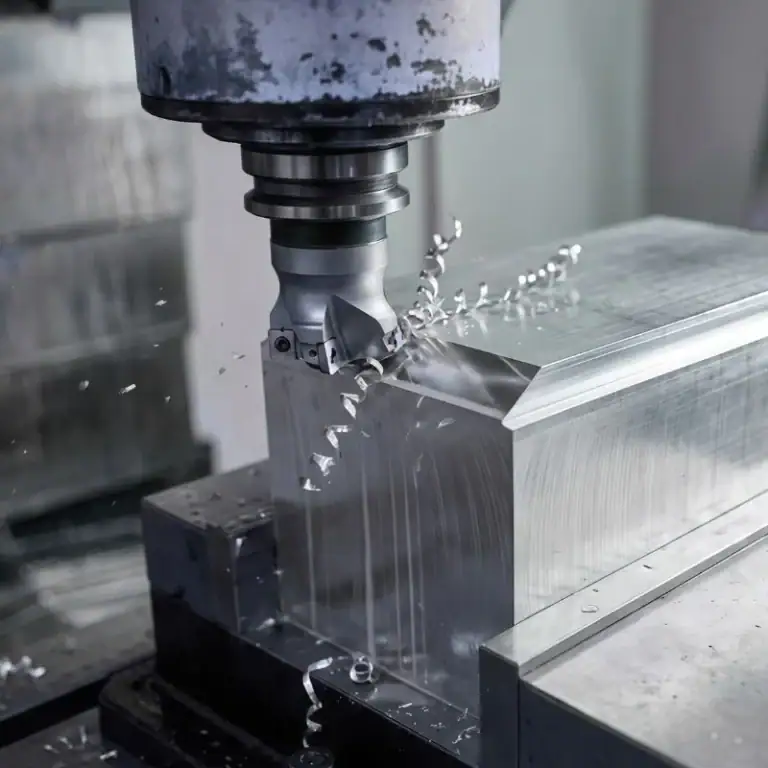
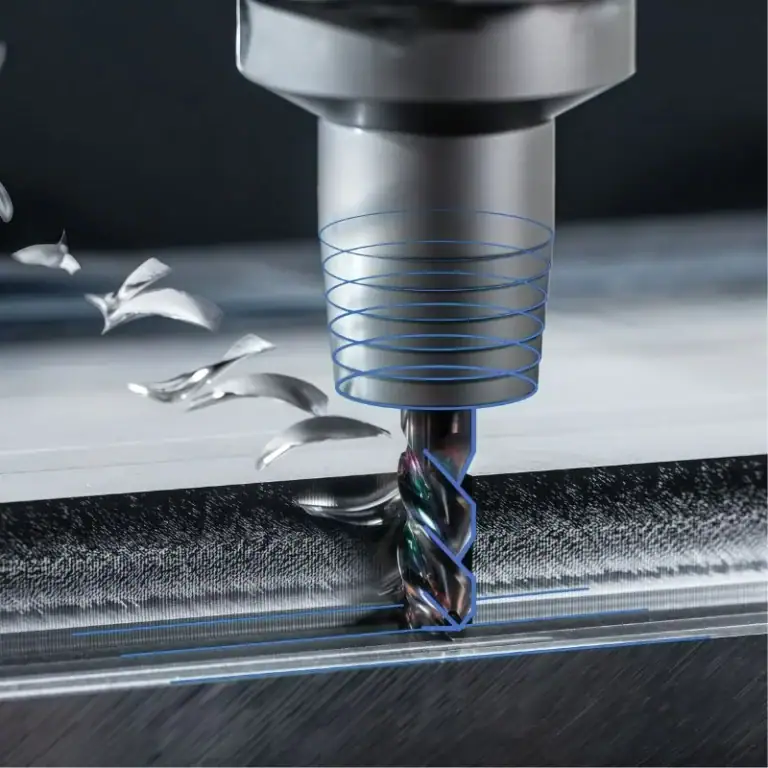
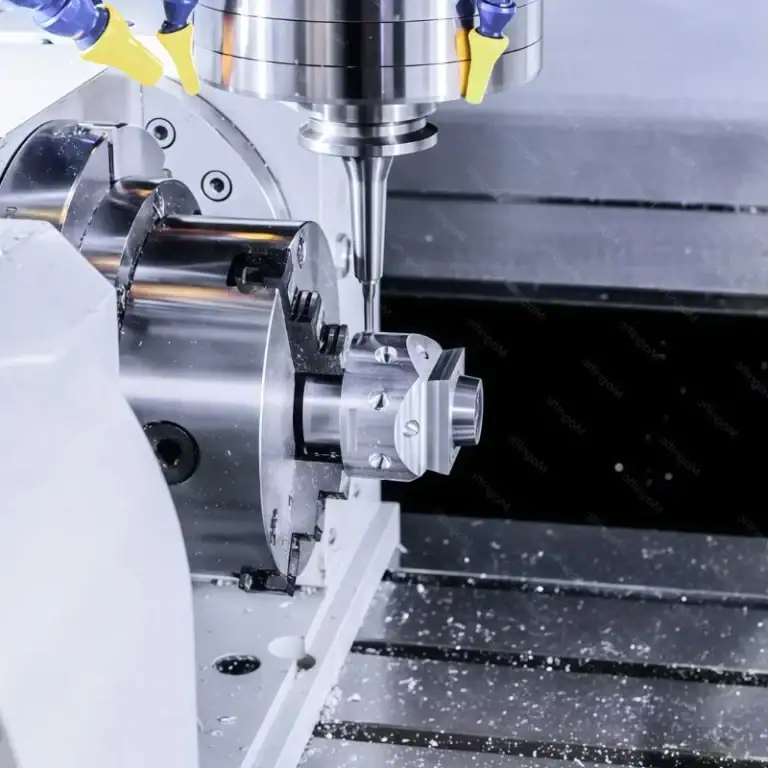
In CNC milling, tool coatings may seem like just a thin surface layer, but they directly affect wear resistance, cutting temperature, edge condition, and tool life. PVD and CVD are both common hard coating technologies, but there is no simple “better or worse” relationship between them. PVD typically has a thinner coating and better edge retention, making it more suitable for precision milling and sharp cutting edges; CVD, on the other hand, offers a thicker coating with strong wear resistance and high-temperature performance, making it more advantageous in heavy-duty and high-load machining.
What Are the Core Differences Between PVD and CVD?
Understanding the manufacturing characteristics of both coatings is essential to evaluating their real performance differences in CNC milling.
PVD Focuses More on Sharp Cutting Edges
PVD is a physical vapor deposition technology with the following characteristics in milling applications:
- Lower process temperature: Compared with CVD, it has less impact on the substrate, better preserving toughness.
- Thinner coating: Less likely to blunt the cutting edge, helping maintain original geometry.
- Suitable for sharp edges: More appropriate for solid carbide end mills.
- Better for precision machining: Provides smoother cutting in contouring, narrow slots, and complex surfaces, resulting in better surface finish.
PVD is more suitable for precision milling and applications requiring sharp cutting edges.
CVD Focuses More on Wear and Heat Resistance
The advantages of CVD coatings are mainly reflected in the following aspects:
- CVD is deposited at higher temperatures, forming a thicker and denser coating.
- Process temperature is around 900–1000°C, improving coating adhesion and stability.
- Thicker coatings significantly improve wear resistance and durability in continuous cutting.
- Performs more stably under heavy-duty, long-duration, or rough machining conditions.
CVD is more suitable for milling applications requiring high wear resistance and high-temperature performance.
Real Performance of Both Coatings in Milling
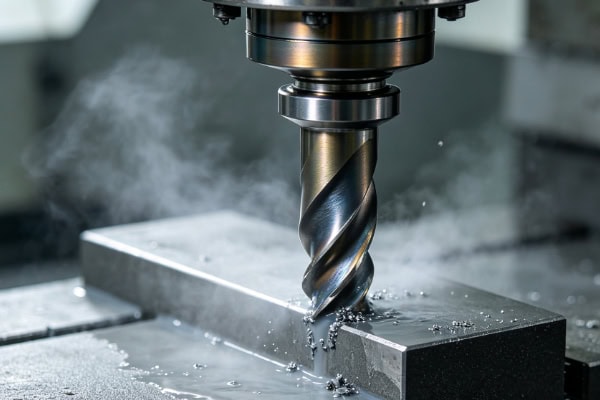
What truly determines coating value is not a single laboratory indicator, but tool life, cutting stability, and part quality during actual machining.
PVD Is Often More Flexible in Precision Milling
The thinner coating of PVD helps maintain the original cutting edge geometry, giving it an advantage in applications requiring sharp edges. Studies have also shown that PVD tools can exhibit lower cutting forces and better resistance to thermal cracking under certain milling conditions. Common advantages include:
- Reducing the risk of excessive edge blunting caused by coating thickness.
- Suitable for high-speed milling and finishing operations requiring high edge quality.
- Allows selection of different coating systems such as TiN and TiAlN depending on material.
For many precision CNC milling tasks, PVD is not just a cost-effective option, but an optimized solution tailored to machining requirements.
CVD Shows Clear Wear Resistance Advantages in Heavy-Duty Machining
The thicker coating of CVD provides stronger wear protection, especially in continuous cutting and heavy machining conditions where tool wear is critical. Studies show that under specific materials and cutting conditions, CVD tools can demonstrate better high-temperature wear resistance due to their thick coating and aluminum oxide layer. However, this does not necessarily mean longer tool life, as performance is also influenced by workpiece material, cutting speed, feed rate, tool geometry, and cooling conditions.
What Customers Should Really Focus On Is the Machining Result
When selecting coatings, instead of simply comparing PVD and CVD, it is more practical to start from the actual machining requirements of the part.
Consider the Workpiece Material
When machining aluminum alloys, stainless steel, mold steels, titanium alloys, or high-temperature alloys, the requirements for heat resistance, wear resistance, and anti-adhesion performance vary significantly.
- High-hardness and high-temperature materials typically require better wear resistance and thermal stability.
- Soft materials require sharper edges, better chip evacuation, and reduced material adhesion.
Coating selection must be matched with both the workpiece material and tool substrate.
Consider the Machining Process
Rough machining emphasizes material removal rate and tool life, while finishing focuses more on edge condition and surface quality.
- Heavy-depth and high-load cutting may require coatings with stronger wear resistance.
- Precision contouring requires avoiding excessive coating thickness that may blunt the cutting edge.
- High-speed machining also requires a combined evaluation of cutting temperature and cooling strategy.
Using different tool solutions for different processes is often more reasonable than applying a single coating across all operations.
There Is No Fixed Performance Gap Between PVD and CVD
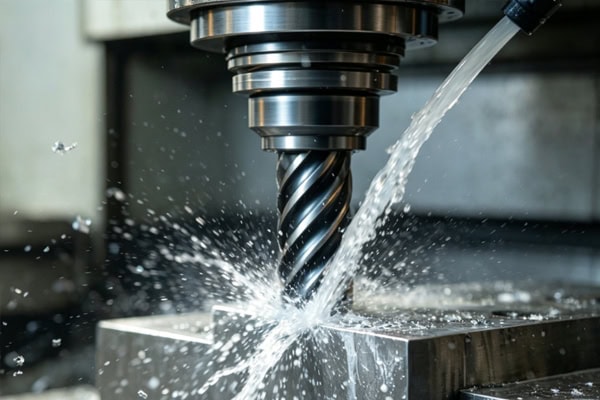
In real machining, the difference between the two largely depends on specific materials and cutting parameters.
Performance Differences Under Different Conditions
Many companies hope to define the difference between PVD and CVD using a simple percentage, but in practice, there is no universal answer. Different studies under different materials and parameters show varying results. For example, some research indicates that CVD can withstand higher cutting speeds in D2 steel milling, while other studies show that PVD performs better in cutting force reduction and thermal crack resistance.
Key Factors Affecting Coating Performance
This demonstrates that coating performance does not exist independently. It is jointly determined by tool structure, workpiece material, machining parameters, and cooling conditions. In CNC milling, what truly matters is cost per part, actual tool life, machining cycle time, final dimensional accuracy, and surface quality.
Conclusion
Coating selection depends more on a comprehensive evaluation of machining conditions rather than a single performance comparison. It is necessary to consider tool geometry, cutting parameters, and production cycle to determine the optimal solution, achieving stable machining performance and cost control. TiRapid can provide tailored CNC milling solutions based on part drawings and process requirements, helping customers improve overall machining efficiency and consistency.