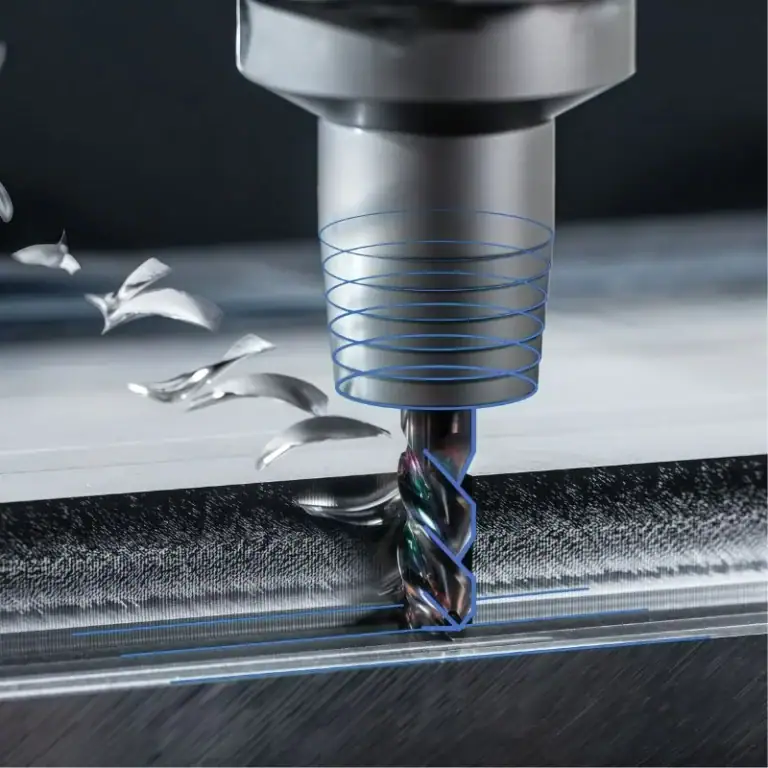
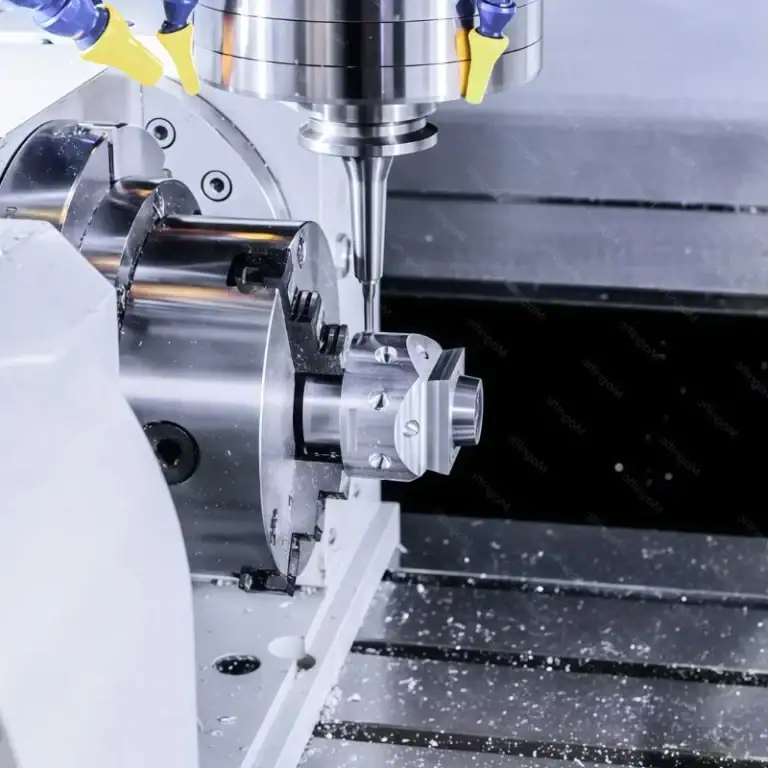
Magnetic chucks are widely used in precision milling for fast clamping of flat workpieces. They are known for high efficiency and convenience, but in high-precision CNC milling applications, their positioning stability remains a key concern for engineers. Especially in thin-walled parts, mold steels, and high-precision datum surface machining, whether the holding force is sufficient and whether micro-displacement occurs will directly affect the final machining accuracy and surface quality. Understanding the real capability limits of magnetic chucks helps make more reasonable fixturing decisions for different machining tasks, thereby improving overall process stability and yield.
Working Principle of Magnetic Chucks and Stability Foundation
Magnetic chucks use electromagnetic or permanent magnetic force to generate attraction, pressing the workpiece onto the table to achieve rapid positioning and fixation.
Attraction Force Determines Basic Stability
The stability of a magnetic chuck depends on magnetic field strength and whether the force distribution is uniform, which directly affects whether the workpiece will shift during machining.
- Stronger attraction force provides higher resistance to cutting force disturbances.
- Uneven magnetic distribution may cause localized force differences and slight deformation.
- Larger contact area results in more uniform force distribution and better positioning stability.
In CNC milling, this surface-contact clamping method is generally reliable for large flat parts.
Workpiece Material Affects Clamping Performance
The holding capability of magnetic chucks is related to material magnetic permeability, and different materials show significant differences. Low-carbon steel has high permeability and the most stable clamping; alloy steels or high-hardness materials have lower permeability, resulting in reduced holding force; non-ferromagnetic materials such as aluminum, copper, and stainless steel are generally not clamped effectively. Therefore, material properties are the primary factor in determining whether a magnetic chuck can be used in CNC milling.
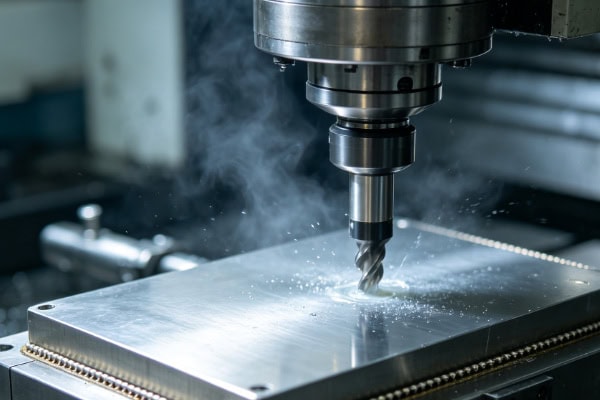
Real Stability Challenges in Precision Milling
In high-precision machining, cutting forces, vibration, and workpiece rigidity amplify the limitations of magnetic chucks.
Micro-Displacement Caused by Cutting Forces
Cutting forces continuously change during machining and can disturb the workpiece.
- Lateral cutting forces may cause slight sliding.
- Localized force concentration may lead to minor warping.
- Long machining cycles may cause cumulative errors.
These variations are sufficient to affect final dimensions in precision machining.
Thin-Walled and Slender Structures Are More Sensitive
Workpieces with low rigidity are more prone to deformation under magnetic clamping.
- Thin walls may be bent or locally deformed by magnetic force.
- Stress release during machining may cause spring-back, affecting datums.
- As material is removed, rigidity decreases and deformation becomes more pronounced.
Such parts often require support blocks or dedicated fixtures to reduce deformation.
Cutting Vibration Amplifies Positioning Errors
In high-speed or high-feed machining, vibration can affect the stability of magnetic chucks.
- Vibration may reduce contact stability between workpiece and chuck.
- Small gap variations can affect positioning accuracy.
- It also affects tool path accuracy and surface finish quality.
In high-precision machining, such vibration-induced errors are often difficult to control.
How to Improve Stability of Magnetic Chucks in CNC Milling
Process optimization can significantly improve the performance of magnetic chucks.
Optimize Clamping and Contact Surface Condition
Good contact conditions are the foundation of stable magnetic clamping. Any debris or unevenness will affect holding performance. Before clamping, ensure the chuck and workpiece bottom surface are clean to avoid chips or oil causing gaps. Improve the flatness of the workpiece bottom surface to ensure full contact with the chuck. If necessary, use high-precision backing plates to improve load distribution and enhance support stability.
Properly Control Cutting Parameters
Optimizing cutting parameters to reduce machining impact is an important way to minimize workpiece displacement.
- Reduce radial cutting force appropriately to lower lateral thrust.
- Avoid sudden tool engagement or large depth of cut to reduce impact load.
- Use smoother feed strategies in finishing to ensure cutting continuity.
In high-precision machining, parameter stability is often more important than efficiency.
Combine Mechanical Fixtures for Hybrid Clamping
In complex or high-risk machining, magnetic force alone is often insufficient and must be combined with mechanical fixtures.
- Add pressure plates at workpiece edges to restrict lateral movement.
- Use support blocks for thin-walled parts to reduce deformation.
- Apply locating pins or datum blocks to improve repeat positioning accuracy.
The combination of magnetic and mechanical clamping significantly improves overall rigidity and machining stability.
Suitable and Unsuitable Applications of Magnetic Chucks
Properly identifying application scenarios is key to leveraging advantages and avoiding risks.
More Suitable Machining Types
Magnetic chucks generally perform well in the following applications:
- Rough or semi-finishing of large flat parts.
- High-efficiency batch production requiring fast setup.
- High-cycle production environments with frequent workpiece changes.
Their core advantages are fast setup and operational convenience.
Cases Where Standalone Use Is Not Recommended
In the following high-precision or high-risk scenarios, using magnetic chucks alone often introduces significant uncertainty:
- Final finishing of ultra-precision molds.
- High-precision forming of thin-walled complex structures.
- Heavy-duty milling under deep cavity or high cutting force conditions.
These scenarios require higher rigidity and stability and rely more on dedicated mechanical fixturing systems.
Conclusion
The reliability of magnetic chucks is determined by material properties, magnetic force distribution, and machining processes. Under suitable conditions, they can reduce setup time and improve CNC milling efficiency. However, in high-precision or thin-walled part machining, mechanical fixtures or auxiliary positioning are often still required to enhance rigidity and stability. From a production perspective, the rationality of fixturing design often directly affects machining consistency, and its importance can even exceed machine performance. TiRapid can provide machining and process optimization solutions for different CNC milling scenarios to help improve both quality and efficiency.