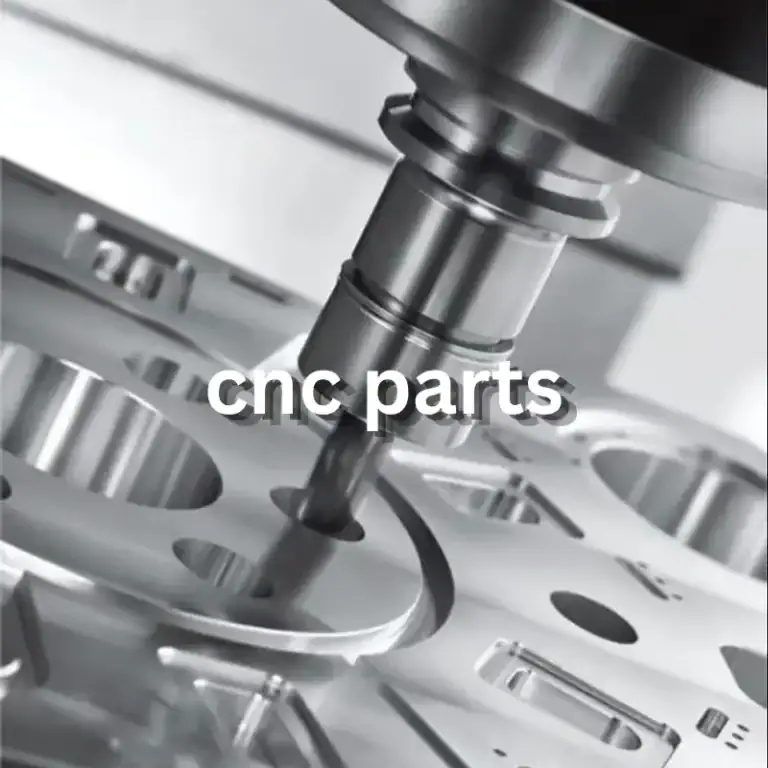
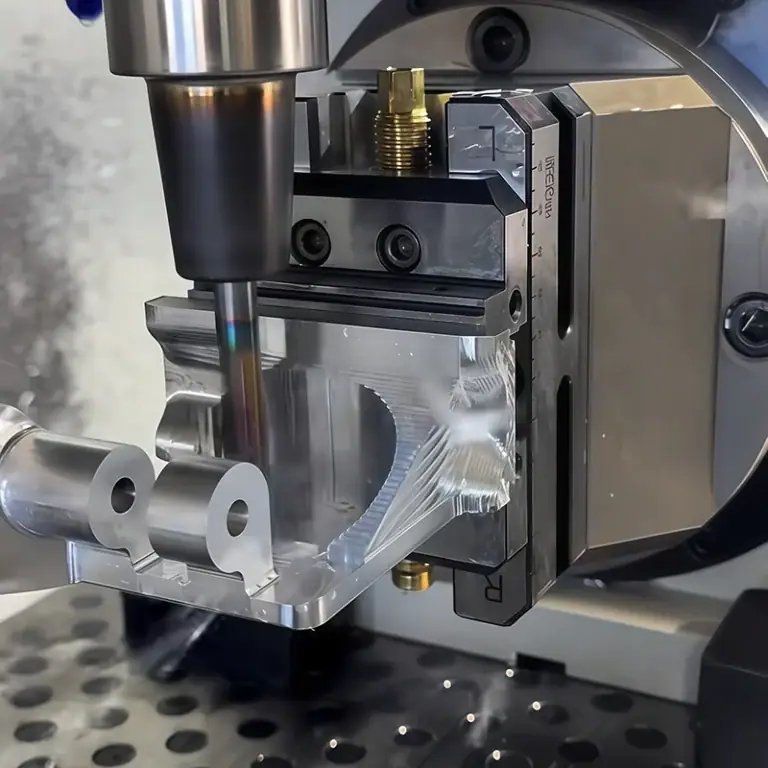
Computer numerical control machining is an automated manufacturing process in which programmed computer instructions control machine tools to remove material and produce precise parts. CNC technology can control tool movement, spindle speed, feed rate, cutting depth, tool changes, and machine positioning, making it suitable for repeatable production of simple and highly complex components.
This guide explains computer numerical control machining, how CNC machines and CNC systems work, the complete CNC machining process, major types of CNC machine, common materials, programming, quality control, applications, and current technology trends.、
What Is Computer Numerical Control Machining?
Computer numerical control machining is a manufacturing process in which computer-controlled machine tools follow programmed instructions to remove material from a workpiece and create a specified geometry. It combines digital design, CNC programming, machine motion, cutting tools, workholding, and inspection to produce repeatable precision parts.
CNC machining is generally classified as subtractive manufacturing because the final component is produced by removing material from a larger piece of stock. Depending on the machine, the process may include milling, turning, drilling, boring, grinding, routing, or other operations. PTC describes CNC as the use of computers to control machine tools, including instructions for tool selection, position, movement, and speed.
Compared with manually operated equipment, CNC machines can repeat programmed movements with much less dependence on continuous human control. This makes computer numerical control machining especially useful when manufacturers need tight tolerances, complex geometry, consistent batches, or parts that must be reproduced months or years later.
What Does CNC Stand For?
CNC stands for Computer Numerical Control, meaning that a computer interprets numerical instructions and uses them to control machine-tool movements and functions.
These instructions define variables such as position, direction, spindle speed, feed rate, cutting sequence, and tool commands. Goodwin notes that CNC machines commonly use G-code for machine motion and M-code for auxiliary machine functions.
In practical manufacturing, CNC changes machining from continuous manual manipulation into a programmable process. The operator still performs setup, tooling, inspection, troubleshooting, and process monitoring, but the machine carries out the programmed cutting sequence automatically.
Why Is CNC Machining Important In Manufacturing?
CNC machining is important because it combines precision, automation, repeatability, manufacturing flexibility, and the ability to produce complex parts from many engineering materials.
Once a stable process has been programmed and validated, the machine can repeatedly follow the same toolpaths. This reduces variation caused by manually positioning tools and enables manufacturers to produce both one-off prototypes and repeated production batches.
PTC identifies speed, accuracy, repeatability, fewer errors, reduced rework, and optimized labor among the major advantages of CNC. Stecker also notes that some precision applications require positional tolerances around ±0.001in or tighter, making controlled CNC processes particularly valuable.
How Does Computer Numerical Control Machining Work?
Computer numerical control machining works by converting a digital part design into machine instructions that control toolpaths, cutting parameters, machine axes, and auxiliary functions. The CNC controller reads these instructions and coordinates the machine so material is removed according to the required geometry.
The workflow typically begins with a CAD model or engineering drawing. CAM software can then calculate toolpaths and generate CNC code. After tools, fixtures, work offsets, and machining parameters are prepared, an operator verifies the setup and runs the program.
A simplified workflow is:
CAD Design → CAM Toolpath → CNC Program → Machine Setup → Cutting → Inspection → Finished Part
PTC describes a similar route in which CAD information is transferred into CAM, toolpaths are created, G-code is generated, the program is loaded, and a trial run is completed before full production.
CNC Programming
CNC programming defines how the machine will move, which tools it will use, and how each machining operation will be performed.
The program can include:
- Tool selection
- Spindle speed
- Feed rate
- Tool coordinates
- Cutting depth
- Work offsets
- Coolant commands
- Tool changes
- Drilling cycles
- Contouring movements
Simple operations can be programmed manually, but complex components are normally programmed with CAM software. Multi-axis machining especially benefits from CAM because manually calculating hundreds or thousands of coordinated tool movements would be inefficient and prone to error.
Computer-Aided Manufacturing (CAM)
Computer-aided manufacturing software converts part geometry into machining strategies, toolpaths, and machine-readable CNC instructions.
The programmer imports or creates part geometry, selects the machine and cutting tools, defines stock and fixtures, establishes machining operations, and calculates tool movement.
Modern CAM also provides simulation and collision checking. Stecker explains that CAM environments can simulate machining setups and detect possible collisions before the program reaches the actual CNC machine, which becomes particularly valuable in multi-axis machining.
How CNC Machines Execute Programmed Instructions
CNC machines execute programmed instructions by converting numerical commands into controlled movement through servo motors, drives, machine axes, and spindle systems.
For example, a milling program may instruct the machine to:
- Load a specific end mill.
- Start the spindle at a defined rpm.
- Move to a known coordinate.
- Approach the workpiece.
- Cut at a specified feed rate and depth.
- Retract the tool.
- Change tools.
- Drill or tap additional features.
Feedback devices can monitor actual axis positions and help the controller maintain commanded movement. This closed-loop control is one reason modern CNC systems can repeatedly execute complex machining paths.
What Does A CNC Machine Do?
A CNC machine automatically cuts, drills, mills, turns, bores, threads, grinds, or otherwise processes material according to a programmed machining sequence.
The exact operation depends on the equipment. Milling machines move rotating cutters through the workpiece, while CNC lathes rotate the workpiece against stationary or driven tools. Stecker identifies milling, turning, drilling, boring, broaching, and sawing among common CNC-controlled machining operations.
CNC machines can also combine operations. A mill-turn center, for example, may turn a cylindrical surface, mill flats, drill cross holes, and machine threads without moving the component to multiple conventional machines.
What Is A CNC System?
A CNC system is the complete combination of controller, software, machine tool, servo drives, axes, feedback devices, tooling, and operating instructions used to automate a machining process.
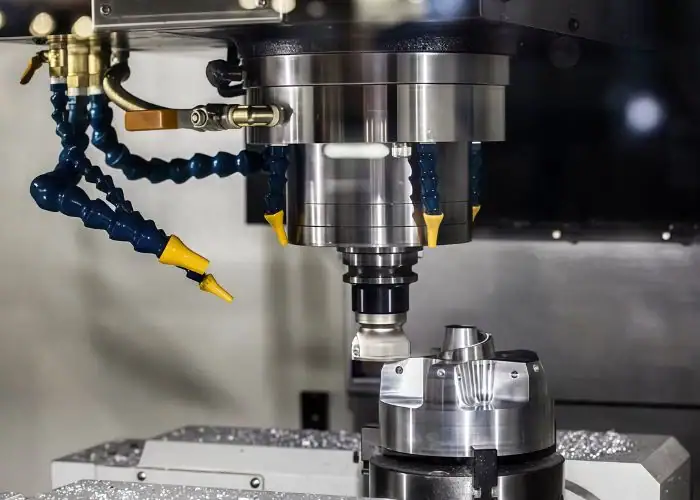
The CNC controller is only one part of the system. Reliable machining also depends on machine rigidity, spindle performance, cutting tools, fixtures, work offsets, tool compensation, programming accuracy, and feedback devices.
| CNC System Component | Main Function |
| CNC controller | Reads and executes machining instructions |
| Machine tool | Performs the physical manufacturing operation |
| Servo drives | Control axis movement |
| Spindle | Rotates the cutter or workpiece |
| Program | Defines machining sequence and coordinates |
| Feedback system | Monitors actual machine position |
| Tooling | Removes material |
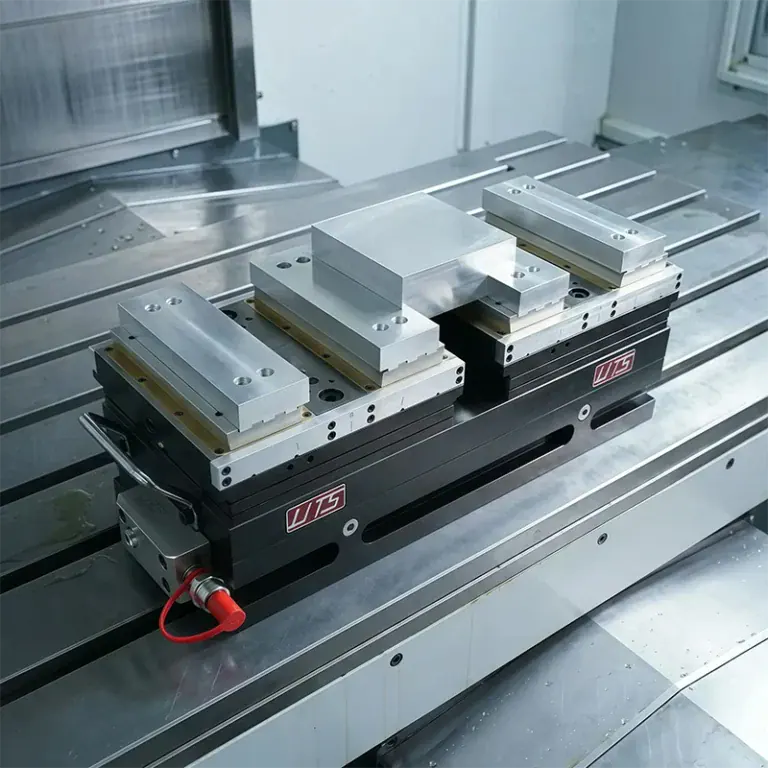
| Workholding | Locates and secures the workpiece |
CNC Controller
The CNC controller is the electronic control unit that interprets programmed commands and coordinates machine movement.
It receives CNC code, calculates motion, communicates with servo drives, controls spindle functions, manages tool changes, and monitors machine status.
Modern controllers can also support probing, tool-life management, compensation, process monitoring, network communication, and advanced multi-axis interpolation.
Machine Tool
The machine tool is the mechanical equipment that physically removes material or performs another programmed manufacturing operation.
Examples include machining centers, lathes, grinders, routers, and drilling machines. Machine configuration determines available axis travel, spindle orientation, rigidity, maximum rpm, tool capacity, and workable part size.
Machine capability must match the component. Buying more axis capability does not automatically make a process better, part geometry, accessibility, tolerance, cycle time, and production volume determine which machine is economical.
CNC Program And Software
The CNC program contains the coded instructions that tell the machine how to manufacture the part.
A CNC program may be generated manually, through conversational programming, or using CAM software. Goodwin notes that CNC instructions may be written manually or generated from CAD and CAM systems.
Programming quality strongly affects cycle time, surface finish, tool life, collision risk, and dimensional stability. Two programs can machine the same geometry but achieve significantly different manufacturing results.
Machine Axes And Motion Control
Machine axes define the directions in which the cutting tool or workpiece can move.
A basic 3-axis CNC mill uses:
- X-axis: left/right
- Y-axis: front/back
- Z-axis: up/down
Rotary A, B, or C axes can be added for 4-axis, 3+2, or 5-axis machining. Vurcon describes X, Y, and Z positioning as the basic foundation for CNC operations such as cutting, drilling, milling, threading, and roughing.
Additional axes reduce re-clamping and improve access to complex features, but they also increase programming and equipment requirements.
Feedback And Monitoring
Feedback and monitoring systems measure machine position, operating condition, tooling status, and process performance.
Encoders and scales can verify axis position, while probes can measure workpieces or tools. More advanced systems may monitor spindle load, vibration, temperature, tool wear, or production status.
These systems help detect errors before they produce an entire batch of defective CNC machining parts.
What Is The CNC Machining Process?
The CNC machining process consists of designing the part, preparing the CNC program, setting up the machine and workpiece, executing the machining operations, and inspecting the completed component.
The exact workflow becomes more detailed for tight-tolerance or multi-operation components, but the fundamental sequence remains similar.
| Step | Process | Main Purpose |
| 1 | Part design | Define geometry and specifications |
| 2 | CNC programming | Create machining instructions |
| 3 | Machine setup | Prepare tools, fixtures, stock and offsets |
| 4 | Machining | Remove material |
| 5 | Inspection | Verify dimensions and quality |
Euro Metal Solutions describes essentially the same five-stage workflow: part design, CNC programming, machine configuration, machining, and inspection/finishing.
Step 1: Create The Part Design
Creating the part design defines the geometry, dimensions, tolerances, materials, surface requirements, and functional features that the CNC process must produce.
Most modern components start from 3D CAD files combined with 2D engineering drawings. The model defines nominal geometry, while the drawing may specify tolerances, GD&T, threads, finishes, material standards, and inspection requirements.
A manufacturable design should also consider tool access, internal corner radii, minimum wall thickness, hole depth, standard cutting tools, and practical workholding.
Step 2: Prepare The CNC Program
Preparing the CNC program converts the design into an efficient sequence of cutting operations.
The programmer decides:
- Machining order
- Tool selection
- Toolpath strategy
- Cutting speed
- Feed rate
- Depth of cut
- Workholding orientation
- Roughing allowance
- Finishing strategy
CAM software then produces machine code through a post-processor configured for the specific CNC machine and controller.
Step 3: Set Up The CNC Machine
Setting up the CNC machine prepares the physical production environment so the programmed coordinates correspond correctly to the actual workpiece.
The operator installs tools, secures material or blanks, sets work offsets, confirms tool lengths, checks fixtures, loads the program, and verifies machine condition.
Setup errors can cause dimensional problems even when the CAD model and CNC program are correct. For this reason, first-piece verification is particularly important on new jobs.
Step 4: Run The Machining Operation
Running the machining operation means allowing the CNC machine to execute the verified toolpaths and remove material from the workpiece.
Machining often begins with roughing, where material is removed quickly, followed by semi-finishing and finishing operations that establish final dimensions and surface quality.
Complex CNC machining parts may require milling, turning, drilling, tapping, boring, reaming, or multi-axis contouring in one or several setups.
Step 5: Inspect The Finished Part
Inspecting the finished part confirms whether dimensions, tolerances, geometry, surface requirements, and other specifications meet the engineering drawing.
Inspection equipment can include:
- Calipers
- Micrometers
- Bore gauges
- Height gauges
- Thread gauges
- Surface roughness testers
- Optical measurement systems
- Coordinate measuring machines (CMMs)
Stecker notes that CNC shops may use gauges and CMM inspection to verify part dimensions and position against tolerances.
What Are The Main Types Of CNC Machining?
The main types of CNC machining include milling, turning, drilling, grinding, and multi-axis machining, while CNC-controlled laser cutting and other processes extend numerical control to additional manufacturing operations.
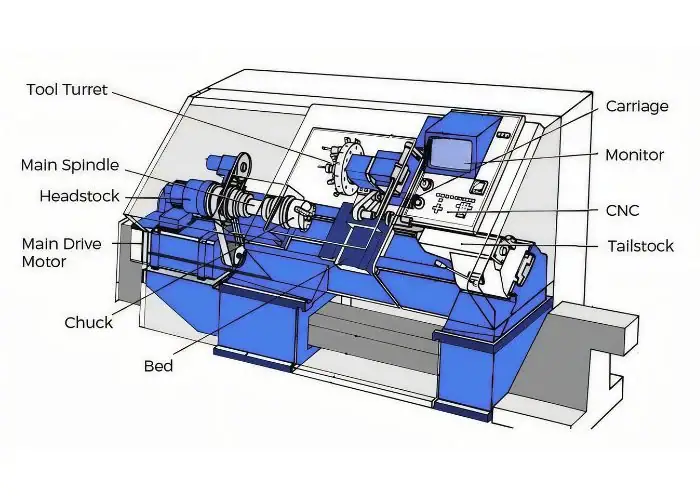
Each process removes material differently, so the most suitable method depends primarily on part shape, tolerance, surface condition, feature accessibility, and production volume.
CNC Milling
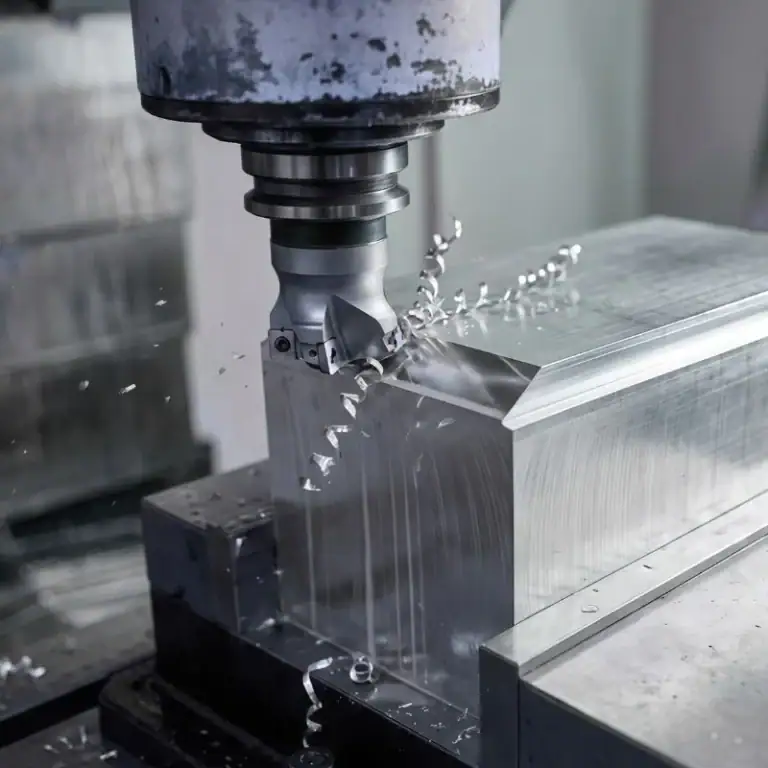
CNC milling uses a rotating cutting tool to remove material from a workpiece secured to a machine table or fixture.
It is suitable for:
- Pockets
- Slots
- Flat surfaces
- Contours
- Hole patterns
- Threads
- Complex 3D surfaces
Three-axis milling handles many conventional parts, while 4-axis and 5-axis machines provide better access to features on multiple orientations.
CNC Turning
CNC turning rotates the workpiece while a cutting tool removes material to form primarily cylindrical geometry.
Common CNC-turned parts include:
- Shafts
- Pins
- Bushings
- Sleeves
- Rollers
- Nozzles
- Threaded components
PTC notes that CNC lathes can perform threading, contouring, boring, and surfacing, with automated feeding systems available for higher-volume production.
CNC Drilling
CNC drilling creates controlled holes at programmed coordinates and depths.
CNC machines can also perform:
- Spot drilling
- Peck drilling
- Counterboring
- Countersinking
- Reaming
- Tapping
The advantage over manual drilling is not simply automation, CNC allows hole position, depth, sequence, and related features to be repeated consistently across multiple parts.
CNC Grinding
CNC grinding uses abrasive wheels to achieve precise dimensions and fine surface finishes.
Grinding is commonly applied after milling or turning when a component requires especially controlled roundness, flatness, dimensional accuracy, or hardened surfaces.
Typical applications include precision shafts, bearing surfaces, gauges, tooling, and hardened mechanical components.
CNC Laser Cutting
CNC laser cutting uses a programmed focused laser beam to cut or engrave sheet or plate material.
It is particularly useful for 2D profiles in sheet metal because no physical cutting tool contacts the workpiece.
Laser cutting belongs to the wider family of CNC-controlled manufacturing technologies, although it is not conventional chip-forming machining in the same sense as milling or turning.
Multi-Axis CNC Machining
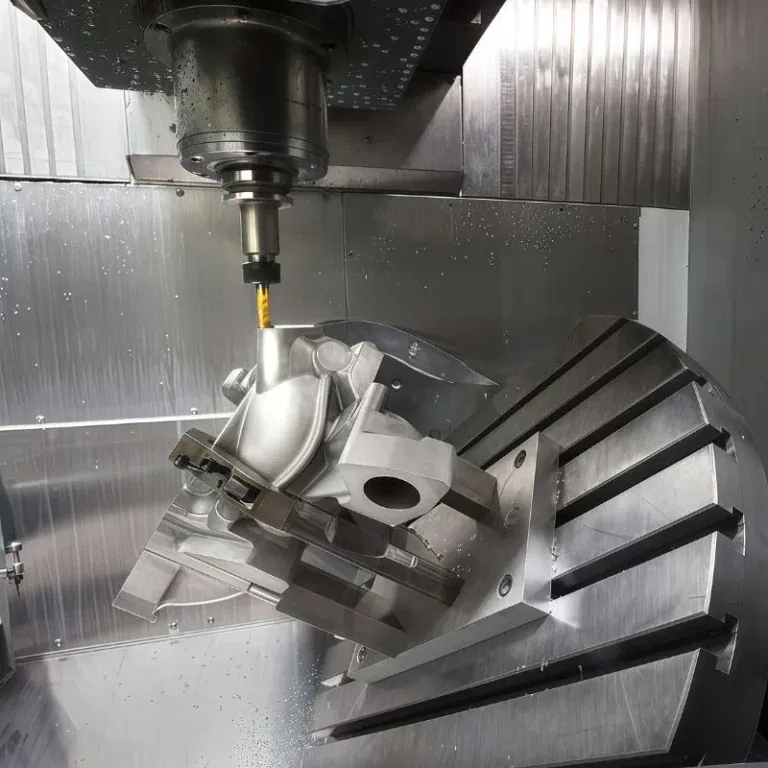
Multi-axis CNC machining coordinates three linear axes with one or more rotary axes to reach complex surfaces and features from different directions.
3+2 machining locks the rotary axes at a chosen angle before cutting. Simultaneous 5-axis machining moves linear and rotary axes continuously during the cut.
Stecker notes that CNC equipment commonly includes 3-axis, 4-axis, 3+2, and full 5-axis configurations, while multi-function machines may combine milling and turning.
What Are The Main Types Of CNC Machines?
The main types of CNC machine include milling machines, lathes, drilling machines, grinders, machining centers, routers, and multi-axis or multi-function systems.
Machine selection should follow the component geometry rather than simply choosing the most advanced machine available.
| CNC Machine | Typical Strength | Common Parts |
| CNC mill | Prismatic geometry | Housings, plates, brackets |
| CNC lathe | Cylindrical geometry | Shafts, bushings, pins |
| Machining center | Multi-operation milling | Complex production parts |
| CNC grinder | High-precision finishing | Shafts, tooling, bearing surfaces |
| CNC router | Large/light materials | Plastic, composites, panels |
| 5-axis machine | Multi-angle geometry | Aerospace, medical, impellers |
| Mill-turn center | Milling + turning | Complex rotational components |
CNC Milling Machines
CNC milling machines use rotating cutters and controlled axis movements to produce prismatic and contoured parts.
Typical configurations include 3-axis, 4-axis, and 5-axis machines. Euro Metal Solutions notes that vertical machining centers may be configured with three through five controlled axes, depending on the required complexity.
CNC Lathes
CNC lathes rotate material around a spindle while controlled tools remove material from the outside or inside diameter.
They are especially economical for rotationally symmetric CNC machining parts. Modern turning centers can add driven tooling, secondary spindles, and Y-axis motion to perform milling and drilling without transferring the part.
CNC Drilling Machines
CNC drilling machines automate accurate hole creation at programmed locations.
Dedicated drilling equipment is useful when a component contains many repeated holes, although CNC mills and machining centers can perform most drilling operations as part of a larger machining cycle.
CNC Grinding Machines
CNC grinding machines automate abrasive finishing where dimensional accuracy and surface condition are critical.
They may be configured for cylindrical, surface, centerless, or specialized grinding. The process is particularly useful after heat treatment when conventional cutting may not provide the required final condition.
CNC Laser Cutting Machines
CNC laser cutting machines move a laser head or workpiece according to programmed coordinates to produce profiles, holes, and cutouts.
They are widely used for sheet-metal fabrication because tool changes are minimized and complex 2D profiles can be cut directly from digital files.
CNC Machining Centers
A CNC machining center is a milling-based machine equipped to perform multiple operations automatically, usually with an automatic tool changer.
Machining centers can drill, tap, mill, bore, chamfer, and contour within one setup. They are commonly available in vertical and horizontal configurations.
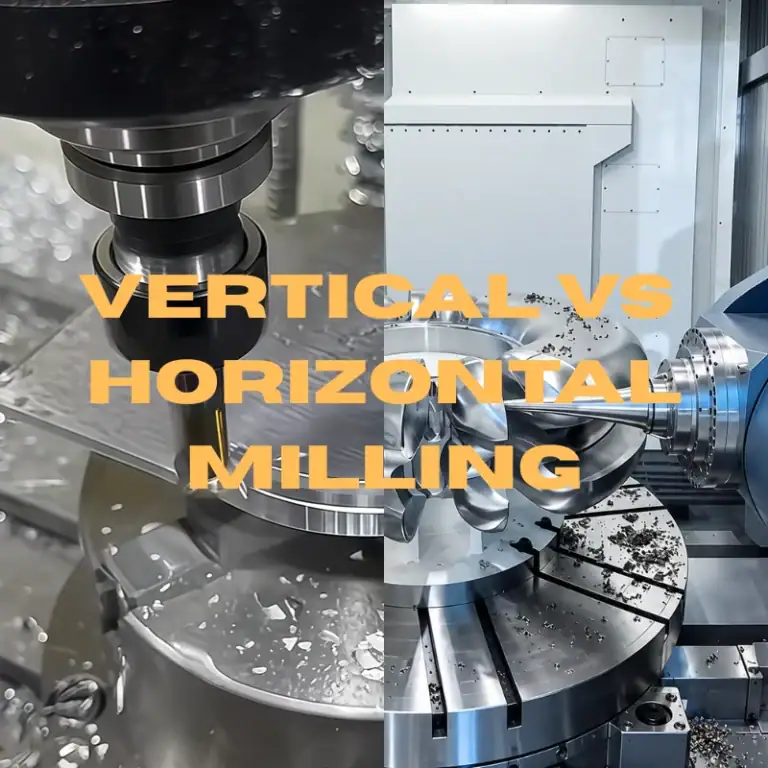
Vertical Vs Horizontal CNC Machines
Vertical CNC machines position the spindle vertically, while horizontal machining centers orient the spindle horizontally.
Vertical machines are flexible and common for plates, housings, prototypes, and general milling. Horizontal machines can provide better chip evacuation and allow multiple workpiece faces to be accessed using pallet or tombstone fixtures.
Stecker describes vertical machines as well suited to components machined primarily from one side, while horizontal configurations are often selected when additional access and production efficiency are needed.
Multi-Axis And Multi-Function CNC Machines
Multi-axis and multi-function CNC machines combine additional axes or machining processes to complete complex parts with fewer setups.
5-axis machines can access multiple faces and complex contours. Mill-turn centers combine turning with milling, drilling, and other operations.
Reducing setups can improve feature-to-feature accuracy because the workpiece is not repeatedly unclamped and repositioned.
What Is The Difference Between NC And CNC?
The difference between NC and CNC is that traditional numerical control relies on older fixed or externally stored instruction systems, while CNC uses programmable computers that make machining easier to modify, automate, monitor, and reuse.
Both technologies automate machine movement, but modern CNC offers much greater programming flexibility and integration.
| Factor | NC | CNC |
| Control | Older numerical control | Computerized control |
| Program changes | Difficult | Relatively easy |
| Program storage | Limited | Digital storage |
| Complex geometry | Limited | Multi-axis capable |
| Automation | Lower | Higher |
| Data integration | Minimal | CAD/CAM/network integration |
Programming
NC programming traditionally relied on punched tapes, cards, or relatively fixed control logic, while CNC programs can be digitally edited, stored, transferred, and reused.
PTC notes that this programmability allows CNC equipment to be redeployed for new components without physically rewiring control logic.
Machine Complexity
CNC systems can control more complex coordinated movements than traditional NC equipment.
Modern multi-axis interpolation makes it possible to machine compound angles, contoured surfaces, and complex 3D features that would be impractical on early NC equipment.
Flexibility And Automation
CNC provides greater flexibility because machine behavior can be changed through programming instead of extensive hardware changes.
Programs can also be linked to CAD/CAM, probing, automation, robots, pallet systems, and manufacturing data systems.
Cost
CNC machines generally require greater initial investment than older conventional or NC equipment, but their automation can reduce labor per component and improve throughput.
Actual unit cost depends on machine utilization, setup time, cycle time, tooling, inspection, material, and production quantity.
Why CNC Replaced Most Traditional NC Systems
CNC replaced most traditional NC systems because digital programming provides greater flexibility, complexity, automation, repeatability, and integration.
PTC notes that legacy NC machines remain in some facilities, but their programming and flexibility limitations make CNC much more practical for modern manufacturing.
What Materials Can Be CNC Machined?
CNC machining can process a wide range of metals, plastics, and selected composites, provided the cutting tools, machine parameters, workholding, and coolant strategy are matched to the material.
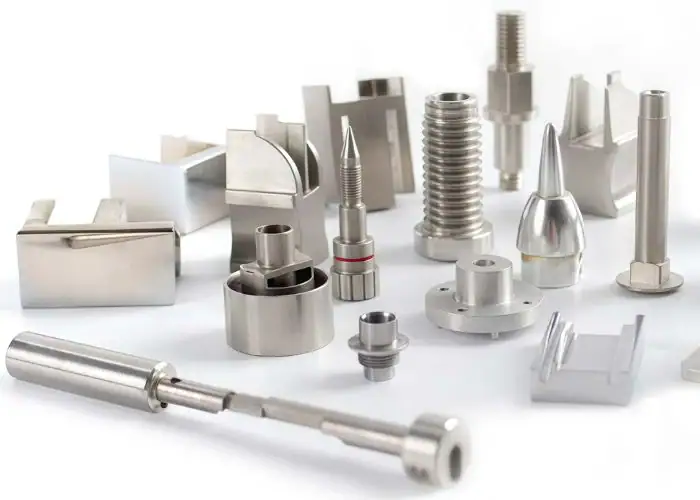
Material machinability strongly affects tool wear, achievable surface finish, cycle time, heat generation, distortion, and final cost.
| Material Group | Examples | Typical Considerations |
| Ferrous metals | Carbon steel, stainless steel | Strength, heat, tool wear |
| Non-ferrous metals | Aluminum, copper, titanium | Machinability varies widely |
| Plastics | PEEK, Delrin, nylon, acrylic | Heat and deformation |
| Composites | Fiberglass, carbon fiber | Abrasion and dust control |
Euro Metal Solutions similarly groups common CNC materials into ferrous metals, non-ferrous metals, plastics, and composites.
Ferrous Metals
Ferrous metals such as carbon steel, alloy steel, stainless steel, and cast iron are widely CNC machined for structural and mechanical applications.
Steel offers useful strength and durability, but machinability varies significantly. Stainless steels may work-harden, while hardened steels may require specialized carbide tooling or grinding.
Non-Ferrous Metals
Non-ferrous CNC materials commonly include aluminum, copper, brass, titanium, and magnesium alloys.
Aluminum is particularly popular because many alloys combine good machinability with low density and useful corrosion resistance. Titanium provides excellent strength-to-weight and corrosion performance but typically requires lower cutting speeds and careful heat management.
Plastics
Engineering plastics can be CNC machined when prototypes, low-volume production, dimensional accuracy, or material-specific performance are required.
Common examples include:
- PEEK
- Delrin/POM
- Nylon
- PTFE
- Acrylic
- Polycarbonate
- HDPE
- PVC
Because plastics have lower stiffness and thermal conductivity than most metals, clamping force, cutting heat, tool sharpness, and dimensional stabilization require careful control.
Composites
Selected composites such as carbon-fiber and fiberglass materials can be CNC machined using appropriate tools and dust-control methods.
These materials can be highly abrasive and may delaminate if tooling or cutting parameters are unsuitable. Diamond-coated or specialized composite tools are often preferred for production work.
What Are The Advantages Of CNC Machining?
The main advantages of CNC machining are high precision, repeatability, complex geometry capability, efficient production, flexible programming, broad material compatibility, and consistent quality across repeated parts.
The value of CNC becomes strongest when a component requires a combination of dimensional control and repeatable production rather than merely material removal.
Precision And Repeatability
CNC machining provides precision and repeatability because programmed toolpaths can be executed consistently across multiple production cycles.
However, actual tolerance capability depends on the machine, material, geometry, tool condition, temperature, fixturing, and inspection strategy. A CNC machine alone does not guarantee tight tolerances.
Complex Part Production
CNC machining can produce complex parts by coordinating multiple axes, cutting tools, setups, and machining operations.
Features such as angled holes, sculpted surfaces, deep pockets, intersecting geometry, threads, and close positional relationships can be manufactured directly from digital models.
Production Efficiency
CNC machining improves production efficiency by automating repetitive movements and enabling longer unattended machining periods.
Vurcon notes that CNC equipment can support continuous production and high output where the surrounding tooling, material handling, and operating conditions allow it.
Automation And Consistency
CNC automation reduces dependence on manual tool positioning and makes each manufacturing cycle more consistent.
Automation can be extended with:
- Bar feeders
- Pallet changers
- Robotic loading
- Tool measurement
- Workpiece probing
- Automatic tool changers
- In-process monitoring
Consistency still depends on stable tooling, material, fixtures, and process control.
Flexible Production Volumes
CNC machining supports prototypes, low-volume manufacturing, bridge production, and repeated batches without requiring dedicated molds for every geometry.
This flexibility is one reason CNC machining services are frequently selected for new product development, custom parts, replacement components, and products with changing designs.
What Are The Applications Of CNC Machining?
CNC machining is used in aerospace, automotive, industrial equipment, medical, electronics, robotics, automation, energy, and consumer products because these industries require precise, repeatable mechanical components.
Vurcon identifies aerospace, automotive, metalworking, electrical and other industrial sectors as major users of computer numerical control technology.
Aerospace
CNC machining is used in aerospace for structural components, brackets, housings, landing-system parts, engine components, fixtures, and complex lightweight structures.
Typical requirements can include tight positional tolerances, lightweight materials, high material traceability, complex 5-axis surfaces, and detailed inspection.
Automotive
CNC machining is used in automotive manufacturing for powertrain components, suspension parts, prototypes, motorsport components, EV hardware, housings, fixtures, and production tooling.
Turning centers are efficient for shafts and rotational parts, while milling and 5-axis machining support complex housings and structural components.
Medical
CNC machining is used in medical manufacturing for instruments, device housings, surgical components, fixtures, and selected implant-related parts.
Medical projects can require fine features, biocompatible materials, controlled surface conditions, traceability, and tight dimensional validation.
Industrial Equipment
CNC machining is used extensively for industrial equipment components such as machine bases, brackets, shafts, manifolds, fixtures, tooling, gears, housings, and replacement parts.
These components often prioritize durability, dimensional stability, fit, serviceability, and repeatable production.
Electronics
CNC machining supports electronics through housings, heat sinks, frames, connectors, test fixtures, cooling components, and precision mechanical assemblies.
Aluminum is frequently selected for these parts because it combines low weight, machinability, corrosion resistance, and good thermal conductivity.
Robotics And Automation
CNC machining is used in robotics and automation for joints, arms, end-effectors, frames, motor housings, sensor mounts, precision plates, and actuator components.
Feature-to-feature accuracy is especially important because alignment errors can accumulate across assemblies and affect movement or positioning.
How Can You Get The Most From CNC Machining?
You can get the most from CNC machining by designing for manufacturability, selecting the right machine and tooling, optimizing CAM programs, controlling quality, and matching specifications to the actual functional requirements of the part.
The most expensive part is not always the most precise part, unnecessary tolerances, deep cavities, non-standard holes, difficult internal corners, and excessive setups can increase cost without improving function.
Design For Manufacturing (DFM)
Design for manufacturing improves CNC efficiency by adjusting part geometry so it can be produced reliably with standard tools and practical setups.
Useful DFM considerations include:
- Avoid unnecessarily tight tolerances
- Use practical internal corner radii
- Limit very deep narrow pockets
- Avoid extremely thin unsupported walls
- Standardize hole and thread sizes
- Provide realistic surface finishes
- Design for tool access
- Reduce unnecessary setups
DFM should preserve part function while removing manufacturing difficulty that does not create engineering value.
CNC Programming And CAM Optimization
CNC programming and CAM optimization improve cycle time, tool life, surface finish, and machining reliability.
Programmers can optimize entry strategies, stepdowns, stepover, tool engagement, cutting direction, roughing methods, finishing passes, and tool changes.
Simulation also reduces the risk of collisions and helps verify complex multi-axis toolpaths before production.
Selecting The Right CNC Machine
Selecting the right CNC machine means matching machine capability to part geometry, tolerance, material, size, and production volume.
A simple bracket may be cheaper on a 3-axis VMC than on a 5-axis center. Conversely, a complex component requiring six setups on a 3-axis machine may become more economical on a 5-axis machine when reduced fixturing and inspection are considered.
Additional CNC Machine Shop Services
Additional CNC machine shop services help complete components that require more than material removal.
Common secondary services include:
- Grinding
- EDM
- Heat treatment
- Anodizing
- Plating
- Passivation
- Bead blasting
- Polishing
- Laser marking
- Assembly
- Inspection
Stecker also emphasizes engineering, procurement, project management, and quality control as useful supporting capabilities in a CNC machining operation.
Key Performance Indicators (KPIs)
CNC machining KPIs measure whether a production process is achieving its quality, delivery, efficiency, and cost targets.
Useful metrics can include:
- First-pass yield
- Scrap rate
- Rework rate
- Cycle time
- Setup time
- Tool life
- Machine utilization
- On-time delivery
- Overall equipment effectiveness
KPIs are most useful when tied to actual production objectives rather than tracked simply because data is available.
Quality Control And QMS
Quality control verifies that CNC machining parts conform to the drawing, while a quality management system controls how inspection, calibration, documentation, corrective action, and process improvement are managed.
Stecker highlights QMS procedures as a framework for maintaining calibration, training, audits, and manufacturing quality.
For procurement teams, inspection capability should be evaluated alongside machine capability. A manufacturer cannot reliably prove a tight geometric tolerance if it lacks suitable measuring equipment.
What Does A CNC Machine Operator Do?
A CNC machine operator sets up, runs, monitors, and checks CNC equipment so programmed machining operations produce parts safely and within specification.
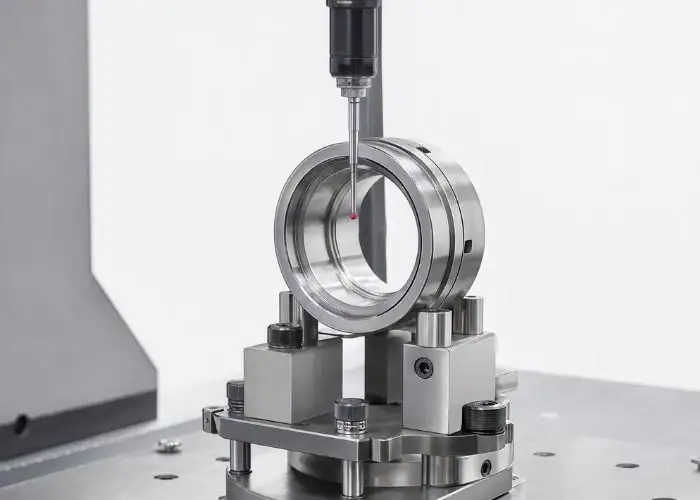
Automation does not eliminate skilled people. Operators remain responsible for workholding, tool condition, offsets, first-piece checks, process monitoring, deburring, and routine dimensional inspection.
CNC Machine Operator Responsibilities
A CNC machine operator is responsible for preparing and monitoring the machining process rather than manually controlling every cutting movement.
Typical responsibilities include:
- Loading and unloading parts
- Checking fixtures
- Installing or replacing cutting tools
- Monitoring tool wear
- Adjusting offsets
- Deburring components
- Checking dimensions
- Responding to alarms
- Documenting production results
Goodwin and Stecker both emphasize that machinists remain important for setup, testing, monitoring, inspection, and machine operation even when the cutting cycle itself is automated.
CNC Machinist Vs CNC Programmer
A CNC machinist focuses more broadly on machine setup, cutting processes, tooling, measurements, and production, while a CNC programmer specializes in creating and optimizing the instructions used by the CNC machine.
In smaller machine shops, one person may perform both roles. In larger operations, programming, setup, operation, process engineering, and quality may be handled by separate specialists.
Skills And Training Required For CNC Operation
CNC operation requires practical knowledge of machining, engineering drawings, cutting tools, measurement, offsets, workholding, safety, and basic CNC programming.
More advanced positions may require CAM programming, GD&T interpretation, process development, troubleshooting, multi-axis machining, probing, or automation experience.
What Are The Latest Trends In CNC Machining?
Current CNC machining trends include more advanced CAM software, increased use of 5-axis and multi-function machines, robotic automation, AI-assisted process monitoring, and Industrial Internet of Things connectivity.
These developments do not change the fundamentals of cutting metal, but they improve how machining processes are programmed, monitored, integrated, and automated.
Advanced CAM Software
Advanced CAM software is improving CNC machining through better toolpath calculation, simulation, collision detection, automation, and machine-specific programming.
Digital simulation is particularly useful for 5-axis machines because tool, holder, spindle, fixture, and workpiece movements must be coordinated safely.
Multi-Axis CNC Machining Centers
Multi-axis machining centers are growing in importance because they can produce complex features with fewer setups.
Reduced re-clamping can improve positional relationships between features, shorten total production time, and reduce fixture requirements.
Multi-Function CNC Machines
Multi-function CNC machines combine processes such as turning and milling into a single machine platform.
These systems are especially useful for complex rotational parts containing flats, cross holes, slots, milled surfaces, or off-axis features.
Robotics And CNC Automation
Robotics and CNC automation reduce repetitive manual handling and can increase machine utilization.
Robots may load raw parts, unload finished components, move parts between stations, operate inspection equipment, or support unattended production.
Stecker describes loading and unloading as common robotic applications in CNC environments.
Artificial Intelligence In CNC Machining
Artificial intelligence in CNC machining is increasingly used to analyze production data, identify process patterns, support predictive maintenance, and optimize machining decisions.
AI does not eliminate the need for machining knowledge. Its practical value is strongest when reliable machine data is available and the system is integrated with appropriate sensors and process controls.
Industrial Internet Of Things (IIoT)
Industrial Internet of Things technology connects CNC equipment and manufacturing systems so production data can be collected and analyzed across a shop floor.
Stecker describes IIoT dashboards as a way to gather machine information for monitoring, scheduling, performance analysis, and preventive maintenance.
This allows manufacturers to track utilization, downtime, alarms, tool performance, and production progress more systematically.
How Do You Choose A CNC Machining Service?
You should choose a CNC machining service by evaluating its machine capability, material experience, achievable tolerances, quality-control system, production capacity, lead time, engineering support, and ability to complete required secondary processes.
Price matters, but the lowest quoted unit price does not necessarily produce the lowest total project cost. Poor DFM, inconsistent inspection, repeated rework, or unreliable delivery can cost more than the original machining difference.
Machining Capabilities
Machining capabilities should match the geometry and complexity of your components.
Confirm whether the supplier offers the processes your project actually needs, such as:
- CNC milling
- CNC turning
- 3-axis machining
- 4-axis machining
- 5-axis machining
- Mill-turn machining
- Grinding
- EDM
A machine list alone is not enough, engineering experience with similar geometry is equally important.
Machine Types And Axis Capability
Machine type and axis capability determine how efficiently the supplier can access and machine your part features.
A 5-axis machine can be valuable when several complex faces must maintain accurate positional relationships, but 3-axis machining may remain more economical for simple components.
The best supplier should select equipment based on part geometry and production economics rather than automatically using the most expensive machine.
Material Experience
Material experience matters because different metals and plastics respond differently to cutting forces, temperature, workholding, and tooling.
A supplier experienced with aluminum may not automatically have the same process capability for titanium, hardened steel, copper, PEEK, or thin-wall engineering plastics.
Ask how the material affects tooling, dimensional stability, deburring, finishing, and inspection.
Tolerance And Quality Control
Tolerance and quality-control capability should match the critical characteristics shown on your engineering drawing.
For demanding components, check whether the supplier can provide:
- CMM inspection
- Surface roughness measurement
- Thread inspection
- Material certificates
- First article inspection
- Dimensional reports
- Process traceability
Tight tolerances should be applied where function requires them rather than across every dimension.
Production Volume And Lead Time
Production volume and lead time should be evaluated together because setup strategy changes with quantity.
A prototype may prioritize programming speed and flexible fixtures. Larger production batches may justify dedicated fixtures, optimized cycle times, automated loading, and longer tool-life strategies.
A suitable CNC supplier should be able to explain how its manufacturing method changes as quantity increases.
Secondary Manufacturing Services
Secondary manufacturing services simplify procurement when machined parts require finishing, heat treatment, marking, assembly, or special inspection before delivery.
Managing CNC machining services and secondary operations through one qualified supplier can reduce logistics, communication steps, and tolerance risk between processes.
FAQs
What Does CNC Stand For?
CNC stands for Computer Numerical Control. It describes a manufacturing system in which programmed computer instructions control machine-tool movements, spindle operation, feed rate, tool changes, and other functions. CNC machines typically interpret G-code for programmed movement and M-code for auxiliary commands. Because programs can be stored, edited, and repeated, CNC enables automated production with significantly greater consistency than manually controlling every machine movement, particularly when multiple identical or geometrically complex parts are required.
What Is CNC Milling?
CNC milling is a subtractive manufacturing process in which computer-controlled rotating cutters remove material from a secured workpiece. Standard 3-axis machines move along X, Y, and Z, while 4-axis and 5-axis configurations add rotary movement for multi-sided or complex surfaces. CNC milling commonly produces housings, brackets, plates, pockets, slots, hole patterns, and contoured components. The achievable tolerance depends on machine condition, material, tool selection, fixture rigidity, geometry, temperature, and the inspection method used.
What Is CNC Programming?
CNC programming is the process of creating machine-readable instructions that define tool movement, spindle speed, feed rate, coordinates, tool changes, and machining sequences. Programs may be written manually for simple operations or generated with CAM software from CAD models for complex components. Modern CAM systems calculate toolpaths and can simulate the machining process before production. PTC explains that CAM frequently converts CAD geometry into toolpaths and ultimately into G-code that can be loaded into the CNC controller.
What Is CNC Equipment?
CNC equipment includes computer-controlled machine tools and the supporting hardware used to perform automated manufacturing operations. Common examples include CNC mills, lathes, machining centers, grinders, routers, drilling machines, and multi-axis systems. A complete CNC setup also includes the controller, spindle, servo drives, cutting tools, workholding, feedback devices, probing systems, coolant equipment, and chip-management systems. Machine selection depends on part geometry, material, tolerance, work envelope, axis requirements, production quantity, and required secondary operations.
What’s The Difference Between CAD And CNC?
CAD and CNC serve different stages of manufacturing. CAD, or Computer-Aided Design, is software used to create the digital geometry and engineering definition of a component. CNC is the computerized system that controls the machine producing that component. CAM normally connects the two: the CAD model supplies geometry, CAM calculates machining toolpaths, and the resulting CNC program controls machine motion. Therefore, CAD defines what the part should be, while CNC equipment physically manufactures the programmed geometry.
Conclusion
Computer numerical control machining combines digital design, CNC programming, automated machine control, cutting tools, workholding, and inspection to manufacture precise and repeatable components. The best process depends on part geometry, material, tolerance, volume, and surface requirements, whether the project uses CNC milling, turning, grinding, drilling, or multi-axis machining. Understanding CNC systems, machine types, programming, DFM, and quality control makes it easier to select a process that balances accuracy, production efficiency, and cost.
At TiRapid, we provide precision CNC machining and manufacturing services for custom metal and plastic components, from prototypes to low-volume production. Our capabilities include CNC milling, CNC turning, 5-axis CNC machining, precision inspection, surface finishing, and engineering support for aluminum, stainless steel, titanium, copper, engineering plastics, and other materials used across aerospace, automotive, medical, electronics, robotics, automation, and industrial equipment applications.