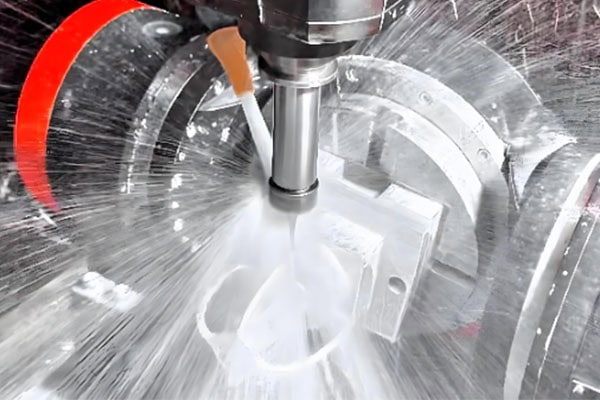
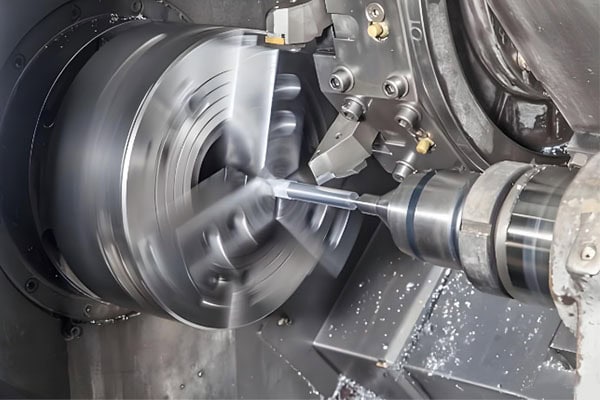
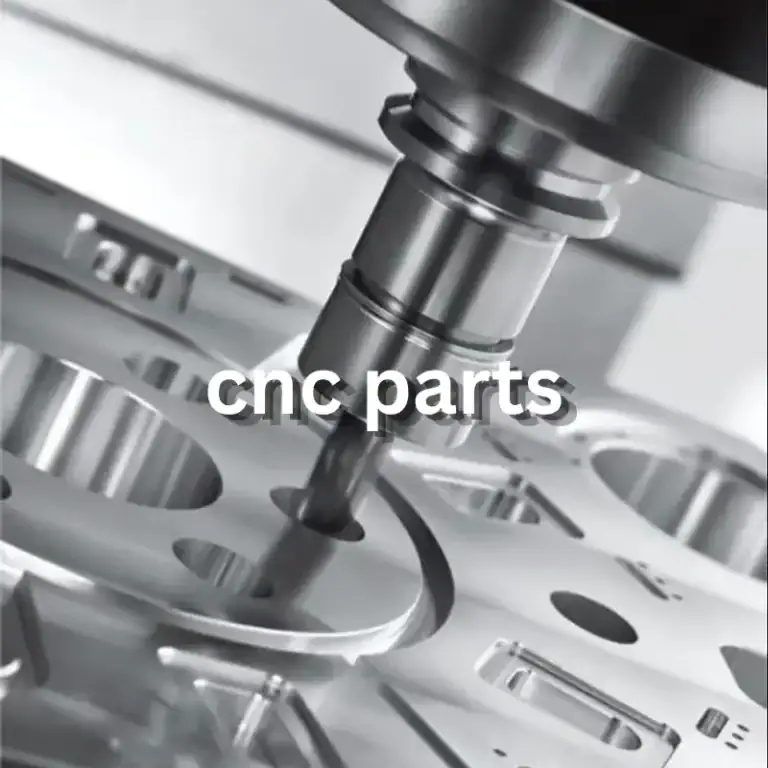
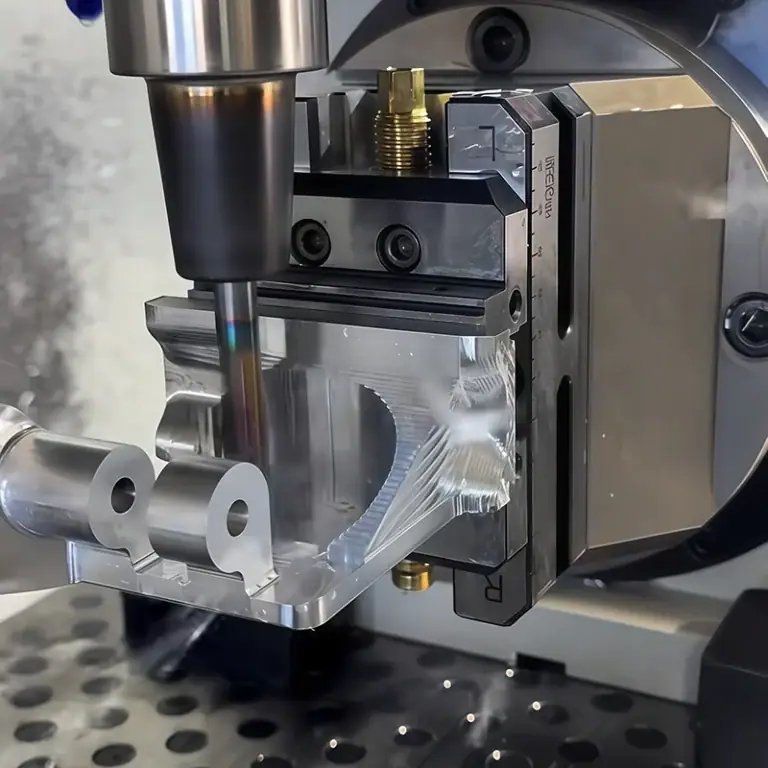
Aerospace equipment places high demands on the dimensional accuracy, structural strength, weight control, and long-term reliability of components. Precision components such as engine-related parts, connectors, brackets, housings, mounting bases, and drone structural components often feature complex surfaces, thin-wall structures, deep cavities, small holes, and multi-axis machining requirements. To address these manufacturing challenges, TiRapid provides precision CNC machining, 5-axis CNC machining, turning and milling, surface finishing, and dimensional inspection services for aerospace components, supporting projects from prototypes to small-batch production.
Get 20% offf
Your First Order
Need custom metal and plastic parts?
Manufacturing Challenges of Aerospace Precision Components
High Machining Accuracy for Complex Structures
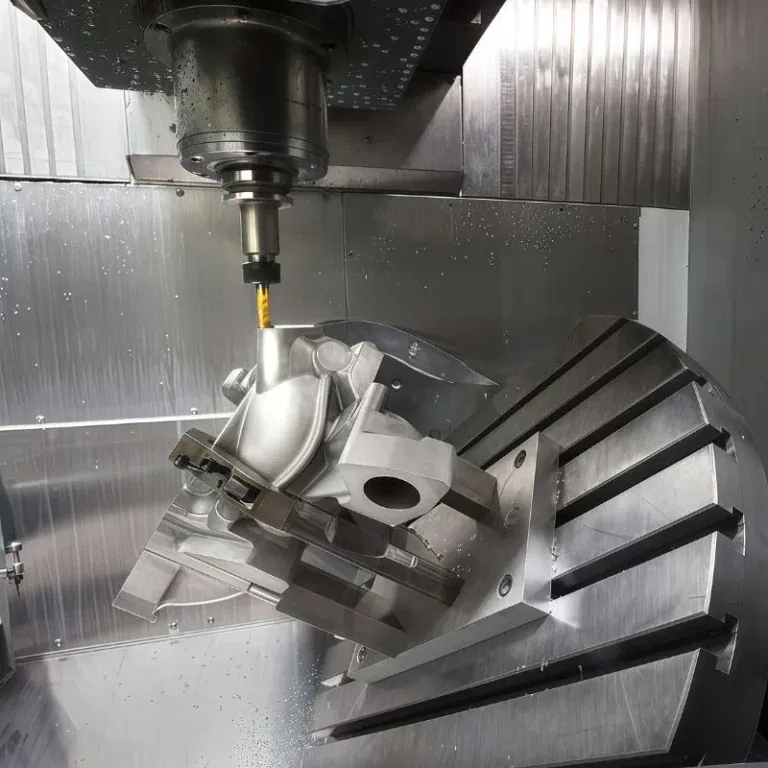
Aerospace precision components often have complex contours and multiple geometric features, including curved surfaces, angled holes, deep grooves, thin walls, and precision mounting surfaces. With conventional 3-axis machining, some complex components may require multiple setups, increasing the possibility of positioning errors. 5-axis CNC machining can reduce the number of setups and provide better access to inclined surfaces and complex geometries, helping improve machining accuracy and consistency.
Challenges of High-Strength Materials
Aerospace components are commonly manufactured from materials such as aluminum alloys, titanium alloys, stainless steel, and engineering plastics. These materials differ in strength, hardness, thermal conductivity, and machinability. Therefore, the machining process needs to be adapted to the selected material, including appropriate tooling, cutting parameters, cooling methods, and tool paths.
Balancing Lightweight Design and Structural Strength
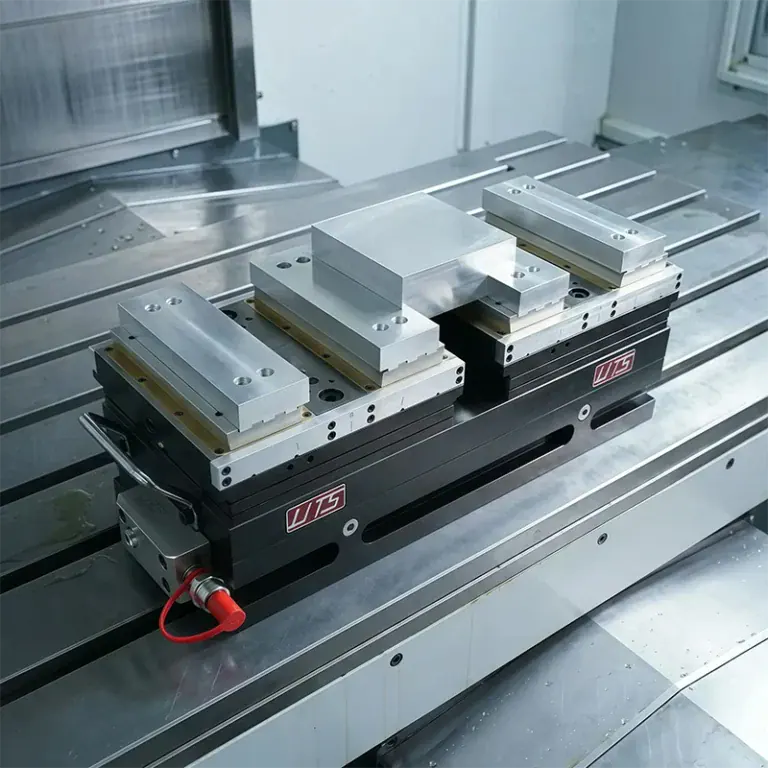
Aerospace components often need to reduce weight while maintaining sufficient structural strength. Designs may include thin walls, reinforcing ribs, and hollow sections, which create higher requirements for tool paths, workholding, and machining stability.
For brackets, mounting bases, housings, connectors, and components with complex surfaces, TiRapid can select 3-axis, 4-axis, or 5-axis CNC machining according to the component’s geometry. 5-axis machining reduces repeated setups for complex parts and allows cutting tools to access inclined surfaces and complicated contours more effectively.
Precision CNC Turning
For shafts, sleeves, connecting shafts, stepped shafts, and other rotational components, CNC turning can be used to machine external diameters, internal bores, threads, end faces, and grooves. Precise control of these features helps meet the dimensional and assembly requirements of aerospace components.
Prototype and Small-Batch Manufacturing
Aerospace products often require design verification, prototype testing, and structural modifications before entering full production. TiRapid supports the transition from prototypes to production by providing DFM analysis, machining, and inspection based on customer CAD files. This makes the service suitable for aerospace prototype components and small-batch production.
Common Aerospace Precision Components and Machining Priorities
Precision Component
Common Structural Features
Key Machining Requirements
Aerospace Brackets
Thin walls, reinforcing ribs, multiple holes
Dimensional and hole-position accuracy
Mounting Bases
Multiple mounting surfaces, locating holes
Flatness and positional accuracy
Connectors
Multiple holes, complex contours
Hole diameter and assembly accuracy
Shaft Components
Rotational structures, stepped shafts
Concentricity and cylindricity
Equipment Housings
Thin walls, deep cavities, complex surfaces
Wall thickness and deformation control
Drone Structural Parts
Lightweight design, complex surfaces
Weight, strength, and dimensional consistency
Precision Inspection and Quality Control
Aerospace precision components require not only accurate machining but also detailed inspection of critical dimensions. TiRapid provides quality control capabilities such as CMM inspection for verifying key dimensions and geometric features after machining.
During manufacturing, inspection plans can be developed for critical parameters such as hole diameter, hole-to-hole distance, flatness, positional accuracy, concentricity, and profile dimensions. For complex precision components, 3D scanning can also be used as an additional dimensional verification method to help reduce the risk of dimensional deviations during final assembly.
Surface Finishing and Post-Processing
In addition to dimensional accuracy, aerospace precision components may require surface finishing according to their operating environment. For example, aluminum alloy components can undergo anodizing or other surface treatments to improve surface wear resistance, corrosion resistance, and appearance. The appropriate finishing process should be selected according to the component’s function, assembly requirements, material, and service environment.
Aerospace Precision Component Manufacturing Process
TiRapid can establish an integrated manufacturing process based on the customer’s CAD files:
Integrating design analysis, machining, post-processing, and inspection into one workflow can reduce information transfer between different production stages and improve manufacturing coordination. TiRapid’s services include DFM reports, CAD file support, assembly, surface finishing, and CMM inspection.
What to Consider When Choosing an Aerospace Precision Component Manufacturer
Aerospace projects typically have strict requirements for machining capabilities, material expertise, quality control, and delivery performance. When selecting a precision component manufacturer, buyers should confirm whether the supplier has 5-axis CNC machining capabilities, experience with complex components, precision inspection equipment, and the ability to support prototype and small-batch production.
For aerospace projects that require rapid design validation, TiRapid can use precision CNC machining and prototype manufacturing to transform design files into functional physical components while supporting subsequent small-batch production. Its aerospace manufacturing capabilities can be applied to brackets, connectors, mounting bases, housings, shafts, and lightweight drone structural components.
Aerospace precision component manufacturing requires a balance between dimensional accuracy, material performance, structural strength, lightweight design, and consistent quality. By combining 5-axis CNC machining, precision turning, DFM analysis, surface finishing, and CMM inspection, manufacturers can establish a comprehensive production process for precision aerospace components. For aerospace brackets, connectors, mounting bases, housings, shafts, and drone structural parts, TiRapid can provide customized CNC manufacturing solutions based on component geometry and project requirements.
Author
Galen Director and Founder
Committed to ensuring we provide the best possible service in the manufacturing industry.
CNC Part Manufacturing: Process, Quality & Design Guide CNC parts are used across aerospace, medical equipment, robotics, automotive systems, electronics, and industrial machinery because CNC machining can produce complex components
Two parts made from the same material can have very different milling prices. One may fit a standard vise and run with common tools. The other may need several setups,
Multiaxis machining is a CNC manufacturing process that allows the cutting tool, workpiece, or both to move across multiple controlled axes during machining. Instead of only cutting from one fixed
A precise toolpath is only useful when the workpiece stays where it belongs. If a part shifts, lifts, or bends during cutting, even a carefully programmed CNC machine can produce
Machining allowance is the extra material intentionally left on a workpiece before final machining. In CNC machining, this extra stock gives machinists enough material to remove surface defects, correct minor
Plain milling is a milling process used to machine broad, flat surfaces by removing material with the peripheral cutting edges of a rotating cutter. It is commonly performed on a
Glass filled nylon is a reinforced engineering plastic that combines the versatility of nylon with the strength and stiffness of glass fibers. Compared with unfilled nylon, it offers better resistance
Tensile stress is the internal force per unit area produced when a material is pulled by an external load. It is calculated by dividing the applied tensile force by the
CNC machining programming connects a digital part design with the movements of a CNC machine. A well-built program defines where the cutting tool moves, which tools are used, how fast
Vertical and horizontal milling use the same basic cutting principle, but spindle orientation changes how the tool reaches the workpiece, clears chips, and handles different part geometries. This guide explains
Chamfer machining is the process of removing material from an edge, hole, or contour to create a controlled angled surface. In CNC manufacturing, chamfers are commonly used to remove sharp
Custom machining is used when a part cannot be sourced as a standard component or when its geometry, material, tolerance, or function must be tailored to a specific project. Instead