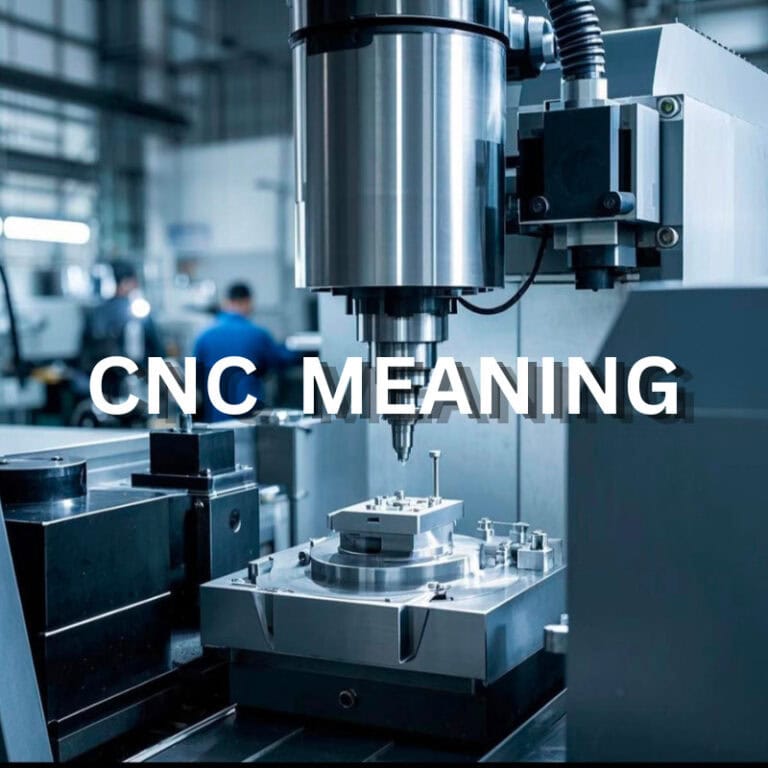
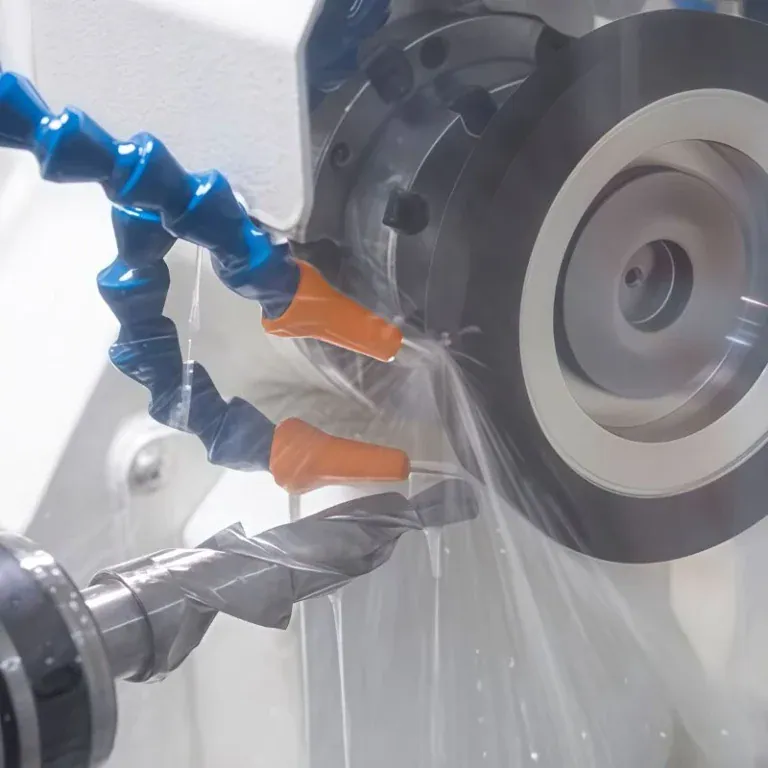
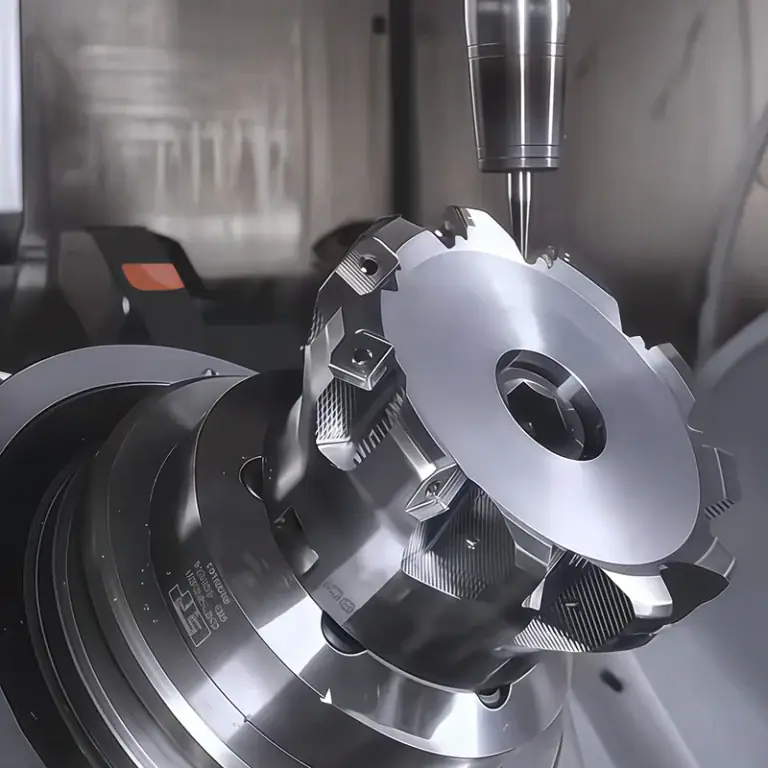
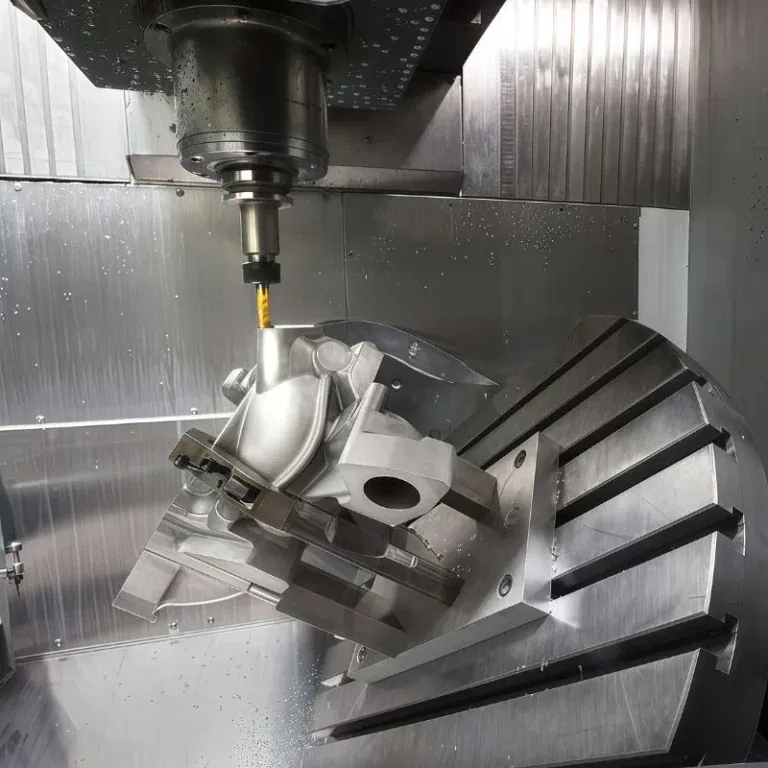
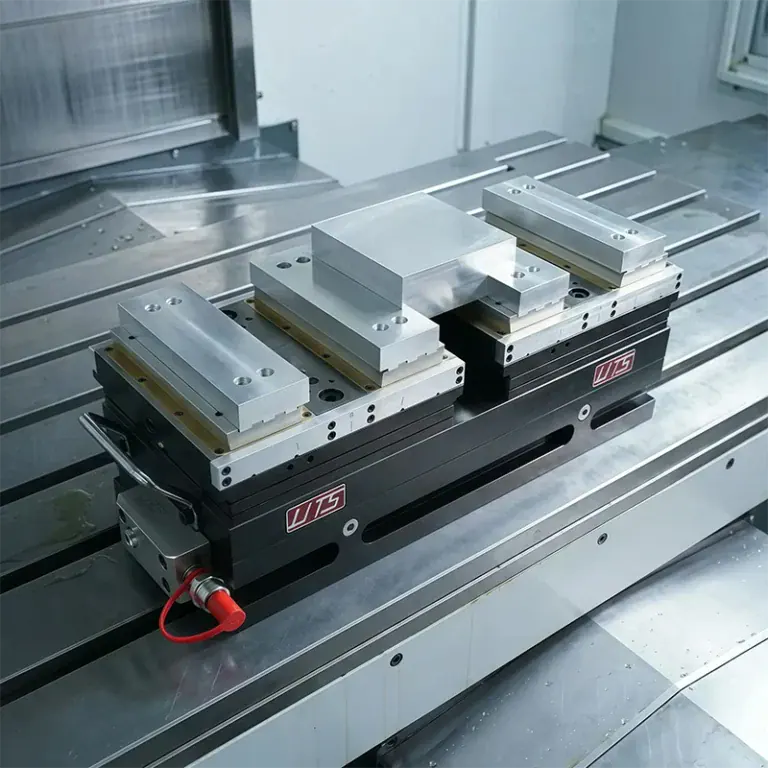
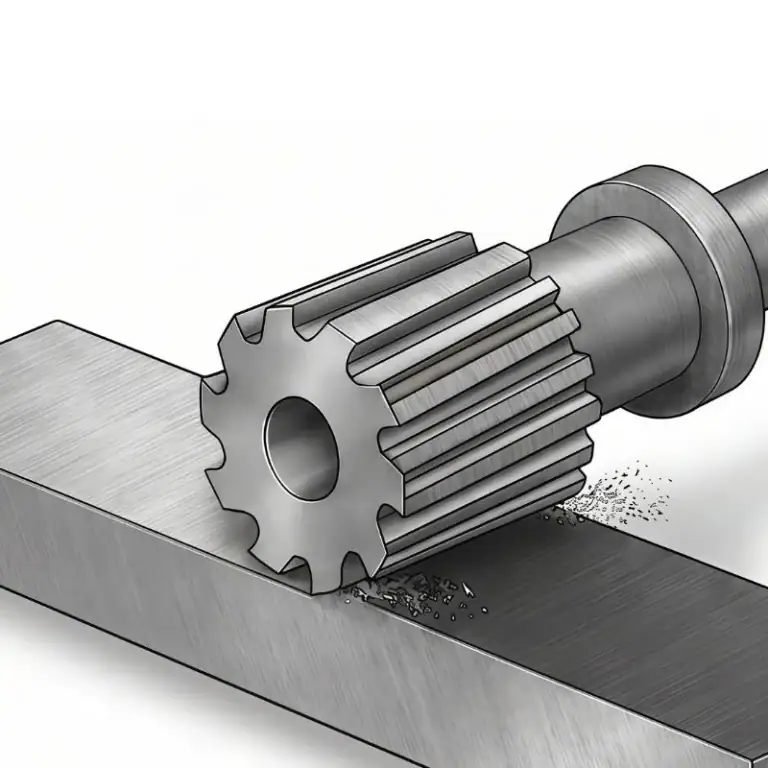
AI CNC machining combines traditional computer numerical control with artificial intelligence, machine learning, manufacturing data, sensors, and intelligent CAM software. Instead of replacing CNC technology, AI adds a decision-support layer that can accelerate programming, optimize toolpaths, monitor cutting conditions, identify tool wear, predict machine problems, and analyze quality data before defects become expensive.
This guide explains how AI CNC machining works, how AI CNC programming and AI CAM software are changing production, and where technologies such as CNC machine learning, CAM Assist, CloudNC, computer vision, adaptive machining, and predictive maintenance fit into modern manufacturing.
What Is AI CNC Machining?
AI CNC machining is the use of artificial intelligence and machine-learning technologies alongside CNC machines, CAM software, sensors, and manufacturing data to improve programming, process optimization, machine reliability, quality control, and production decisions. AI does not replace CNC motion control, it improves the decisions made around it.
A conventional CNC machine follows programmed coordinates, feeds, speeds, tool changes, and other instructions with high repeatability. An AI-assisted CNC workflow adds another layer that can analyze CAD geometry, previous machining results, tool information, machine loads, sensor signals, and inspection data to identify opportunities for improvement.
The key difference is that conventional CNC automation primarily executes predefined logic, while AI can recognize patterns and make recommendations based on historical or current conditions. In real production, this may mean automatically creating an initial CAM strategy, predicting tool wear, identifying abnormal vibration, or recommending a controlled change in cutting parameters.
What Does AI In CNC Machining Mean?
AI in CNC machining means using software algorithms to turn manufacturing information into useful predictions, recommendations, or controlled process decisions.
For example, an AI system can compare spindle load, vibration, temperature, tool history, and inspection results from previous jobs. If similar patterns repeatedly appeared before tool failure or unstable cutting, the system can recognize the same risk earlier during future production.
AI should therefore be viewed as an additional manufacturing intelligence layer rather than an independent machining process. The CNC controller still controls machine motion, while the AI system helps programmers, machinists, and engineers make better decisions before, during, or after cutting.
How Is Machine Learning Used In CNC Machining?
CNC machine learning uses historical and real-time manufacturing data to identify relationships between machining conditions and results such as tool wear, chatter, cycle time, dimensional variation, surface quality, or machine failure.
For example, a model may learn that a particular vibration pattern combined with increasing spindle load often occurs near the end of a cutter’s useful life. When the same pattern appears again, the system can recommend tool inspection or replacement before catastrophic breakage.
Machine learning can also help optimize machining parameters. When sufficient production data exists, algorithms can compare material, tooling, machine conditions, previous feeds and speeds, and machining results to identify combinations that produce more stable or efficient cutting.
The limitation is data quality. Incorrect material information, inconsistent tool libraries, incomplete setup records, or unreliable sensors can produce weak recommendations even when the algorithm itself is advanced.
What Problems Can AI Solve In CNC Manufacturing?
AI can help solve CNC manufacturing problems involving programming time, repetitive CAM work, inefficient toolpaths, unstable cutting, tool wear, unplanned downtime, quality drift, and inspection bottlenecks.
The strongest applications normally address a measurable problem that already generates reliable digital information. AI is less effective when the real issue is poor workholding, an incomplete drawing, an unsuitable cutter, or an unstable machining process that has never been standardized.
| CNC Manufacturing Problem | How AI Can Help |
| Slow CAM Programming | Automates feature recognition and initial machining strategies |
| Repetitive Programming | Reuses successful machining knowledge across similar features |
| Inefficient Toolpaths | Improves tool motion, engagement, feeds, and speeds |
| Chatter And Vibration | Detects unstable cutting patterns from machine signals |
| Tool Wear | Predicts deterioration from load, vibration, and historical results |
| Machine Failure | Supports condition monitoring and predictive maintenance |
| Quality Drift | Detects dimensional trends before parts exceed tolerance |
| Inspection Bottlenecks | Uses image and measurement data to prioritize inspection |
AI works best when it improves a stable manufacturing process. It cannot compensate for fundamental errors in tooling, fixtures, machine condition, process planning, or engineering interpretation.
How Does AI CNC Machining Work?
AI CNC machining works by collecting manufacturing information, analyzing the data, generating a recommendation or prediction, applying or validating that decision, and then measuring the result. This feedback loop makes the CNC workflow more responsive than a process based only on fixed programming.
Depending on the application, information can come from CAD models, CAM software, CNC controllers, tool databases, vibration sensors, spindle-load signals, temperature sensors, inspection systems, or historical manufacturing records.
A simplified AI CNC machining workflow is:
Collect Data → Analyze Conditions → Recommend Or Predict → Validate Or Apply → Measure Results → Improve
Machine And Process Data Collection
Machine and process data collection gives the AI system the information it needs to understand manufacturing conditions.
Different signals reveal different parts of the process. Spindle load can indicate cutting resistance, vibration can reveal chatter or bearing changes, and temperature can help identify thermal drift or machine-health problems.
| Data Type | What It Can Indicate |
| Spindle Load | Cutting load, tool wear, abnormal engagement |
| Vibration | Chatter, imbalance, bearing condition |
| Temperature | Thermal drift, overheating, spindle condition |
| Motor Current | Cutting resistance and machine load |
| Acoustic Signals | Tool wear, breakage, abnormal cutting |
| Axis Data | Position and machine-motion behavior |
| Inspection Data | Dimensional drift and quality trends |
Not every AI application requires additional sensors. AI CAM software may operate mainly from CAD geometry, tool libraries, material information, and previous programming decisions.
Real-time process monitoring and predictive maintenance usually require more direct machine data because the software needs to understand the physical condition of the equipment and cutting process.
AI Analysis And Decision-Making
AI analysis converts raw manufacturing data into patterns that can support machining decisions.
During programming, intelligent software can recognize common geometries such as pockets, holes, slots, faces, and contours and connect them with known machining operations. This reduces repetitive feature selection and gives programmers a faster starting point.
During cutting, machine learning can compare current signals with previously observed stable and unstable conditions. Increasing vibration combined with changing spindle load, for example, may indicate chatter or cutter deterioration.
The output does not always need to become an automatic machine command. In many applications, the safest approach is for AI to generate a recommendation that a programmer, machinist, or manufacturing engineer validates.
Process Adjustment And Feedback
Process adjustment uses the AI recommendation to modify a CAM strategy, cutting parameter, maintenance decision, inspection plan, or other part of the manufacturing workflow.
Some adjustments happen before machining. AI CNC programming can optimize operations, feeds, speeds, or toolpaths before the NC program reaches the machine.
Other systems work during machining. When sensor information indicates changing cutting conditions, a controlled adaptive system may modify permitted parameters within predefined limits.
The final step is measuring the outcome. Cycle time, tool life, dimensional accuracy, surface finish, scrap, and machine utilization should be evaluated together. A10% cycle-time improvement is not useful if tool breakage or quality failures increase significantly.
Traditional CNC Vs AI CNC Machining
Traditional CNC machining executes predefined programs and parameters, while AI-assisted CNC machining adds data analysis, prediction, automated recommendations, and adaptive optimization around those instructions. The physical machining process remains CNC machining, but the decision-making becomes more data-driven.
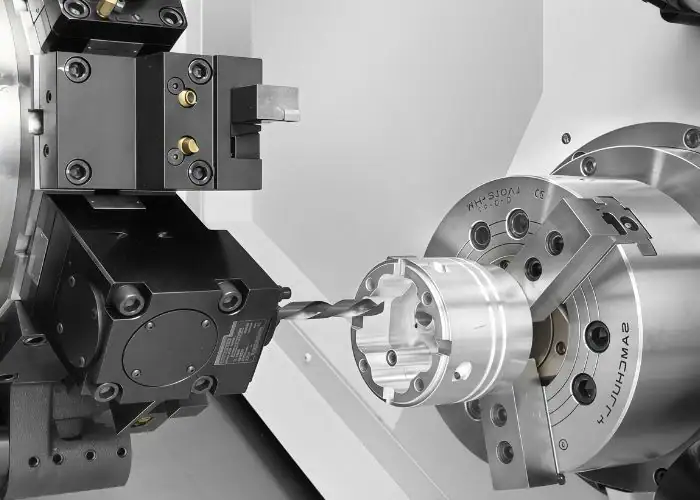
AI does not remove the need for cutting tools, workholding, datums, coolant, machine accuracy, verified programs, or inspection. These manufacturing fundamentals remain the basis of successful production.
| Factor | Traditional CNC Machining | AI-Assisted CNC Machining |
| Programming | Programmer creates most operations | AI can automate repetitive decisions |
| Feature Recognition | Manual or rules-based | Intelligent recognition can assist |
| Toolpaths | CAM/programmer generated | AI can generate or optimize strategies |
| Feeds And Speeds | Predetermined | Data-based optimization is possible |
| Tool Monitoring | Operator or fixed-life rules | Predictive monitoring can be added |
| Maintenance | Preventive or reactive | Predictive maintenance |
| Inspection | Gauges, probing, CMM | AI-assisted image and data analysis |
| Human Role | Programming and process control | Validation, optimization, exception handling |
The practical difference is therefore not “manual CNC versus automatic CNC.” CNC machining has been automated for decades. AI adds more intelligence to decisions that previously depended heavily on individual experience, fixed rules, or manual data analysis.
Traditional CNC can already be extremely efficient when a skilled programmer has optimized a stable process. AI provides greater additional value when programming is repetitive, process conditions change, machines generate large amounts of data, or unplanned downtime and quality drift are expensive.
How Is AI Used In CNC Programming?
AI is used in CNC programming to recognize part geometry, recommend machining operations, assist tool selection, generate initial toolpaths, support parameter decisions, and simplify interaction with NC programming software. The objective is to reduce repetitive programming without removing engineering review.
AI CNC programming is one of the most practical uses of AI in CNC machining because CAD and CAM workflows already contain structured digital information.
Rather than creating every operation manually, the programmer can increasingly begin from an automatically generated machining strategy and spend more time verifying difficult features, fixtures, tolerances, and process risks.
Automated Feature Recognition
Automated feature recognition identifies machinable geometry directly from a3D model and connects those features with suitable machining operations.
A programmer may normally identify pockets, holes, slots, faces, contours, and other features before choosing how each should be machined. Intelligent CAM can perform part of this analysis automatically.
Modern systems can also connect recognized features with standard machining methods. A hole may be linked with drilling, boring, or reaming strategies, while a pocket may automatically receive roughing and finishing operations.
This is especially useful in high-mix CNC manufacturing. Even when every finished component is different, many individual machining features repeat across unrelated parts.
Tool And Operation Selection
AI can assist tool and operation selection by evaluating part geometry, material type, available cutters, machine capability, and previous manufacturing strategies.
A system might recommend roughing, rest machining, drilling, semi-finishing, and finishing operations and then identify appropriate cutting tools for each stage.
However, the digital model does not always contain enough information for a complete manufacturing decision. Tool overhang, holder clearance, fixture rigidity, stock condition, thin walls, surface finish, tolerance, and actual tool availability can change which strategy is best.
Experienced programmers therefore remain responsible for deciding whether the recommended process fits the real machine setup.
AI-Assisted G-Code And Program Verification
AI can assist G-code and NC programming, but machine-ready code should still be simulated and validated before cutting begins.
AI-generated programs can contain incorrect assumptions about tools, clearances, machine configuration, fixtures, or manufacturing intent. This becomes particularly important for 5-axis machining, expensive materials, long tools, or complex workholding.
A practical workflow remains:
AI-Assisted Programming → CAM Review → Simulation → Postprocessing → Machine Prove-Out → First-Part Inspection
AI shortens repetitive steps inside the programming process. It does not eliminate the need for verification.
For this reason, manufacturers evaluating AI CNC programming software should consider simulation, postprocessor compatibility, tool libraries, and human-review capabilities as seriously as the AI itself.
Natural Language CNC Programming
Natural language CNC programming allows users to interact with manufacturing software using conversational questions or instructions.
Instead of manually searching menus and software documentation, a programmer may ask how to change a machining parameter, locate a function, modify a cutter, or understand a specific programming option.
Tools such as the Siemens NX X Manufacturing Copilot demonstrate how conversational AI can be integrated into professional manufacturing software.
This type of assistant can reduce software-learning friction and speed up access to information. It does not replace machining knowledge, because the programmer still needs to determine whether the suggested operation or parameter is appropriate for the actual workpiece.
How Is AI Transforming CAM Software?
AI is transforming CAM software by automating feature recognition, accelerating toolpath creation, recommending machining strategies, providing programming assistance, and reusing successful manufacturing decisions. This shifts more programmer time from repetitive toolpath creation toward optimization and process engineering.
AI CAM software is becoming particularly useful where a shop has more CNC machine capacity than CAM programming capacity.
Instead of relying only on faster machines, manufacturers can improve throughput by reducing the time required to prepare reliable programs for those machines.
AI CAM Software
AI CAM software combines conventional CAM functions with intelligent systems that can recognize patterns, analyze context, or make manufacturing recommendations.
It is important to distinguish AI from ordinary CAM automation. Traditional CAM already uses advanced algorithms for cutter motion, collision checking, adaptive clearing, and simulation.
AI adds another level when the software recognizes previous decisions, learns from historical machining data, interprets geometry automatically, or recommends strategies according to the specific manufacturing context.
For buyers evaluating AI CAM or NC programming software, the most useful question is therefore not simply whether the software contains AI.
The better question is: Which programming decisions can it improve, and can those improvements be validated using our actual parts, machines, tooling, and postprocessors?
CAM Assist And CloudNC
CAM Assist is an AI-assisted CNC programming technology from CloudNC designed to generate machining strategies inside supported CAM environments.
Instead of manually programming every operation from the beginning, CAM Assist can analyze part geometry and provide an initial machining strategy that the programmer reviews and modifies.
CloudNC has stated that CAM Assist can automate a substantial portion of CAM programming in supported workflows, with published claims reaching up to about80% of the programming process in suitable applications. This should be treated as a vendor-reported capability rather than a guaranteed result for every component.
The important benefit is not simply automatic toolpaths. In a shop with a CAM programming backlog, AI-assisted programming can give an experienced programmer a useful starting point and leave more time for complex parts, difficult fixtures,5-axis strategies, and process optimization.
AI Copilots And Decision Support
AI copilots provide contextual assistance to programmers while they work inside manufacturing software.
Siemens NX CAM, for example, includes intelligent manufacturing features and conversational assistance designed to help users navigate software functions, retrieve information, and make programming decisions more efficiently.
AI decision support can also help standardize manufacturing knowledge. Experienced programmers often develop proven cutting strategies that remain in personal memory. Intelligent systems can help capture and reuse some of these decisions across future programs.
The programmer should still remain responsible for the final choice. Geometry may be similar between two parts while tolerance, workholding, machine rigidity, or material behavior makes the same machining strategy inappropriate.
How Does AI Optimize CNC Machining?
AI optimizes CNC machining by improving toolpaths, feeds, speeds, cutting-load stability, tool-wear monitoring, and process decisions using CAD information, historical results, and real-time machine data. The objective is lower total machining cost, not simply maximum cutting speed.
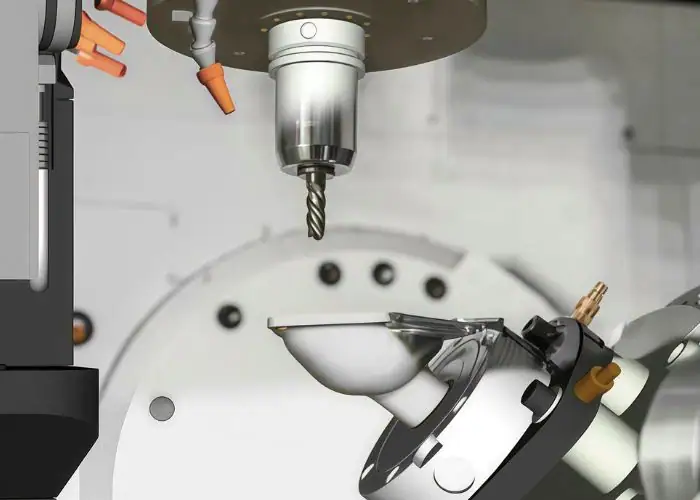
A successful optimization must balance cycle time, tool life, surface quality, process stability, machine capacity, and scrap risk.
This is particularly important because improving one individual metric can sometimes make the complete manufacturing process worse.
Toolpath Optimization
AI toolpath optimization aims to reduce unnecessary machine movement and identify strategies that better match geometry, material, tooling, and process constraints.
This may include reducing air cutting, improving roughing sequences, selecting more efficient machining approaches, reducing unnecessary tool changes, or creating a better order of operations.
Automated toolpath generation can also reduce the amount of repetitive CAM work needed before optimization begins.
However, a mathematically shorter toolpath is not automatically better. It can still cause poor chip evacuation, unstable tool engagement, holder interference, excessive overhang, or difficult inspection sequencing.
Engineering review therefore remains important even when the initial toolpath is automatically generated.
Adaptive Feeds And Speeds
Adaptive feed and speed optimization changes permitted cutting conditions according to actual or predicted tool engagement rather than using one conservative value everywhere.
When cutter engagement increases in a corner, feed can be reduced to maintain a stable load. When the tool enters a lighter cut, feed may increase while remaining within validated limits.
This can help manufacturers use more of the available cutting capability without applying aggressive parameters blindly to every section of the path.
Adaptive systems should still respect machine capability, cutter limits, workholding rigidity, spindle power, material behavior, and proven process windows.
AI should optimize a fundamentally sound machining process rather than compensate for a poor setup.
Chatter And Tool Wear Monitoring
AI can identify chatter and tool wear by analyzing changes in vibration, spindle load, motor current, acoustic signals, or historical tool-life information.
Traditional tool management often replaces cutters after a predetermined number of cycles. Condition monitoring can add information about how the tool is actually performing.
This is especially valuable in unattended machining. If a cutter breaks during a long cycle and the machine continues running subsequent operations, one tool failure can affect the workpiece and potentially additional tools.
Early detection can trigger inspection, parameter review, tool replacement, or a controlled machine stop before the failure becomes more expensive.
Cycle Time And Tool Life Optimization
AI creates greater machining value when cycle time and tool life are optimized together.
A highly aggressive cutting strategy may reduce cycle time but cause premature tool failure. An overly conservative process may extend tool life while wasting valuable spindle capacity.
The more useful measure is total cost per conforming component.
Published AI/physics-based machining optimization case studies have reported meaningful cycle-time improvements. One SenseNC aerospace application reported about a20% cycle-time reduction, although results depend heavily on the original process, machine, material, and tooling.
AI optimization generally delivers greater economic value when the process repeats because even a small improvement becomes significant when multiplied across hundreds or thousands of cycles.
How Is AI Used For CNC Quality Control?
AI is used for CNC quality control to analyze images, CMM measurements, process signals, and historical quality data so manufacturers can detect abnormal conditions earlier, identify dimensional trends, and focus inspection on higher-risk features.
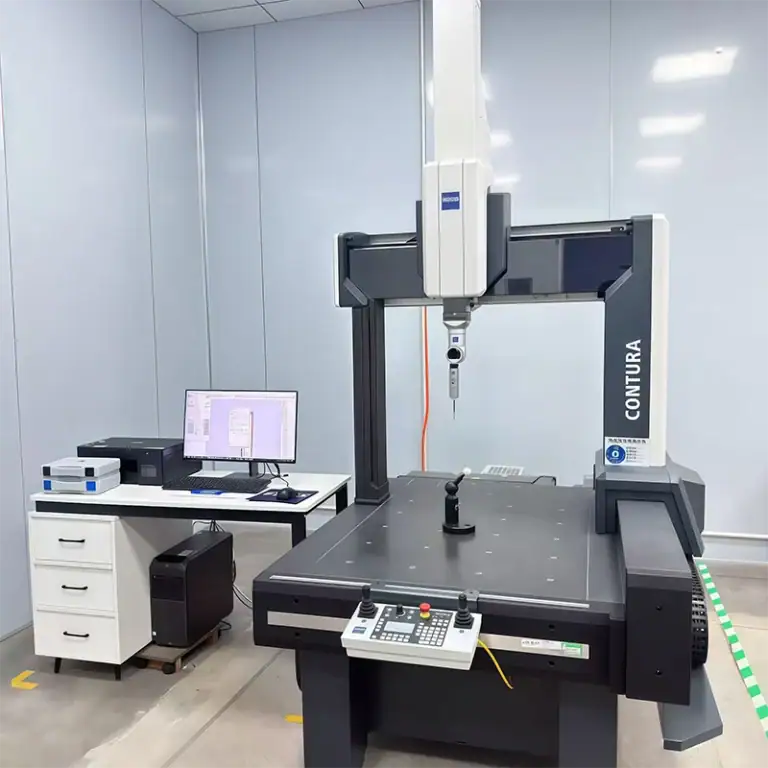
AI does not remove the need for calibrated measurement equipment. Computer vision, probes, gauges, and CMM systems solve different quality-control problems.
The strongest application is often combining reliable measurement with intelligent analysis.
Computer Vision Inspection
Computer vision uses cameras and trained algorithms to identify visible defects, missing features, incorrect orientation, surface abnormalities, or other visual conditions.
For repeat production, automated visual inspection can evaluate components with consistent logic throughout an entire shift.
This makes it useful for inspections that are visually repetitive but time-consuming for operators.
However, image recognition is not the same as dimensional metrology. A computer vision system may identify a visible defect but should not automatically replace a calibrated CMM or gauge when the drawing specifies tight geometric tolerances.
The correct inspection technology should always match the quality requirement.
AI-Assisted CMM And Dimensional Analysis
AI-assisted dimensional analysis uses inspection history to identify patterns that may indicate increasing process risk.
For example, a bore may remain within tolerance while its measured diameter gradually moves toward the upper specification limit. Traditional pass/fail inspection still accepts the part, but trend analysis can recognize that the process is becoming less centered.
The shop can then inspect the cutter, check tool wear, review temperature, or adjust a controlled offset before nonconforming parts begin to appear.
This moves quality control from only detecting defective parts toward predicting when a stable process may be beginning to drift.
Closed-Loop Quality Control
Closed-loop quality control connects reliable inspection results back to manufacturing decisions.
A simplified workflow is:
Machine Feature → Measure Feature → Compare With Target → Calculate Correction → Validate Limit → Adjust Offset
This approach can reduce the delay between dimensional drift and corrective action during repeat production.
Automatic compensation needs strict safeguards. If a measurement is incorrect, the system should not be able to generate an unlimited correction.
Validated measurement, compensation limits, traceability, and rules for human approval are therefore critical parts of closed-loop manufacturing.
How Does AI Support Predictive CNC Maintenance?
AI supports predictive CNC maintenance by analyzing machine-condition data for patterns that may appear before spindle, bearing, tooling, coolant, lubrication, or other equipment problems. This helps maintenance teams identify deterioration earlier and reduce unexpected downtime.
Predictive maintenance does not eliminate normal preventive maintenance. It adds condition-based information so maintenance can be scheduled more intelligently.
This is especially valuable on expensive machines where one unexpected breakdown can disrupt multiple customer jobs.
Spindle And Machine Condition Monitoring
Machine-condition monitoring uses vibration, temperature, current, runtime history, coolant behavior, alarms, and other signals to detect changes in equipment performance.
For example, a gradual change in spindle vibration does not automatically mean bearing failure is imminent, but it can indicate that further inspection is required.
The advantage is early visibility. Maintenance teams can investigate changes while the machine is still operating rather than waiting until a component fails completely.
This allows repairs to be planned around production schedules and may provide additional time to obtain replacement components.
Tool Failure Prediction
AI can support cutting-tool failure prediction by connecting process signals with known wear or breakage patterns.
A shop can combine fixed tool-life limits with condition information rather than relying entirely on one method.
If load and vibration begin to resemble previous end-of-life tool behavior, the system can recommend inspection or tool replacement.
This becomes particularly useful during long cycles and lights-out production, where an operator may not be available to hear an unusual cutting sound or visually inspect the cutter.
Reducing Unplanned Downtime
Predictive maintenance reduces downtime when an emerging problem is identified early enough for the manufacturer to schedule service.
A planned maintenance period is usually easier to manage than an unexpected machine failure during an urgent production job.
The ROI is therefore strongly related to machine utilization and the financial impact of downtime.
Monitoring a heavily loaded 5-axis machining center generally creates more potential value than applying the same predictive system to a machine that operates only occasionally.
What Are The Benefits Of AI CNC Machining?
The main benefits of AI CNC machining are faster programming, better machining optimization, improved machine utilization, more predictable tool life, earlier quality detection, less unplanned downtime, and greater ability to automate repetitive manufacturing decisions.
The actual value depends on which production bottleneck AI is solving and how often that improvement repeats.
| Benefit | How AI Creates Value |
| Programming Time | Automates repetitive CAM decisions |
| Cycle Time | Improves toolpaths and cutting parameters |
| Tool Life | Monitors wear and cutting stability |
| Quality | Detects trends and abnormal conditions earlier |
| Scrap | Helps intervene before repeated defects occur |
| Downtime | Supports predictive machine maintenance |
| Machine Utilization | Reduces delays and supports unattended production |
| Knowledge Retention | Reuses successful programming decisions |
AI therefore should be evaluated using measurable manufacturing KPIs rather than the number of AI features included in a software package.
Saving several minutes on one component may have little financial impact. Saving the same time across20,000parts can create substantial additional spindle capacity.
Similarly, early detection becomes more valuable as material cost and accumulated machining time increase.
Where AI CNC Machining Delivers The Highest ROI
AI CNC machining usually produces stronger ROI when improvements can be repeated frequently or when programming errors, downtime, or scrap are expensive.
| Manufacturing Scenario | Why AI Can Create Higher ROI |
| Repeated Part Families | Improvements can be reused across many jobs |
| High CAM Workload | Automated programming reduces engineering hours |
| Complex 3D Or 5-Axis Parts | Toolpath decisions have greater economic impact |
| Expensive Materials | Early detection protects high-value workpieces |
| High Machine Utilization | Small cycle-time gains accumulate quickly |
| Recurring Tool Problems | Condition monitoring reduces breakage risk |
| Lights-Out Production | Monitoring reduces unattended machining risk |
| Inspection Bottlenecks | AI can focus attention on high-risk features |
High-volume manufacturing is an obvious candidate because every improvement repeats many times. However, low-volume and prototype CNC shops can also benefit from AI CNC programming.
Even when finished components are unique, similar holes, pockets, contours, machining strategies, tooling decisions, and CAM tasks repeat across unrelated customer parts.
For these manufacturers, programming productivity may create more value than machine-learning models focused on large runs of identical parts.
How Can Manufacturers Implement AI CNC Machining?
Manufacturers should implement AI CNC machining by starting with one measurable production problem, establishing reliable data, selecting a technology that addresses that problem, validating the results, and scaling only after the initial application demonstrates repeatable value.
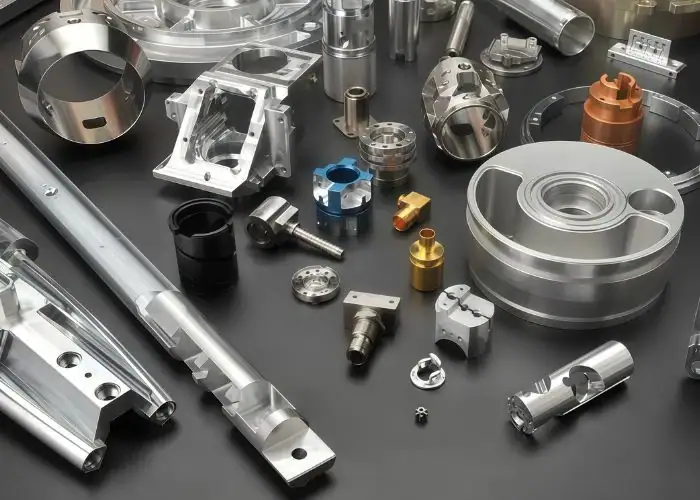
The objective should not be “install AI.” The objective should be solving a manufacturing constraint.
This staged approach also makes both technical performance and ROI easier to evaluate.
Start With A Measurable CNC Problem
The first implementation step is defining the problem.
A manufacturer might have excessive CAM programming time, repeated tool breakage, chatter, high scrap, unexpected spindle downtime, slow inspection, or inconsistent programming between employees.
The current condition should be measured before implementing AI.
If CAM programming currently takes8hours per job, the shop can compare the result after introducing AI CNC programming. If a machine currently loses40hours per year to unscheduled downtime, predictive maintenance can be evaluated against that baseline.
Without baseline data, improvement becomes difficult to prove.
Connect CAM, CNC, Sensors, And Inspection Data
AI becomes more useful when the required manufacturing information can be connected.
Depending on the application, the workflow may look like:
CAD → CAM → CNC → Machine Data → Inspection → Production Records
Programming automation may need CAD geometry, CAM software, tool libraries, and material information.
Predictive maintenance requires machine-condition data. Closed-loop quality requires reliable inspection information.
Manufacturers do not need to collect every possible signal simply because storage is inexpensive. A smaller quantity of well-structured, correctly labeled information can be more useful than large volumes of unreliable data.
Can Existing CNC Machines Be Upgraded With AI?
Existing CNC machines can often gain selected AI capabilities through CAM software, external sensors, edge computers, machine-monitoring systems, or data interfaces.
Software-side AI is usually easier to add because the machine controller itself does not need to change. AI CAM software and CAM Assist can improve programming before the NC program reaches the machine.
Real-time monitoring and adaptive control can be more difficult on older equipment because some controllers provide limited access to internal machine data.
External sensors can solve part of this limitation for monitoring applications.
However, AI should not be used as a substitute for mechanical condition. If a spindle, ballscrew, guideway, controller, or machine structure can no longer support the required accuracy, machine repair or replacement may provide greater value than adding intelligent analytics.
Validate AI Before Scaling
AI-generated programs and recommendations should be validated before they are trusted across the entire shop.
CAM programs should still be reviewed and simulated. Adaptive machining should use clearly defined parameter limits. Predictive-maintenance warnings should initially be compared with physical inspections, and AI quality systems should be checked against established measurement methods.
Manufacturers should then measure the selected KPI.
Useful indicators include programming hours, cycle time, tool consumption, scrap, machine availability, intervention rate, or inspection results.
Only after the initial application produces repeatable improvement should it be expanded to additional machines or production processes.
What Are The Challenges Of AI CNC Machining?
The main challenges of AI CNC machining are incomplete data, inaccurate recommendations, legacy-machine integration, implementation cost, cybersecurity, process variability, and the continued need for experienced engineering validation.
AI can improve manufacturing decisions, but it does not remove the physical uncertainty of cutting material.
The more critical the component, the more important validation becomes.
Data Quality And AI Accuracy
AI accuracy depends on whether the software receives enough correct manufacturing information to understand the process.
A3D CAD model may define geometry while omitting important production information such as datum intent, surface requirements, assembly relationships, process history, or inspection priorities.
This limits fully autonomous programming.
AI can also become less reliable when the current job differs significantly from previous data. Experience collected from rigid aluminum components may not transfer directly to a thin-wall titanium part with very different thermal and cutting behavior.
The system should therefore support confidence limits and human review instead of assuming every recommendation is equally reliable.
Legacy CNC Integration And Cost
Older CNC machines can create integration challenges because their controllers may provide limited data access or communication capability.
External sensors can add condition monitoring, but closed-loop adaptive control may require a more modern control architecture.
Implementation cost also extends beyond software licensing.
Possible costs include CAM upgrades, sensors, edge devices, postprocessors, integration, tool-library cleanup, network infrastructure, cybersecurity, training, and ongoing maintenance.
Manufacturers should therefore evaluate total implementation cost rather than the subscription price alone.
Cybersecurity And Data Protection
Cybersecurity becomes increasingly important as CNC machines, CAM software, cloud systems, quality data, and production networks become connected.
Manufacturers handling aerospace, medical, defense, robotics, or proprietary customer parts may work with highly sensitive CAD models and process information.
Access permissions, network segmentation, account security, update procedures, cloud storage, data ownership, and customer requirements should therefore be evaluated before connecting manufacturing systems to external platforms.
An AI solution that reduces cycle time but creates unacceptable intellectual-property or network risk is not a successful manufacturing improvement.
Human Validation And Engineering Responsibility
Human validation remains necessary because CNC machining is a physical process containing information that may never be fully represented digitally.
Fixture stiffness, unusual stock, chip evacuation, cutter runout, tool overhang, thermal behavior, coolant condition, machine wear, and operator observations can change which strategy is correct.
This becomes especially important for aerospace, medical, molds, complex 5-axis components, tight-tolerance assemblies, and other applications where one poor manufacturing decision can be expensive.
The practical goal is therefore human-AI collaboration: allow software to analyze repetitive information while experienced people remain responsible for high-impact manufacturing decisions.
Will AI Replace CNC Machinists And Programmers?
AI is unlikely to eliminate CNC machinists and programmers, but it will automate more repetitive programming, monitoring, analysis, and optimization work. Human roles will increasingly focus on process planning, validation, workholding, troubleshooting, prove-out, and supervision of automated systems.
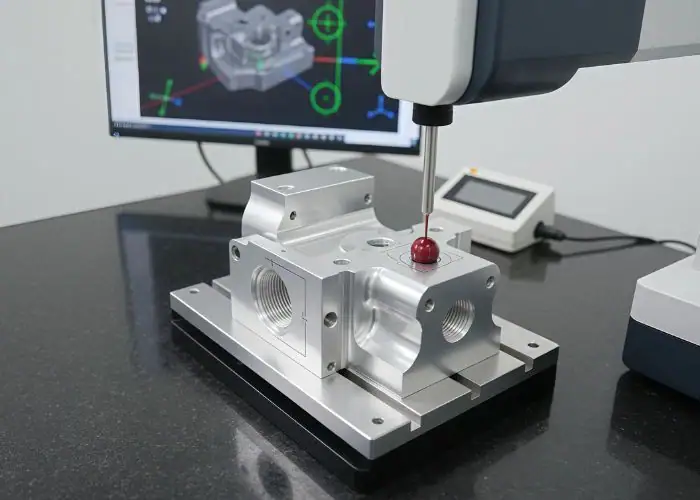
AI can be highly capable in digital, repetitive, and data-rich tasks. It is less capable when success depends on incomplete manufacturing context or physical problem-solving.
| CNC Task | AI Capability | Human Responsibility |
| Feature Recognition | High | Verify manufacturing intent |
| Initial Toolpaths | High | Review strategy and safety |
| Parameter Recommendations | Medium–High | Confirm actual cutting conditions |
| Repetitive CAM Work | High | Manage complex exceptions |
| Tool-Wear Analysis | Medium–High | Validate replacement strategy |
| Quality Data Analysis | High | Determine corrective action |
| Workholding Design | Limited | Engineer fixtures and datums |
| Chatter Troubleshooting | Medium | Diagnose the physical root cause |
| First-Part Prove-Out | Limited | Supervise actual machining |
| Critical Tolerance Decisions | Limited | Maintain engineering responsibility |
A CNC programmer may therefore spend less time manually creating routine pocket, hole, and contour operations and more time validating automatically generated strategies.
The programmer’s value shifts toward manufacturing knowledge: fixtures, difficult materials, tolerance control, multi-axis strategy, simulation, and troubleshooting.
Machinists also remain essential because the physical machine still produces the component. Loose chips, changing coolant, cutter damage, fixture movement, stock variation, and unexpected machine behavior still require real manufacturing awareness.
The stronger future combination is therefore likely to be CNC expertise plus AI-assisted software, rather than CNC expertise competing against AI.
What Is The Future Of AI CNC Machining?
The future of AI CNC machining is moving toward more autonomous programming, closer integration between machining and inspection, increasingly predictive equipment management, and more reliable lights-out production. These capabilities will expand gradually as manufacturers establish where automated decisions are safe and economically useful.
The likely future is not a single “AI CNC machine” that replaces the complete manufacturing team.
Instead, intelligence will continue to spread across CAM programming, machine monitoring, quality control, maintenance, scheduling, and process optimization.
More Autonomous CNC Programming
CNC programming will become more autonomous as AI improves at recognizing geometry, selecting machining operations, applying tooling knowledge, and generating complete initial strategies.
Programmers may increasingly begin from an AI-generated process rather than a blank CAM setup.
This can substantially change productivity, particularly in shops where CNC machine capacity exceeds available programming capacity.
However, complex geometry, close tolerances, difficult workholding,5-axis accessibility, specialty materials, and unusual surface requirements will continue to create situations where experienced review is essential.
The competitive advantage may therefore shift from who can manually generate toolpaths fastest toward who has the best combination of manufacturing standards, automation, process knowledge, and verification.
Closed-Loop Smart Manufacturing
Closed-loop manufacturing connects machining, machine monitoring, and inspection so information from one step can influence the next.
A system might monitor tool condition during cutting, measure the completed feature, compare the result with the target, and recommend a controlled correction before the next workpiece.
Digital twins and simulation can add another layer by allowing the manufacturer to evaluate machining behavior before using physical material and spindle time.
This approach has particular value for high-cost components because preventing one late-stage failure can protect many hours of accumulated machining.
As more production data becomes connected, the boundary between programming, machining, quality, and maintenance will become less separate.
AI And Lights-Out CNC Machining
AI can make lights-out CNC machining more reliable through tool monitoring, anomaly detection, predictive maintenance, quality analysis, and improved exception handling.
However, successful unattended manufacturing still depends on physical process reliability.
| Requirement | Why It Matters |
| Reliable Workholding | Prevents part movement and setup failure |
| Automatic Tool Management | Supports worn or broken tool replacement |
| Chip Evacuation | Prevents recutting and machine stoppage |
| Coolant Control | Maintains cutting and tool stability |
| In-Process Probing | Verifies part position and critical dimensions |
| Machine Reliability | Reduces unattended stoppages |
| Robust CNC Programs | Reduces collision and machining risk |
| Exception Handling | Defines what happens when conditions become abnormal |
AI strengthens the monitoring and decision-making layer around these systems.
It cannot compensate for a poorly clamped workpiece, blocked chip conveyor, unsuitable tool, unreliable automation, or mechanically unstable CNC machine.
FAQs
Can AI Do CNC Machining?
AI can perform or assist many CNC machining tasks, including feature recognition, initial toolpath creation, cutting-parameter recommendations, tool-wear monitoring, predictive maintenance, and quality-data analysis. Some AI CAM systems can automate a large portion of repetitive programming, but AI does not independently replace the complete manufacturing process. CNC machines, cutting tools, workholding, postprocessors, simulation, prove-out, and dimensional inspection remain essential. AI is most effective when it accelerates programming and decision-making while experienced engineers retain control over critical operations.
Is CNC Going To Be Taken Over By AI?
CNC manufacturing is unlikely to be completely taken over by AI because machining still depends on workholding, material behavior, tolerance interpretation, troubleshooting, safety, and physical process validation. AI will probably automate more repetitive CAM programming, toolpath generation, monitoring, maintenance prediction, and quality analysis. This changes job responsibilities rather than eliminating them. CNC programmers and machinists will increasingly spend more time on complex setups, process optimization, automation supervision, first-part validation, and solving manufacturing problems that software cannot fully interpret.
Which AI Is Best For Machine Design?
There is no single best AI for every machine-design or manufacturing task. Siemens NX CAM is useful where integrated CAD/CAM and intelligent manufacturing functions are required, while CloudNC CAM Assist focuses more specifically on accelerating CNC programming. SenseNC focuses on cutting-parameter and machining optimization. The best option depends on whether the main requirement is mechanical design, CAM programming, toolpath optimization, simulation, or machine monitoring. Compatibility with existing CNC equipment, postprocessors, tooling libraries, data-security requirements, and engineering-review workflows should also influence the choice.
How To Use AI In Machine Design?
AI can be used in machine design to accelerate geometry analysis, repetitive design work, manufacturability evaluation, feature recognition, CAM planning, and machining-strategy development. A practical workflow is CAD Model → Engineering Constraints → AI-Assisted Analysis → CAM Strategy → Simulation → Engineering Review → Prototype Or First-Part Validation. AI can shorten repetitive digital tasks, but loads, materials, tolerance stacks, interfaces, safety factors, surface requirements, and final design approval still require engineering judgment. The best results come from combining AI speed with validated mechanical and manufacturing knowledge.
What Are Top 3 AI Tools?
For CNC manufacturing, three relevant AI tools are Siemens NX CAM, CloudNC CAM Assist, and SenseNC. NX CAM combines professional CAM with intelligent feature recognition and programming assistance. CAM Assist focuses on automatically generating initial machining strategies and has vendor-reported automation of up to roughly80% of CAM programming in suitable supported workflows. SenseNC combines machining physics and AI to optimize cutting parameters, with one published aerospace case reporting about a20% cycle-time reduction. Actual results depend on part geometry, tooling, machines, and existing process efficiency.
Conclusion
AI CNC machining is changing modern manufacturing by adding data-driven programming, toolpath optimization, CNC machine learning, predictive maintenance, computer vision, and intelligent quality analysis to established CNC technology. Its strongest value comes from solving measurable production problems while preserving the fundamentals of machining: reliable workholding, appropriate tooling, validated programs, controlled cutting parameters, accurate inspection, and experienced engineering judgment.
At TiRapid, we provide precision CNC machining and manufacturing services for prototypes, complex components, and low-volume production. Our capabilities include CNC milling, CNC turning, 5-axis CNC machining, precision inspection, surface finishing, and machining of aluminum, stainless steel, titanium, copper, engineering plastics, and other materials for automation, robotics, aerospace, medical, electronics, and industrial applications.