
TiRapid’s Standard Finishes Gallery
TiRapid’s Finishes
TiRapid’s online quoting system allows users to customize material, features, surface finish, and project notes for custom manufacturing parts. We offer a wide range of standard finishing options across multiple processes, with clear support for different appearance and functional needs. For projects that require more flexibility, multiple finishes can also be arranged based on part requirements, making TiRapid a convenient single-source solution for both manufacturing and finishing.
If a specific finishing or post-processing option is needed but not shown in the quoting page, TiRapid can still help. Users can contact our team directly or select the “Other” finish option during the quotation process to describe special requirements and request further review.
Popular Finishes for Metal
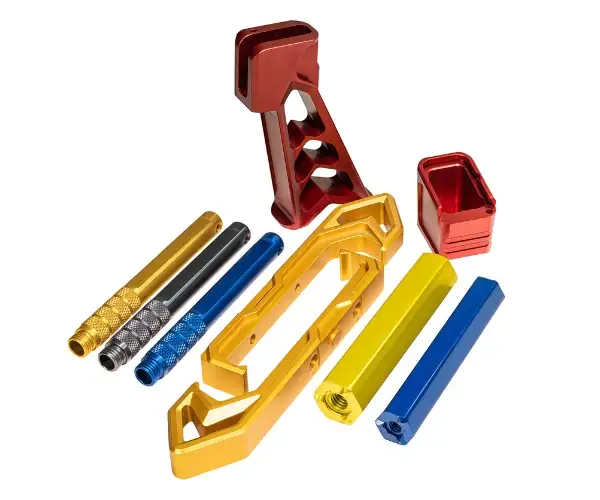
Standard
Parts are delivered cleaned and deburred, with no additional surface treatment applied. This option is suitable when no cosmetic or protective finish is required and the part will remain in its as-machined condition.
Type II Anodize
Type II anodize improves corrosion resistance and can also serve as a base for paint or other secondary finishes. The coating thickness typically ranges from 0.0002″ to 0.0012″ and generally complies with MIL-A-8625 / MIL-PRF-8625 Type II, Class 2.
Color anodizing uses dyes to change the appearance of the part surface. Because of process variation, anodized colors cannot be matched exactly to specific Pantone or RAL standards. Type II anodized coatings can also wear over time and may gradually fade or bleach when exposed to prolonged direct sunlight.
Type III Hardcoat Anodize
Type III hardcoat anodize creates a thicker and more wear-resistant coating than standard anodizing. It is commonly selected when added durability and surface protection are needed, and it can also be used as a base for paint or other finishes. The coating thickness is typically around 0.002″ and generally conforms to MIL-A-8625 / MIL-PRF-8625 Type III, Class 1 or Class 2.
Because the coating is thicker, the finished color often appears darker than standard anodizing. Even clear or unpigmented hardcoat anodizing can darken the part surface. Depending on the alloy, surface condition, and process variables, the natural appearance may range from light gray to dark gray or brown. As with other anodized finishes, exact Pantone or RAL color matching is not possible.
Chromate Conversion (Chem-Film)
Chromate conversion coating, also known as chem-film, improves corrosion resistance while maintaining surface conductivity, making it a common choice for parts that also need electrical performance. It can also be used as a base for paint. This finish adds very little thickness, usually around 0.00001″ to 0.00004″, and typically complies with MIL-DTL-5541 Type I or II, Class 1A or Class 3, depending on specification. If other requirements such as MIL-DTL-81706 are needed, they should be clearly identified in the part drawing.
Type I chromate conversion contains hexavalent chromium and usually gives the part a gold or brown appearance. Type II does not contain hexavalent chromium and is generally clear, so it has little effect on the original surface color.
Powder Coating
Powder coating provides a continuous, durable, and protective finish by applying dry powder evenly to the part surface and then curing it with heat. It is commonly used when both surface protection and decorative appearance are important. Typical coating thickness ranges from 0.006″ to 0.012″ and generally conforms to ASTM D7803 as well as various MIL and FDE specifications.
Powder coating is available in a wide range of colors and gloss levels, making it suitable for both functional and cosmetic applications. It is often selected for metal parts that need improved durability, better surface coverage, and a more finished appearance.
Other Metal Finishes We Offer
Black Oxide
Black oxide is a conversion coating used on ferrous metals such as steel and stainless steel. It darkens the outer surface of the material and is often selected to reduce glare and improve appearance. It can also provide a modest increase in corrosion resistance while having minimal effect on part dimensions.
Electropolishing
Electropolishing is an electrochemical finishing process used to smooth and brighten metal surfaces, especially stainless steel. It helps improve appearance while also reducing the risk of corrosion by removing a thin surface layer. Typical material removal is about 0.0001″ to 0.0025″, and the process generally conforms to ASTM B912-02.
Heat Treatment
Heat treatment is used to improve the mechanical properties of metal parts. Depending on the material and application, this may include heat treating, annealing, stress relieving, or other thermal processes. The required treatment should be specified in the Notes section or on the supplied drawing. Applicable standards may include ASTM B917 for aluminum alloys and AMS-H-6875 / AMS 2759 for steels.
Passivation
Passivation is a clear chemical treatment used mainly for 200 series, 300 series, and precipitation-hardened corrosion-resistant stainless steels. It removes free iron from the surface to improve corrosion resistance without noticeably changing dimensions. The coating thickness is extremely small, typically around 0.0000001″, and may conform to standards such as ASTM A967, AMS-QQ-P-35, MIL-STD-171, ASTM A380, or AMS 2700.
Electroless Nickel Plating
Electroless nickel plating applies a uniform nickel layer to the part surface, including complex or irregular geometries. It is commonly used to improve corrosion resistance, oxidation resistance, and wear performance. The finished surface typically appears brighter and more uniform. Coating thickness generally starts at 0.0001″ and may conform to ASTM B733, Type IV, SC1, Class 1 by default, or AMS 2404 when specified. For other nickel plating requirements, the “Other” finish option can be selected for manual review.
Gold Plating
Gold plating provides strong corrosion and tarnish resistance along with low contact resistance, excellent conductivity, and good solderability. It is often used for electrical and high-performance applications where surface reliability matters. Visually, it gives the part a gold-colored appearance. The default specification is typically MIL-G-45204 and ASTM B488, with common thickness ranging from 0.00002″ to 0.00005″. Gold plating thicker than 0.00005″ usually requires manual quotation and review.
Silver Plating
Silver plating is an electroplated finish that offers very high electrical conductivity and good solderability. It also provides corrosion resistance, although the surface can tarnish over time. This finish gives the part a silver-colored appearance and is commonly used for conductive applications. Typical coating thickness ranges from 0.00002″ to 0.0003″, and the process generally conforms to AMS QQ-S-365D.
Zinc Plating
Zinc plating is commonly used on carbon steel and other rust-prone alloys to improve corrosion resistance. It is a conductive metallic coating and is often selected as a standard protective finish for steel components. Zinc plating generally conforms to ASTM B633-15 Service Class 1 (SC1), with a typical coating thickness of about 0.0002″. The finished appearance usually has a light silver shine.
Media Tumbled
Media tumbling is a batch finishing process that uses vibrating media to remove burrs, soften sharp edges, and improve overall surface uniformity. It can also reduce visible machine marks on external surfaces, resulting in a cleaner and more consistent appearance. Parts larger than 8 inches may require manual review depending on geometry and handling conditions.
Powder Coating
Powder coating creates a continuous protective finish by applying dry powder evenly to the part surface and curing it with heat. It is widely used when both durability and appearance are important. Typical coating thickness is around 0.006″ to 0.012″, and the finish generally conforms to ASTM D7803 along with various MIL and FDE specifications. A wide range of colors and gloss levels is available. Additional powder coating options can be reviewed in our powder coat finishes gallery.
Wet Painting
Wet painting provides a continuous protective color finish using sprayed or manually applied liquid paint. Water-based or solvent-based coatings may be used depending on the application. This finish is often selected when color customization, visual appearance, or added surface protection is required.
Other Custom Finishing
For projects that require special finishing beyond the standard options, custom finishing services can also be arranged. Depending on the process and part requirements, this may include protective, decorative, or application-specific treatments. If the desired finish is not listed, it can be specified through the “Other” finish option for additional review and quotation.
TiRapid can also support a wide range of custom finishing requirements through the online quote system by selecting “Other” from the finishing drop-down menu. This option allows customers to request additional post-processing solutions beyond our standard offerings. Common custom finishes and related services include:
- Tin Plating
- Copper Plating
- Adhesive Primers / BR-127 / CARC
- Thin Film Lubricants
- Zinc Phosphate Coatings
- Precision / Ultrasonic / Oxygen Service Cleaning
- Magnetic Particle Inspection
- Fluorescent Penetrant Inspection
- Ultrasonic Inspection
- Cadmium Plating
- Hard Chrome Plating
- Finish Masking
- And More

See More Examples of Our Metal Finishes
Popular 3D Printing Finishes
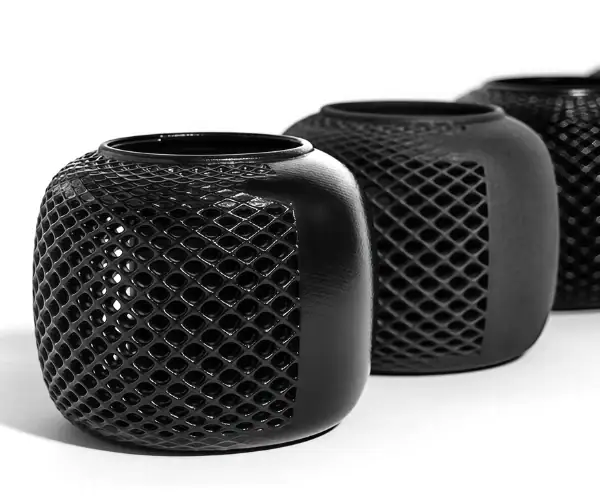
Vapor Smoothing
Vapor smoothing gives 3D printed parts a more uniform and sealed surface with a smooth semi-gloss finish. It is often selected to improve surface appearance and can also be paired with color dyeing for additional visual enhancement.
Available as a standard option for:
- Selective Laser Sintering (SLS)
- HP Multi Jet Fusion (MJF)
Color Dyeing
Color dyeing changes the outer appearance of the part by immersing it in a dye solution that penetrates approximately 0.010″ into the surface. Slight variation in color may occur from one batch to another due to process and material differences.
Available as a standard option for:
- Selective Laser Sintering (SLS)
- HP Multi Jet Fusion (MJF) — Black Only
Nickel Plating
Nickel plating is offered as a secondary copper and nickel plating process that applies a 0.004″ to 0.006″ nickel layer to the part surface. It is commonly used to improve durability, stiffness, and wear resistance. This finish is mainly functional rather than decorative, and the final appearance is typically rough nickel.
Available as a standard option for:
- Selective Laser Sintering (SLS)
3D Printing Finishes by Process
Selective Laser Sintering (SLS) Finishes
Standard
Parts are cleaned through depowdering, including sandblasting and manual powder removal. The standard SLS finish has a white matte appearance with a slightly textured surface.
Media Tumbled
This finish starts with the standard SLS surface and adds abrasive media tumbling. Tumbling helps reduce visible growth lines and may soften sharp edges, leaving the part with a more uniform eggshell-like finish.
Color Dyeing
Parts are immersed in a dye solution that penetrates about 0.010″ into the outer surface, changing the part color. As with most dyed finishes, slight variation may occur from batch to batch, including black.
Media Tumbled, Dyed Black
This option combines black dyeing with abrasive media tumbling. It helps reduce visible growth lines while also softening edges and giving the part a darker finished appearance.
Vapor Smoothing
Vapor smoothing is an automated post-processing method that improves surface quality by changing most areas from matte to semi-gloss. It also helps seal the surface, improve cosmetic consistency, and support production-ready appearance. Vapor-smoothed SLS parts can also be dyed.
Nickel Plating
Nickel plating is available as a secondary copper + nickel plating process that adds a 0.004″–0.006″ nickel coating. This finish is mainly used to improve stiffness, durability, and wear resistance rather than cosmetic appearance. The final result is a rough nickel finish.
Other
Additional SLS finishing options may also be available depending on project needs. These can include custom post-processing such as sanding, painting, or plating. Special requests can be submitted for manual review.
HP Multi Jet Fusion (MJF) FInishes
Standard
MJF parts are depowdered using sandblasting and manual powder removal. The standard finish is typically gray matte with a fine textured surface.
Dyed Black
Parts are placed in a dye solution that darkens the outer surface. The final color is generally consistent, but slight variation between batches may still occur.
Vapor Smoothing
Vapor smoothing for MJF parts improves the surface from matte to a cleaner semi-gloss finish. It also helps seal the surface, improve consistency, and provide a more refined appearance for production applications. Vapor-smoothed parts can also be dyed.
Other
Additional MJF finishing options such as sanding, painting, or plating may be available upon request. Custom requirements can be submitted for manual review.
PolyJet Finishes
Standard
Support material is removed and parts are cleaned after printing. The finished surface is generally smooth, with a matte to semi-gloss appearance.
Upper-Face, Glossy
After support removal and cleaning, upward-facing surfaces are left with a glossy finish, while the remaining areas retain a matte to semi-gloss appearance.
Other
Extra PolyJet finishing options, such as sanding or other custom processing, may also be available depending on the project requirements.
Stereolithography (SLA) Finishes
Matte
Supported surfaces are lightly sanded with 220 or 320 grit sandpaper and then media blasted to create a more even matte finish.
Natural
Supported surfaces are lightly sanded with 220 or 320 grit sandpaper to improve surface quality. Some sanding marks may remain visible on supported areas.
Strip and Ship
Supported areas may show small support-removal marks, including light grid-like dots or minor surface blemishes.
Quick Clear
Only supported surfaces are sanded, so some visible layering may remain. A high-gloss clear coat is then applied to improve overall shine.
Other
Additional SLA finishing services may include sanding, polishing, painting, plating, or post-thermal processing, depending on part requirements.
Fused Deposition Modeling (FDM) Finishes
Standard
FDM parts are produced with support structures that are removed during post-processing. The finished parts typically retain fine visible layer lines on the surface.
Other
Additional finishing options such as sanding or painting may be available for FDM parts when a different surface appearance is required.
Carbon DLS™ Finishes
Standard
Carbon DLS parts usually have a matte to semi-gloss surface depending on feature direction. After printing, supports are removed and parts are cleaned. Supported areas are lightly sanded with 220 or 320 grit sandpaper to improve surface quality, although sanding marks may still be visible.
Other
Other post-processing options may also be available depending on the application and cosmetic requirements.
Direct Metal Laser Sintering (DMLS) Finishes
Standard
Support structures are removed and the part is media blasted to achieve a more uniform surface. Typical surface roughness is around 150–400 µin Ra.
Other
Additional DMLS finishing options, such as CNC machining of selected features or polishing, may be offered based on part geometry and project requirements.
Metal Binder Jetting Finishes
Zirblast
This standard finish produces a bright, matte metallic appearance ranging from bronze to gray. The look comes from a ceramic bead blasting process using zirconium silicate media.
Antique Bronze
After tumble polishing, a heat patina is applied to create a copper-like finish with darker gray areas in regions less accessible to the media. Parts are sealed before shipment.
Damascus Steel
A heat patina is applied to a media-blasted surface, resulting in an even dark gray matte appearance. Parts are sealed before shipment.
Medieval Pewter
This finish combines heat patina and tumble polishing to create a dark gray surface with some bronze highlights on raised features. Parts are sealed before shipping.
Tumble Polished
Parts are media tumbled to produce a semi-gloss polished finish. The color appears bright bronze, with darker gray areas in recessed or harder-to-reach features. Small gaps may still retain traces of polishing media.
Wheat Penny
A heat patina followed by media blasting creates an even matte copper-like finish. Parts are sealed before shipment.
See Our 3D Printing Materials & Finishes
Injection Molding Finishes
TiRapid offers standard mold finishing options for plastic injection molding, ranging from glossy and smooth to matte and textured surfaces. Because the finish is applied to the mold cavity, it transfers directly to the molded part during production.
Our standard mold finish options include:
- Society of the Plastics Industry (SPI) Mold Finishes
- Mold-Tech Textures
- VDI Textures
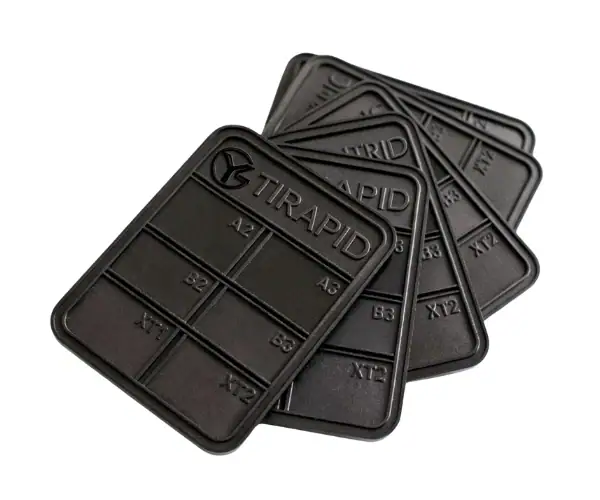
Injection Molding Finishes In Detail
SPI A Finishes
SPI A-1
SPI A-1 is a premium mold finish produced by diamond buffing with Grade #3, 6000 grit. It creates a very high-polish surface and is commonly used for parts that require maximum gloss or optical clarity. The average surface roughness is approximately 0.012–0.025 µm Ra.
SPI A-2
SPI A-2 is created with Grade #6, 3000 grit diamond buffing to achieve a high-polish finish. It is often selected for molded parts that need a smooth, refined appearance and can also be used for transparent applications. The average surface roughness is about 0.025–0.050 µm Ra.
SPI A-3
SPI A-3 uses Grade #15, 1200 grit diamond buffing to produce a high-to-medium polished surface. It is suitable for parts that require a cleaner visual finish but do not need the highest optical quality. The average surface roughness is typically 0.050–0.100 µm Ra.
SPI B Finishes
SPI B-1
SPI B-1 is a 600-grit sanded mold finish that produces a medium polish surface. It offers a smoother appearance than lower SPI grades while remaining less reflective than a diamond-polished finish. The average surface roughness is approximately 0.05–0.10 µm Ra.
SPI B-2
SPI B-2 is a 400-grit sanded finish used to create a medium polish. It is often chosen for molded parts that need a controlled and consistent surface appearance without a high-gloss effect. The average surface roughness is around 0.10–0.15 µm Ra.
SPI B-3
SPI B-3 is a 320-grit sanded finish that produces a medium-to-low polish surface. It is commonly used when a lower polish level is acceptable while still maintaining a relatively uniform molded appearance. The average surface roughness is about 0.28–0.32 µm Ra.
SPI C Finishes
SPI C-1
SPI C-1 is a 600-stone finish that creates a low-polish surface. It is often selected for molded parts that require a more functional finish with limited surface gloss. The average surface roughness is approximately 0.35–0.40 µm Ra.
SPI C-2
SPI C-2 is a 400-stone finish that results in a low-polish surface with a more subdued appearance. It is commonly used for general-purpose parts where cosmetic polish is less critical. The average surface roughness is around 0.45–0.55 µm Ra.
SPI C-3
SPI C-3 is a 320-stone finish that produces a lower-polish surface with a visibly rougher texture than higher SPI grades. It is suitable for applications where a simple functional finish is preferred. The average surface roughness is typically 0.63–0.70 µm Ra.
SPI D Finishes
SPI D-1
SPI D-1 is a dry-blasted finish using glass bead to create a satin-like surface. It is often used when a non-gloss finish with light texture is required. The average surface roughness is approximately 0.80–1.00 µm Ra.
SPI D-2
SPI D-2 is a dry-blasted finish using #240 oxide to create a duller and more textured surface. It is commonly selected when a matte appearance is preferred over polished finishes. The average surface roughness is about 1.00–2.80 µm Ra.
SPI D-3
SPI D-3 is a dry-blasted finish using #24 oxide to produce a rougher dull surface. It is typically chosen for molded parts that require a coarse matte texture. The average surface roughness ranges from 3.20–18.00 µm Ra.
Popular Mold-Tech Finishes
Standex Engraving Mold-Tech is a standardized mold texturing system commonly used for commercial and production plastic parts. It is often selected when a molded product needs a controlled matte texture instead of a polished surface. Mold-Tech textures are organized into multiple series and identified by texture number and texture depth. In many projects, Series A textures are especially popular because they offer fine-to-coarse matte finishes without requiring more specialized engineered texturing methods.
Below are several common Mold-Tech finishes available through TiRapid:
MT-11010
MT-11010 provides a dull matte finish with a texture depth of approximately 0.001″.
MT-11020
MT-11020 creates a coarse matte finish with a texture depth of approximately 0.0015″.
MT-11030
MT-11030 produces a coarser matte surface with a texture depth of approximately 0.002″.
VDI (EDM) Finishes
VDI 3400 surface finish, commonly known as VDI finish, is a mold texture standard developed by the Society of German Engineers (Verein Deutscher Ingenieure). It is widely used to define matte mold textures produced through Electrical Discharge Machining (EDM). VDI finishes can range from relatively fine textures to much coarser matte grain depending on the selected grade, making them a common choice for molded parts that need consistent textured surfaces.
VDI 12
A 600-stone low-polish finish with an average surface roughness of 0.40 µm Ra.
VDI 15
A 400-stone low-polish finish with an average surface roughness of 0.56 µm Ra.
VDI 18
A glass bead blasted satin finish with an average surface roughness of 0.80 µm Ra.
VDI 21
A #240 oxide dry-blasted dull finish with an average surface roughness of 1.12 µm Ra.
VDI 24
A #240 oxide dry-blasted dull finish with an average surface roughness of 1.60 µm Ra.
VDI 27
A #240 oxide dry-blasted dull finish with an average surface roughness of 2.24 µm Ra.
VDI 30
A #24 oxide dry-blasted dull finish with an average surface roughness of 3.15 µm Ra.
VDI 33
A #24 oxide dry-blasted dull finish with an average surface roughness of 4.50 µm Ra.
VDI 36
A #24 oxide dry-blasted dull finish with an average surface roughness of 6.30 µm Ra.
VDI 39
A #24 oxide dry-blasted dull finish with an average surface roughness of 9.00 µm Ra.
VDI 42
A #24 oxide dry-blasted dull finish with an average surface roughness of 12.50 µm Ra.
VDI 45
A #24 oxide dry-blasted dull finish with an average surface roughness of 18.00 µm Ra.
Learn More About Plastic Injection Molding Finishes
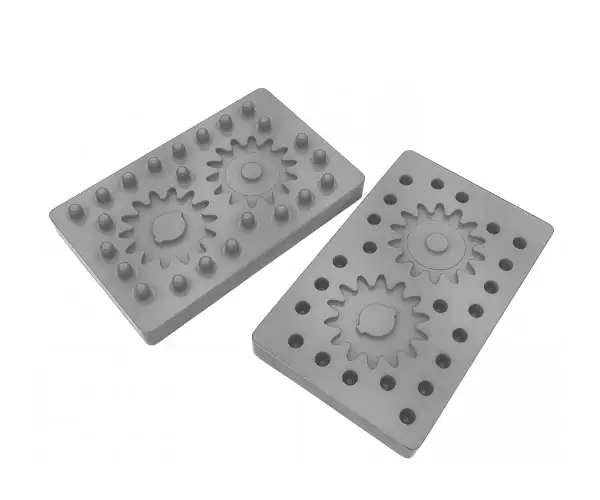
Urethane and Silicone Casting Finishes
At TiRapid, urethane cast parts can be produced in rigid, flexible, or rubber-like forms depending on the selected urethane material. We offer a variety of color options, including transparent as the standard choice, along with black and custom color matching. Parts can also be supplied with a standard smooth finish or upgraded with custom finishing services such as painting and hardware installation to better meet project requirements.
Cast Urethane and Silicone Finish Options
Matte/Frosted
This is a standard finish in which the master pattern is lightly prepared to create a matte or frosted appearance on the final cast parts. The effect may vary slightly depending on whether the material is opaque or translucent.
Semi-Gloss
For a semi-gloss finish, the master pattern receives additional surface preparation to produce a smoother result. This creates cast parts with a cleaner surface and a more refined visual appearance.
High-Gloss
A high-gloss finish requires more extensive processing of the master pattern to achieve a very smooth surface. When cast, this finish can produce glossy parts and is especially suitable for applications that require a clearer or more polished appearance.
Textured
TiRapid can also offer textured finishes for cast urethane and silicone parts using selected SPI and Mold-Tech standards. These textures are designed to create a molded appearance similar to injection molded components.
Custom
For projects that require additional finishing or secondary operations, TiRapid can also support custom options such as hardware installation, overmolding, and painting. If a specific finish is needed, it can be requested for manual review during the quotation process.
