What Is Plating? Types, Processes & Applications
Plating is a surface-finishing process that deposits a thin layer of metal onto a substrate. It is commonly used to improve corrosion resistance, wear resistance, electrical performance, solderability, or appearance without manufacturing the entire component from the coating material.
This guide explains what plating is, how the plating process works, the main plating methods and metals, and how coating thickness, surface preparation, geometry, and inspection affect finished parts. It also covers practical considerations for plating precision CNC machined components.
What Is Plating?
Plating is the process of applying a thin metallic layer to the surface of another material, known as the substrate. Depending on the application, the deposited layer may provide corrosion protection, better wear resistance, improved electrical conductivity, greater solderability, or a decorative finish.
The substrate provides the main shape and structural properties of the part, while the plated layer changes its surface characteristics. For example, a steel component may receive zinc plating for corrosion protection, while an electrical contact may receive copper, tin, silver, or gold to improve electrical or assembly performance.
This approach can be economical because only the surface receives the more specialized material. A component can therefore retain the strength and cost advantages of its base material while gaining selected surface properties from the plating layer.
Plating Vs Coating
Plating and coating are related terms, but coating is broader.
Plating generally refers to depositing a metallic layer onto a substrate through electrochemical, chemical, immersion, or related metal-deposition processes.
Coating can include metallic layers as well as paint, powder coating, polymers, ceramics, and other protective films.
For engineering drawings, using the correct term helps manufacturers understand the required material, process, thickness, and inspection method.
Plating Vs Anodizing
Plating deposits another material onto the surface. Anodizing works differently.
During anodizing, the surface of a metal—most commonly aluminum—is electrochemically converted into a controlled oxide layer. It does not simply add a separate metallic coating in the same way that nickel or zinc plating does.
This difference matters for CNC parts because anodizing and plating affect dimensions, corrosion behavior, appearance, electrical properties, and masking requirements differently.
Why Is Metal Plating Used?
Metal plating allows engineers to modify the surface of a component without changing the entire bulk material. The required function determines both the plating metal and the process.
Improve Corrosion Resistance
Corrosion protection is one of the most common reasons for plating.
A metallic coating can act as a barrier between the substrate and moisture, oxygen, chemicals, or other aggressive environments. Zinc is widely used to protect steel, while nickel and chromium coatings can also provide useful corrosion resistance for suitable applications.
The required protection depends on the base metal, environment, plating thickness, and specification. A decorative indoor component and an industrial part exposed to moisture or chemicals may require very different plating systems.
Improve Wear Resistance And Surface Hardness
Some plated layers are selected to improve surface durability.
Nickel and chromium-based finishes can be used where the surface is exposed to sliding, contact, or repeated mechanical wear. This can be useful for shafts, pins, tooling surfaces, machine components, and other areas where the base material provides structural strength but the surface requires additional protection.
Plating mainly changes surface behavior. It does not automatically increase the strength of the entire component.
Improve Electrical Conductivity And Solderability
Copper, silver, gold, and tin are important plating materials in electrical and electronic applications.
Copper and silver provide high conductivity, gold is valued for conductivity together with corrosion resistance, and tin is commonly selected when solderability is important. CEP specifically identifies solderability and electrical conductivity as important plating functions.
This makes plating useful for contacts, connectors, terminals, electronic components, and other parts where only the surface needs particular electrical properties.
Improve Appearance
Plating can also improve the visual quality of a part.
Nickel, chromium, gold, and other finishes can create bright, reflective, smooth, or decorative surfaces. In some products, appearance is the main purpose, in others, decorative performance is combined with corrosion or wear protection.
For visible CNC parts, the final appearance also depends on the quality of the machined surface beneath the plating.
How Does The Plating Process Work?
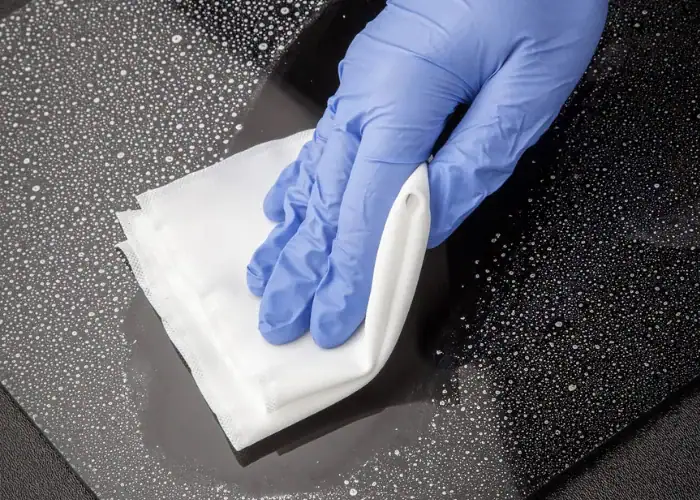
Although different plating methods use different deposition mechanisms, surface preparation is critical. Oil, grease, oxides, dirt, and machining residue can interfere with adhesion and create inconsistent results.
Surface Cleaning And Preparation
The first step is to prepare the substrate.
Typical preparation can include:
- Degreasing
- Chemical cleaning
- Oxide removal
- Acid treatment
- Etching
- Mechanical polishing
- Surface activation
The exact sequence depends on the base material and plating system.
A clean and chemically active surface gives the deposited metal a better opportunity to bond properly. Poor preparation can lead to peeling, bare areas, blistering, or inconsistent coating coverage.
Plating Bath And Metal Deposition
After preparation, the part enters a plating solution or other deposition process.
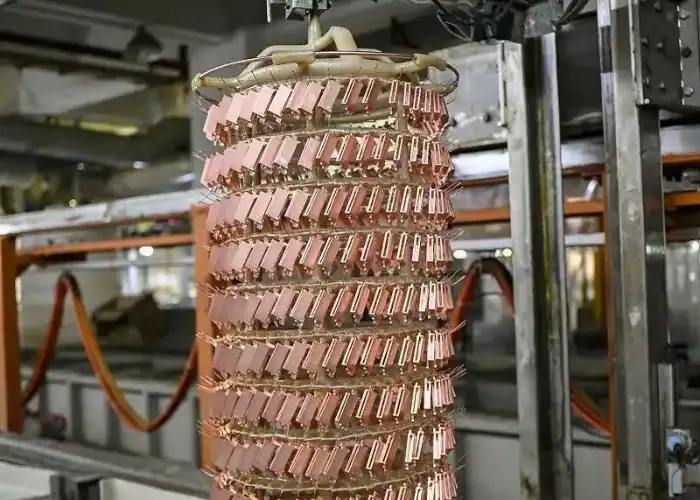
In electroplating, the workpiece is placed in an electrolyte containing metal ions. Electrical current drives positively charged metal ions toward the negatively charged workpiece, where they are reduced and deposited as a metallic layer.
In electroless plating, deposition occurs through a controlled chemical reaction rather than an externally applied electrical current. This difference affects process control, geometry coverage, material compatibility, and coating uniformity.
Rinsing, Drying, And Post-Treatment
After deposition, parts are generally rinsed to remove residual chemicals and then dried.
Depending on the specification, additional operations can include polishing, heat treatment, sealing, passivation, or other finishing steps. 3ERP describes surface preparation, activation, plating, rinsing, and drying/post-treatment as typical stages in the overall process.
Final inspection follows to confirm that the plated component meets appearance, thickness, adhesion, and dimensional requirements.
What Are The Main Types Of Plating?
Different plating methods provide different balances of coating uniformity, material selection, process cost, and suitability for complex geometry.
Electroplating
Electroplating is one of the most widely used metal plating processes.
The workpiece functions as the cathode in an electrolytic solution, and an electrical current causes metal ions to deposit onto its surface. Common electroplated materials include nickel, copper, zinc, chromium, tin, gold, and silver.
Electroplating offers a broad range of functional and decorative finishes. However, the electrical field and part geometry can influence how evenly material builds on corners, edges, recesses, and other features.
For precision components, coating distribution must therefore be considered when specifying final dimensions.
Electroless Plating
Electroless plating deposits metal through a chemical reduction reaction without an external electrical current.
One of the best-known examples is electroless nickel plating. Because deposition is driven chemically rather than by current distribution, this process can provide relatively uniform coverage over complex geometry.
This makes electroless plating attractive for components with recesses, complex profiles, or features where consistent coating thickness is important.
Process chemistry still needs careful control, and the exact deposit properties depend on the selected plating system and specification.
Immersion Plating
Immersion plating uses a chemical displacement reaction rather than an external electrical current.
The substrate is immersed in a solution containing ions of a more noble metal, which replace atoms at the surface and create a relatively thin deposit. Because the reaction is self-limiting, immersion processes generally produce thinner coatings than conventional electroplating.
These coatings can be useful in electronics and other applications where a thin functional metallic surface is required.
Selective And Brush Plating
Selective plating applies a coating only where it is needed rather than covering the entire component.
Brush plating is one method. A brush-like tool carries the plating solution while electrical current deposits material onto a targeted area. It can be useful for local repairs, worn areas, electrical contacts, or specific functional surfaces.
Selective plating can reduce unnecessary coating and protect features that should remain unplated.
What Metals Are Commonly Used For Plating?
The correct plating metal depends on the functional requirement, substrate, environment, appearance, and cost.
| Plating Metal | Main Benefit | Typical Use |
| Nickel | Corrosion and wear resistance | Precision mechanical parts |
| Zinc | Sacrificial corrosion protection | Steel parts and fasteners |
| Chromium | Hardness, wear resistance, appearance | Mechanical and automotive parts |
| Copper | Conductivity and undercoating | Electrical and multilayer plating |
| Tin | Solderability and corrosion protection | Electrical components |
| Gold | Conductivity and corrosion resistance | Electrical contacts |
| Silver | High electrical conductivity | Electrical applications |
These metals are commonly used because each offers a different balance of conductivity, corrosion behavior, wear resistance, appearance, and cost.
Nickel Plating
Nickel plating is widely used when corrosion resistance, wear performance, or a durable metallic surface is required.
Both electrolytic nickel and electroless nickel processes are available. Electrolytic nickel uses electrical current, while electroless nickel relies on chemical reduction.
For precision parts, the distinction matters because electroless deposition can offer more uniform thickness over complex surfaces, while conventional electroplating may provide other advantages depending on the required finish and production process.
Zinc And Chrome Plating
Zinc plating is commonly applied to steel for corrosion protection. Zinc can provide sacrificial protection, meaning the coating preferentially corrodes to help protect the underlying steel.
Chromium plating is used where hardness, wear resistance, corrosion protection, or a reflective appearance is required. Industrial hard chrome and decorative chrome should not be treated as identical processes because their purpose, coating system, and thickness can differ.
Copper, Tin, Gold, And Silver Plating
Copper is widely used for electrical conductivity and as an intermediate layer in multilayer plating systems.
Tin is particularly useful where solderability is required. Gold combines conductivity with strong corrosion resistance, making it valuable for electrical contacts. Silver offers very high electrical and thermal conductivity.
For electrical components, the selected coating should match contact resistance, wear, environment, soldering, and cost requirements.
Electroplating Vs Electroless Plating
Electroplating and electroless plating can both produce functional metallic coatings, but they use different deposition mechanisms.
| Factor | Electroplating | Electroless Plating |
| Deposition Method | Electrical current | Chemical reaction |
| External Current | Required | Not required |
| Thickness Distribution | More geometry-dependent | Generally more uniform |
| Complex Geometry | Requires careful process control | Well suited to complex surfaces |
| Common Example | Electrolytic nickel | Electroless nickel |
| Process Control | Electrical + chemical | Mainly chemical |
Electroplating is suitable for a broad range of metals and applications, while electroless plating is often chosen when uniform coverage on complex features is particularly important.
Neither method is automatically better. The choice depends on base material, geometry, coating specification, thickness, production quantity, and functional requirements.
How Does Plating Affect CNC Part Dimensions?
For precision CNC components, plating must be considered as part of the dimensional design rather than as a cosmetic operation added after machining.
A deposited layer changes the final size of coated surfaces. CEP specifically notes that plating thickness must be checked in addition to post-plating dimensions, particularly on features that must fit into mating parts.
Plating Thickness And Tolerance
If plating is applied to an external diameter, the finished diameter increases. If it is deposited inside a bore, the available opening becomes smaller.
This can affect:
- Shafts
- Precision bores
- Bearing seats
- Sliding fits
- Threads
- Sealing surfaces
- Connector features
The drawing should make clear whether dimensional tolerances apply before plating or after plating.
For tight-tolerance components, the machining allowance may need to account for the specified coating thickness so that the final plated part remains within tolerance.
Masking Critical Features
Not every surface should necessarily receive plating.
Typical masking areas can include precision threads, bearing interfaces, electrical contact zones, sealing faces, datum surfaces, or other features where coating buildup would interfere with function.
The drawing should identify the plated area and any surfaces that must remain uncoated.
Clear masking requirements reduce ambiguity between machining, finishing, and inspection.
Machine Before Or After Plating?
Most precision parts are primarily machined before plating because the plated layer is generally intended to remain on the finished surface.
A typical sequence may be:
CNC machining → deburring and cleaning → plating → final inspection
However, some components may require grinding, polishing, lapping, or another controlled finishing operation after coating when a plated functional surface has an especially demanding final size or finish.
The correct sequence depends on coating thickness, tolerance, surface finish, geometry, and functional requirements.
What Factors Affect Plating Quality?
Good plating depends on more than choosing a metal such as nickel or zinc. Surface condition, part geometry, bath conditions, current distribution, process time, and handling can all influence the final result. CEP notes that dwell time, geometry, bath temperature, electrical current, and material selection can affect plating thickness and uniformity.
Surface Condition
The plated layer follows the surface beneath it.
Machining marks, scratches, burrs, contamination, oxide films, and poor cleaning can affect both appearance and adhesion.
A visually polished coating cannot always hide defects in the original substrate. If cosmetic appearance is critical, the required surface condition should therefore be specified before plating.
Geometry And Coating Uniformity
Part geometry can strongly influence coating distribution, especially in electroplating.
Sharp edges and exposed areas may receive more deposit, while deep recesses, internal cavities, and difficult-to-reach features may receive less.
For complex CNC components, geometry should be reviewed together with the plating method and thickness tolerance rather than assuming that every surface will receive exactly the same deposit.
Bath Time, Current, And Process Conditions
Plating thickness and quality also depend on controlled process conditions.
Important variables may include:
- Plating time
- Current density
- Bath temperature
- Chemical concentration
- Solution condition
- Part positioning
These parameters are normally controlled by the plating supplier according to the selected process and applicable specification.
Common Plating Defects
Plating defects can affect appearance, corrosion performance, dimensional accuracy, and service life.
Peeling And Poor Adhesion
Poor adhesion can occur when contaminants, oxides, or unsuitable surface conditions prevent the coating from bonding correctly.
PrimeWeld identifies surface preparation as a major factor in bonding problems and notes that contamination can interfere with adhesion.
Proper cleaning and activation should therefore be treated as essential process steps.
Uneven Plating Thickness
Uneven thickness can result from part geometry, current distribution, positioning, racking, immersion conditions, or inconsistent process control.
This is especially important for tight-tolerance parts because excessive coating on one area can affect fit even when the overall coating appears acceptable.
Pitting, Blistering, And Discoloration
Pits, blisters, stains, and color differences may indicate problems with contamination, pretreatment, bath conditions, gas formation, or material compatibility.
Some appearance variation may be acceptable for functional coatings, while cosmetic parts may require much stricter visual standards.
The required acceptance criteria should therefore be established before production.
How Is Plating Quality Inspected?
Inspection should confirm that the plated layer performs its intended function and that the final part remains dimensionally acceptable.
Visual Inspection
Visual inspection can identify:
- Bare areas
- Peeling
- Cracks
- Blisters
- Pits
- Discoloration
- Inconsistent coverage
CEP and PrimeWeld both describe visual inspection as a basic step for checking coating coverage and consistency.
Plating Thickness Measurement
Thickness measurement verifies whether the deposited layer meets the specified requirement.
Possible methods include X-ray-based measurement, cross-section analysis, or other methods defined by the applicable standard. CEP notes that X-ray measurement can be used to examine plating thickness and uniformity.
The correct measurement method depends on the coating, substrate, thickness range, geometry, and specification.
Adhesion And Functional Testing
Some parts also require adhesion, corrosion, solderability, electrical, or other functional testing.
For precision CNC components, these checks should be combined with final dimensional inspection. A coating can meet its own thickness requirement while still causing a shaft, hole, thread, or fit to fall outside the drawing tolerance.
Plating Applications In Manufacturing
Plating is used in automotive, aerospace, electronics, industrial equipment, medical products, and many other manufacturing sectors because it can add functional surface properties without changing the entire component material.
CNC Machined Components
CNC machined parts can use plating for corrosion resistance, wear protection, conductivity, or appearance.
Typical plated features may include:
- Shafts
- Pins
- Housings
- Brackets
- Bushings
- Precision fittings
- Electrical components
For these parts, the important engineering relationship is:
machined dimension + plating thickness + masking + final inspection
If these items are planned together, plating becomes part of the manufacturing process rather than an uncontrolled final step.
Electrical And Electronic Components
Plating is widely used for connectors, contacts, terminals, circuit-related parts, and other conductive components.
Copper, tin, gold, and silver can provide different combinations of conductivity, solderability, corrosion resistance, and contact performance.
The optimum coating depends on electrical requirements, expected wear, operating environment, and cost.
Automotive, Aerospace, And Industrial Components
Automotive components use plating for corrosion protection, appearance, wear resistance, and electrical functions. Aerospace and industrial parts may use coatings where specific surfaces require additional environmental or wear protection.
The coating should always be selected based on the component’s actual service conditions rather than industry name alone.
How To Choose The Right Plating For A CNC Part
The best plating process is the one that meets the component’s functional requirements while remaining compatible with its material, geometry, tolerances, and manufacturing sequence.
Start With The Functional Requirement
First define why the part needs plating.
Possible priorities include:
- Corrosion protection
- Wear resistance
- Surface hardness
- Electrical conductivity
- Solderability
- Appearance
- Dimensional restoration
Once the primary function is clear, suitable coating materials and processes can be compared more effectively.
Match The Plating To The Base Material
The substrate also influences the plating system.
Aluminum, carbon steel, stainless steel, copper, and brass have different surface chemistries and may require different cleaning, activation, strike layers, or undercoats.
Material compatibility should therefore be confirmed before production, particularly when adhesion or corrosion performance is critical.
Define Thickness, Masking, And Final Tolerance
For precision CNC parts, the drawing should ideally communicate:
- Plating type
- Required thickness
- Applicable specification
- Areas to be plated
- Areas to be masked
- Cosmetic requirements
- Final dimensional tolerances
- Inspection requirements
These details reduce uncertainty between machining and finishing suppliers.
A nominal finish such as “nickel plate” may not provide enough information for a critical part. The more tightly controlled the geometry and fit, the more important it becomes to define the coating as part of the engineering specification.
FAQs
Can You Electroplate Aluminum?
Yes. Aluminum can be electroplated, but its natural oxide layer must be removed or treated first. Proper pretreatment, such as a zincate process, helps the plated metal bond securely to the aluminum surface.
What Is Electroless Nickel Plating?
Electroless nickel plating deposits a nickel-based coating through a chemical reaction without external electrical current. It provides relatively uniform thickness, making it useful for complex CNC parts, bores, recesses, and precision surfaces.
What Type Of Plating Is Most Commonly Used?
Nickel and zinc plating are among the most common industrial options. Zinc is widely used for corrosion protection on steel, while nickel plating is commonly chosen for corrosion resistance, wear resistance, and precision mechanical components.
What Is Hard Chrome Plating?
Hard chrome plating is a thick chromium coating applied mainly to improve hardness, wear resistance, and surface durability. It is commonly used on shafts, pins, molds, hydraulic components, and other mechanical surfaces exposed to friction or wear.
Conclusion
Plating deposits a thin metallic layer onto a substrate to improve corrosion resistance, wear performance, conductivity, solderability, or appearance. The final result depends on the plating method, coating metal, surface preparation, geometry, thickness control, and inspection. For precision components, plating should be planned together with CNC dimensions, masking, fits, and final tolerances so the coated part performs as intended.
At TiRapid, we provide precision CNC machining and manufacturing services with surface finishing support for custom metal parts. We consider material selection, machining allowances, coating thickness, masking, dimensional inspection, and final part requirements to help deliver reliable prototypes and low-volume production.