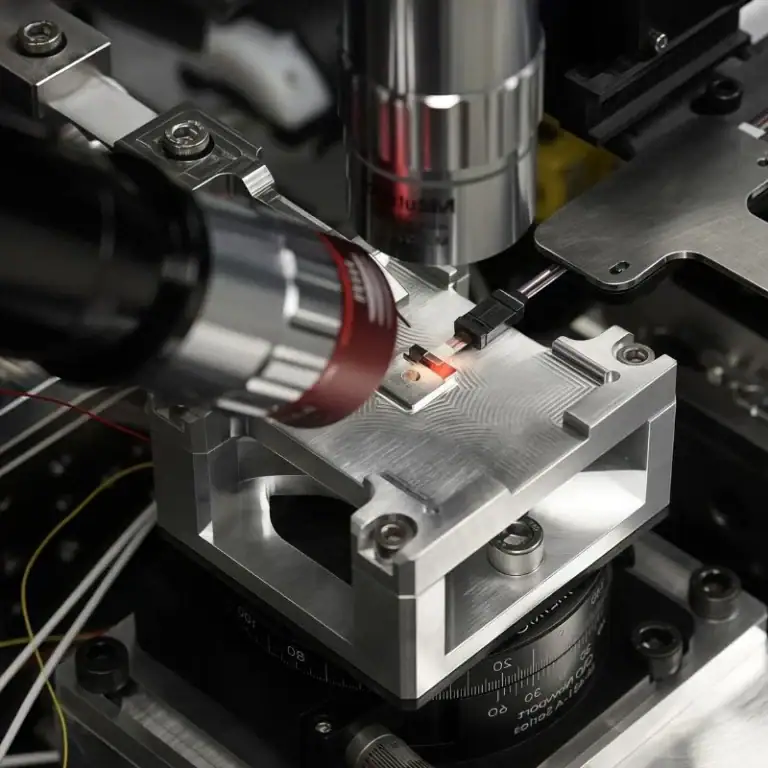
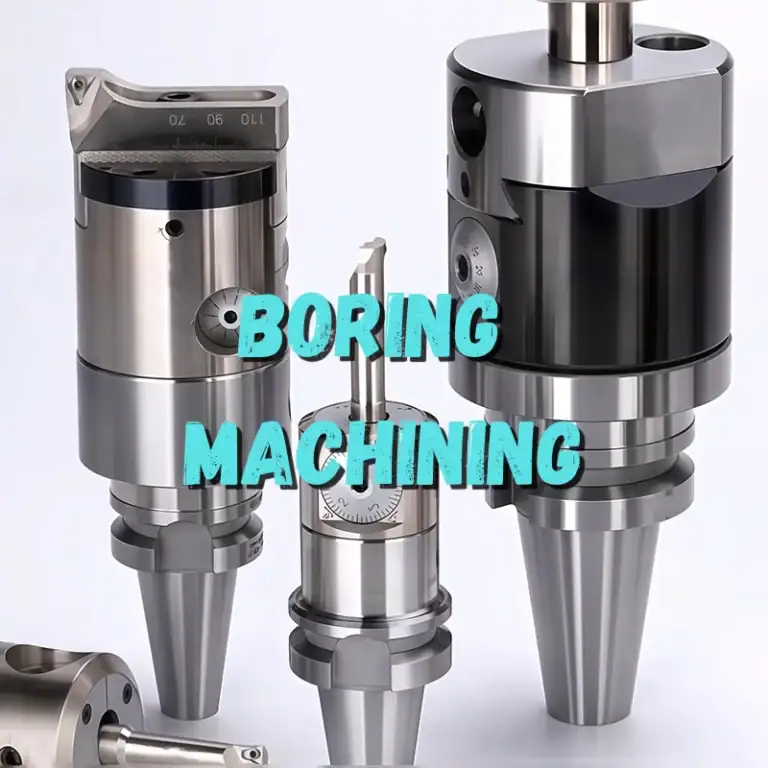
CNC turning machining costs are influenced by several production conditions, including component structure, raw material prices, machining time, machine type, tool consumption, machining accuracy, order quantity, and post-processing requirements. Even when two components have similar dimensions, their final machining costs can differ significantly if their materials, tolerances, structural complexity, or production quantities are different. CNC turning relies on computer numerical control equipment to perform operations such as external turning, internal boring, facing, grooving, threading, and profile machining. The actual production cost includes not only machine operating time but also programming, setup and adjustment, tool preparation, quality inspection, cleaning, packaging, and equipment maintenance. For purchasing managers and manufacturers, understanding how CNC turning costs are formed makes it easier to evaluate quotations and control manufacturing expenses through material selection, process optimization, tool management, and production planning. In high-volume production, machining time and material utilization usually have a greater influence on unit cost, while for high-precision, low-volume components, programming, setup, and inspection costs often account for a larger share of the total expense.
Raw Material Prices Directly Affect CNC Turning Costs
Raw material is an important component of CNC turning costs. Different metals vary considerably in purchase price, density, machinability, and market availability. Common CNC turning materials include aluminum alloys, stainless steel, carbon steel, alloy steel, brass, copper alloys, titanium alloys, and selected engineering plastics. The more expensive the material, the greater the impact of raw material weight and machining allowance on the final quotation. Materials such as titanium alloys, stainless steel, and high-performance alloys may also require lower cutting speeds, more advanced tooling, or additional machining time, causing both material and processing costs to increase. Selecting appropriate stock dimensions and purchasing specifications can reduce unnecessary machining allowance and help control material expenses.
Material Type Affects Purchasing Costs
Different materials have different market prices and supply conditions. Before CNC turning begins, manufacturers need to select materials according to the component’s operating environment, strength requirements, corrosion resistance, weight requirements, and machinability. Aluminum alloys generally offer good machinability and low weight, making them suitable for lightweight precision components. Stainless steel provides strong corrosion resistance and is commonly used for machinery, medical equipment, and food-processing equipment. Brass offers excellent machinability and electrical conductivity, making it suitable for connectors and precision components. Titanium alloys provide high strength and low density but generally involve higher material prices and greater machining difficulty.
- Aluminum alloys are suitable for lightweight precision components
- Brass is suitable for high-precision connectors
- Carbon steel is suitable for cost-sensitive mechanical components
- Stainless steel is suitable for corrosion-resistant components
- Alloy steel is suitable for high-strength structural parts
- Titanium alloys are suitable for high-performance industrial components
- Copper alloys are suitable for conductive and thermal components
Material selection determines not only the purchase price of the raw stock but also the cutting speed, tool life, and machining cycle. Selecting a material according to actual application requirements can prevent unnecessary costs caused by excessive material specifications.
Stock Dimensions Affect Material Utilization
The greater the difference between the raw stock dimensions and finished component dimensions, the more material must be removed, resulting in lower material utilization. CNC turning commonly uses round bars, tubes, or forgings as raw stock. Selecting an appropriate bar diameter and length can reduce unnecessary cutting and material waste. For high-volume production, manufacturers can standardize stock specifications according to component dimensions, allowing the same raw material to be used for several product models and improving inventory efficiency.
Proper stock dimension design reduces scrap while also shortening material removal time. When the component geometry matches the stock dimensions closely, roughing operations become shorter, reducing both machine operating time and tool consumption.
Component Complexity Determines Machining Time
Component geometry is one of the key factors affecting CNC turning costs. Simple shafts, sleeves, pins, and cylindrical components can generally be machined using a limited number of tools, while programming paths are relatively short and machining cycles are easier to control. Components containing deep holes, internal and external threads, narrow grooves, multiple steps, complex curves, or special profiles require more tools and more complicated programming. Setup and inspection work may also increase. As component complexity increases, cutting time, tool-changing time, setup time, and inspection time generally increase as well.
External Turning and Facing Usually Have Lower Machining Costs
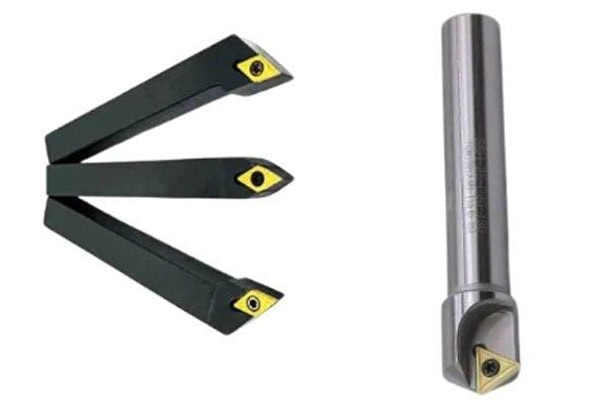
External turning, facing, chamfering, and standard step machining are common CNC turning operations. Tool selection and programming are relatively mature, and standard cutting tools can usually complete roughing and finishing operations efficiently. For regularly shaped rotational components, standardized tooling can significantly improve production efficiency.
- External rough turning
- External finish turning
- Facing
- Step turning
- Chamfering
- Standard groove machining
These components are well suited to batch production. By using standardized programs, tools, and fixtures, manufacturers can further reduce setup time and unit manufacturing costs.
Deep Holes and Complex Internal Features Increase Costs
Deep-hole machining requires strong tool rigidity, effective chip evacuation, stable cooling, and reliable cutting conditions. As hole depth increases, tool overhang generally becomes longer, increasing the risk of vibration and dimensional instability. Complex internal features such as stepped bores, tapered holes, internal grooves, and special mating structures also require different boring tools and additional machining operations.
- Deep-hole boring
- Stepped bore machining
- Internal groove machining
- Tapered hole machining
- Precision internal boring
- Special internal structures
Complex internal features increase tool requirements, machining time, and inspection time, which can raise the final quotation.
Higher Machining Accuracy Usually Means Higher Production Costs
Component accuracy directly affects CNC turning process design and quality inspection requirements. Standard mechanical components may only require conventional dimensional tolerances, while precision shafts, hydraulic components, medical device parts, and aerospace components may require strict control of dimensional tolerances, roundness, concentricity, runout, and surface roughness. High-precision machining requires more stable machine tools, precision tooling, and advanced inspection equipment. Thermal stability, workholding conditions, and tool wear must also be carefully controlled. As accuracy requirements become stricter, inspection frequency and process adjustment requirements generally increase.
Standard Dimensional Tolerance Machining
Standard mechanical components can generally be manufactured using conventional CNC turning machines, standard cutting tools, and common measuring instruments. The process is mature and setup and inspection costs are relatively easy to control.
For large quantities of standardized shafts and connectors, standard tolerances can meet actual assembly requirements while avoiding additional costs associated with unnecessarily tight tolerances.
High-Precision Component Machining
High-precision components require more stable machine tools, precision cutting tools, and inspection equipment. Depending on the component requirements, manufacturers may use micrometers, bore gauges, roundness measuring instruments, surface roughness testers, coordinate measuring machines, or dedicated inspection fixtures.
- Control dimensional tolerances
- Control roundness
- Control concentricity
- Control end-face runout
- Control surface roughness
- Control thread accuracy
- Increase inspection frequency for critical dimensions
High-precision machining can satisfy demanding equipment requirements, but inspection, setup, and machine operating costs also increase.
Tool Materials and Tool Consumption Affect CNC Turning Quotations
Cutting tools are major consumables in CNC turning production. Different materials require different tool materials and geometries, while tool price, service life, and replacement frequency directly affect unit manufacturing costs. Aluminum machining generally benefits from sharp cutting edges, while stainless steel and alloy steel require stronger emphasis on wear resistance and impact resistance. Difficult-to-machine materials such as titanium alloys and high-temperature alloys can cause faster tool wear and may require higher-performance tooling and carefully controlled cutting parameters.
Tool Types Affect Machining Efficiency
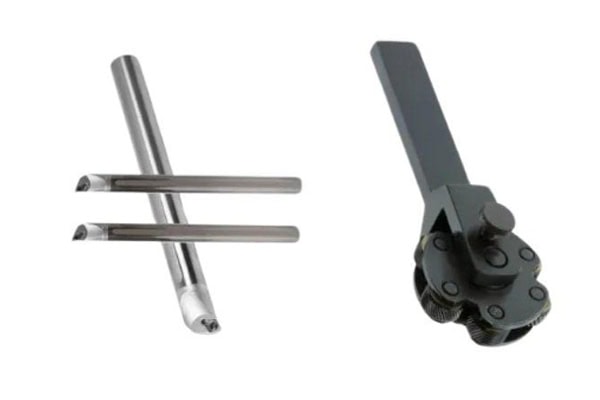
Common CNC turning tools include external turning tools, internal boring tools, grooving tools, parting tools, threading tools, and form tools. Different tools perform different machining operations, and more complex component structures generally require more tools.
- External turning tools for outer surfaces
- Internal boring tools for holes
- Grooving tools for grooves
- Parting tools for separating components
- Threading tools for internal and external threads
- Form tools for special profiles
Proper tool configuration can reduce tool-changing operations and unnecessary tool movement while controlling tool inventory and consumption costs.
Tool Life Affects Unit Manufacturing Costs
Cutting tools gradually wear during continuous production. Short tool life means more frequent tool replacement, increasing both tooling expenses and machine downtime. Optimizing cutting parameters, cooling methods, and tool geometry can extend tool life.
For batch production, manufacturers can establish tool replacement standards according to actual tool life and record the number of components processed by each tool. Effective tool management helps control machining costs and reduces dimensional deviations caused by excessive tool wear.
CNC Lathe Type Influences Machining Costs
Different CNC turning machines vary in performance, automation level, investment cost, maintenance requirements, and production efficiency. Standard two-axis CNC lathes are suitable for relatively simple rotational components, while turn-mill machines, twin-spindle machines, and automated production lines can handle more complex machining tasks. Equipment purchase costs, maintenance expenses, energy consumption, and machine utilization all contribute to manufacturing cost calculations.
Standard CNC Lathes Are Suitable for Conventional Components
Standard CNC lathes have mature structures and are suitable for external turning, facing, internal boring, grooving, and threading. Their investment and maintenance costs are relatively easy to control, making them suitable for conventional mechanical components and batch orders.
Turn-Mill Machines Are Suitable for Complex Components
Turn-mill machines can perform turning, milling, drilling, and selected complex profile operations in a single setup, reducing workpiece transfers and repeated positioning. Although the equipment investment is higher, turn-mill machining can reduce intermediate handling and setup time for complex, high-value components.
For high-value precision components, properly selected turn-mill equipment can improve production efficiency and assembly accuracy, meaning that its overall manufacturing cost may not necessarily be higher than using several conventional machines for separate operations.
Production Volume Affects Unit CNC Turning Costs
Order quantity has a significant influence on CNC turning unit prices. Low-volume production must absorb fixed preparation costs such as programming, setup, adjustment, and first-piece inspection over a small number of components. High-volume production can distribute these fixed costs across more products. Stable production volumes also make it easier for manufacturers to establish standardized processes and introduce automatic bar feeding and loading systems.
Cost Characteristics of Low-Volume Production
Small-batch components often have relatively high preparation costs. New products require drawing confirmation, CNC programming, tool selection, fixture adjustment, and first-piece inspection. These preparation tasks still need to be completed even when the production quantity is small.
- Higher programming cost per component
- Higher setup cost per component
- More noticeable first-piece inspection costs
- Fixed preparation costs are difficult to distribute
- Automation investment has a slower payback
For prototypes, research components, and trial-production parts, flexible machining methods are generally more suitable.
Advantages of High-Volume Production
Batch orders can make full use of validated CNC programs, tools, and fixtures, reducing repeated setup work. As production volume increases, machines can operate continuously, while automatic feeding and inspection systems can provide greater value.
- Lower programming cost per component
- Better distribution of setup expenses
- Higher machine utilization
- Less manual auxiliary work
- Lower tooling cost per component
- More efficient material purchasing
- Higher overall production efficiency
Stable high-volume orders generally achieve better unit manufacturing costs, particularly for standardized components with consistent geometry and dimensions.
Surface Treatment and Secondary Operations Increase Final Costs
After CNC turning, some components may require heat treatment, plating, anodizing, polishing, passivation, deburring, precision cleaning, or protective treatment. Post-processing costs depend on material, component size, surface requirements, and production quantity. Conventional mechanical components may only require simple deburring and cleaning, while medical, semiconductor, and aerospace components may require stricter cleaning, surface treatment, and clean packaging procedures.
Common Post-Processing Services
Different products require different finishing processes, and these operations should be included in the overall manufacturing budget during quotation and procurement.
- Heat treatment
- Anodizing
- Electroplating
- Passivation
- Polishing
- Deburring
- Ultrasonic cleaning
- Rust protection
- Precision packaging
The greater the number of post-processing operations, the higher the delivery time and overall manufacturing cost are likely to be.
Quality Inspection Requirements Also Affect CNC Turning Costs
Quality inspection is an essential part of precision machining. Standard components can generally be inspected using calipers and micrometers, while high-precision components may require roundness testers, contour measuring instruments, surface roughness testers, coordinate measuring machines, and dedicated inspection fixtures. As the number of inspection requirements increases, inspection labor, equipment usage, and quality documentation costs also increase. For batch production, first-piece inspection, in-process sampling, and final inspection can be combined to maintain quality while controlling inspection expenses.
Conventional Dimensional Inspection
Conventional dimensional inspection verifies external diameter, internal diameter, length, groove width, groove depth, and thread dimensions against drawing requirements. Standard measuring tools offer fast inspection and are suitable for ordinary mechanical components and batch production.
Precision Inspection Requires More Resources
High-precision components may require inspection of roundness, concentricity, runout, profiles, and surface roughness. Precision inspection improves product quality control but also requires additional equipment and labor resources.
By defining appropriate inspection items and sampling frequencies, manufacturers can avoid unnecessary repeated inspections while maintaining stable product quality.
How to Effectively Reduce CNC Turning Costs
CNC turning costs should not be reduced simply by demanding a lower machining price. More effective cost control comes from optimizing raw material specifications, component geometry, tooling, CNC programming, machine selection, production volume, and quality control. Appropriate component design can reduce unnecessary machining operations, suitable material selection can reduce raw material expenses, optimized tool paths can shorten machine operating time, batch production can distribute fixed setup costs, and effective tool management can reduce downtime and tool waste. Cooperation among process engineers, purchasing teams, and production departments can help manufacturers establish more economical production solutions while maintaining required product quality.
Improve Material Utilization
Selecting appropriate bar stock specifications and reducing excessive machining allowance can directly lower material consumption. This optimization is particularly valuable when processing expensive metals.
Optimize CNC Programs
Reducing air-cutting movements, shortening tool-change travel, and properly organizing roughing and finishing operations can reduce non-cutting time. Program optimization also reduces machine operating time and increases output per machine hour.
Optimize Production Batches
Grouping products with similar materials, dimensions, and tool configurations can reduce changeover and setup time. For long-term orders, manufacturers can establish standardized process databases so repeat orders can enter production more quickly.
CNC turning machining costs are not determined by a single factor. They are formed by a combination of raw material purchasing, stock dimensions, component geometry, machining accuracy, tool consumption, machine type, machining time, production volume, post-processing, and quality inspection requirements. Components with simple structures, economical materials, moderate tolerances, and large production quantities are generally easier to manufacture at lower unit costs. High-precision components, complex geometries, difficult-to-machine materials, and low-volume orders require greater investment in equipment, tooling, inspection, and process preparation. For companies seeking to control CNC turning quotations, optimizing material specifications, simplifying component geometry, reducing unnecessary machining, improving material utilization, extending tool life, optimizing production batches, and establishing stable inspection procedures can all contribute to better cost control. With mature CNC machining processes and efficient production management, manufacturers can improve production efficiency and strengthen price competitiveness while maintaining dimensional accuracy, surface quality, and required component performance.