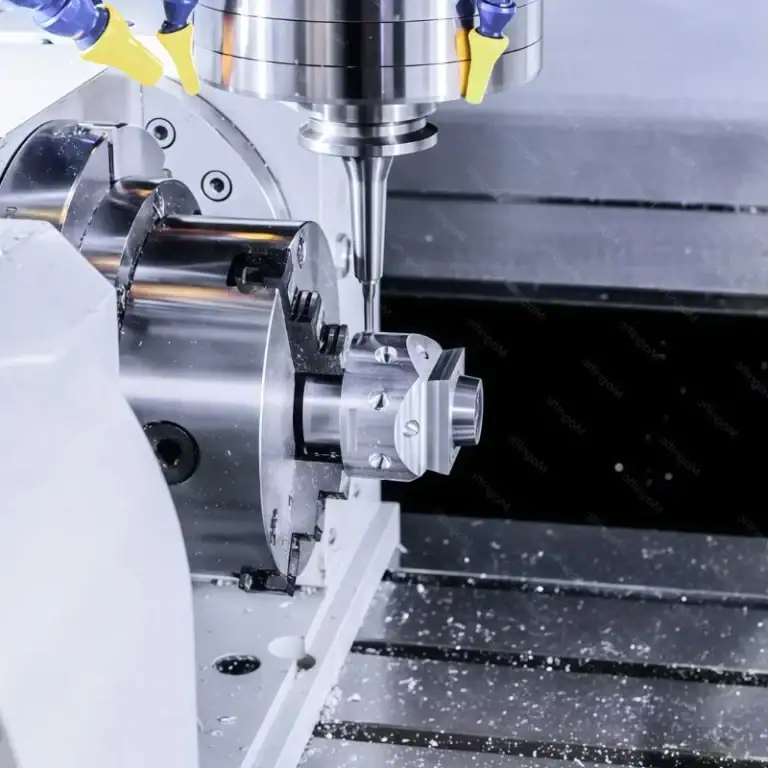
Automatic turning processes are becoming increasingly popular in the modern machining industry, especially in the production of automotive parts, electronic components, hardware fittings, medical devices, and precision shaft components. Compared with traditional manual turning, automatic turning not only improves machining efficiency but also enhances dimensional stability and batch production consistency. With the continuous development of CNC technology, automatic turning equipment has become more advanced in handling complex components, while machining precision and production stability have also improved significantly.
Automatic Turning Can Improve Machining Efficiency
One of the biggest advantages of automatic turning is its high machining efficiency. Traditional manual machining requires frequent clamping, measuring, and parameter adjustments, while automatic turning equipment can operate continuously through programmed control, greatly reducing downtime. For mass production parts, the advantages of automatic turning in production cycle and machining speed become even more obvious.
Stronger Continuous Machining Capability
Automatic turning equipment can maintain continuous machining operation for long periods.
Common advantages include:
- Reduced manual intervention
- Shorter tool changing time
- Lower machine downtime frequency
- Higher equipment utilization rate
Efficiency improvements become more obvious in batch production.
More Stable Production Rhythm
During manual machining, operator habits can affect production rhythm, while automatic turning maintains a fixed machining cycle.
For example:
- More stable cutting time
- Consistent product machining cycles
- Smoother process coordination
- Higher batch production efficiency
A stable production rhythm is more beneficial for production management.
Automatic Turning Helps Improve Machining Accuracy
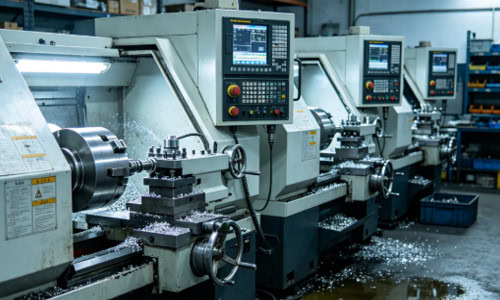
Many high-precision components require strict dimensional consistency, and automatic turning equipment has clear advantages in precision control. CNC systems can precisely control tool movement paths, reducing human error while improving repeat machining stability. For long-term batch production, automatic turning is more capable of maintaining consistent product quality.
More Stable Dimensional Consistency
Automatic turning equipment controls machining paths through programming, maintaining high repeatability accuracy.
It can easily achieve:
- Consistent batch dimensions
- Reduced tolerance fluctuation
- Stable repeated machining
- Improved product consistency
The advantages become more obvious in precision component machining.
Reduced Influence of Human Error
Manual machining is easily affected by operator experience, fatigue, and measurement error, while automatic turning equipment reduces these fluctuations.
For example:
- More accurate tool position control
- More stable machining parameters
- Smaller positioning deviation
- Easier dimensional correction
The advantages become even more noticeable during long-term batch production.
Automatic Turning Can Reduce Labor Costs
As machining automation continues to develop, more companies are focusing on labor cost control. Automatic turning equipment has clear advantages in reducing dependence on manual labor. Traditional turning often requires operators to continuously monitor machines, while automatic equipment can complete most machining actions through programmed control, greatly improving both production efficiency and workforce utilization.
One Operator Can Manage Multiple Machines
During automatic turning, most processes can run automatically, allowing one operator to manage multiple machines simultaneously.
Common situations include:
- Reduced number of operators required
- Improved workforce utilization
- Lower labor management pressure
- Higher production efficiency
Batch production workshops are more suitable for automated operation.
Reduced Repetitive Operations
Traditional manual turning consumes a large amount of time on repeated clamping and measuring, while automatic turning can complete these operations automatically through programmed control.
It can reduce:
- Repeated manual operations
- Long periods of machine monitoring
- Manual parameter adjustment
- Repetitive inspection work
The overall machining process becomes smoother.
Automatic Turning Is Suitable for Complex Part Machining
As component structures become increasingly complicated, conventional turning can no longer satisfy certain machining requirements, while automatic turning can achieve more integrated machining functions. Some automatic turning equipment can complete multiple machining operations in a single setup, reducing repositioning error while improving overall machining efficiency.
Multi-Process Integrated Machining
Some automatic turning equipment can complete multiple machining operations in one cycle.
For example:
- External turning
- Drilling operations
- Thread machining
- Grooving operations
Reducing repeated clamping also improves machining accuracy.
Stronger Capability for Complex Toolpaths
CNC automatic turning systems can perform complex trajectory control.
It can easily achieve:
- Curved surface machining
- Irregular shape machining
- Small precision component machining
- Micro-part machining
Machining efficiency for complex products is greatly improved.
Automatic Turning Can Improve Machining Stability
Machining stability directly affects product quality and equipment life, and automatic turning has clear advantages in maintaining stable operation. Automatic equipment can continuously operate under fixed parameters, reducing fluctuations in cutting conditions while minimizing machining errors caused by manual adjustments. The advantages become even more obvious during long-term continuous production.
More Stable Cutting Conditions
Automatic turning equipment can continuously operate under fixed parameters, resulting in smaller fluctuations during machining.
It can reduce:
- Machining vibration
- Dimensional drift
- Tool impact
- Surface quality fluctuation
The stability advantage becomes more obvious during long-term operation.
More Standardized Tool Management
Automatic turning equipment is usually equipped with tool compensation and automatic tool changing functions.
During machining, it can:
- Automatically correct dimensions
- Control tool wear
- Improve tool utilization rate
- Reduce human adjustment error
Machining quality becomes easier to maintain consistently.
Application Advantages of Automatic Turning in Mass Production
Automatic turning is highly suitable for large-scale production, especially in standard components and precision small parts. During batch machining, the equipment can maintain consistent machining parameters, reducing quality differences between products. Compared with manual machining, automatic turning is more suitable for standardized production management.
For long-term production orders, automatic turning can also improve delivery stability. Once equipment operation becomes stable, it can maintain continuous production for extended periods while reducing quality fluctuations caused by human factors. As automation technology continues to advance, automatic turning will continue expanding its application range in the precision machining industry.